

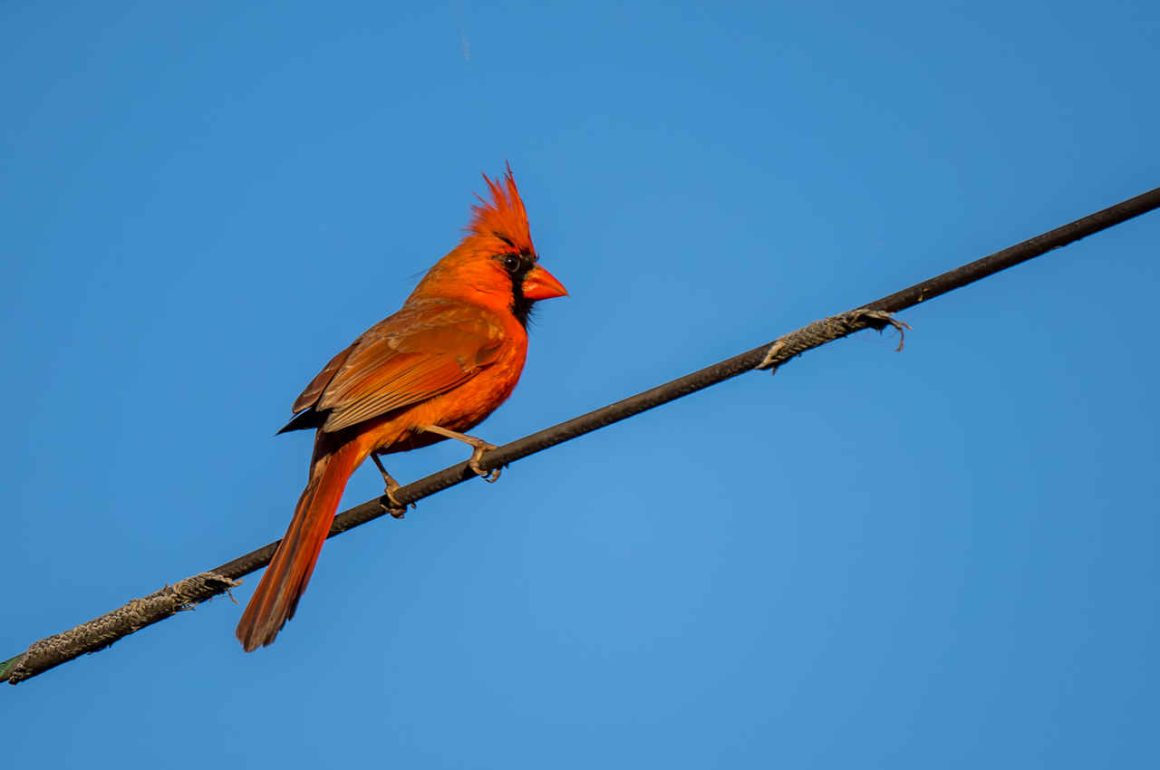
Unsurprisingly, not all bird species are equally popular in the United States. One way to measure this is by looking at how often they have been chosen as official state birds.
The undisputed champion is the Northern Cardinal, selected by seven states. It is followed by the Western Meadowlark (six states) and the Northern Mockingbird (five states). After that, the field gets much more fragmented, with familiar species such as bluebirds, American Goldfinch, American Robin, Brown Thrasher, Black-capped Chickadee, and Common Loon appearing in multiple states.
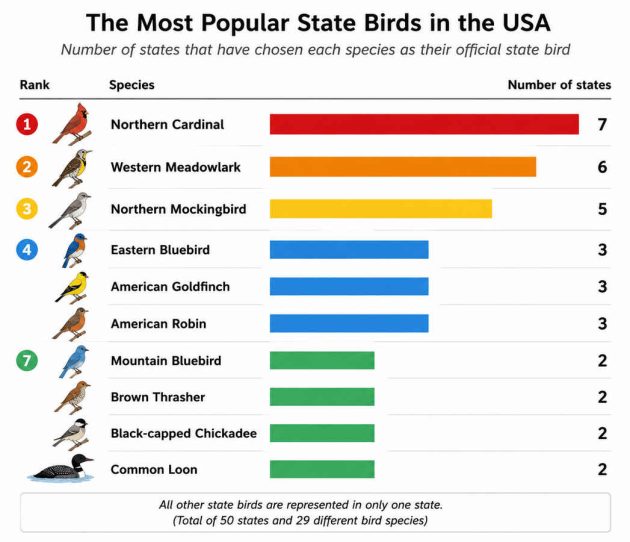
The pattern is fairly clear: Americans tend to prefer familiar neighbors over obscure specialists. A bird does not need to be rare or restricted to the state to become a symbol of it. It helps much more if people see it in their backyard. The populists are winning.
This also explains why some birds have struggled to gain political fame. The California Gull, for example, is the official bird of only one state — and despite its name, that state is not California but Utah.
Even an ambitious campaign by MAAGA (Make American Gulls Great Again) has so far failed to convince other states that gulls deserve more recognition.









The big tragedy is that the Blue Jay is not the state bird of any state. Maybe it should be our national bird to go along with our national tree, the red oak. I talk about this in my book, Slow Birding. Others have also written about what better birds for different states would be.
The Blue Jay is of course the provincial bird of Canada’s Prince Edward Island since 1977. Steller’s Jay for BC and the Canada Jay for the whole country.
But I am sure the Canada Jay will be renamed American Jay soon …