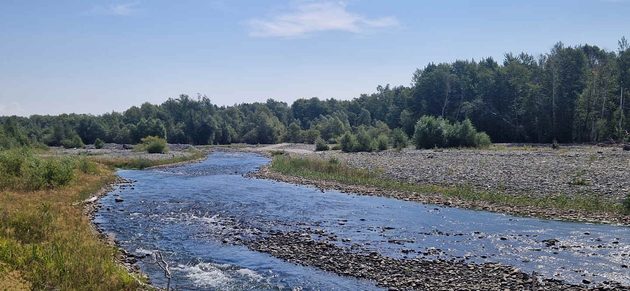
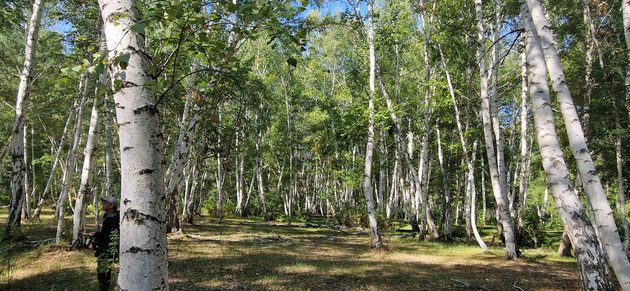
The Akqi National Wetland Park is an eBird hotspot in northwestern Xinjiang. The Chinese description gives the usual weirdly precise characterization of the habitat:
The Xinjiang Habahe Akqi National Wetland Park … cover[s] a total area of 1,250 hectares, of which 1,206.11 hectares are wetlands, representing a wetland rate of 96.49%.
It also seems to be an important area for older Chinese ladies to take group photos.
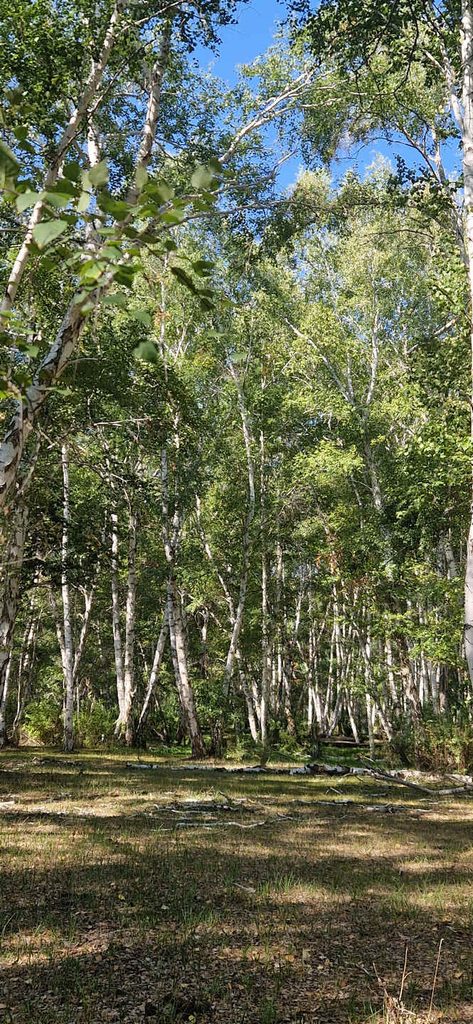
For birders, this is less of an attraction than the woodpeckers found here. I saw four species within a few hours, all apparently sharing pretty much exactly the same habitat of birch forest.
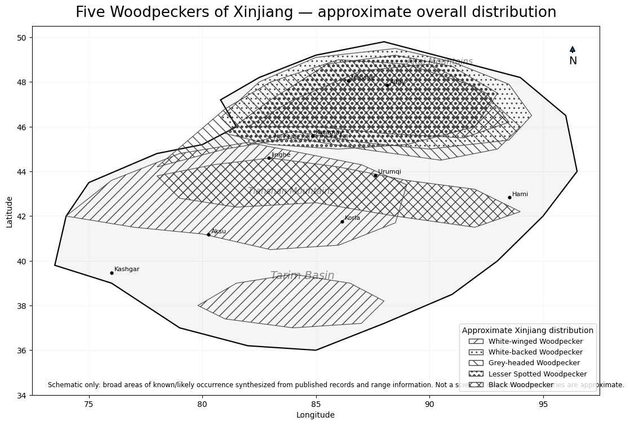
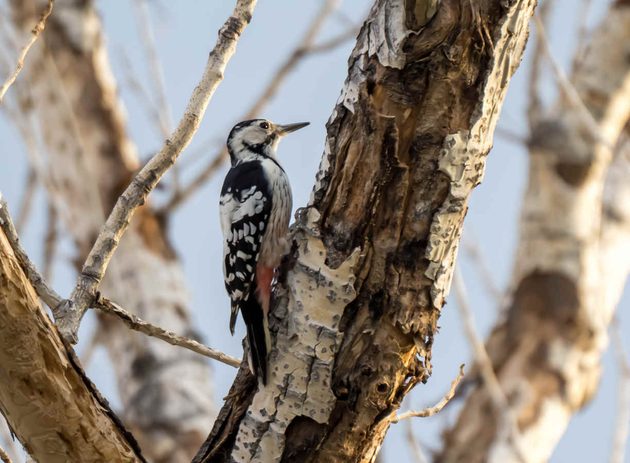
Maybe that is not really that surprising — though it was to me — as all four species have wide ranges, stretching from Western Europe to the Far East. One of them is the White-backed Woodpecker.
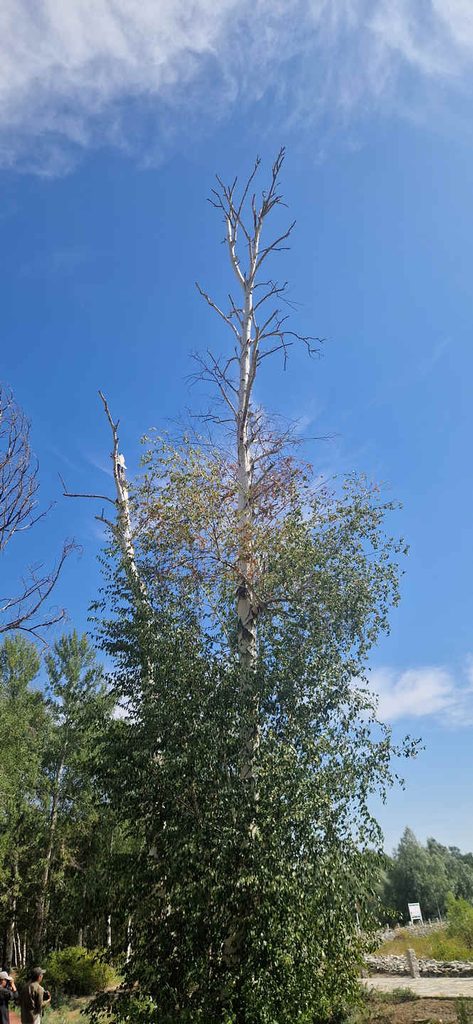
Its presence may be seen as an indicator of the quality of the forest here. Its diet is rather specialized, consisting largely of beetles and wood-boring larvae, which are particularly abundant in older forests with plenty of dead wood. As such forests have disappeared, the White-backed Woodpecker has become very rare in western Europe (HBW).
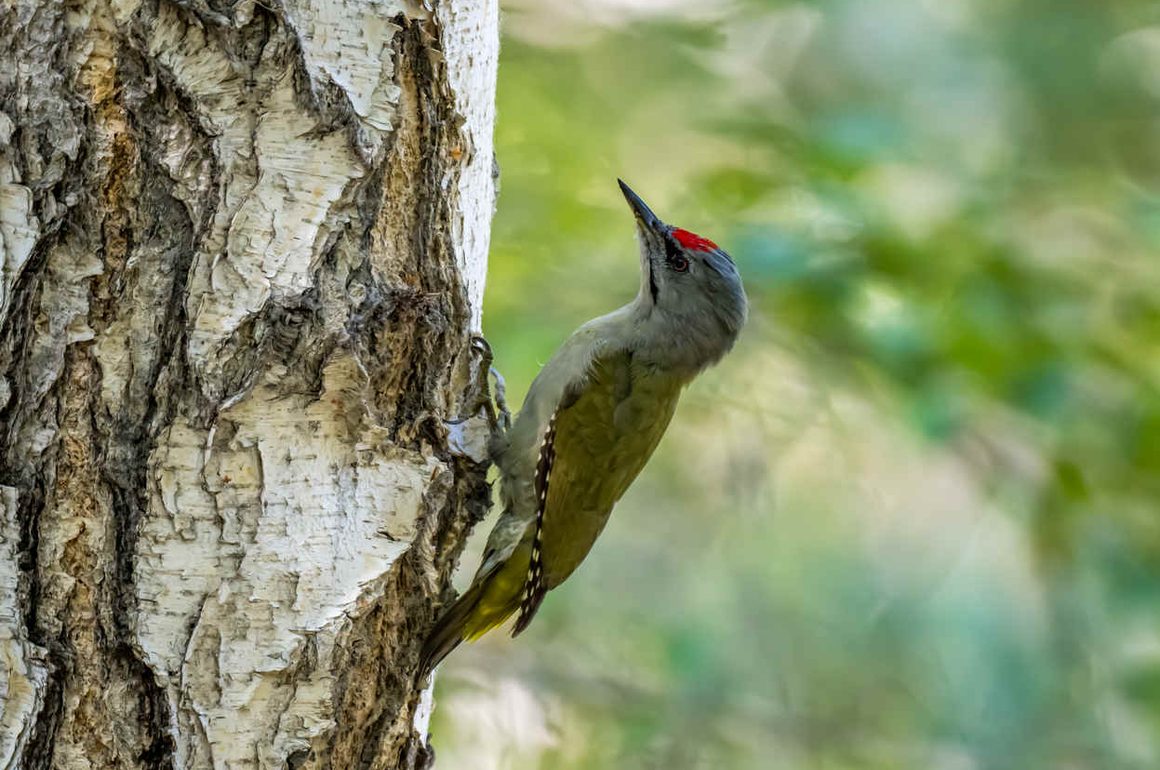
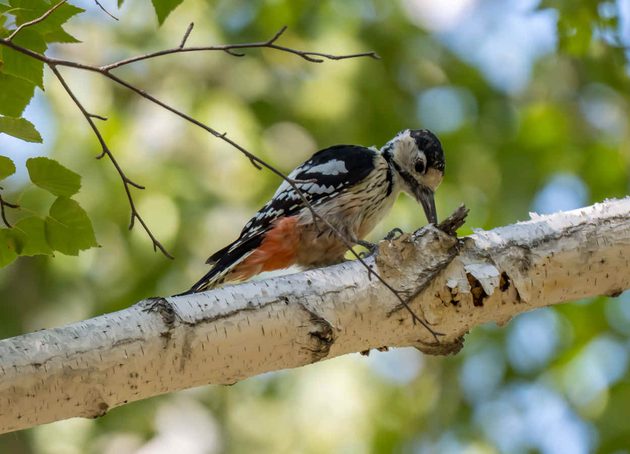
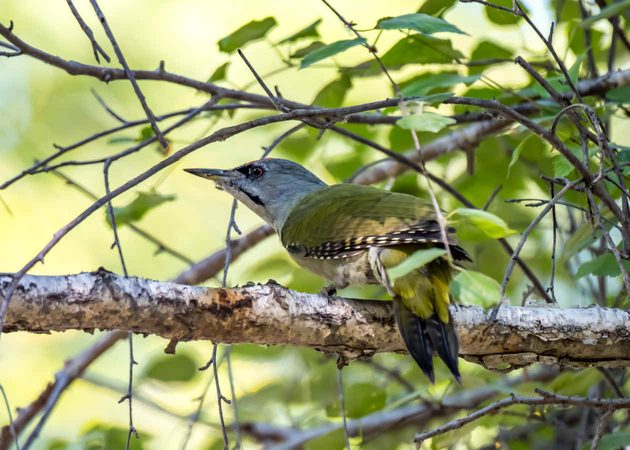
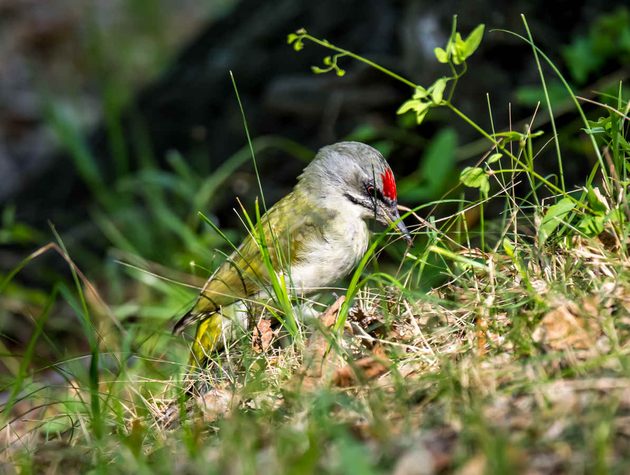
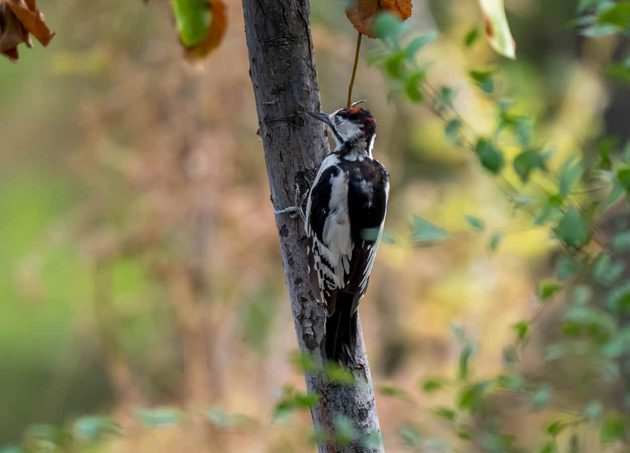
In contrast, the Grey-headed Woodpecker has a more varied — I am hesitant to say more catholic, as that feels a bit pretentious — diet. It includes ants, but also fruit, and the species even visits feeders.
Like the previous species, it has the typical woodpecker gender color coding; in this case, the red forehead indicates the male.
It also contributes to providing sustainable housing. Its old cavities are frequently reused, both by the woodpecker itself and by other birds. One study found that each old cavity in a living tree was, on average, reused 4.2 times, though only 1.6 times in dead trees (source).
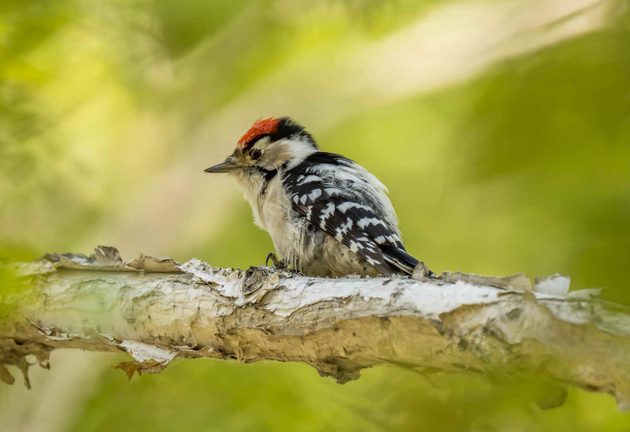
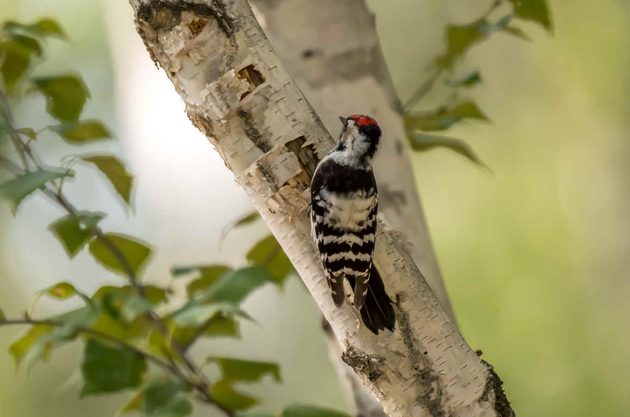
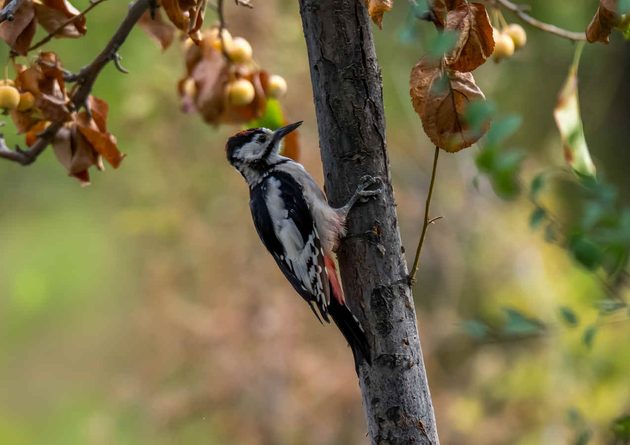
The Lesser Spotted Woodpecker has a distribution similar to the Grey-headed Woodpecker — a very wide range — and shares the color coding as well.
It is generally a bird favoring open, not-too-dry woodland. While such habitat may not be regarded as highly characteristic for Xinjiang, it exists, as this location shows, and thus offers habitat for birds more typically associated with northern Europe.
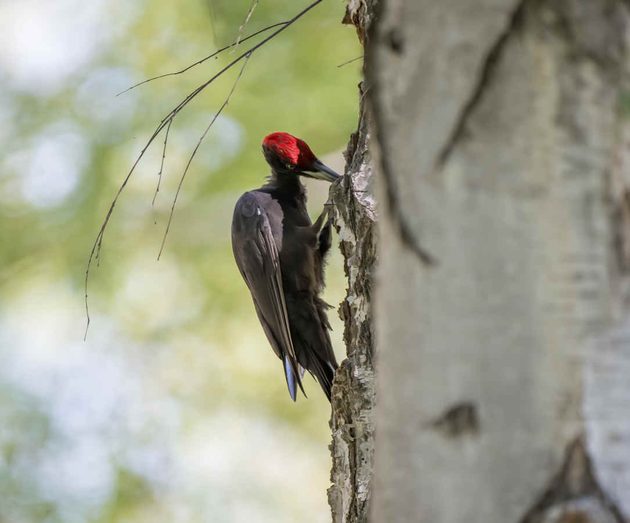
Finally — and for me the star of the woodpecker portfolio here — the wetland also hosts the Black Woodpecker. I was so excited about seeing it (one of my top targets for going to Xinjiang) that there will be a separate post on the species.
I saw one more woodpecker in Xinjiang, though not in this forest. For the White-winged Woodpecker, Xinjiang is fairly central within its Asian range. Maybe that is the reason why HBW calls it a little-known species.
And perhaps it is also the reason why it was previously considered Near Threatened, while now being classified as Least Concern, after it became clear that it is common within much of its range. In fact, I saw it at several other locations in Xinjiang.
Written by Kai Pflug
Kai has lived in Shanghai for 22 years. He only started birding after moving to China, so he is far more familiar with Chinese birds than the ones back in his native Germany. As a birder, he considers himself strictly average and tries to make up for it with photography, which he shares on a separate website. Alas, most of the photos are pretty average as well.
He hopes that few clients of his consulting firm—focused on China’s chemical industry—ever find this blog, as it might raise questions about his professional priorities. Much of his time is spent either editing posts for 10,000 Birds or cleaning the litter boxes of his numerous indoor cats. He occasionally considers writing a piece comparing the two activities.













Leave a Comment