

By Tania Dey
Tania Dey is an academic person specialising in chemistry, materials, and nanotechnology, with 20 years of post-PhD experience in North America and Europe, currently relocated to India. She is also an amateur photographer with a great passion for nature. She can be reached at taniadey@hotmail.com
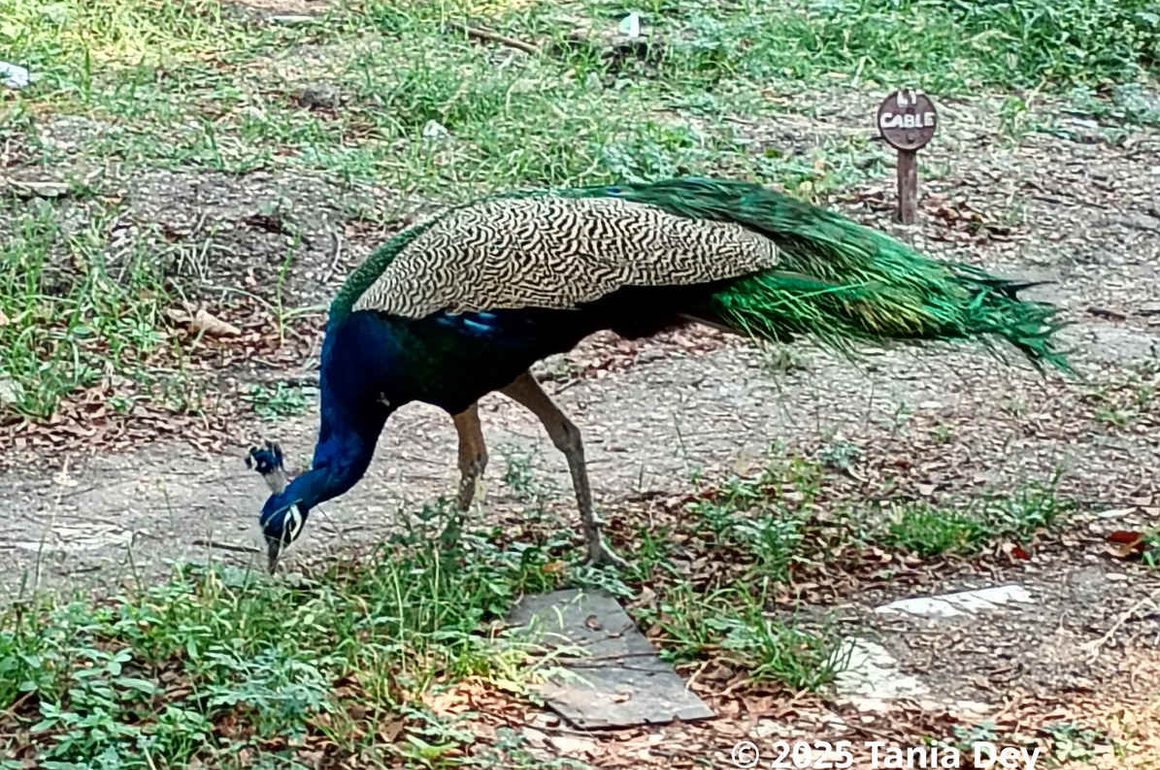
Here is a quiz for you. What is the national bird of India? Yes, you guessed it right. It is the peacock, that majestic-looking huge bird (Photo 1). At least for this bird, you do not need a zoom camera, and they come close to you too. Technically, they are called the Indian Peafowl (Pavo cristatus), which covers both the male (peacock) and female (peahen) versions. It is only the males who have an iridescent blue-green color and a gorgeous long tail with eye-like decorations. As seen in various other birds, this is to attract the females. On these occasions, you may see them spread their tail like a fan. On the other hand, females have a dull brown color with no tail (Photo 2).
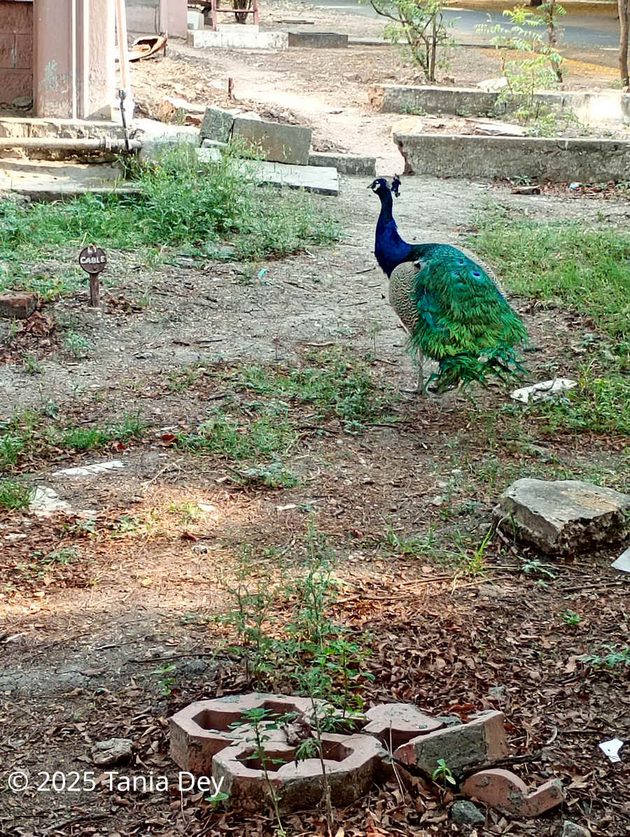
Photo 1: Peacock, the national bird of India.
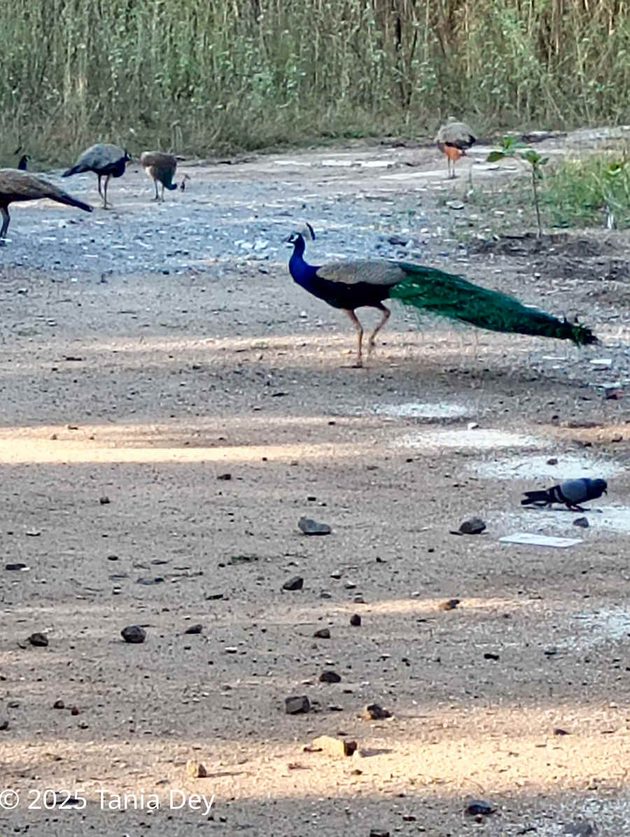
Photo 2: Peacocks and peahens.
Peacocks are historically associated with Rajasthan, a desert region in the middle of India. But there are peacocks native to South India as well. Interestingly, they have taken shelter inside college, university, and research institute campuses, and they seem to be quite happy with it. The caretakers feed them seeds, grains, and insects twice or thrice a day (Photo 3 and Photo 4), and in return the peacocks keep the campuses snake-free. It is all about give and take.
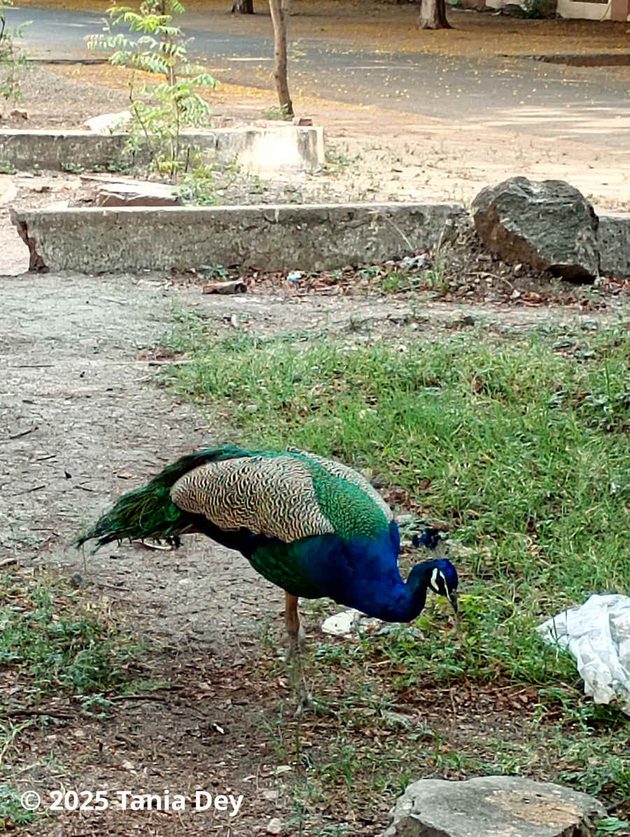
Photo 3: Peacock eating grains.
Don’t think peacocks are inclined toward higher education. Sprawling, loss of natural predators, and habituation are some of the reasons why peacocks are so abundant on college campuses. Oftentimes, the campuses are densely populated with trees, scrublands, grass fields, and agricultural patches offering an ideal mix of roosting trees and foraging grounds away from heavy vehicle traffic. Research by the Sálim Ali Centre for Ornithology and Natural History (SACON) in Coimbatore shows that a sharp decline in natural predators like jackals has contributed to the peafowl population skyrocketing. Over the years, peacocks have undergone behavioral change called habituation, losing their fear of humans and getting easy access to campus food.
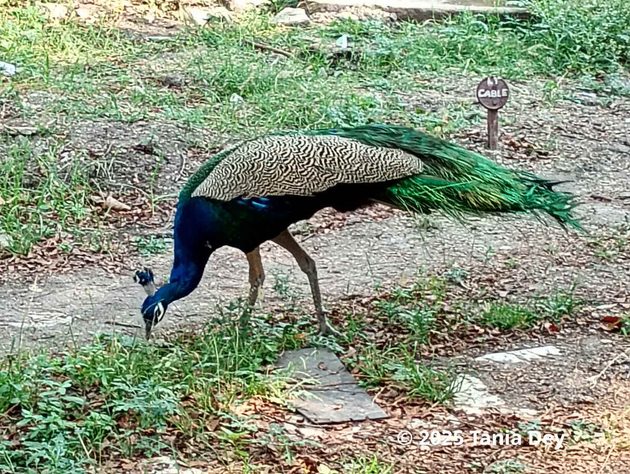
Photo 4: Peacock searching for insects.
It is not uncommon to find handicraft souvenir items in India depicting peacocks. This may include brass wall plates with engraved peacock designs, small figurines made of wood or colored metal (Photo 5), stone-studded brooches, key rings, embroidered bags showing typical Indian animals (Photo 6), peacock motifs in sarees (Photo 7), seashell artworks (Photo 8), paintings, and so on. You may wish to collect some of these keepsake memories when you are here.
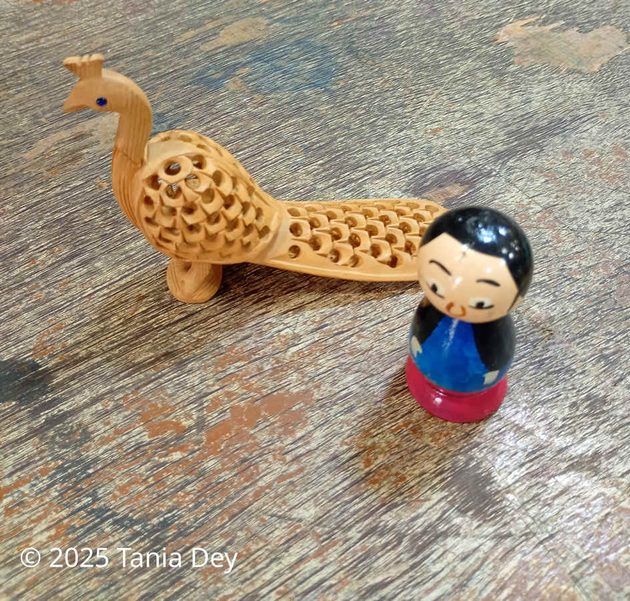
Photo 5: Wood-carved peacock sitting beside a Channapatna doll.
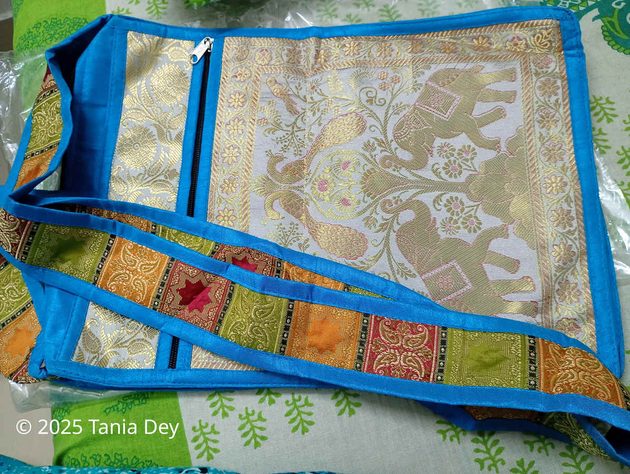
Photo 6: Embroidered bag showing typical Indian animals like peacocks and elephants.
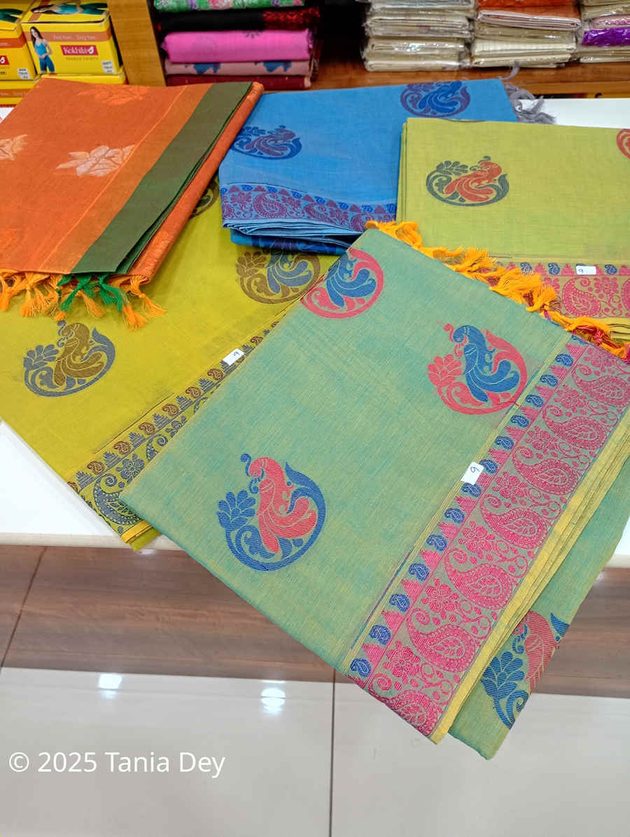
Photo 7: Kovai cotton sarees with peacock motifs.
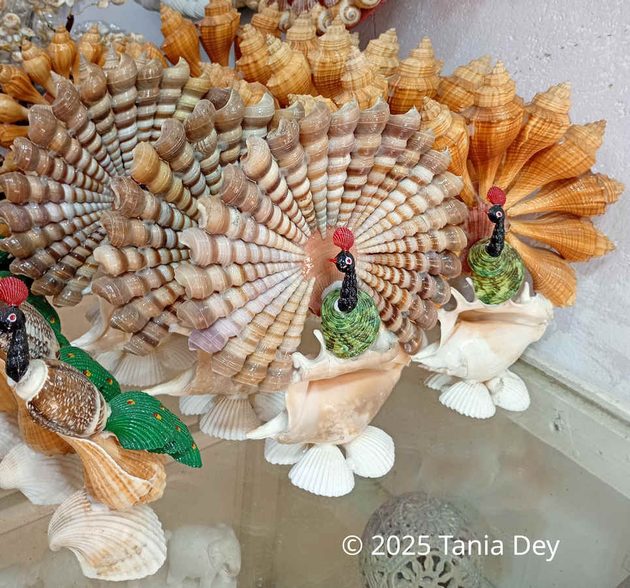
Photo 8: Seashell artwork depicting peacocks.







Leave a Comment