

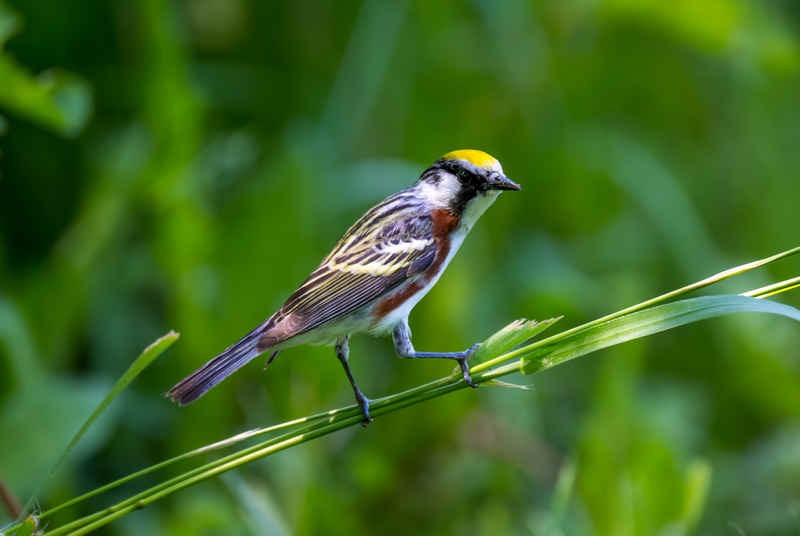
Full disclosure: I am not familiar with North American birds at all. So, I will probably write quite a few posts excitedly discussing species that our readers in the US find boring as hell. Well, you are more than welcome to come to Shanghai and talk about your fascination with Light-vented Bulbuls and Oriental Magpie-robins …
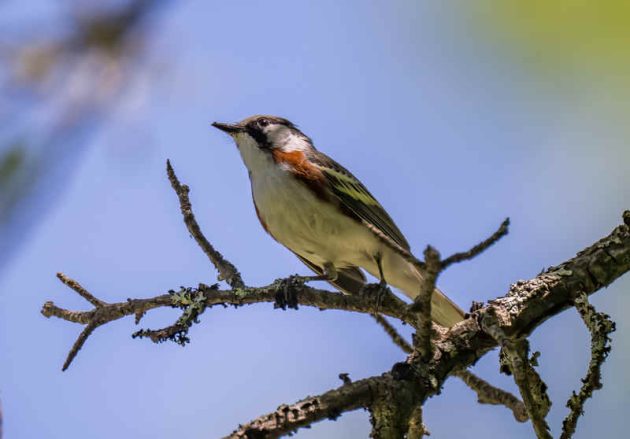
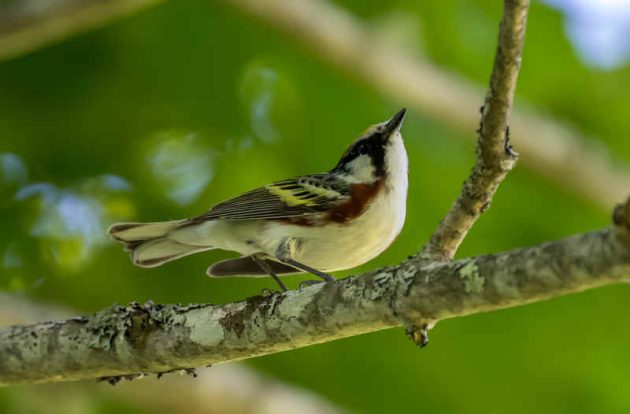
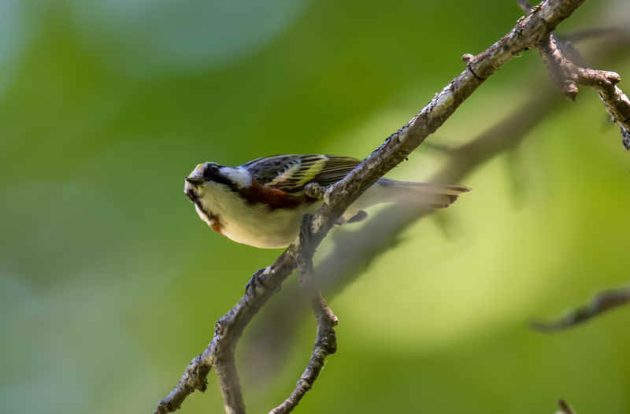
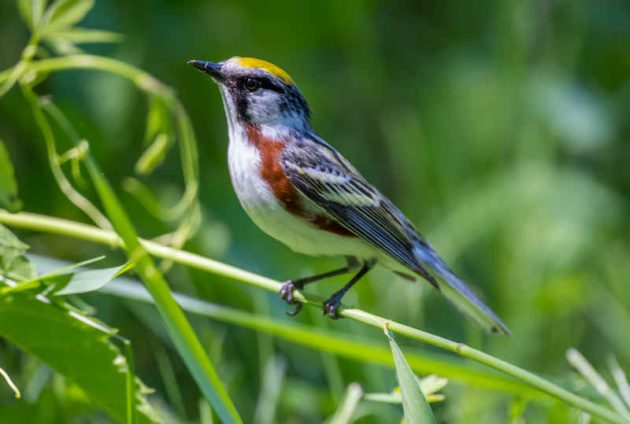
The Chestnut-sided Warbler was a particular surprise to me – by the looks of it, a bird I would have located somewhere in the neotropics (where, admittedly, it wisely spends the winter), not in the then rather frigid Maine.
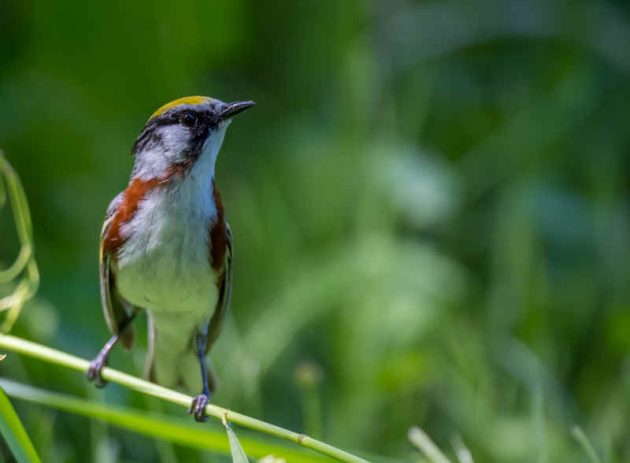
It is an attractive and interesting-looking bird – or, to quote James Giroux: “Unlike many warblers that are precisely ‘painted’, the Chestnut-sided is a splotchy collection of color – more like an abstract painting. It’s the Jackson Pollock of warblers.”
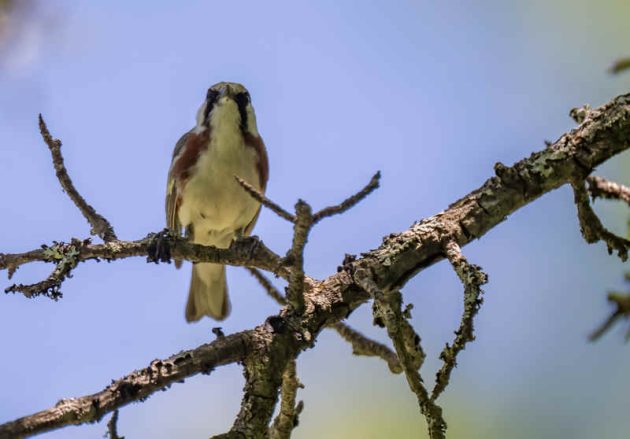
Apparently, it has benefited dramatically from human activities in the US, preferring scrubby habitats such as those in suburbs or cemeteries (where I took my photos) to primeval forests (source: HBW).
It may also benefit from climate change – one paper states that it now (after 1970) arrives seven days earlier in spring in a specific region than before 1970.
In the HBW profile, it is interesting to see what is listed as priorities for future research: “To define where songs are used and under what conditions, variability in the use of songs needs more study. The extreme stereotypy of the AE song category raises several interesting questions. By what means is the stereotypy of the AE songs enforced, and what is the significance of this?”
Of course, for most global bird species, not nearly enough information is available to even phrase such follow-on questions. And of course, the HBW profiles for these birds do not even have a “Priorities for Future Research” section …
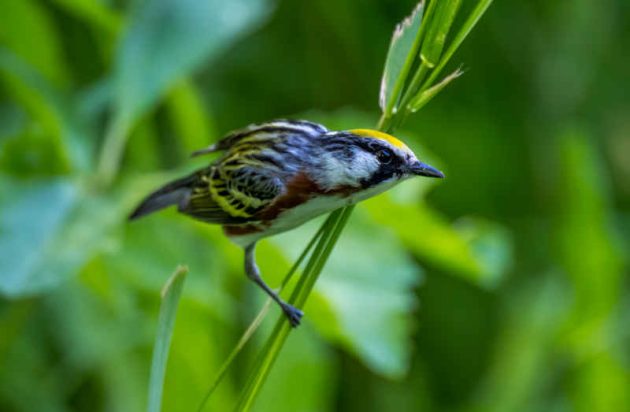








In spite of living in the US, I really enjoyed this article! Anybody who’s interested in birds would never get tired even if they’re in your backyard. I live in Florida, so I only see them passing through and rarely get to see them in the magnificent breeding plumage that you presented in this article. Thank you.