
July is a great time to visit Svalbard, especially with the rest of the world’s south boiling under heat domes and fighting horrific wildfires. Svalbard is cold (30-35F degrees), sunny (all 24 hours) and for the most part not too windy. Long, sweeping views and no trees make for good visibility. Good birding conditions.
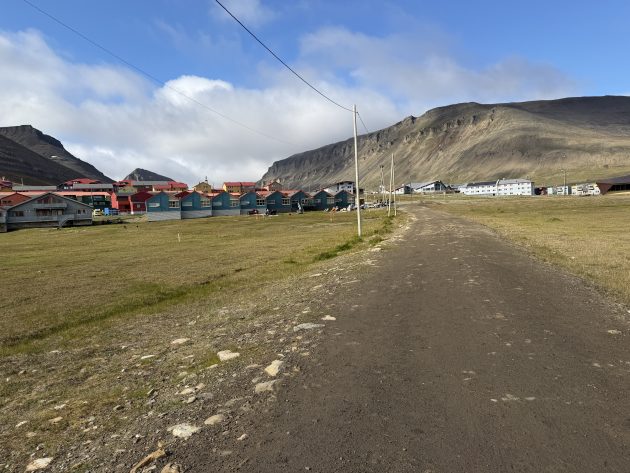
Longyearbyen, Svalbard
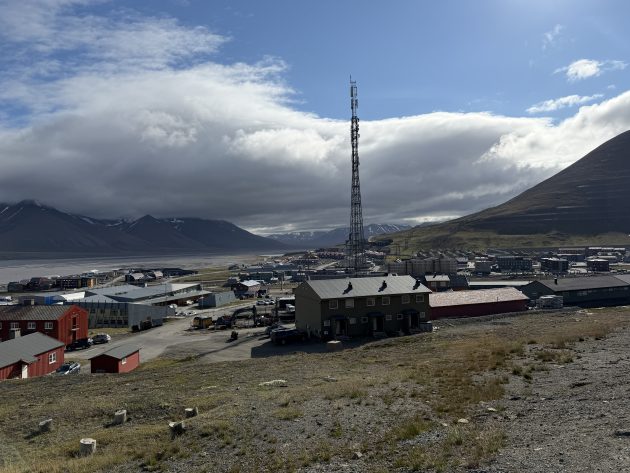
Longyearbyen, Svalbard
Arriving in Longyearbyen, I was primed for an adventure spotting and observing many new bird species. My head was full of possibilities of what I could see and my life list growing. Well, after arriving I was surprised to learn that there are “only” around forty-five bird species that are somewhat regularly seen around Svalbard. Most of these species are summer migrants coming north to breed. I had even seen most of these species already as they migrated past my home along the east coast of the United States’ mid-Atlantic. Embarrassed by my lack of usual pre-trip birding preparation, and while this trip was not a birding trip but a family one with a broader focus (although I never stop birding, so there is that), I decided to try to slow bird my way around Svalbard and enjoy whatever species I saw, focusing less on species count and more on the bird itself. This is a new challenge, requiring a change in my mindset that I have to intentionally do.
Within minutes of arriving at Longyearbyen, Svalbard’s biggest town, I saw my first Svalbard bird – a Snow Bunting. Back home this bunting is a regular rarity (yeah, I don’t get that, but that’s what my local birder buddies say) that flies through in ones or twos, and maybe once in a great while, a little drift. It sports light rusty patches on its head, ears, and shoulders and has a white underbody. My first Svalbard Snow Bunting was a female in breeding plumage; more white, no real rusty patches, and a nice streaky back. This was my first time seeing this bunting in breeding plumage. I spent some minutes admiring her foraging and watching how meticulously she pecked at the permafrost looking for whatever she could eat. Exciting!
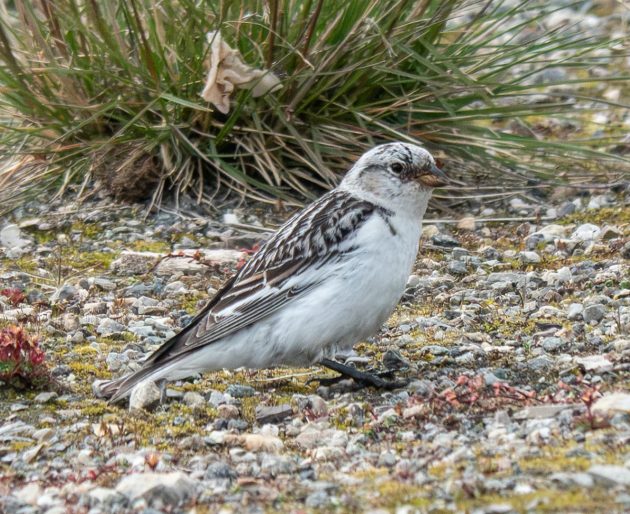
Snow Bunting, breeding female, Longyearbyen, Svalbard, July 2026
A secret in Longyearbyen is that there is nice bird hide with a cozy, warm, comfortable interior and great windows looking over the fjord. We did not know about this hide until I saw a camera and binocular laden man approaching, who kindly pointed to a nearby blue shed perched over an embankment facing the Adventfjord. That is the bird hide, have a look he told us. We had been standing within steps of it, but it had been obscured by a large ramshackle shed. Ack, curse my lack of bird pre-planning! This “Loffhuset” is a nice hide that serves as a research hide, as well as a hide open for visitors. It is a must visit for anyone coming to bird in Longyearbyen.
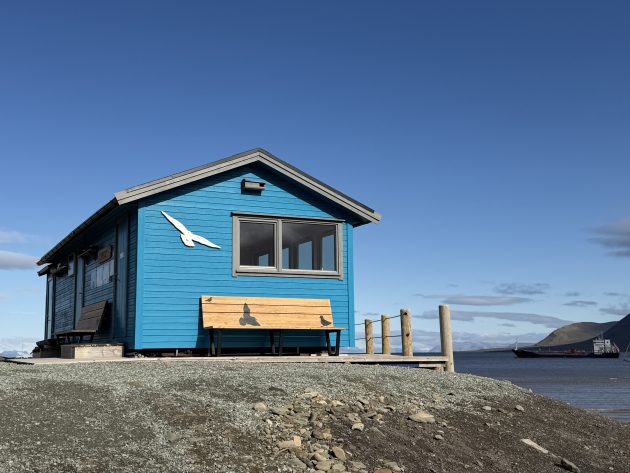
Longyearbyen bird hide “Loffhuset” overlooking Adventfjord
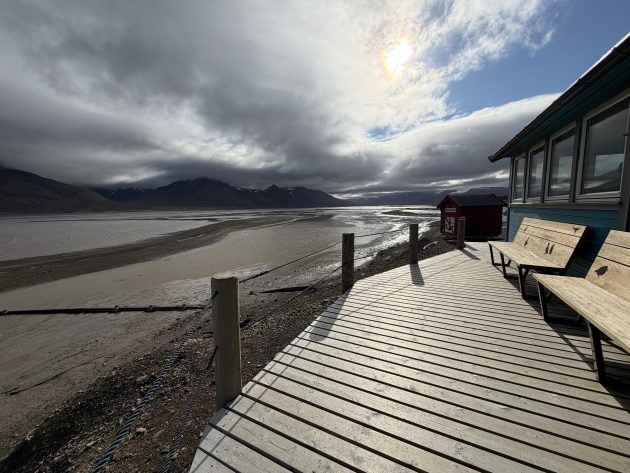
Nice wind-protected outdoor deck of the hide facing the Adventfjord.
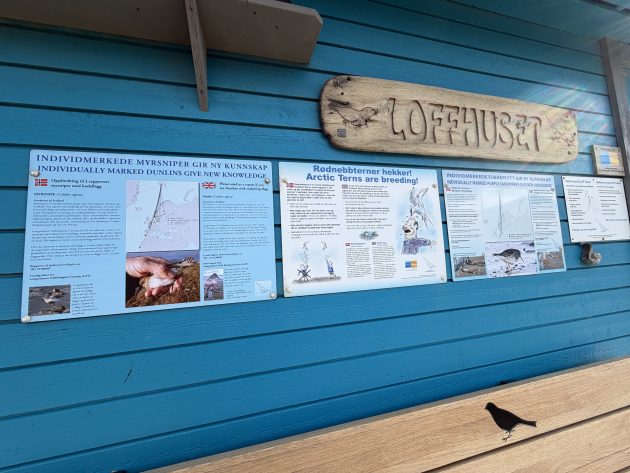
Information on the bird banding projects posted on exterior of the Loffhuset hide: Dunlin, Arctic Terns, and Purple Sandpiper
From the hide we saw Purple Sandpipers, Common Eiders, Dunlin, Glaucous Gull, Arctic Terns, and more Snow Buntings. A good scope would have been nice to have to watch the smaller birds as they hunted around the tide pools and fjord shoreline. We didn’t have one so we spent more time watching the terns flying over the fjord and the Common Eider ducks bobbing in the waves. While the windows in the hide don’t open, they are clear and provide great visibility and protection from freezing wind. There are nice benches and a table to sit and look out over the fjord, as well as a lot of light, and enjoyable reading material about local birds.
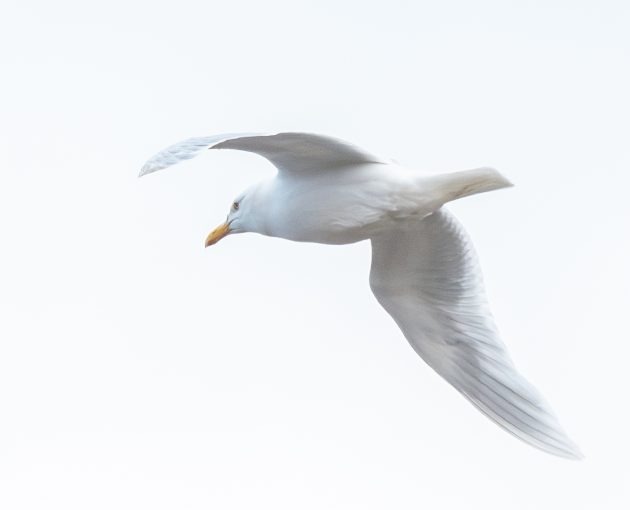
Glaucous Gull, Longyearbyen, Svalbard, July 2026
Walking around Longyearbyen we had been warned to stay within the town’s perimeter. If we wanted to venture beyond the town limits, one should have a rifle to ward off any polar bears that might be around. The rifles are to be unloaded while in town and registered with the Svalbard authorities. Having no issue with staying in town and owning no rifles, we ambled around the town roads and discovered a large hull of Barnacle Goose wandering along the town streets among the colorful houses. There were a few goslings and even a leucistic Barnacle Goose that refused to pose for photos.
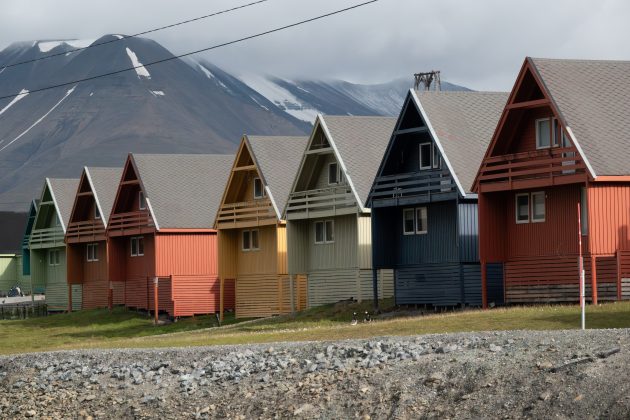
Longyearbyen houses, Svalbard
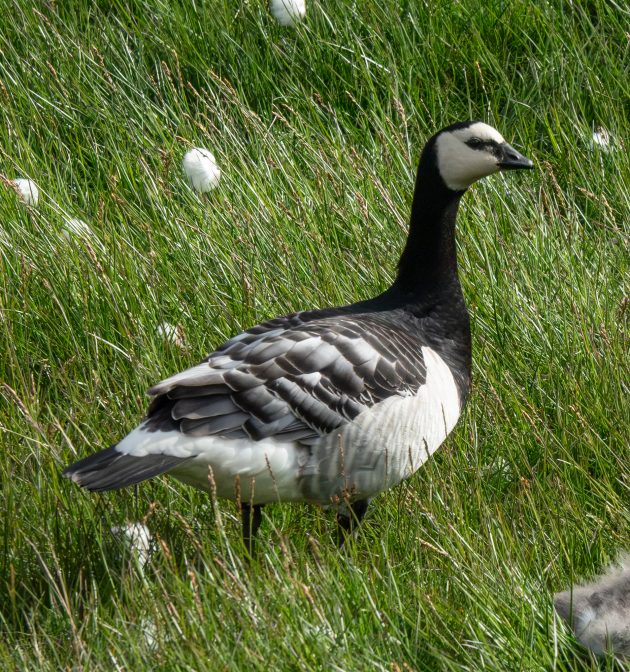
Barnacle Goose adult
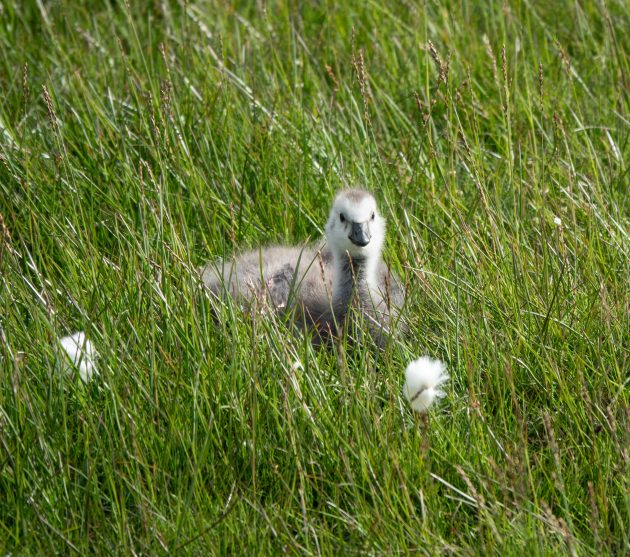
Barnacle Goose gosling
Higher along the town slopes, in front of the local church, we came across a large gaggle of Pink-footed Goose with many goslings. Eagerly eating their way along the grassy roadside, ignoring us completely, this first sighting of Pink-footed Goose was a thrill and delight. This species was a lifer and I felt that familiar, thrilling rush of a lifer! I was so excited to tick this species, but I remembered that this was slow birding time so I forced myself to slow down and enjoy them…slowly… as the geese fed and relished the sun.
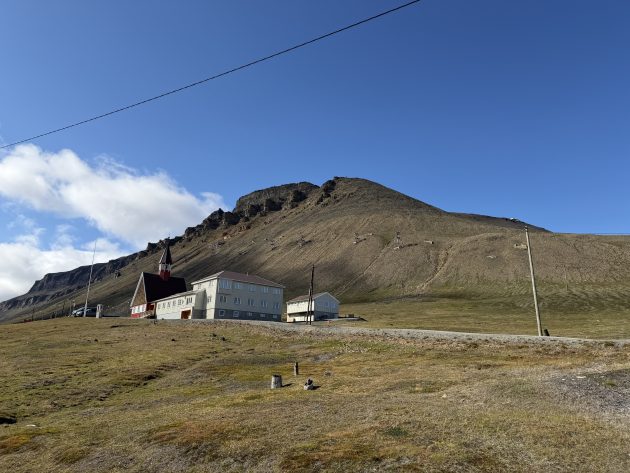
Church in Longyearbyen, Svalbard
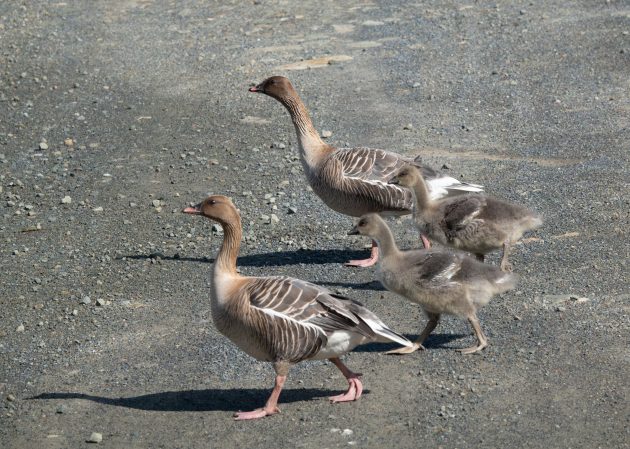
Pink-footed Goose and gosling
We returned to our lodging to find a couple of Black Guillemots floating below our ship deck and Arctic Terns circling above harassing a Parasitic Jaeger over their dinner. I watched them as they existed in this arctic, dry, beautiful, cool place. I did not know it at the time, but these three species were going to become my daily friends as we circumnavigated Svalbard.
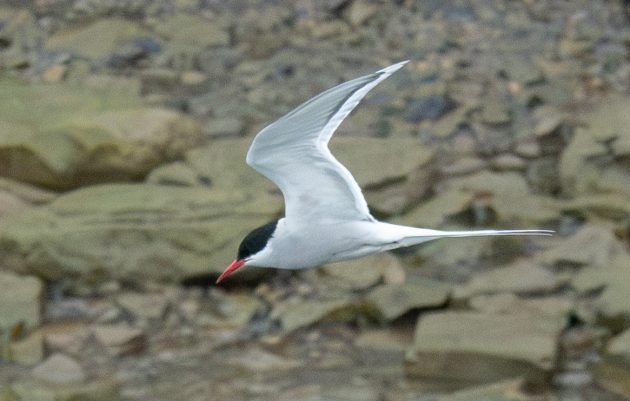
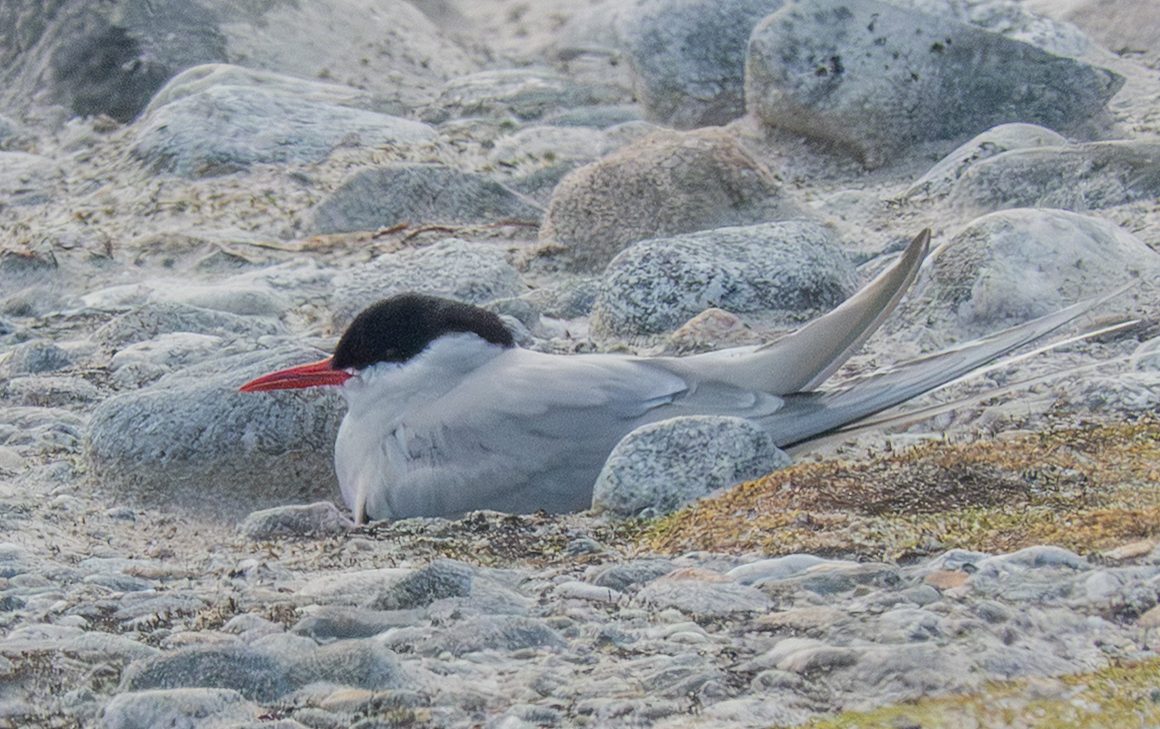
Arctic Tern
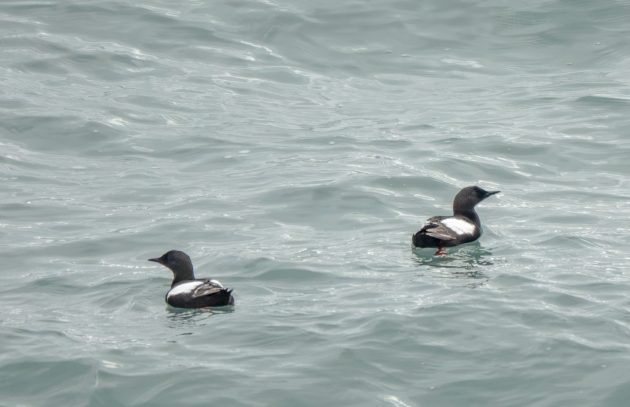
Black Guillemot
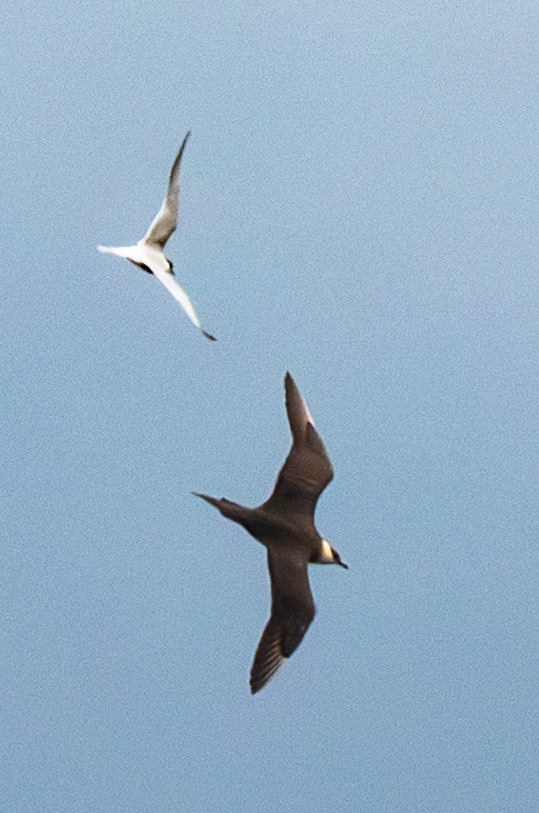
Parasitic Jaeger and Arctic Tern





Great job! Love seeing a place I’ve never even heard of before.
Great read. I hope that there will be a Part II (and did you see any polar bears?) Svalbard barnacles winter on the Solway in west Scotland, where leucistic birds are reported annually.