

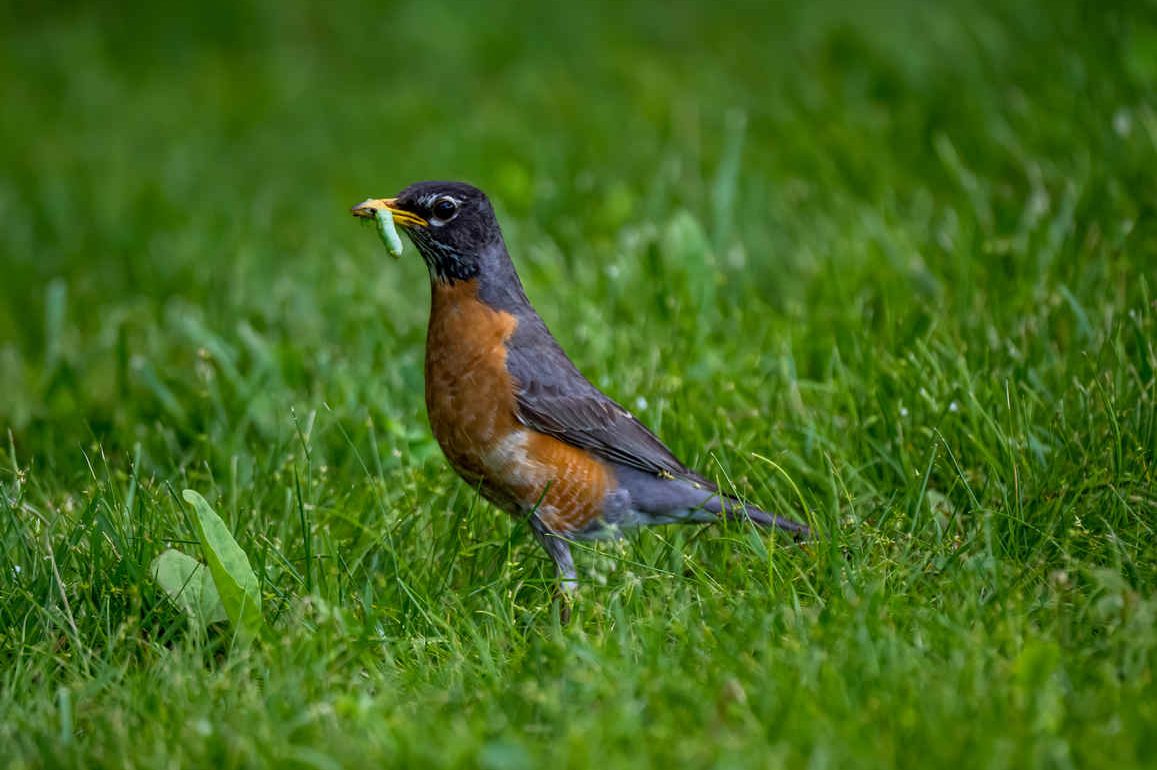
I am still somewhat bitter for never having gotten recognition for coming up with the abbreviation RINO for the American Robin (Robin In Name Only).
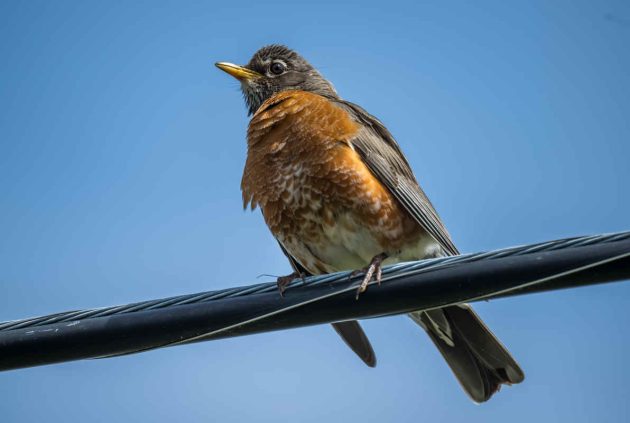
Apparently, befuddled and likely still seasick from a long trip on a small, possibly leaky, and definitely uncomfortable ship, immigrants from Europe failed to notice the substantial differences between the European Robin and the American cover version, such as the different size, color, weight, and song.
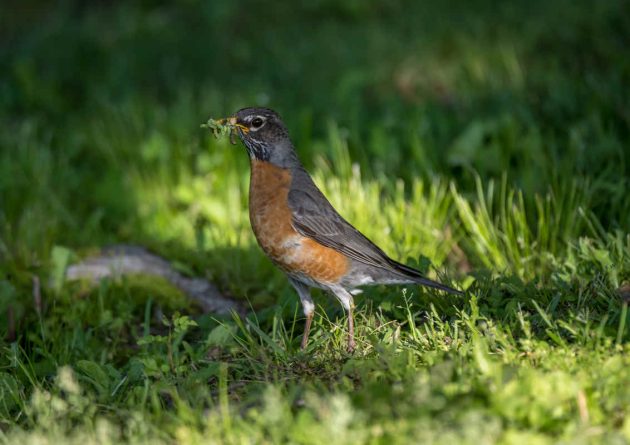
Admittedly, there are also some similarities – both are birds, I guess (for a more differentiated view, see here). But enough to confuse the two, as described here? Only because the two birds seem to have the same function on Christmas cards?
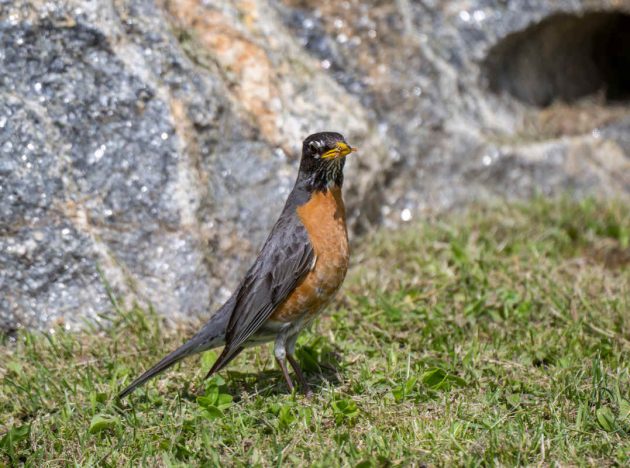
So, let’s focus on the American version. The scientific name Turdus migratorius indicates that a large share of the population is migratory, but (in line with the pretense of being a robin in the common name) over the past two decades, more and more robins have skipped migration altogether and thus prove their scientific name wrong (source: HBW).
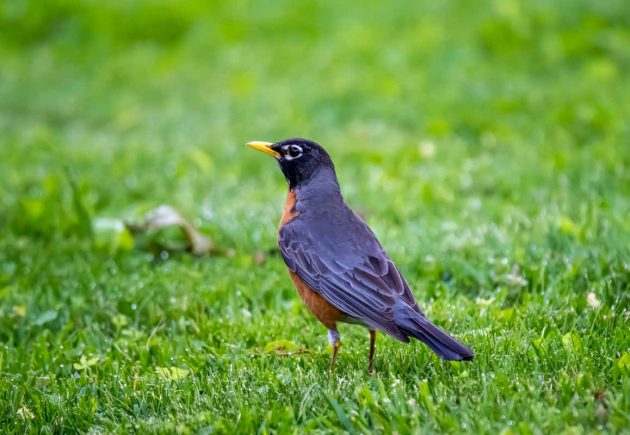
Given that buffets are more popular in the US than elsewhere (source: ChatGPT), it is perhaps not surprising that American Robins were also the subject of buffet-style experiments. The birds were offered a three-way choice of white mulberry, Bella honeysuckle, and red-osier dogwood fruits. It seems that honeysuckle is the equivalent of green salad – in the trial, 15 of the birds preferred mulberry, 2 preferred dogwood, while 0 preferred honeysuckle.
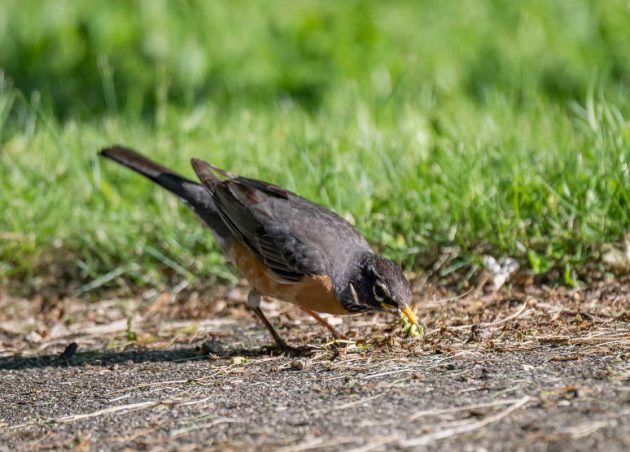
If I were a student or professor at Eastern Washington State University, I might worry about the future funding of my institution. A recent poster published by some of its researchers found that county-level changes in American Robin abundance are not correlated with increased wind turbine densities across Washington state. Surely the university’s dean hopes the country’s chief windmill expert never comes across this paper.
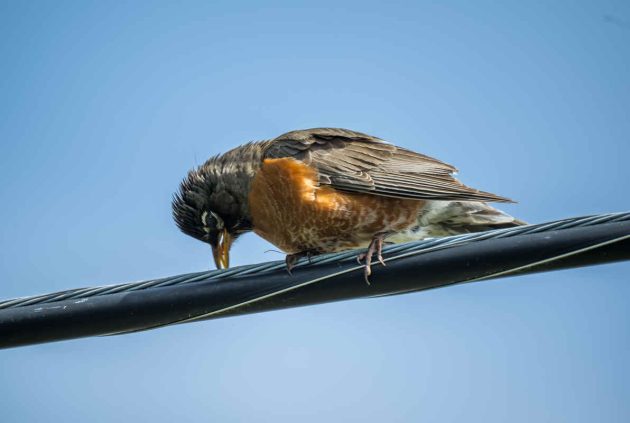
Meanwhile, in the attractively named journal “Integrative and Comparative Biology”, it takes six researchers to turn the obvious possible reactions of American Robins to wildfire smoke (do nothing, change behaviour, leave) into a “tiered ‘Stay, Shift, Go’ framework”. Don’t you love it when ornithologists start sounding like management consultants?
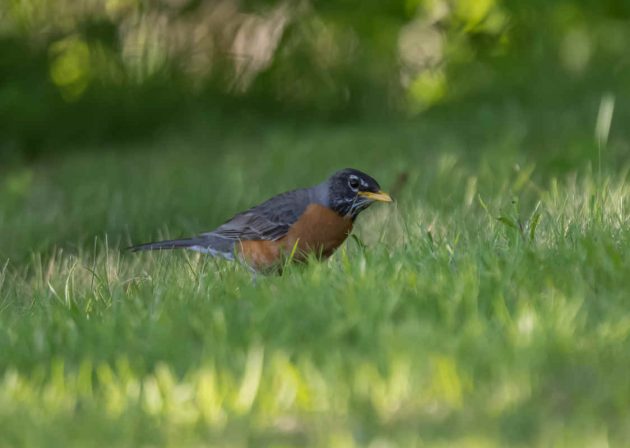
What would those management consultants recommend to improve nestling productivity? Maybe feeding them at night? Apparently, this is indeed being observed in locations with sufficient artificial light.
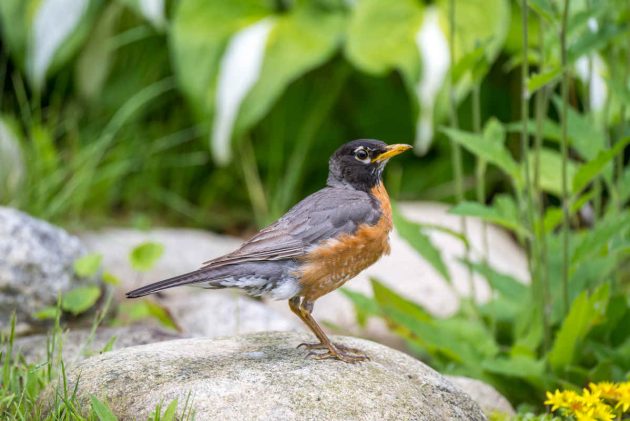
Other ornithologists borrow directly from management consultants and the like, using methods such as conjoint analysis (a method I have used myself in analyzing the buying factors of chemical customers). Here, it was used to determine which factors most strongly influence the rejection of cowbird eggs by American Robins (which they apparently do with great success).
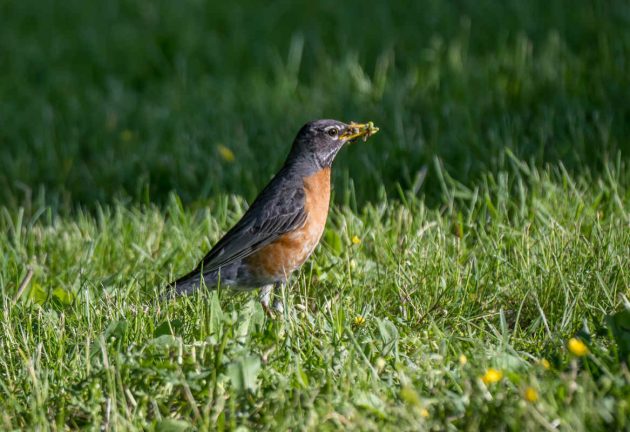
The researchers found that white model eggs were 50% more likely to be rejected relative to blue eggs, small-round eggs were 39% more likely to be rejected compared to large-elongated model eggs, and maculated eggs were 19% more likely to be rejected compared to immaculate eggs.
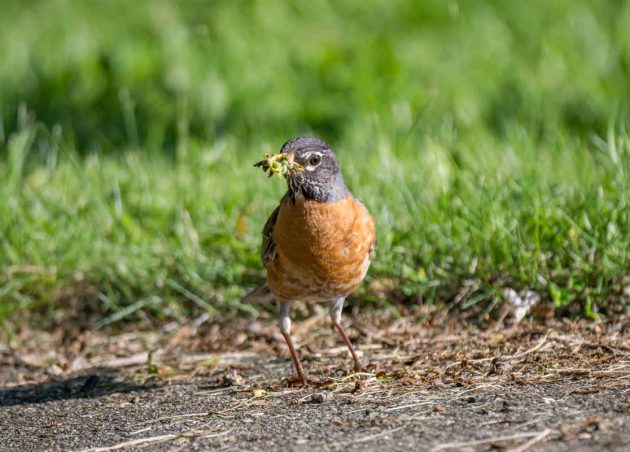
Finally – as I have been watching the TV series Loudermilk lately, which features a dry alcoholic rock critic as its main character – a warning about the dangers of alcohol. A mass mortality event of American Robins in Virginia was most likely caused by the consumption of fermented holly berries. Don’t drink and fly.





Leave a Comment