

Birding in Trinidad & Tobago can be reasonably done all year, there is no need to limit it to the northern winter as it has traditionally been. If T&T is indeed to be considered as the ideal introduction to Neotropical birding, it should follow that birds can be seen throughout all seasons. The equatorial nature of the islands, combined with their convenient positioning at the junction of the Caribbean arc and the northern coast of South America gives them an added boost during August through September – while many of the forest birds are undergoing their moult.
When folks ask me (it happens often) what’s the best time of year to go birding in T&T, I always struggle. Invariably, I respond by calling one or two of the months in the first half of the year. Usually April, as it’s my birth month and has always consequently been my personal party month. This combined with the fact that most of the people asking me these questions live in either the US, UK, or Europe. I suspect that few of these people are looking forward to spending thousands of dollars to fly somewhere else to plod through rice paddies scanning for sandpipers, or (worse) break their necks looking at the undersides of winter-plumaged warblers in the upper canopy.
The wildcard that gets dealt on some of my birding trips in T&T involves some of my favourite birds: seabirds. While we don’t do true pelagic cruises that are at sea for days at a time, a boat that charts the right course at the right time of year can yield spectacular results.
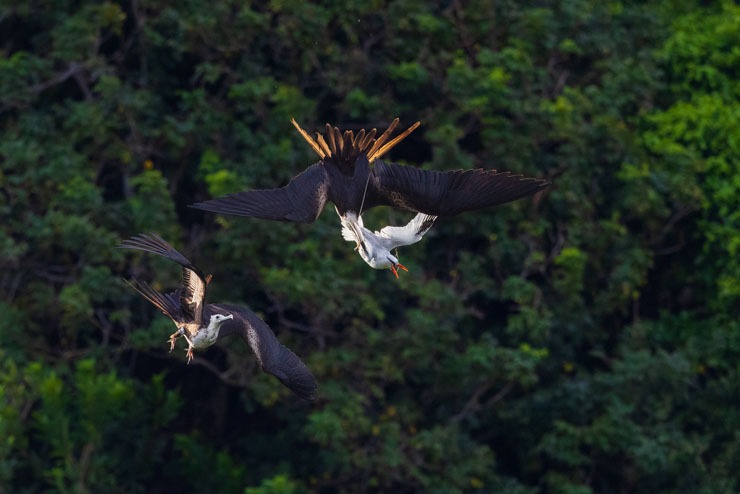
By far the most famous of these is the showstopping Red-billed Tropicbird. These angelic seabirds run the gauntlet of several thousand Magnificent Frigatebirds as they attempt to raise their young on the cacti-strewn cliffs of Little Tobago Island, just off of Tobago’s northeast coast. Countless people have been mesmerised by the high-octane aerial drama over the years, most everyone rooting for the much smaller tropicbirds.
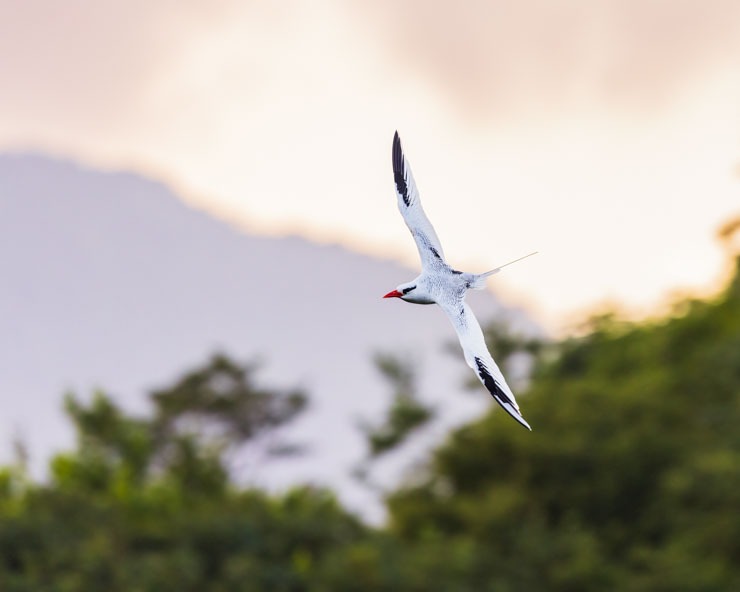
Red-billed Tropicbird
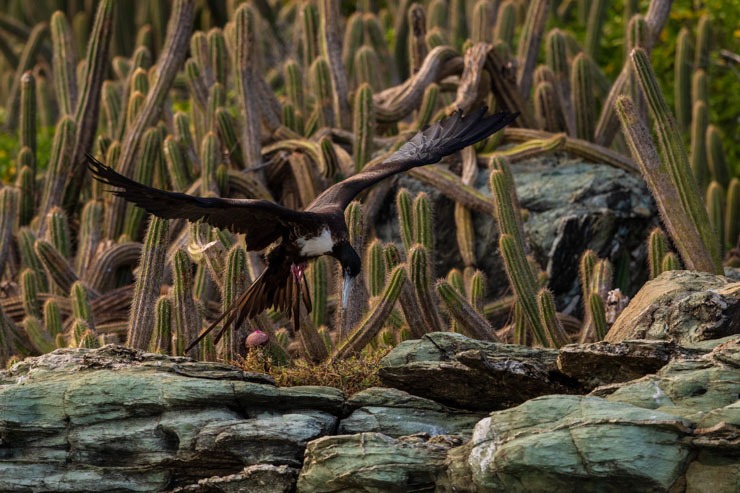
An adult female Magnificent Frigatebird picks nesting material.
The frigatebirds easily fit the description of villian – shrouded in glossy black, their giant wings and forked tail contrast sharply with the ethereal purity and grace of the tropicbirds. Clad in bright white with elegant tail streamers, the tropicbirds make the perfect hapless protagonist to pull on everyone’s heart-strings. Frigatebirds are portrayed as mischievous, lazy, and oftentimes plain evil in this saga, and I’m certain that if given the opportunity, some folks would go to great lengths to chase the marauding frigatebirds away to “save the innocent tropicbirds”. Or maybe I’ve been reading too many Facebook comments…
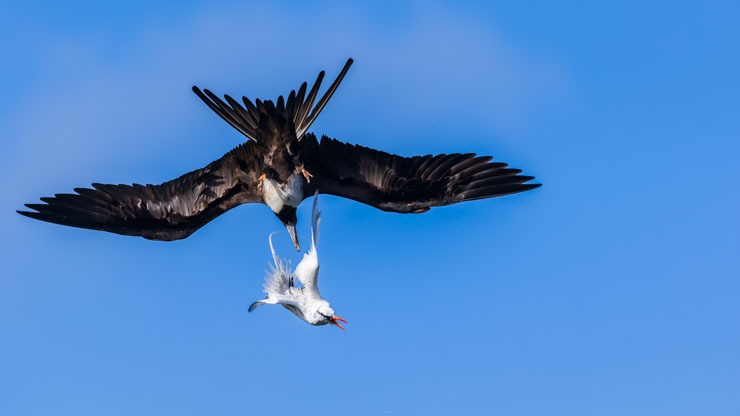
The frigatebirds accelerate without even a flap of their massive wings, entering into a stoop that can easily recall a falcon. Victims are grabbed, up-ended, and shaken, until they pay their taxes.
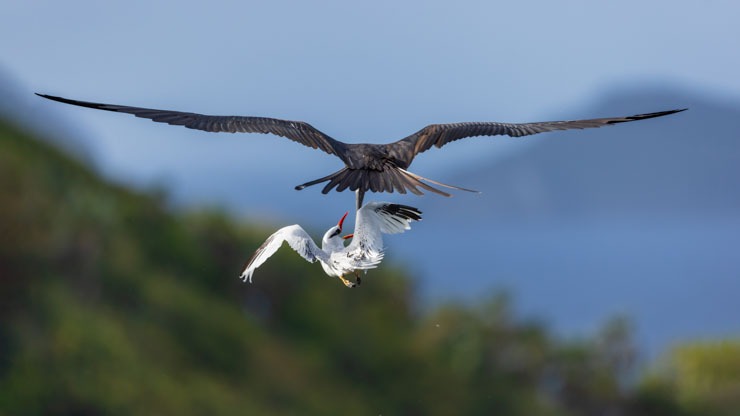
Tropicbirds are very often grabbed by their most prized and beautiful accessory: those tail streamers.
Frisking your neighbours is learned behaviour; one must know how to identify a laden target in the first instance. Only then do stealth and speed play their part.
The truth is that frigatebirds do often get a bad rap for being thieves – they are indeed proficient kleptoparasites – yet this strategy only comprises less than half of their usual methodology of food acquisition. They are primarily self-feeders, foraging above large predatory fish such as tuna that force baitfish to the surface. Flying fish form a significant portion of their diet as well, doubtlessly because the fish take to the air in an attempt to escape threats from below. In fact, one of my favourite scenes in wildlife cinematography was filmed in these very waters off the coast of Tobago.
The supporting cast is fairly varied, with Brown Booby and the slightly smaller Red-footed Booby mostly avoiding the crosshairs of the frigatebirds. I’ve seen Magnificent Frigatebirds stealing nesting material from Red-footed Boobies more than I’ve seen them hounding them for regurgitated fish.
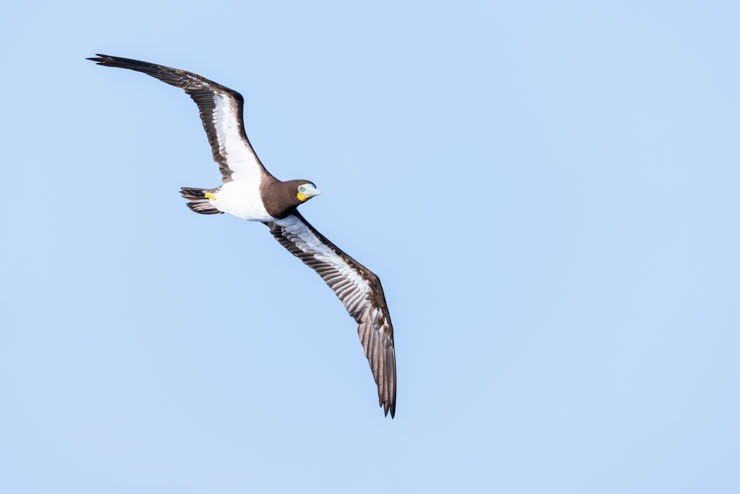
Brown Booby
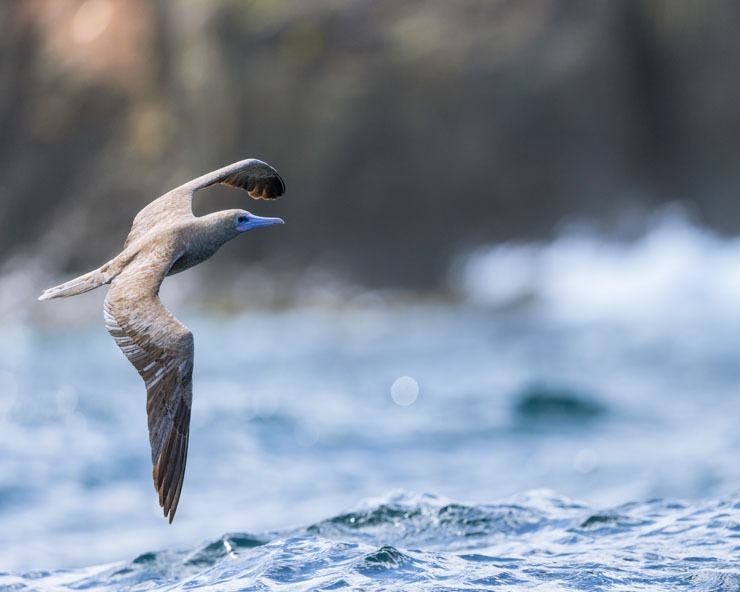
There are three colour morphs of Red-footed Booby around these islands, by far the white-tailed morph is the most common, followed by an all-brown morph, with a few all-white morphs present as well.
Laughing Gulls are familiar to many from other, more accessible coasts, but journey to these rocky offshore islets to breed each year. Donning their finest hoods and applying rich scarlet lipstick, they toss their heads back in raucous laughter. Surely, the jokes must be on the humans incapable of flight.
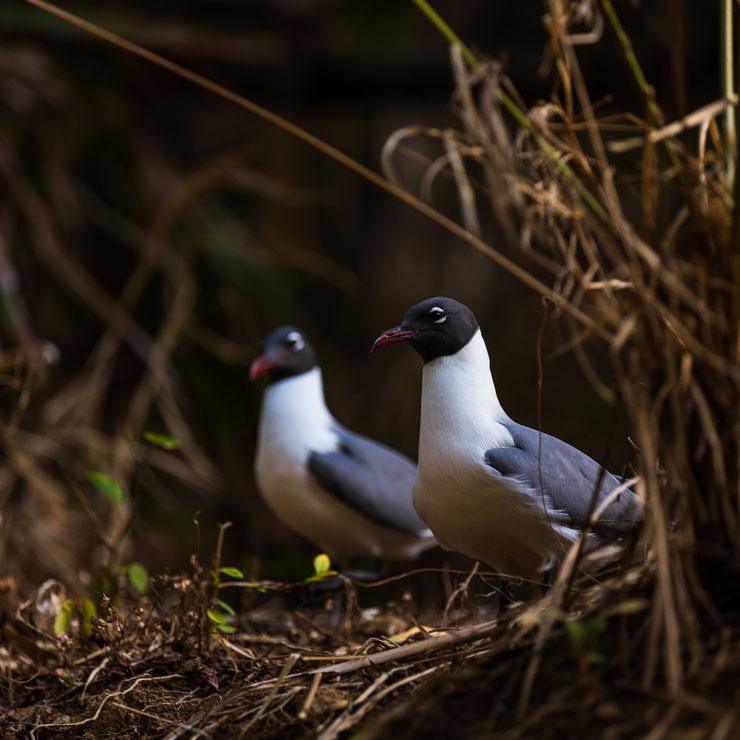
Laughing Gull
Further afield, smaller rocky outcrops provide suitable nest sites for Bridled Tern, Sooty Tern, Roseate Tern, and Brown Noddy. Ardent searching is sometimes necessary, as not all of these may be active or vocal – except Sooty Terns maybe, who tend to make their presence known.
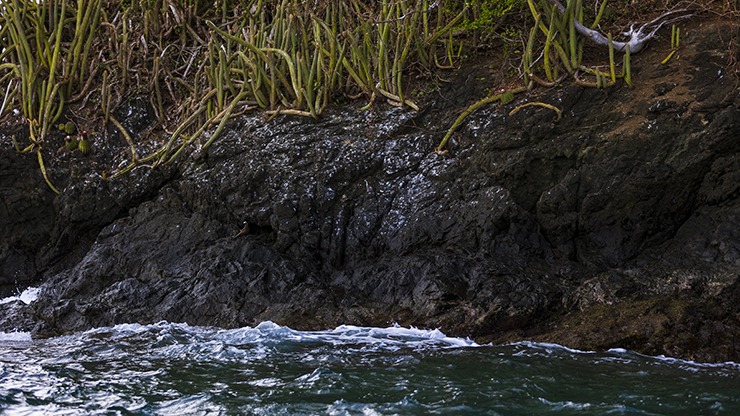
The white cap on a Brown Noddy can easily look like a splotch of guano! Can you find it in this photo?
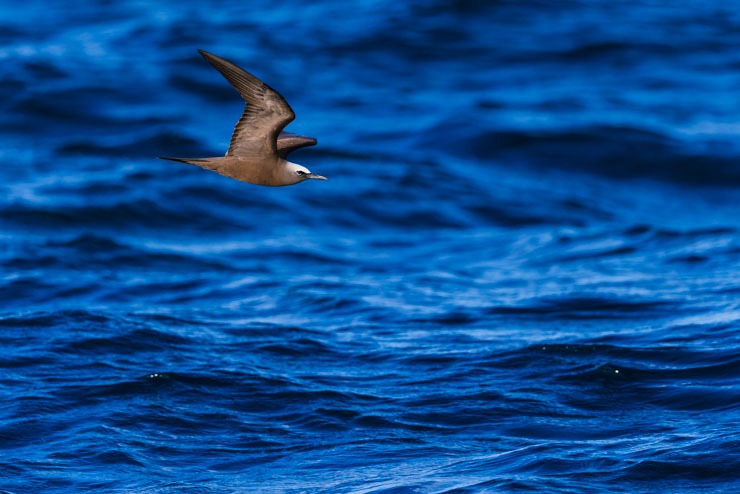
Brown Noddy
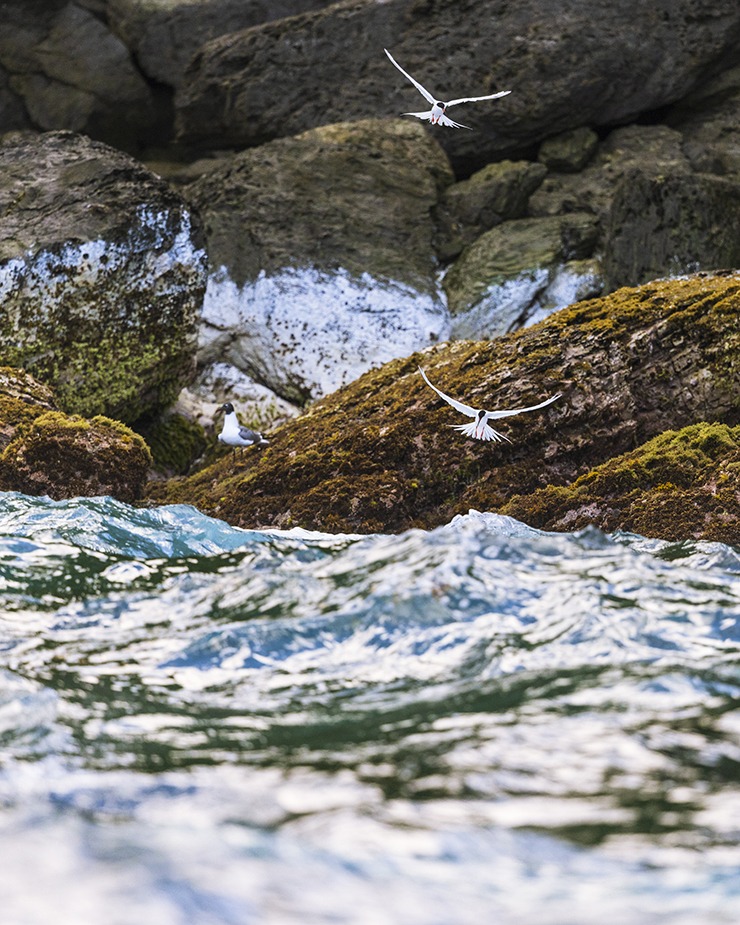
It is suggested that the Roseate Tern is one of the most beautiful terns on the planet. I can’t disagree, even if asked this question on a rocking boat.
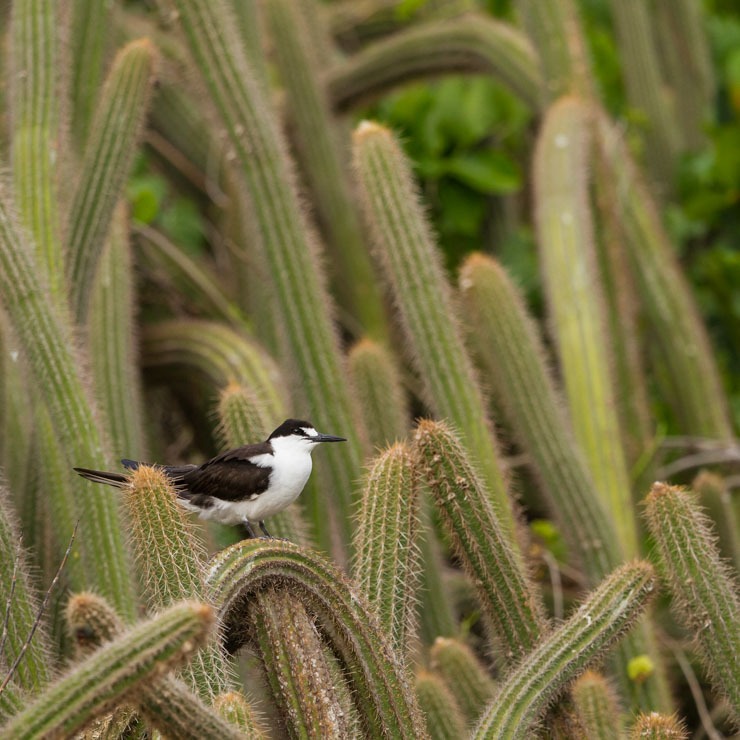
Sooty Tern
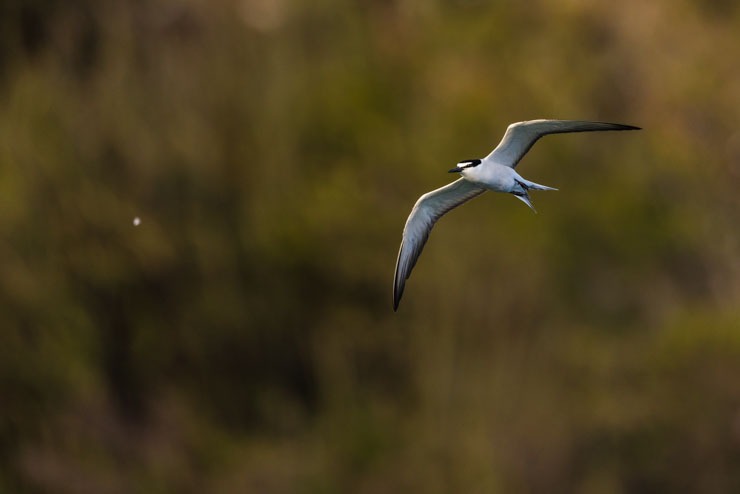
Bridled Tern
At the right time of year, with the correct captain, one should be able to easily navigate the waters off of northeast Tobago – within the Northeast Tobago Biosphere Reserve – and get eyes on all of these incredible species. One seabird, however, is much more difficult than the others. It is neither secretive nor is it uncommon at all. In fact, it is easy to see the evidence of its existence – most often in the form of guano or feathers strewn across the ground, in front of a small hole in the dirt. That bird is the Sargasso Shearwater, and it only comes ashore after dark. It spends the daylight hours far offshore, likely several miles further than most of the small boats are willing to venture.
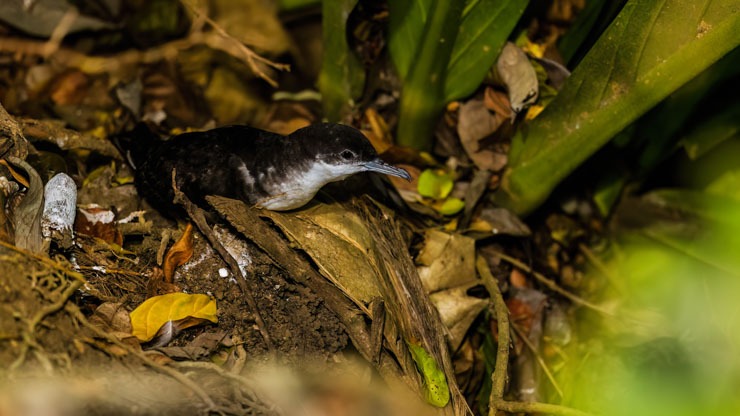
Sargasso Shearwater
Of the 501 species of birds recorded in T&T (you heard it here first), getting a glimpse of these species guarantees memorable encounters. Is it the birds, or is it in the adventure? The salt spray lingering over a rugged coastline at sunset, innumerable shades of blue in the water and in the sky, unseen squalls at night – perhaps you need to visit, that’s the only true way to see which wildcard you’re dealt.
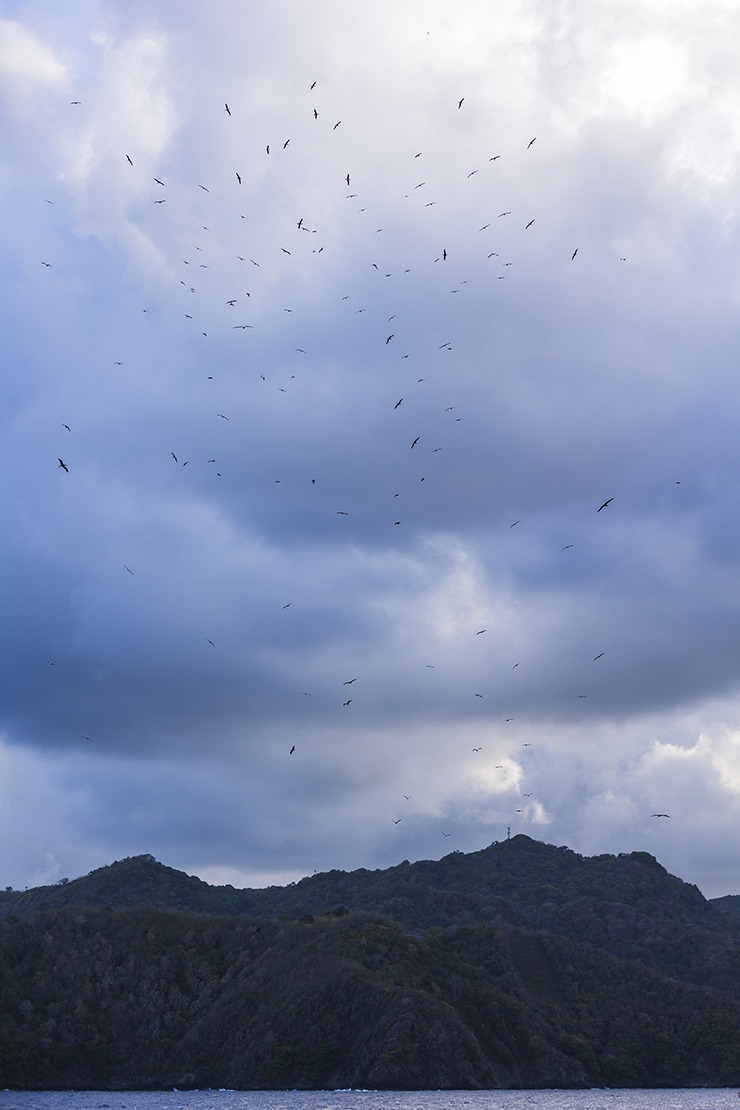
More boobies than I can count!




Great piece, and brings back fond memories of my visits to Tobago. In December 2003 I noted in my diary great views of a single white-tailed tropicbird seen from Little Tobago. I believe that these birds are rare, but I note that ffrench in his A Guide to the Birds of Trinidad and Tobago didn’t believe that these birds ever occur in the waters off Tobago. What, I wonder, is their current status?
Appreciate your kind words, David. White-taileds are quite rare and are only seen occasionally among the colony of Red-billed Tropicbirds on Little Tobago. I once sat at the lookout on Little Tobago for around 7 hours on a twitch for White-tailed Tropicbird without success. They breed only a short hop further north, though.
Great work. Keep it up!
Many thanks, Ryan!