

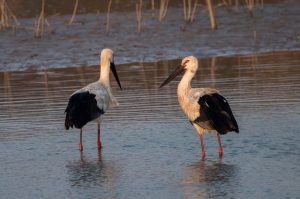
Or so says a study by San Francisco State researchers using data collected from over forty years of measurements taken during bird banding. Here’s hoping that this means that some birds, at least, might be able to adapt as climate change continues.

Corey is a New Yorker who lived most of his life in upstate New York but has lived in Queens since 2008. He's only been birding since 2005 but has garnered a respectable life list by birding whenever he wasn't working as a union representative or spending time with his family. He lives in Forest Hills with Daisy and Desmond Shearwater. His bird photographs have appeared on the Today Show, in Birding, Living Bird Magazine, Bird Watcher's Digest, and many other fine publications. He is also the author of the American Birding Association Field Guide to the Birds of New York.












Weird. I would have thought the opposite, as body size and temperature tend to be inversely proportional, per Bergmann’s Rule.
But, now in reading the piece it suggests the larger size is a response to more extreme weather, rather than just warming.
Maybe a very, very long period of continuous warming around 235 Million years ago could explain the size of dinosaurs? Wow, do I want to see California Condors in a million years from now…
From the website ARKIVE, I read an article saying the opposite–that climate change is making animals shrink–>
I am very curious about this. Could somebody explain this to me?