

By Samantha Meheltz
Samantha is a young birder in Northeastern Pennsylvania. She took a huge interest in birds when she was 7 years old and stumbled into her neighbor’s yard, where they had many bird feeders! She loves and appreciates all birds, especially the Osprey and the Gray Catbird.
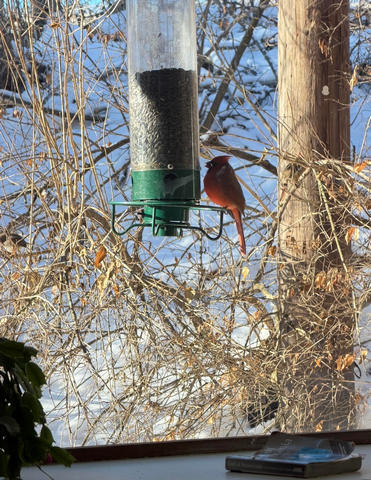
When I first started working as a dental assistant, I never expected part of my daily routine to involve looking out the window with a field guide. Between managing schedules and fighting with the little squirrels, our team has become a group of full-time birdwatchers. These feeders were supposed to be a simple way to distract patients, but they’ve grown into a staple of our office. It turns out that, even for non-birders, a little bit of backyard wildlife can make a big difference for patients with dental anxiety.
As someone who already loved birds before joining the practice, imagine how ecstatic I was to see that my love for wildlife was thriving right outside my room’s window. Over time, I’ve noticed my patients and coworkers asking more and more questions about the animals outside. It has been incredibly rewarding and fun to share what I know and am passionate about, whether I’m explaining the migratory birds that pass by or helping decode certain behaviors. Part of my job as a dental assistant is to keep patients calm and make sure they’re comfortable. I’ve noticed that talking about the birds or sharing random fun facts has been a great way to do so. I get to talk about what I’m passionate about and distract them enough to forget they’re even in a dental chair!
The impact of these feeders doesn’t stop after the appointment ends, either. People who used to white-knuckle the armrests are now coming in happy to tell us about their own backyards. We get asked what type of seed we use to attract our variety of birds, how to prevent squirrels from taking over, and how to tell finches and sparrows apart! We’ve watched curious people transform into active bird lovers who go home and put up feeders of their own. I never expected people to leave a dental appointment wanting to start birdwatching themselves, but it’s been really fun to see.
Thanks to our established setup, the view from our window changes with every passing season. We have our daily, constant feathered friends, such as Northern Cardinals, American Goldfinches, Black-capped Chickadees, Tufted Titmice, and occasionally a Blue Jay. Every season, we also see some new faces, like Rose-breasted Grosbeaks, Gray Catbirds, Ruby-throated Hummingbirds, and House Wrens. It’s definitely a little game between me and my coworkers to try to guess the bird and mark it down in our field guide. Patients have also mentioned keeping track of the birds during every visit!
Of course, maintaining a wildlife sanctuary outside our dental clinic comes with a lot of challenges. On the positive side, I get to watch generations of bird families, migrating birds that only stop by in the spring, and fledglings getting their first bites to eat. On the downside, like every other bird feeder, we unfortunately have to deal with sick birds, crazy squirrels, and making sure everything stays clean. It takes some extra work for our team behind the scenes, but seeing how much joy it brings to our office makes everything worth it.
Dealing with sick birds has absolutely been the hardest part of this, but it has also brought out the true caretakers on our team. Because wildlife safety is a top priority while we have these feeders up, sometimes we have to make the tough call to take them down for weeks at a time to help prevent disease from spreading. It’s always sad for us and our patients to look out at an empty window, but we all know it’s necessary to help keep the birds safe. During some of these times, I’ve had to step in as a wildlife rescuer, successfully saving two sick birds by taking them to a nearby wildlife rehabilitation center. I’ve also given them names: JJ and Bianca. Both were unfortunately diagnosed with house finch eye disease, also called Mycoplasma conjunctivitis. JJ was a male House Finch, and Bianca was a female Purple Finch. Both birds have since been released and are healthy! Navigating these emergencies and maintaining strict sanitation can be difficult, but protecting the birds and other wildlife is very important to our team.
The feeders have been a fixture outside our clinic for many years, and they’ve done so much more than provide a simple way to distract anxious patients. They’ve managed to build a little community! Our birds, from the daily visitors to my rescues, remind everybody to take a deep breath, look outside, and find joy in the little things. Having a dental appointment is never easy, but our little birds have shown us that compassion and curiosity can transform any environment, even one where sharp instruments in your mouth are involved!






Leave a Comment