

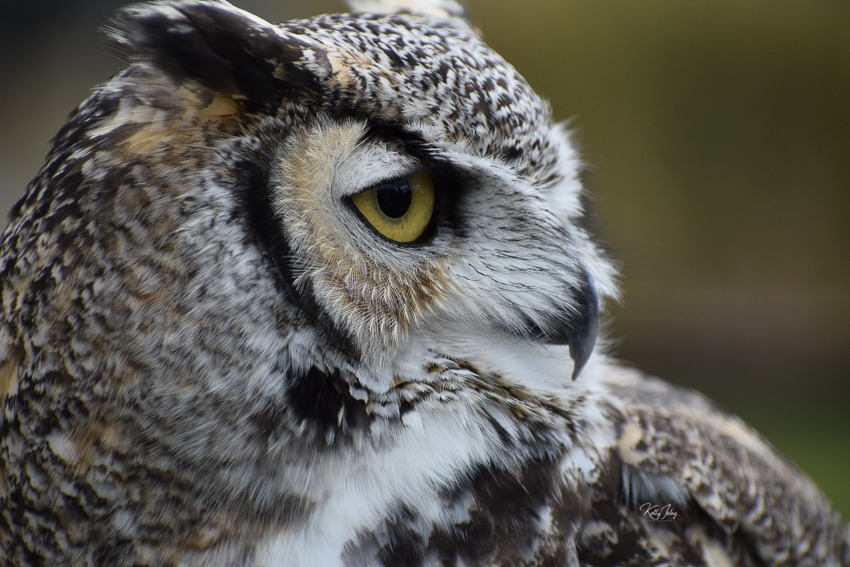
A bird moves through the branches, and suddenly you are paying attention. You follow a flick of wings, wait for another call, and lift your binoculars. For a moment, the unanswered emails and unfinished errands fade into the background.
For bird lovers, that small shift feels familiar. We head outside hoping to see something interesting and sometimes return feeling a little steadier, too. As the holiday season approaches in many parts of the world, with its celebrations, obligations, and sometimes difficult emotions, those ordinary encounters may feel especially welcome.
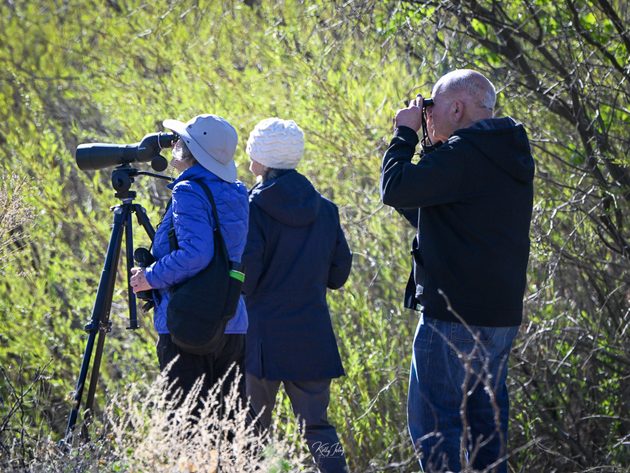
Research is beginning to give birders a clearer picture of that connection. Seeing birds, listening to their songs, and deliberately noticing their activity may support well-being. The invitation is appealing: spend a little time with the birds already sharing your world.
What research suggests
A review published in Ecopsychology, “Birding Benefits: A Review of Mental Health, Cognitive, Social, and Conservation Impacts,” brings together research on how birding may affect our lives. Its authors describe preliminary evidence of reduced anxiety and stress, benefits for memory and attention, and opportunities for social and community participation. They also identify potential educational benefits and connections with citizen science and conservation. [1]
The authors’ conclusion is optimistic while recognizing that researchers are still exploring how and why these benefits arise. Birds may inspire wonder, invite closer attention, or help us feel connected to the natural world. No single explanation is established, and evidence specific to birding is still developing.
Audubon’s “Birding With Benefits: How Nature Improves Our Mental Mindsets” places these possibilities within the broader research on time outdoors. The article describes two leading explanations: natural settings may restore attention after mental fatigue and reduce stress. It also explores how outdoor experiences can support learning and connection. [2]

For birders, the practical message remains encouraging. Returning to a favorite patch or taking a break beside a familiar tree can create room for curiosity and renewal during an ordinary day.
Mary Ann Zimmerman, MC, LPC, LISAC, Managing Director of Mindability, explains, “Mindful birdwatching gives us something specific to notice in the present moment. That can offer a brief pause from repetitive worries, without requiring us to make those worries disappear.”
Listening counts too
Some birds remain hidden no matter how patiently we search. Fortunately, a clear view is not essential to every benefit researchers have observed.
In a randomized online experiment involving 295 participants, researchers studied the effects of listening to birdsong or traffic noise for six minutes. Participants who listened to birdsong reported reduced anxiety. The experiment did not find an improvement in depressive states. That distinction matters: a short-term change in how someone feels is different from treating a mental health condition. [3]
For birders, listening offers another way to enjoy an outing. Try pausing before identifying a call. Notice its rhythm, the spaces between notes, and whether another bird answers. There is room to enjoy the sound before reaching for a name.
Give curiosity a little room
Birding asks us to notice details we might otherwise overlook: a shadow shifting along a tree trunk, a duck disappearing beneath the water, or a familiar flock of geese exploring a beautiful meadow.

In a Psychology Today article, psychologist Lizabeth Roemer describes several possible pathways connecting birding and well-being, including stress reduction, restored attention, awe, and social connection. These are useful ways to think about the experience, although researchers are still investigating precisely how its benefits arise. [4]
For an experienced birder, the practical invitation might be to spend longer with a common species. Watch how it searches for food or responds to its neighbors. Let an ordinary encounter hold your attention without needing it to become an exceptional sighting.
For bird enthusiasts of all levels, Zimmerman offers this tip: “Let the activity fit the energy you have that day. A few minutes watching from a window can be a manageable starting point. It does not have to become another task you judge yourself for completing.”
That approach leaves room for different abilities, schedules, and circumstances. A window overlooking a tree, a seat in a garden, or a nearby park may be a good place to start. Binoculars can enrich the experience, but a bird does not need to fill the frame to be worth watching.
A shared interest can open a conversation
Birding can also make room for companionship. Asking someone what they have spotted offers a simple opening. So does inviting a friend to watch the birds at a familiar pond. For readers who prefer company, a small local group may make an outing feel more welcoming.
The recent 10,000 Birds article “Birding and Depression: Comments from China” brings personal experiences into this discussion. Contributors describe motivation, companionship, and renewed connection through birdwatching. Their accounts are individual testimony rather than clinical evidence, but they add human context to the research. [5]
They also remind us to be gentle about participation. When someone is struggling, getting outside may be difficult. An invitation can leave room for a shorter visit, a change of plans, or simply sitting together where birds might appear.
Zimmerman adds, “Birding can be a meaningful part of caring for our mental well-being. Sharing an outing with someone who enjoys birds can offer company without the pressure of formal conversation. Sometimes, having something to notice together is a comfortable place to begin.”

Make space for an ordinary encounter
On your next outing, consider leaving a few minutes unplanned. Stay with one bird after you have identified it. Listen without immediately opening an app. If you bring a camera, take a moment to watch before deciding on the photograph.
Afterward, notice how you feel without demanding a particular result. Some days will bring calm; others may bring a good look at a bird. Neither requires a remarkable checklist.
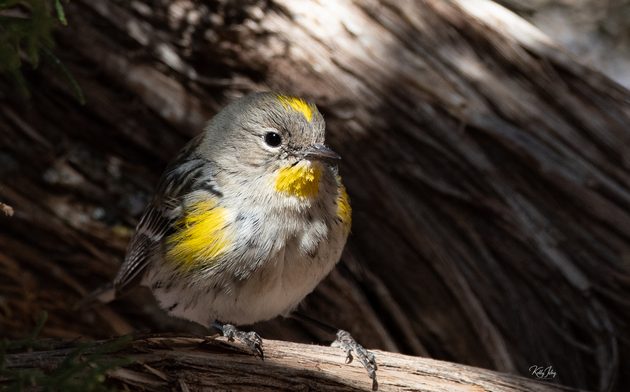
The emails and errands will still be there. But you may return to them with something worth carrying into the rest of your day: a moment of wonder, a little breathing room, and the memory of a bird turning in the light.
References
- Jennifer G. Andrews, Rachel J. Ammirati, and Caleb J. M. Andrews, Ecopsychology, “Birding Benefits: A Review of Mental Health, Cognitive, Social, and Conservation Impacts.” First published online September 23, 2024; Volume 17, Issue 1 (2025). This draft draws on the abstract and conclusion. https://journals.sagepub.com/doi/full/10.1089/eco.2024.0019
- Jill U. Adams, Audubon, Winter 2019, “Birding With Benefits: How Nature Improves Our Mental Mindsets.” Historical program descriptions and counts are not presented as current statistics. https://www.audubon.org/magazine/birding-benefits-how-nature-improves-our-mental-mindsets
- Max Planck Society research summary (2022), “Birdsong is good for mental health.” https://www.mpg.de/19373671/birdsong-is-good-for-mental-health
- Lizabeth Roemer, Psychology Today, “Birding Your Way to Well-Being.” https://www.psychologytoday.com/us/blog/mindfully-doing-what-matters/202405/birding-your-way-to-well-being
- 10,000 Birds, “Birding and Depression: Comments from China.” https://www.10000birds.com/birding-and-depression-comments-from-china.htm











Leave a Comment