

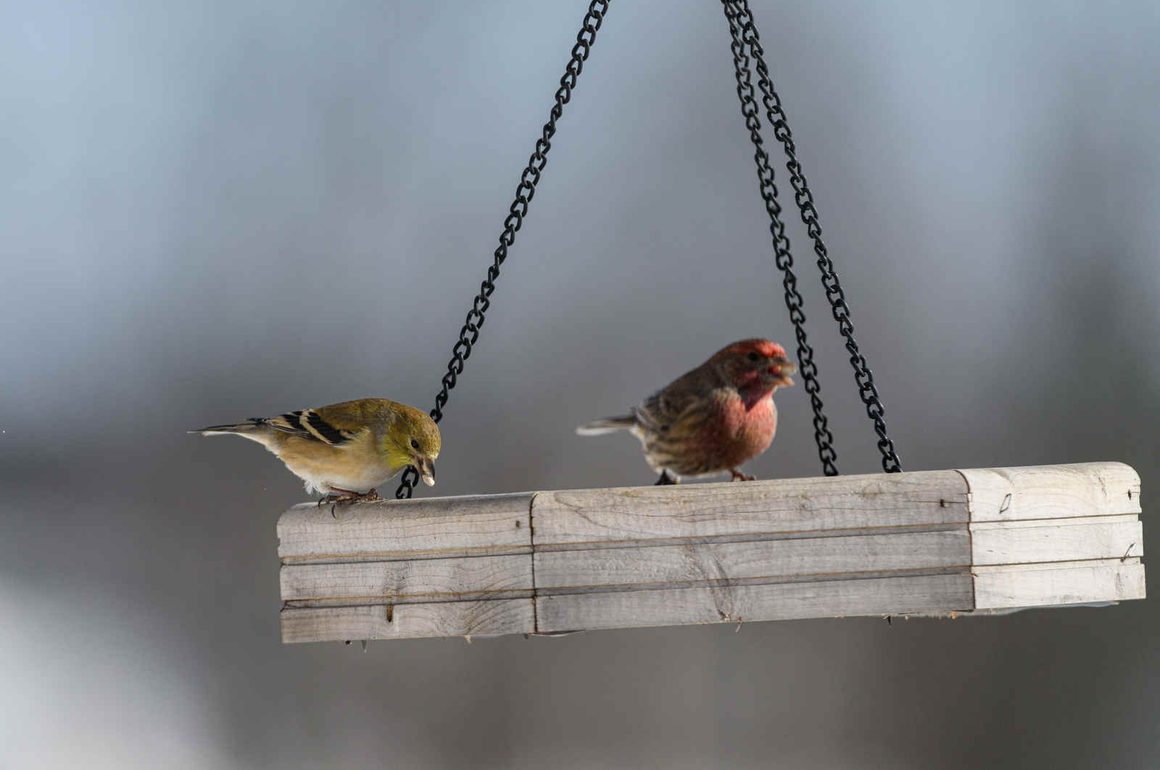
In November, my feeders get busy in a way they never are in summer. The House Sparrows arrive in a noisy group before I have finished my morning tea. The bulbuls follow, then the Laughing Doves walking the ground below, and the Common Mynas, bold as ever, checking everything before they eat. On a cold morning, I can count twenty birds or more around two small feeders, all of them shoulder to shoulder, all of them eating from the same few surfaces.
I love that sight. It is the reason I feed birds. But a few winters ago I learned something that changed the way I look at it. A feeder that brings birds together also brings their germs together. The same crowded table that saves a small bird on a freezing night can be the place where sickness spreads from one bird to the next. Cleaning the feeder is not a chore I do when I remember it. In winter, it is the most important job I have as someone who feeds birds.
Winter makes the problem worse for three simple reasons. First, more birds use the feeder because natural food is scarce and the days are short. Second, the seed stays wet longer. A cold morning brings dew, a rainy spell soaks the feeder, and damp seed is where mould grows. Third, the birds are under stress. A small bird that has spent a freezing night needs every bit of energy it has, and a sick bird has less to spare. The Cornell Lab of Ornithology and the National Audubon Society both say the same thing in different words: a dirty feeder in winter is a risk, and a clean one is a kindness.
I clean my seed feeders at least once every two weeks. That is the schedule recommended by Cornell’s Project FeederWatch, and it is the one I keep. In wet weather, I clean more often, and I clean every time a feeder is empty, before I put fresh seed in. I never pour new seed on top of old seed. The old seed at the bottom is the part that has been rained on, sat on, and dropped on, and burying it under fresh seed only hides the problem. If the seed is clumped, damp, or smells musty, I throw it away. If I see mould, I throw it away without a second thought. Some moulds produce a toxin called aflatoxin, and the Cornell Lab warns that it is dangerous to birds even in small amounts. No seed is worth a sick bird.
My cleaning routine takes about twenty minutes, and it is the same every time. First I take the feeder down and empty it completely. Then I scrub every part with warm soapy water, paying attention to the perches and the holes where the seed comes out, because that is where beaks and droppings meet. Then I soak the feeder in a solution of one part household bleach to nine parts water. The Cornell Lab and Audubon both recommend this ratio, and a study of feeder cleaning methods found that a ten-minute soak in this diluted bleach solution left fewer bacteria than washing with soap and water alone. I let it soak for ten to fifteen minutes, then I rinse it very thoroughly with clean water and let it dry completely before I refill it. A feeder that is still damp when it goes back outside will grow mould faster than a dry one, so I never rush this part. I clean on a sunny morning when I can, and I let the feeder dry in the sun.
A few safety rules matter here. Never mix bleach with vinegar, ammonia, or other cleaners. I wear gloves, and I rinse until I cannot smell bleach at all. If I want a gentler clean between the bleach washes, Audubon suggests boiling the feeder in water or soaking it in one part white vinegar to one part water. Vinegar is fine for light cleaning, but it is not as strong a disinfectant as diluted bleach, so when disease is a worry, bleach is the better choice.
Suet feeders need the same care. I clean mine every two weeks along with the seed feeders, because suet goes soft and stale in warm spells and collects the same droppings and mould. I take the cage down, scrub it, and let it dry before I put a fresh block in. Old suet that smells rancid goes in the trash, not back in the cage.
The seed I store is only as good as the place I keep it. I keep mine in a metal can with a tight lid, in a cool, dry corner, off the floor. Audubon recommends metal because mice and squirrels chew through bags and plastic, and I have lost enough seed to mice to believe it. I buy only what my birds will eat in a few weeks, and I never try to rescue seed that has gone wet or mouldy. Drying it out does not make it safe. The mould may be gone from sight, but the toxin it left behind is not. Penn State Extension gives the same advice: store seed in a cool, dry place and do not use seed that has become mouldy.
The ground under the feeder matters as much as the feeder itself. My doves and sparrows spend half their time picking up spilled seed from the ground, and droppings pile up there too. Once a month, I sweep up the hulls and the old seed under my feeders, and I rake the ground clean. Audubon gives the same advice, and Clemson Extension says the same: a clean patch of ground under the feeder is part of a clean feeder.
Cleaning is only half the job. The other half is watching. I look at my birds every morning, and I have learned the signs that mean trouble. A bird with red, swollen, runny, or crusty eyes may have house finch eye disease, a condition caused by a bacterium called Mycoplasma gallisepticum. It was first noticed by people watching feeders in the Washington, D.C. area in the winter of 1994 and 1995, and it has since spread to goldfinches, purple finches, and evening grosbeaks as well. A bird that sits fluffed up and sleepy in the middle of the day, that does not fly away when I come close, or that leaves bright green droppings around the feeder, may be sick too. Salmonella is another feeder disease, and it is most common in winter and spring. Trichomoniasis, a disease caused by a tiny parasite, spreads readily among doves and pigeons, and a study summarised by Project FeederWatch found that the parasite survived in wet seed but not in dry seed, which is one more reason to keep seed dry.
If I see a sick bird, I take the feeder down right away and clean it with the bleach solution, and I leave it down for about two weeks so the birds scatter and the chain of contact is broken. Audubon says to leave it down for at least several days and to get in touch with a local wildlife rehabilitator for advice. Some guidance for a serious outbreak says longer, and I follow the longer advice if birds are dying. It is hard to take a feeder down in the coldest weeks, when the birds need it most, but a feeder that spreads sickness helps no bird at all. The birds will find other food while the feeder is down, and they will come back when it is clean.
The mistake I made for years was waiting. I would see the feeder getting dirty and tell myself I would clean it next weekend, or when the weather improved. Winter is the worst season to wait, because winter is when the feeder is busiest, and the seed is wettest. The other mistake is cleaning at the wrong moment. I never clean a feeder while birds are using it, and I never clean it in a rush and put it back up still wet. Twenty minutes, once every two weeks, is a small price for a yard full of healthy birds.
A clean feeder does not make a garden less wild. It makes it safer. My sparrows still argue over the same perch, my bulbuls still arrive like they own the place, and my doves still walk the ground below in their calm, unhurried way. The difference is that I know the food I put out is not carrying sickness with it. If you feed birds this winter, clean your feeders before the coldest weeks arrive, and keep cleaning them until spring. Your birds will thank you in the only way they can, by coming back, bright-eyed and hungry, every single morning.
Cover Photo by Jay Brand taken from Pexels










Leave a Comment