

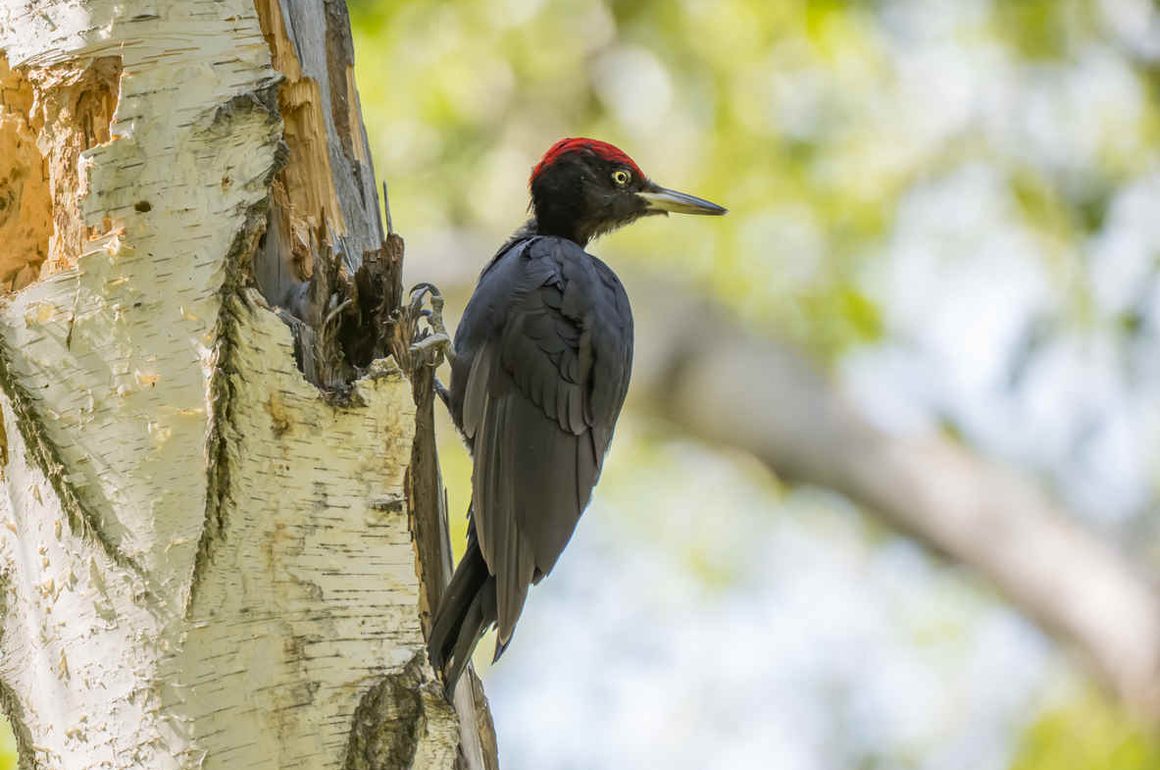
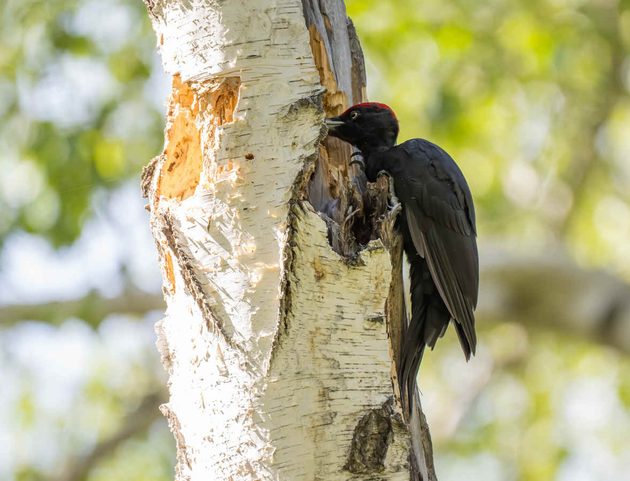
Location, location, location – yes, we all know that. But what does it mean for the Black Woodpecker?
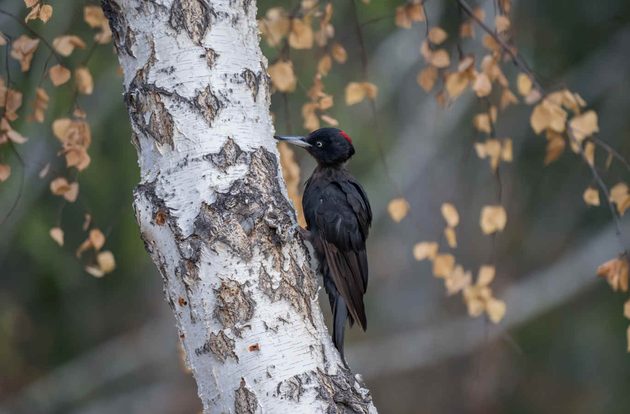
In French temperate forests, the species preferably excavates trees in beech-dominated sites, particularly in those areas with fewer small-diameter trees (source). Real estate agents focusing specifically on Black Woodpeckers are well aware of this and price their offerings accordingly.
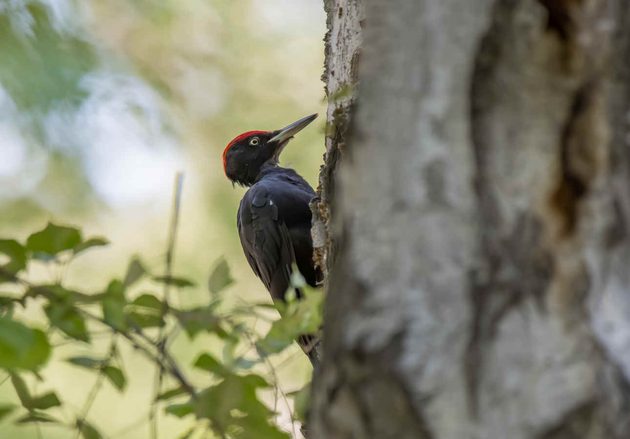
Somewhat surprisingly, the real estate value of cavities does not seem to depend on how easily predators can detect them (source). Admittedly, the same finding sounds a bit more impressive in its German original: “Hieraus schließen wir, dass die Potentiale zur Prädationsvermeidung, die sich für den Schwarzspecht durch die Auswahl von Höhlenstandorten ergeben, unter den in unseren Untersuchungsgebieten herrschenden Habitatbedingungen nicht weiter gesteigert werden können.”
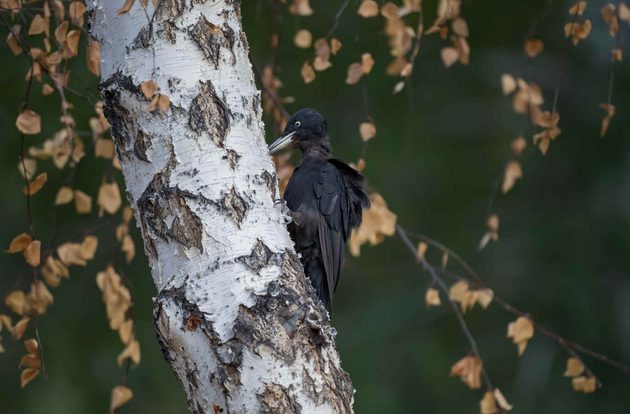
One paper – probably submitted by a frustrated real estate agent – specifically criticizes the shoddy quality of some Black Woodpecker cavities, making it very difficult to find second-hand buyers for them. In particular, many holes are regarded as poor quality due to shallow depth, low height, or narrow entrance (source).
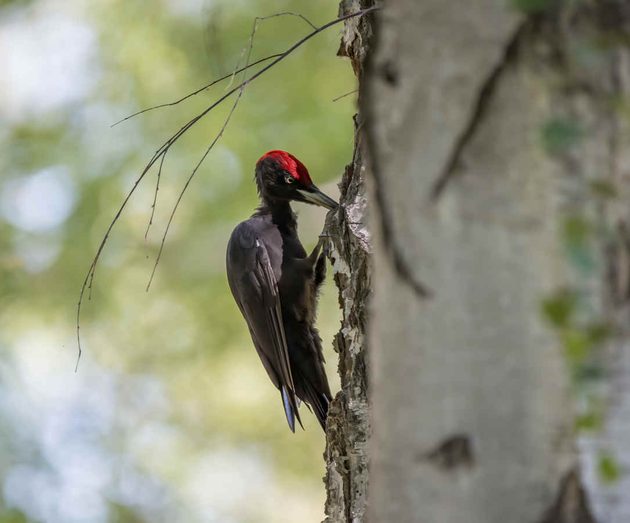
Generally, second-hand buyers, particularly Jackdaws, prefer nest holes in the vicinity of farmland (location, location, location!), but the height in the tree and depth of the hole are also important selection criteria (source).
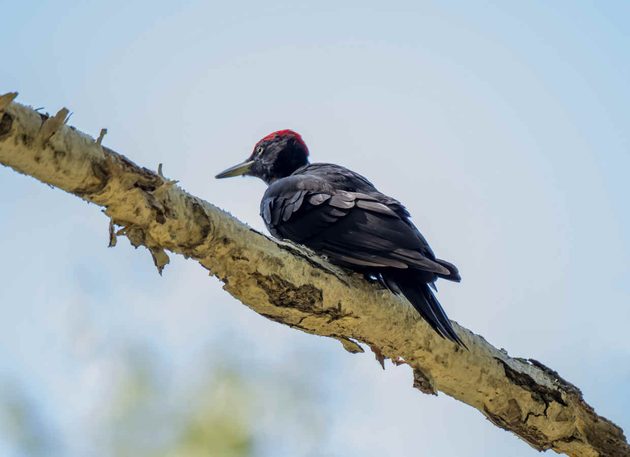
The competition for these second-hand holes is not fair. Jackdaws usually get the best nest holes, while other subordinate species have to use inferior holes near fields or nest holes in areas with less competition, deeper in the forest (source).
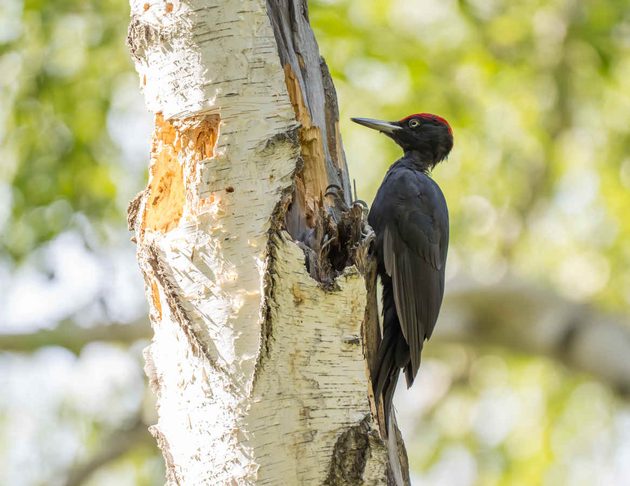
Despite these stringent criteria, Black Woodpecker nest holes are not ideal homes for breeding Jackdaws – one study found that only 56% of breeding attempts in them were successful. Apparently, the woodpecker holes are not optimized to prevent nest predation, particularly by Pine Marten (source).
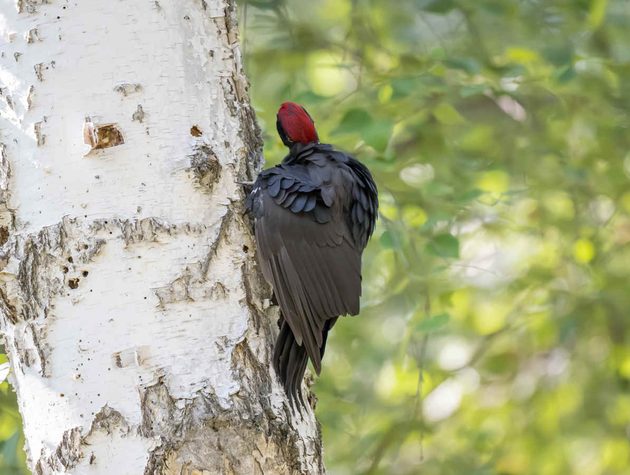
And what if you are a species in need of Black Woodpecker holes – such as the rare Boreal Owl – but there are no Black Woodpeckers around? Well, one option is for conservationists to subsidize the housing market by providing nest boxes.
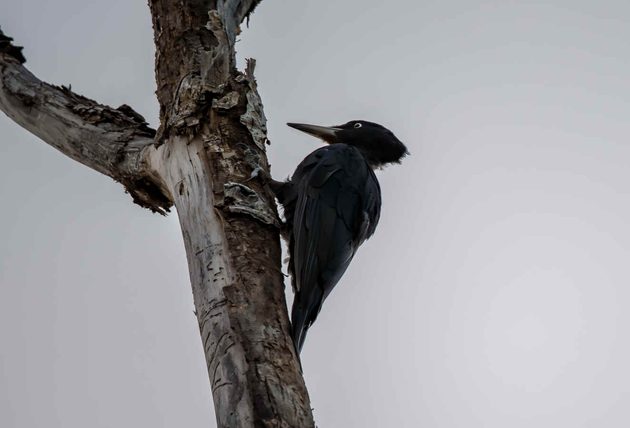
Photos taken in Northern Xinjiang in August 2026.








Leave a Comment