

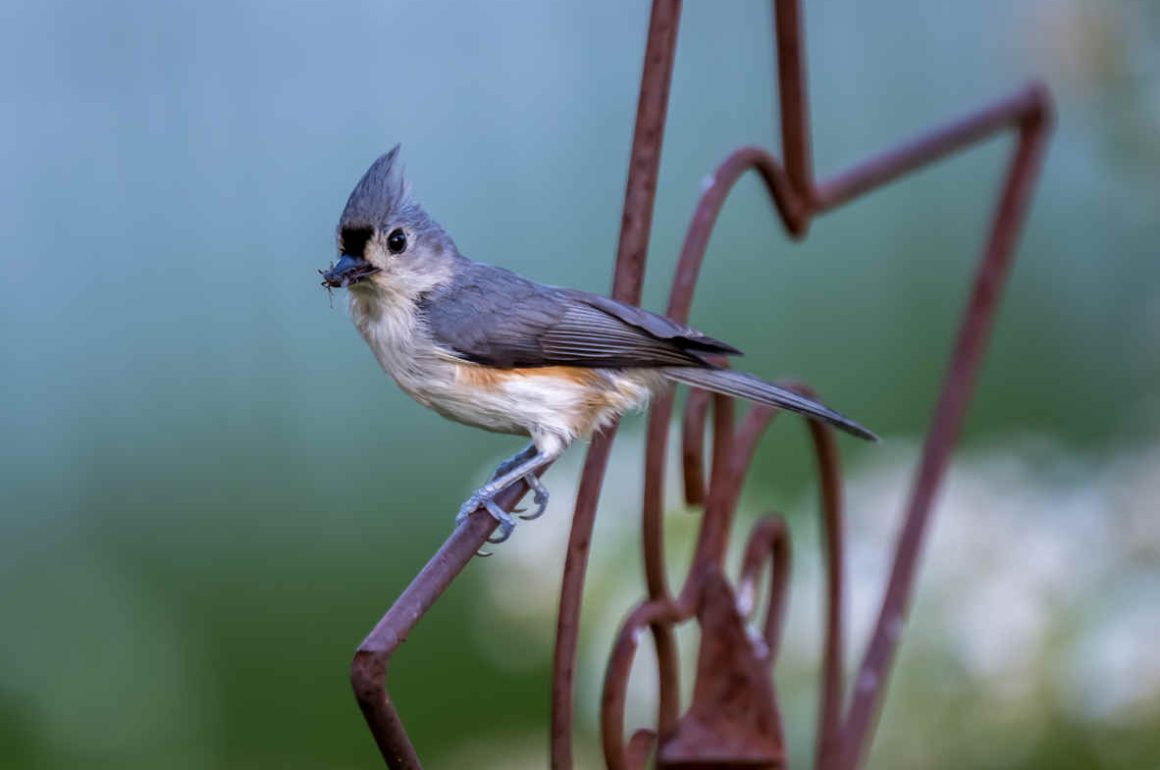
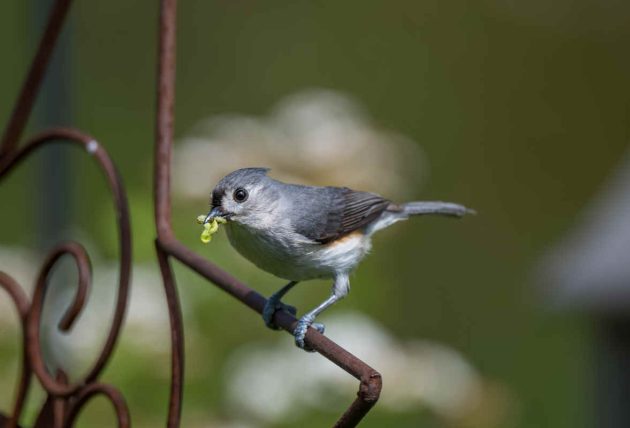
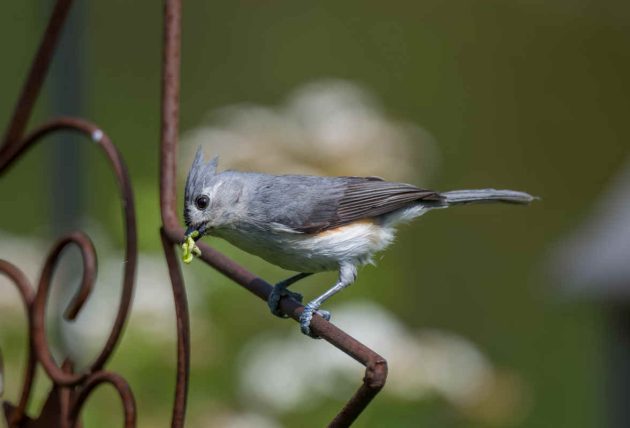
I was standing on a small road in a Maine suburb, directing my camera at a garden next to the road. There, a bird was commuting between its foraging area, a staging post, and a nestbox, busy feeding its young.
The friendly owner of the garden emerged from her veranda, asking about the name of the bird. Embarrassed, I pretended not to know. Would she have called the police if I had said “Tufted Titmouse“? I did not want to risk having to explain the history behind the bird’s name.
Tit comes from an ancient Germanic word meaning something small, while “mose” was an old Germanic word for a small bird that later got turned into “mouse”. So, small bird is what titmouse means, nothing else.
Confusingly, if etymology were to give any guidance, the plural then should be Titmouses. It is Titmice instead, thus pretending that the name indeed is derived from the word “mouse” with its irregular plural.
(German readers familiar with the works of the German band Die Ärzte will point out that there is an early song by this band titled “Tittenmaus” – and the harmless explanations provided above certainly do not apply to this song title).
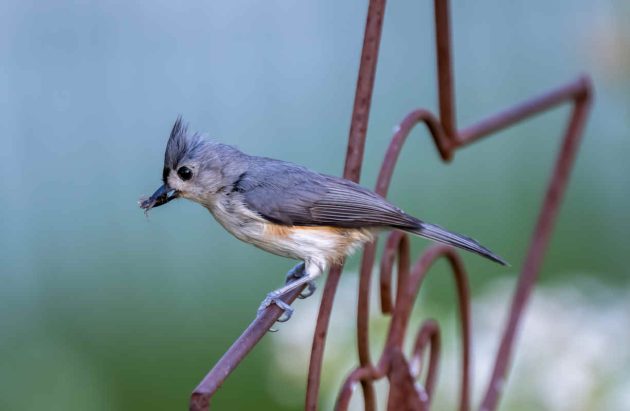
Anyway, it is a rather cute-looking bird. And none other than the highly respected ornithological journal “Birds&Blooms” dedicates a whole webpage to showing 18 Totally Adorable Tufted Titmouse Bird Pictures.
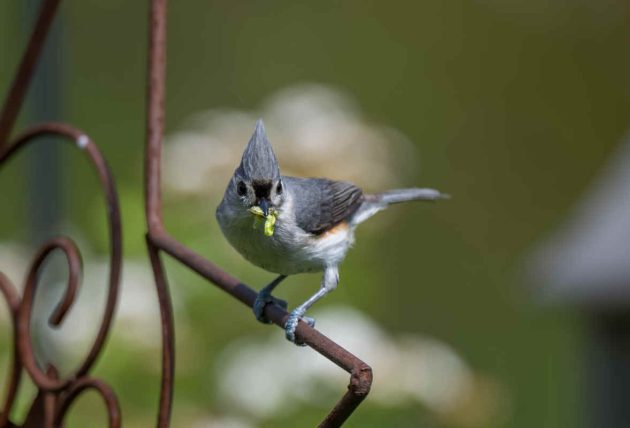
Others are much more sceptical: “It’s easy to see why some might describe the Tufted Titmouse as cute, but I prefer to keep my distance. It’s a feathered dinosaur, a wolf in sheep’s clothing, pugnacious and bent on two things: survival and reproduction.”
The survival aspect manifests itself – among other things – in titmice eating more under particularly harsh winter conditions (source) …
… and in changing its behavior on whether the eyes of predators are facing toward the bird or away from it (source 1, source 2, source 3).
As for reproduction, one brief note already published in 1927 records how titmice pluck hair from a live woodchuck, presumably for nest building. Somehow, I find it fascinating that these old records are now easily accessible online. And cover bird observations without having to discuss R Square tests (or whatever) as well.
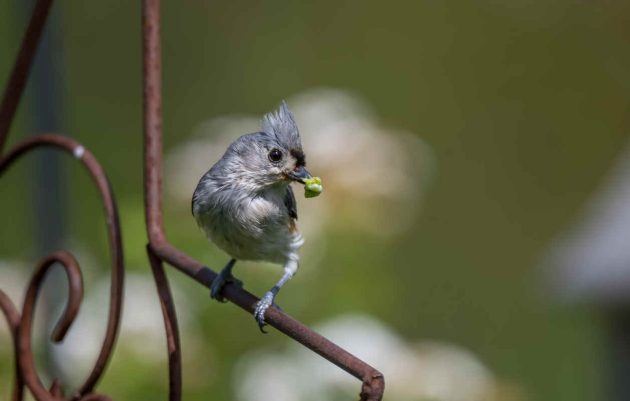
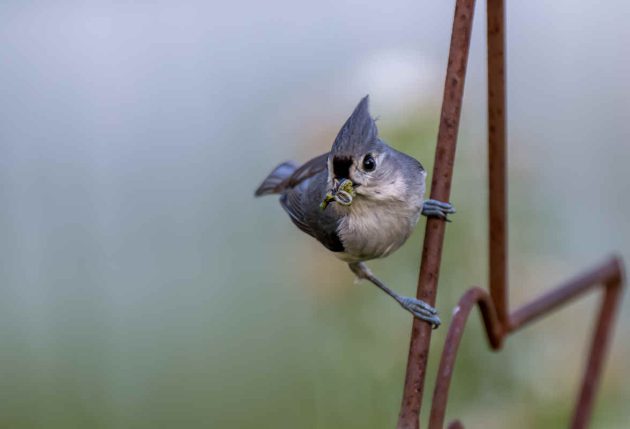
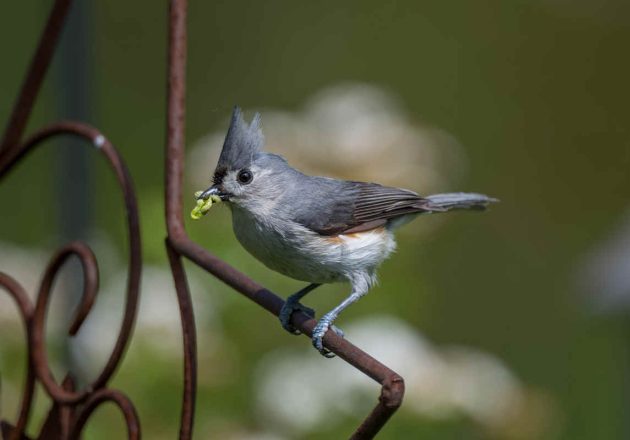
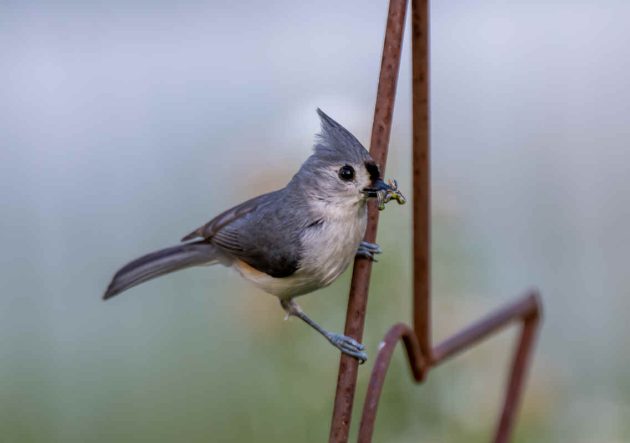
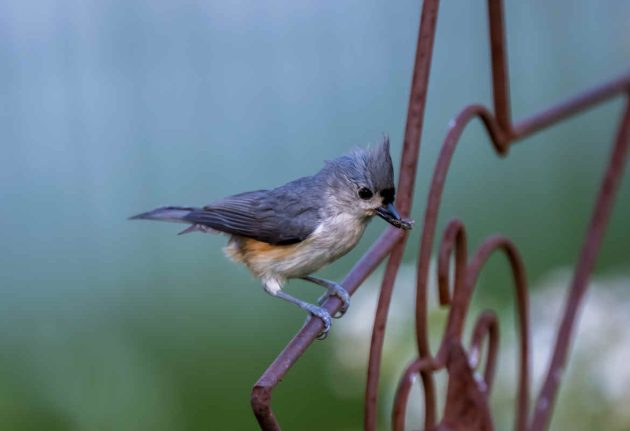
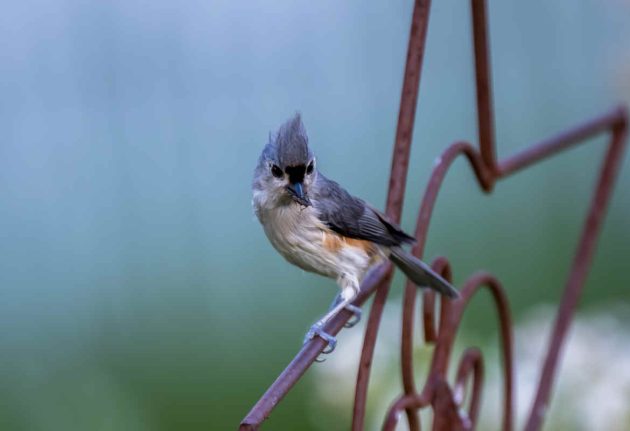
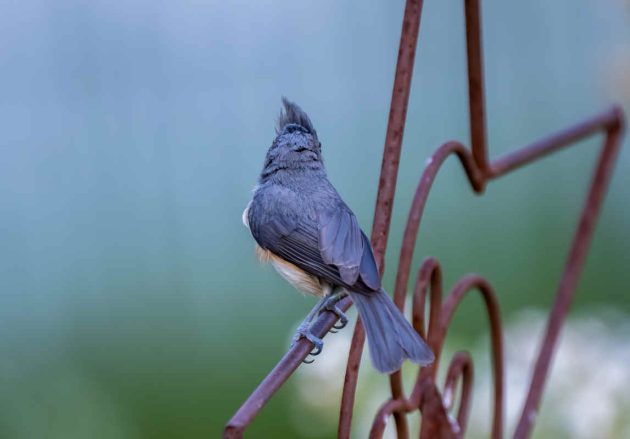
And of course, the photos in this post – taken in Bath, Maine, in June 2026 – show the effort titmice make to bring up their chicks. Yes, this feathered dinosaur is also engaged in reproduction.








Sorry, I have to disagree. The word “titmice” falls in the same category as “burglarize”. Languages move from the complex to the simpe, the other way around doesn’t make sense.