

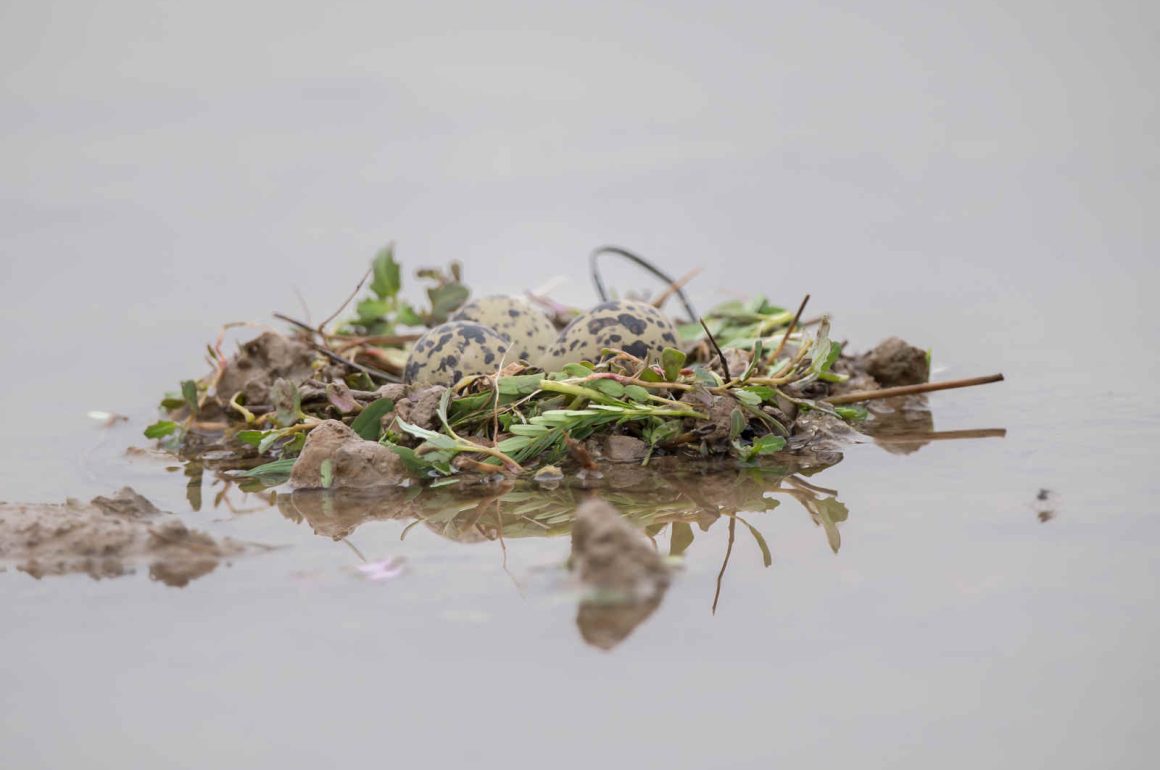
An egg looks simple—smooth, clean, almost featureless. That simplicity is misleading.
This post is not about the developing embryo. It is about the chemistry that keeps that embryo alive long enough to matter. From the moment it is laid, an egg enters a world full of microbes. Bacteria, fungi, and other microorganisms are everywhere, and many will use an egg as a resource if given the chance.
Bird eggs do not rely on mechanical barriers alone. They are layered chemical systems, and each layer plays a distinct role in disrupting microbial invaders.
The Shell
Start with the shell. It is built largely from calcium carbonate, an inorganic material derived from the bird’s diet. Calcium carbonate makes the shell rigid, but it is also chemically stable—predictable in how it interacts with water and gases.
The shell is porous, and it has to be. An egg that could not exchange oxygen and carbon dioxide would fail fast. Permeability is therefore not a flaw—it is a requirement. The chemistry of the shell reflects this.
The same pores that let gases in also limit what the shell can keep out. Microbes are bigger than gas molecules, but they are not absolutely excluded. The shell slows them down, but it does not stop them.
That limitation is deliberate. The shell is a compromise between two opposing needs: gas exchange and protection. Additional chemical defences are therefore essential.
The Cuticle
Most of the egg’s chemical defences live in the cuticle, a thin, outermost layer of the shell. Unlike the rigid calcium carbonate beneath it, the cuticle is soft, water-insoluble, and made mostly of glycoproteins, with smaller amounts of fats and carbohydrates. This combination forms a protein–lipid matrix that is both physically and chemically active.
Water is the main delivery system for microbes. Rain, dew, or even the moisture in a nest can carry bacteria across the shell. The cuticle interferes with that chemistry. Its hydrophobic components repel water, while the proteins create surface tension effects that make it harder for water—and microbes—to spread. Embedded within this matrix are antimicrobial proteins such as Lysozyme C, ovotransferrin, and ovocalyxin-32, which directly attack bacteria that do manage to arrive.
The result is a chemically sophisticated shield: the cuticle slows microbial movement, disrupts the chemistry microbes rely on to colonise the egg, and buys the embryo time to develop. Different species tweak this layer depending on their environment—eggs exposed to humid conditions often have a thicker or more hydrophobic cuticle, while species nesting in drier environments may invest less. In this way, the cuticle is not a passive coating but an active, molecular-level defence.
Inside the Egg
Even after passing the shell and cuticle, microbes face a second line of defence inside the egg. The albumen, yolk, and surrounding membranes are all chemically active, designed to slow or neutralise invaders before they reach the embryo.
The egg white contains proteins that interfere with microbes in specific chemical ways. Lysozyme breaks down bacterial cell walls, ovotransferrin binds iron to limit microbial growth, and protease inhibitors like ovomucoid slow bacterial enzymes.
The yolk, mainly a source of nutrition, also contributes. Certain proteins in it can bind bacterial toxins or inhibit growth. The membranes around yolk and albumen are more than physical barriers: they create chemical gradients of pH, ions, and other molecules that make it harder for microbes to survive. These gradients are tuned to hinder microbes while remaining compatible with the developing embryo.
Chemical defences inside the egg are layered and complementary. A microbe that survives the cuticle and shell still encounters proteins, membranes, and gradients that reduce its chances of success.
Layered Defence
Together, these layers show how the egg balances opposing demands. The shell provides structure and gas exchange but is only a partial barrier. The cuticle slows water-borne microbes and adds a first chemical line of defence. Inside, the albumen, yolk, and membranes supply a second, more targeted set of chemical protections. In this way, bird eggs are layered chemical systems against microbial threats.














Fascinating! I loved learning about this.
I agree with Kendall – absolutely fascinating, and something that I’d never thought about.