


October 10th wasn’t just any other pumpkin-spiced Autumn day. White-throated Sparrows doing the towhee two step in sugar red leaves brought the fall magic but, while the non-birding public went about their Saturday business of fall foliage viewing, Halloween shopping, park walking, relaxing, working, getting married, worshipping, or other activities, the birders among us were focusing on the vital- birds of course.
October 10th was also October Global Big Day (as opposed to regular Global Big Day in May), a date when birders around the world are greatly and wonderfully encouraged to go birding and, record those observations in eBird. Since most birders would rather watch birds than do a heck of a lot of other things, we don’t need much arm twisting to answer the call. In a double whammy of birding encouragement, October 10th was also World Migratory Bird Day! Two big reasons to go birding heaped on top of the baseline yearn to go birding, all on the same beautiful day- what could go wrong? Nothing…except maybe sleep depravation and straining your personal birding limits.
As with all birding endeavors, how you do October GBD/World Migratory Bird Day/beautiful October Saturday birding is up to you. It’s how birding rolls and why this endeavor is such a funtastic, positive, good side hobby. But, truth be told, those heavy birding incentives and expectations can have their consequences. A birder may find themself thinking, “Sure, I’ll go birding on October 10th, maybe start at 6? Nah, I’ll miss owls if I don’t start earlier. Ok, how about 4? Well…that’s early but what if I wanted to count shorebirds and couldn’t logistically record them during the day? I’d have to get there by 3 so I could drive back to my main starting point by 4 for the owls, and then continue on to my main glorious dawn birding spot…and then there’s raptor migration to consider and, oh yeah, the birds I didn’t see in the morning…and there’s the ocean too with its gulls and other seabirds. Is 3 hours too far to drive to reach the shore? Not without strong coffee, stalwart birding companions, and tasty snacks that force me to vigorously chew and stay alert but, then again, would the crackling of crunchy snacks reduce my ability to hear a wayward siskin, or, (gasp) a lost Dickcissel? But there’s always soft and quiet snacks and it will be a day to completely give ourselves over to birding so…might as well make the most of it and bird for at least 20 hours straight!”.
And that, right there, is how some birders end up doing a Big Day, a 24 hour calendar date that can swiftly transform into a no holds barred, potentially unwise birding marathon. Oh yes, all those incentives and sudden realization of possibly birding glory can and will have their due. At least that’s what happens to me when presented with an excuse to throw everything aside and focus on birds, especially with the satisfying and reassuring knowledge that thousands of other birders are doing the same thing on the same date. And, oddly enough, I didn’t follow through on October 10th! I know, blasphemy and shame on me but I had other priorities. It happens! Even on one of the most important dates for birding.
To make up for missing out on that fine double birding day global event, I decided to stick with my Big Day plan and execute it shortly after, on October 24th. My personal, postponed Big Day ended up being a Big Morning but, it was still chock full of birds, still worth the birding focus. Residing in Costa Rica, I of course carried out the plan within this birdy country. Here’s how it all went down.
The Auspicious Dickcissel
On past Big Days, I’ve kept faith with classic, over enthusiastic birding insanity and started with the counting at the stroke of midnight. Although that first minute start affords more precious time to listen for owls and nocturnal migrants, it also eliminates a vital aspect of everyday life; sleep. Opting for being alert and not feeling like a birdwatching zombie, I decided to start my personal October Big Day at 3 a.m. instead of the Cinderella hour. That would give me enough time to try for night birds while also reaching my first dawn birding spot without erasing too many hours of necessary sleep (I went to bed at 7).
At 2:30 o’dark, I brewed a fine pot of coffee, threw a bunch of snack bars and other sustenance in the cooler, and was out the door by 3. In my urban Central Valley Costa Rican neighborhood (typically erroneously referred to as “San Jose”), I listened for a moment, heard nothing but a couple of distant motorbikes (the bane of my nocturnal flight call listening sessions), and urged my car down the road, windows down and ears focused on the welcoming night sky. That move paid off with a sudden and appreciated “zrrt” of a Dickcissel.
Yes! I looked up, thanked the invisible prairie/rice Cardinalid, wished for thrushes and move on. It was a good first bird and I took it as an auspicious beginning and fine omen for my Big Day.
Night Birds Sleeping? 3 A.M. Traffic
Dickcissel success got me smiling but, sadly, it was not a presage of further bird action. I carried out a stealthy driveby for the uncommon in Costa Rica Killdeer, cupped ears to the sky and strained listening for other nocturnal migrants, and playbacked for Tropical Screech-Owl.
My earnest was met with the quiet of a tropical night. Well, nearly quiet; the hum of background traffic was constant and I passed a couple groups of young folks drinking on side of the road, one trio of which was trabadouring into the 3 a.m. night like it was a campground bonfire jamboree. Although briefly tempted to implore them to keep it down so I could listen for Swainson’s Thrushes and screech-owls (didn’t they know what was at stake?!?), I kept to my route. Sometimes you gotta do that, especially on time conscious Big Days.
If I had said something they probably would have laughed anyways and handed me a drink (or, more likely throw an empty one at me). If I had asked nicely, maybe they would have invited me to the erstwhile jamboree but, upon hearing my karaoke rendition of Chestnut-backed Antbird whistles, would have likely banished me anyways.
Not interested in karaoke, I quickly hit the highway, bright-eyed and ready to rush on down to the hot and tropical Pacific Coast! This is as exciting as it sounds. It is indeed hot and tropical and on account of those constant life brew conditions, there’s a whole lot of night life going on. We got uncommon Common Potoos staring from perches, Common Pauraques leaping up from dusty roads, and a host of possible owls too! I hoped to get there by 4, just in time for the owls to sound off and make it onto my list. The original plan was to huff it to Orotina and charge my car at the new charging station for 12 minutes, hoping to hear a couple owls and maybe Common Potoo except, that the rush to the coast was more like a downhill slog, or a jog, or maybe a crawl.
Surprisingly, I wasn’t the only one out and about at 3 a.m. early Saturday morning Costa Rica. A bunch of other folks were on the roads too, who on Earth knows what they were doing at that pre-dawn hour? Personally, I sort of felt like no one should be awake that early unless they were birding or at least looking for snakes or mice or other fascinating tropical biodiversity but, what are gonna do? The world isn’t quite there yet and I recalled that the other main road to the coast was still closed, hence the people thundering along in 18 wheeler trucks. This surprise pre-dawn dead of the night traffic slowed me down a fair bit but, with some re-strategizing, I could still change plans, still get back on my vital Big Day schedule. Heck, I didn’t really need to charge yet, that could be crossed off the list! Instead of searching out night birds in the mangos of Orotina, I could head to another spot near there, a key place where I’ve seen Striped Owl and even heard Least Bittern.
I did just that and excitedly hopped out of the car to listen to the dark, marshy field! I listened alright and before long, I began to wonder why the Purple Gallinules and owls and other feathered friends didn’t get the memo. I did manage to see a couple of Common Pauraques and legitimate eyeshine that was either a Common Potoo or a choice Chuck-will’s-Widow but, alas, I was too far away to see anything other than an intriguing, reflective eye. Having heard several night birds at that spot in the past, I was nonplussed and perplexed but what could I do? The Big Day must go on! Off I went, trying to stick to schedule on the rural bumpy road to the mangroves of Bajamar.
Pre-dawn and Dawn at Bajamar
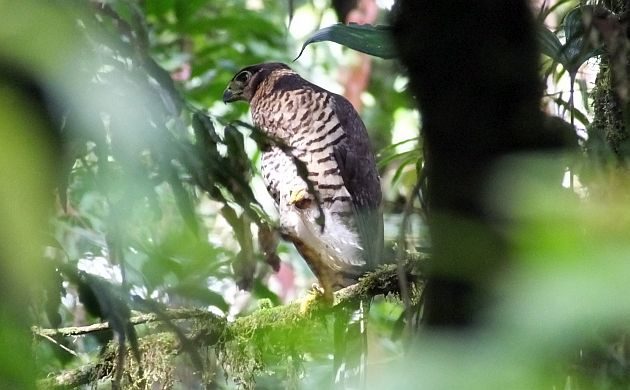
When you get serious about Big Day totals, dawn is everything, especially in tropical places. Shortly after the sky hints at light, birds begin to sound off and I’m not talking any old birds either but ones you probably ain’t gonna see the rest of the day. Those would be forest-falcons, maybe a Laughing Falcon and curassows and woodcreepers quickly followed up by an increasing array of additional birds keeping pace with the quickly growing light. Put yourself in the right place and you have a better chance of racking up a critical number of species. Ideally, one should do this in tropical rainforest as this is the most species rich habitat that also hosts the largest number of birds easily missed later in the day. Hear em once and you basically “got em”. Despite this truth, I pushed my luck and tried another idea, one that came back to shorebirds.
Good numbers of shorebirds move through and winter in Costa Rica but, there’s a catch. There’s not many accessible places to see them and, the main, best spots are a bit too far from the other key sites for a major Big Day route. To adequately count plovers and sandpipers and so on, you need to hit those roosting spots at night and more or less count the Arctic visitors by sound (fortunately, they do call at night). Having opted for sleep, the main, sweet shorebird night counting site wasn’t in my birding cards. Instead, my ace in the hole was a seaside lagoon at a spot called, “Bajamar”. I had no idea if shorebirds would be there but, it was worth a shot and I didn’t have any other choice. The road there also being owl-worthy, I found myself on it at the owl calling slot between 4 and 5.
This really is the best time to hear night birds in Costa Rica, at least in my experience. You can listen and try to call owls all night long but, usually, that’s a waste of time. Instead, listen in the right places an hour before dawn and you should hear several. The only problem was that didn’t pan out on October 24, 2026. Nope, no Pacific Screech-Owl (the most common species there), not even one of the many pauraques had managed to lift their odd voices to the sky. Thankfully, a distant Spectacled Owl gave me a break just before it got too light and some other birds began to sound off as well; moaning Collared Forest-Falcons revealing their lethal presence, Little Tinamous whinnying like miniature horses sucking helium, another bird here and another there including hoped for Double-striped Thick-knee (not made up, not AI I promise) as I made my way to the key and most special shorebird filled lagoon.
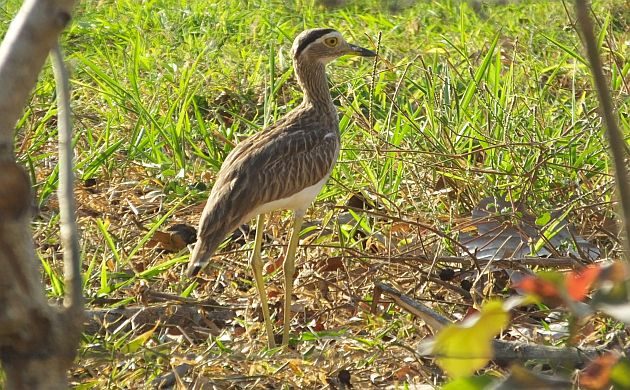
The lagoon was there as hoped and there were lots of birds but…the water was too high for ye small waders! Uh oh, nary a plover, nor a Willet, this wasn’t good but, at least some other birds were present. Dozens of Wood Storks and White Ibis and herons were flapping and croaking and rush houring their way to feeding spots. I couldn’t complain about that nor hearing two other elusive species; Ringed and Belted Kingfishers (Belted is way uncommon in CR). I scanned every corner, looking for a muddy edge, a shorebird happy border to no avail. Sandpiperless, I had to move on to nearby mangroves and the shore itself.
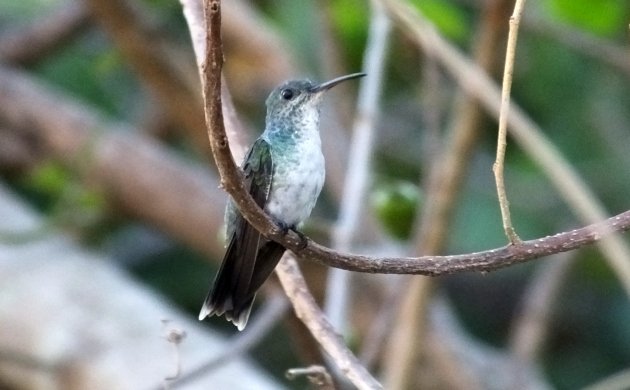
By now, it was 5:20 and the clock was ticking! Pishing in the mangroves turned up some birds although, ironically, the only mangrove resident that showed was the rare and endemic Mangrove Hummingbird. It was time to check the ocean, a true wild card, especially this big El Nino year. Recently, other birders had been seeing Red Phalaropes, Sabine’s Gulls, and other species that should have been way offshore. Amazingly, they were in play along with other rarities! I reached the black sand and I scanned and scanned as Barn Swallows zipped by and an Osprey called. You birds are welcome, you are all welcome on the Big Day list but where were the seabirds? Ahhh, carefully scanning with the scope, I thought I picked up some bits way out there in the middle of the Gulf of Nicoya. I focused my small handy Opticron scope in and out and realized that yes, I did, I did see some bits! Distant birds, much too far to identify but there they were, giving me hope that an errant and brave or confused shearwater might fly closer.
No tube-nosed being was confused enough to glide into my identifiable field of view on October 24th but, some other birds did. Expected Black Terns were there along with Royal Terns and a couple other species. Best was a couple of probable Arctic Terns but they were just too far to say for sure and hundreds of other birds were waiting. Surely curious about my presence on that lonely shore, a pair of Tropical Mockingbirds eyed me from a low Beach Almond. I gave them a nod, added them to the day list and on I went.
A Birding Drive from Dry Forest to Rainforest
Next on the Big Day route was critical roadside birding, a drive through open, dry forest, and then rainforest habitats hosting a treasure trove of species. This blend of birdy habitats would be my dawn chorus, one that would ideally include a high number of birds heard while cooly driving along. But wouldn’t they be hard to hear over the noise of the revving motor? Wouldn’t I need to stop and turn off the car and see if any birds felt like calling after being interrupted by controlled explosions, as mufflered as they were?
Not when the motor is electric.
With an electric vehicle, a birder can quietly cruise on by, hearing and ticking them off with windows down and sunroof open; picking up dozens of species in Zen birding fashion. And that’s how it sort of went; various birds did vocalize but, not as many as expected. A few were also notably absent (hello Lesser Ground-Cuckoo, Olive Sparrow and normally vociferous Long-tailed Manakin….). It was still good though and a fair portion of birds flitted into view or announced their presence.
In the dry areas, expected noisy parrots were around
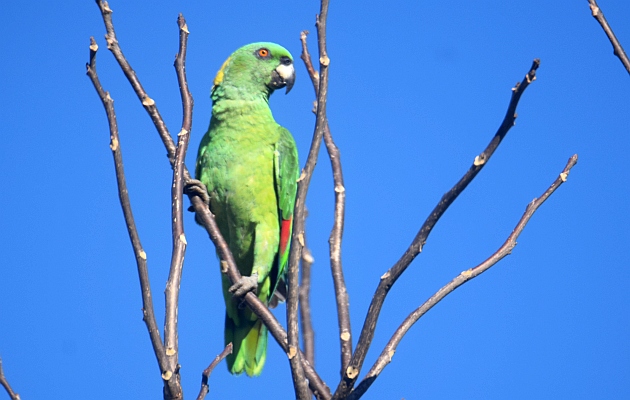
along with Black-headed Trogon and other species.
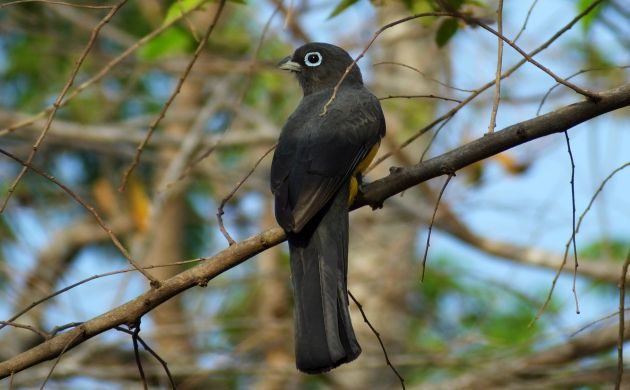
I reached rainforest at the Bijagual Road and drove straight up, the windows down strategy in full effect but, on this birdiest of stretches, the birds were fantastically and frustratingly quiet. I suppose they were taking a break? Or, figured they’s already sang enough on other days? Whatever the case, on a road where I typically hear dozens of species without trying, the avian scene was decidedly quiet. Not entirely and I still picked up Scaly-breasted Wren and several other species (and saw two Great Curassows) but it was much quieter than other days. No matter, I could still find the same birds on my walk in the adjacent Carara National Park! As quieter than normal as it was, I also still managed to find several key birds. There was the maniacal calling of Gray-cowled Wood-rails, sightings of a couple of swifts, a major bonus White-crested Coquette buzzed off by a not so charming Charming Hummingbird, a call happy Roadside Hawk, Zone-tailed Hawk, and some other species.
Carara National Park and a Tough Choice
Yet another critical stop, the rainforests of this important protected area are essential for a fine suite of lowland forest species. Even though the afore-mentioned road goes next to the park, it doesn’t quite host several species that occur on the park trails. A walk through is essential for any serious Big Day attempt and, thanks to my 7 p.m. bed time hour, I was ready to rock and bird roll it just after 8 a.m. That’s when the park opens in the off season and it’s not the ideal time for birding but the birds can still show and you don’t have a choice for earlier entrance anyways.
Having purchased my ticket in advance (necessary to enter the park) and no time to waste, I approached the park entrance window with phone screen at the ready (to show the entrance code) and identification (to prove that I was myself). After a brief exchange of pleasantries with the park guards and assurance that no, I did not have a plastic bottle or food (although I did have a contraband Cliff bar), I entered the trails.
Being three loop trails subsequently connected to each other, it’s more like one big trail but it’s not so long that you can’t walk (or run) all of it in an hour. To keep to schedule, I would need to at least do a brisk walk in the park, maybe not as fast as arm swinging park or mall walkers working on the heart rate but, pretty close. Unlike them, I would have to watch for potentially dangerous Fer-de-Lances on the trail (uncommon but definitely possible), while also looking and listening for birds. This is not a feat for the unfocused and I can’t recommend it for light-hearted birding but, it’s a must on a tightly scheduled Big Day. Luckily, the park trails are mostly flat, easy, and also very easy to notice any venomous snakes; perfect for a brisk Big Day walk.
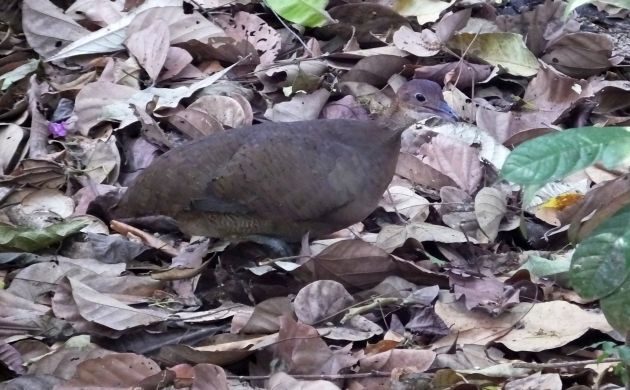
As I had hoped, the trails mostly paid off. Auditory birding and stopping for fruiting trees and mixed flocks turned up a fine array of target species, including such notables as the loud mouthed Rufous Piha, a couple trogons, a few woodcreepers, the stealthy Streak-chested Antpitta and so on and more. Especially nice were close views of Great Tinamou and Ruddy Quail-Dove, Riverside Wren and some other birds but, as rich as the birding was, it wasn’t quite good enough for breaking any Big Day records.
Don’t get me wrong, it was an hour and 20 minutes of good birding in Carara but, it just wasn’t reaching the level of species needed to identify more than 350 by the end of the day. That might sound nuts but seriously, having largely missed too many shorebirds, missing everything from manakins to various forest flycatchers and a couple dozen other key species, quick calculations made me realize that reaching 350 species was improbable. And, since that’s what I was shooting for, I figured the strain and investment in birding until 9 at night wasn’t quite worth it, at least not on October 24th, 2026.
If I had, I’m pretty sure I would have identified more than 300 species and that’s a fantastic total but, it was still short of the main goal.
Tarcoles Birding and the End of a Big Morning
I was quickly accepting that my Big day had turned into a Big Morning but it was only 9:30, and with the Big Day birding timer paused, I had all the time in the world to check the seaside village of Tarcoles. Heading into town, I was greeted by storks, spoonbills, and herons in a small wetland. As a token of appreciation, way in the shaded back part of the wetland was a hoped for Solitary Sandpiper, appropriately alone. I thanked it for showing as Northern Jacanas screeched and flashed their bright yellow wings and made my way to the beach.
What would the shore hold? Not a heck of a lot and no rare gulls but the clouds of distant Black Terns on the gulf were a cool reminder of bird connections between cold, northern marshes and warm tropical waters. I also finally saw some shorebirds! There was a Prairie Willet (fresh off the taxonomic press), Ruddy Turnstone skipping in and out of shore-washed glassy rocks, and a meditative Hudsonian Whimbrel. Best of all was a sudden flyby flock of fast flying shorebirds. Not reacting quick enough to the avian ambush, I ended up focusing on them from behind; dark, thick black tips to white tails, wing stripe, and flying with a similarly patterned but slightly smaller bird with a brownish back…Surfbirds (and that one turnstone)!
Scarlet Macaws also called from the beach trees as they typically do, a Common Black Hawk flew past, and frigatebirds soared high overhead. Not a bad end for a big morning even if I actually ended it with a couple of not so exciting but just as countable birds; Rock Pigeons and House Sparrows at the charging station in Orotina. I don’t knock them, they nearly brought me to 200 species (my trip report). Maybe next time, there will be enough calling dawn birds, shorebirds, and avian surprises to have me birding up and over the mountains and pushing past 350? Maybe even 400? The birding cards gotta fall into place but, in bio-heavy Costa Rica, you bet that glorious birding madness is possible.







Leave a Comment