

By Rob McConnell
Rob McConnell is a lifelong amateur birder who has recently discovered that being retired allows one to adopt a far more committed approach to the pleasure of observing birds and their behaviour.
Our morning drive had been surprisingly quiet. As we drove the dusty tracks of Tsavo West National Park in early June, the acacia scrubland offered little in the way of avian activity. The birds, it seemed, were elsewhere—perhaps sheltering from the heat, perhaps simply absent. We exchanged glances and shrugged. Such is the nature of birding; some days are more productive than others.
Then we approached the waterhole, and everything changed.
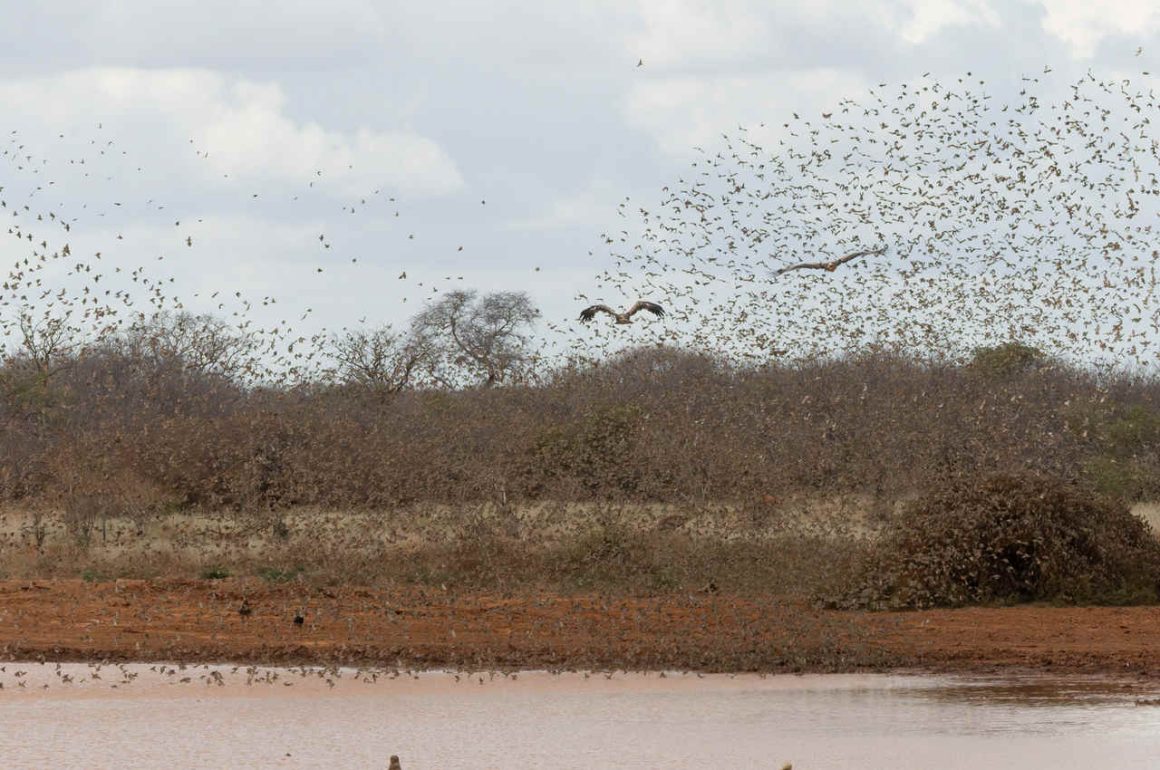
What greeted us defied easy description. The shrubs and bushes ringing the water were alive—a seething, rippling mass of small birds packed so densely that individual branches vanished beneath their collective weight. Tens of thousands. Hundreds of thousands. The numbers became meaningless abstractions. These were Red-billed Quelea, and we had stumbled upon one of Africa’s most extraordinary avian phenomena.
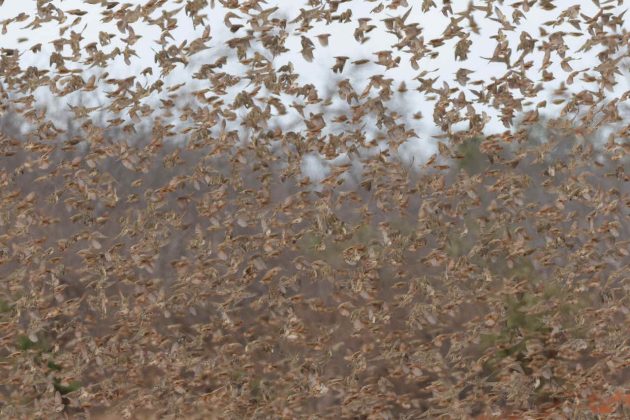
The Red-billed Quelea is a bird that trades in superlatives. Closely related to weavers, this sparrow-sized finch is the most numerous wild bird on Earth, with an estimated population of 1.5 billion individuals—a figure so vast it strains comprehension. In wetter years, when food is abundant and breeding conditions favour population explosions, quelea gather in flocks so immense they darken the sky and strip crops bare within hours. Farmers call them “feathered locusts,” and entire government programmes across sub-Saharan Africa are dedicated to controlling their numbers. Yet here, at this remote waterhole somewhere in the 9,000 square kilometres of Tsavo West’s red-earth wilderness, the quelea were simply being quelea: gathering in their multitudes to drink.
What makes these congregations so mesmerizing is the birds’ collective behaviour. Unlike many species that flock loosely, quelea move with extraordinary synchronization. As we watched, a portion of the mass would spontaneously lift from the bushes, rising as a single cloud that wheeled and twisted above the water. The flock would then descend in a coordinated wave, each bird dipping to the surface just long enough to snatch a mouthful of water before climbing back into the air. The effect was hypnotic: a living, breathing organism composed of countless individual parts, each reacting instantaneously to the movements of its neighbours.
This synchronization is more than a spectacle; it is a survival strategy. By moving as one, the quelea confuse predators, making it nearly impossible to single out an individual target. The sheer density of bodies creates a visual chaos in which any predator’s focus dissolves. Safety, for the quelea, lies not in strength or speed but in numbers beyond counting.
And yet, predators had gathered. Of course they had.
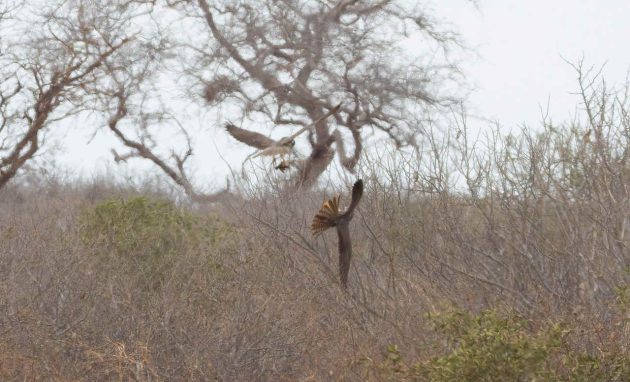
Perched in trees and on the ground around the waterhole, we counted roughly forty Tawny Eagles—an astonishing concentration of raptors in itself. Always variable in their plumage, several displayed the striking white morph. Several Lanner Falcons sliced through the sky, their flight more urgent, more purposeful, with pairs seen passing victims. On the ground and in the shallows stood African Woolly-necked Storks and hulking Marabou Storks, their prehistoric silhouettes unmistakable. White-headed Vultures completed the assembly, patient and watchful.
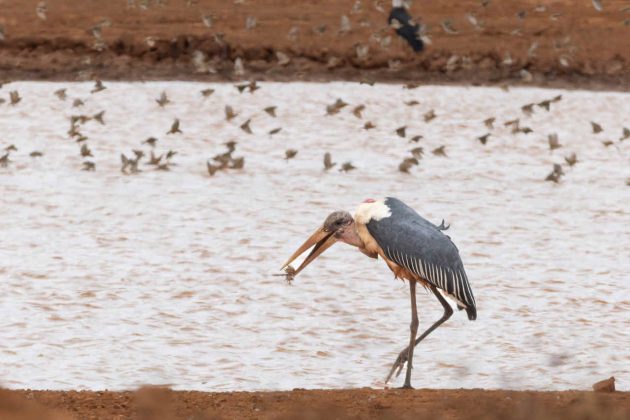
As each wave of quelea launched toward the water, chaos erupted. The eagles and falcons plunged into the swirling clouds, talons extended, snatching victims mid-flight. The storks and vultures adopted a different strategy entirely: they simply waited. In the frenzy of descent, some quelea misjudged their approach, crashing into the water or colliding with one another. These unfortunates—stunned, waterlogged, disoriented—became easy pickings for the wading birds, who plucked them from the surface with unhurried efficiency.
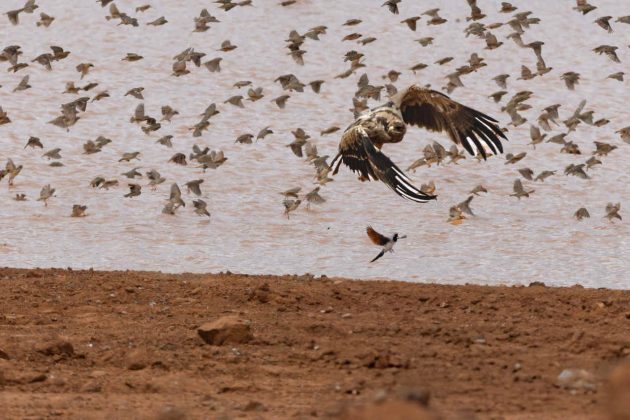
For thirty minutes, we sat transfixed as the drama unfolded. The air thrummed with wingbeats and the high-pitched chatter of countless quelea. Eagles wheeled and dove. Falcons struck with devastating speed. Storks waded through the carnage with the indifferent patience of undertakers. It was beautiful and brutal in equal measure—a vivid reminder that the natural world operates by its own unsentimental logic.
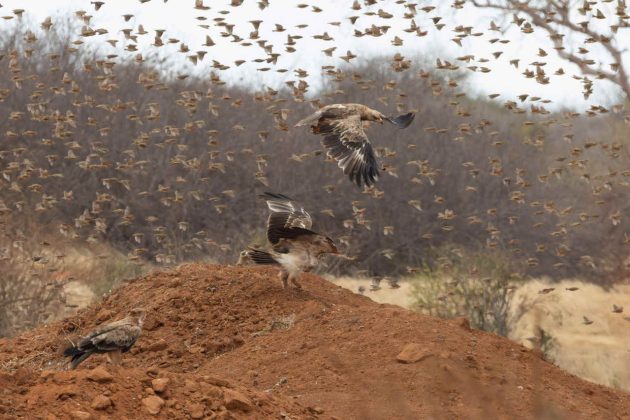
Gradually, the frenzy subsided. The predators, sated and sluggish, began to drift away from the waterhole. Tawny Eagles settled heavily into the treetops. The Marabou Storks stood motionless, digesting. With the threat diminished, the quelea flocks shifted from panicked flight to calmer, more orderly drinking rotations.
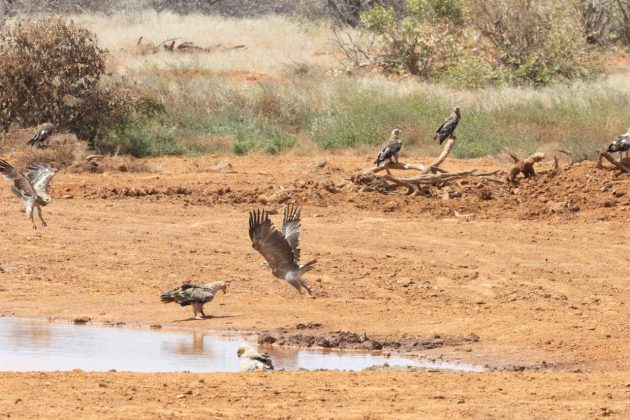
We lingered a while longer, reluctant to leave. What we had witnessed was not merely a birding highlight but a glimpse into the ancient rhythms of predator and prey, abundance and exploitation, survival and sacrifice. The quelea, for all their vulnerability, would endure. Their numbers guaranteed it. And the predators, too, would return tomorrow, and the day after, drawn by the same irresistible bounty.
As we finally drove on, the bush seemed less quiet than before. Perhaps the birds had been there all along, and we had simply needed reminding how to look.







Very well written; the article provides readers with informative and engaging insights about the Queleas. Watching and recording that incredible spectacle for more than 30 minutes must have been an unforgettable experience. I can only imagine the sheer drama and movement of such a massive flock.
Wow, what an amazing event to encounter! Bird behaviour is fascinating. Thanks for sharing this.