
I like islands, but they have one drawback if you like birds: the smaller they are, the fewer species of birds they have. I knew as soon as I signed up to be a member of the 10000 Birds team for the Global Big Day (10 October) that I wouldn’t be recording lots of birds because I would be on the Balearic island of Menorca in the Mediterranean Sea. However, though my score wouldn’t be high, I reckoned that a day’s birding on Menorca could produce at least 50 species, so that was my target.
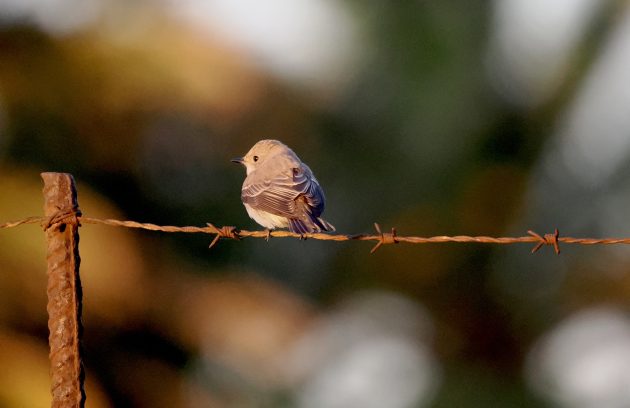
The Spotted Flycatcher on his favourite fence
My day started before dawn on the Bay of Fornells, and it got off to a good start when I spotted a distant Osprey, setting off to fish for his (or her) breakfast. Menorca has six pairs of breeding Ospreys, so it’s a bird I expect to see every time I visit Menorca, but not every day. Then, minutes later, the Spotted Flycatcher I’d first seen a couple of days before appeared on its favourite fence. Sardinian warblers chatted from a nearby pine tree, while Greenfinches wheezed from the top of the same tree. Collared Doves, birds that have only been in the Balearics for the last 29 years, were in good voice, and there was a whole line of them on a nearby wire.
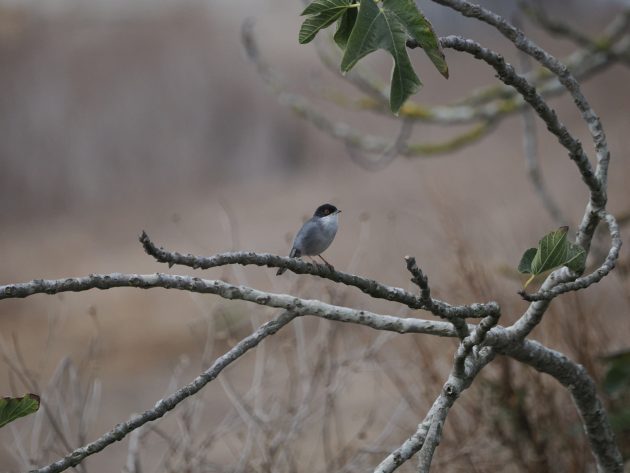
Sardinian Warblers rarely pose to have their picture taken
Thirty minutes later I was up to 25 species, so I was able to enjoy my breakfast with half my target already achieved. My next destination was Son Bou, where there’s a small marsh that invariably holds water even when the rest of the island is parched and dry, as it was this year. Walking down the path – the Cavi de Cavalls – to view the marsh, I noted a small flock of Cattle Egrets and two Grey Herons in an adjoining field. Cattle Egrets, like Collared Doves, are also new colonists on Menorca, first breeding in 2006, but now they are widespread and easy to find (just look for some cows, though surprisingly there were none to be seen here).
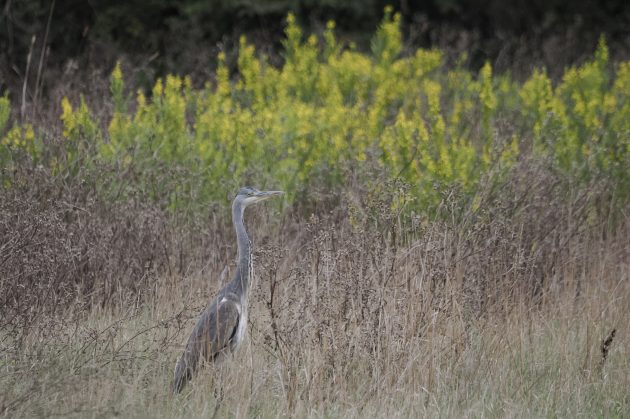
One of the two Grey Herons at Son Bou
The mash was hardly teeming with birds, but it produced a pleasing number of new species for me: Moorhen, Coot, Shoveler, Mallard, Teal and best of all, a Western Swamphen. It’s a bird that we used to call Purple Gallinule, which of course led to confusion with the North American bird of the same name. It’s another new colonist on Menorca, but can be difficult to find.
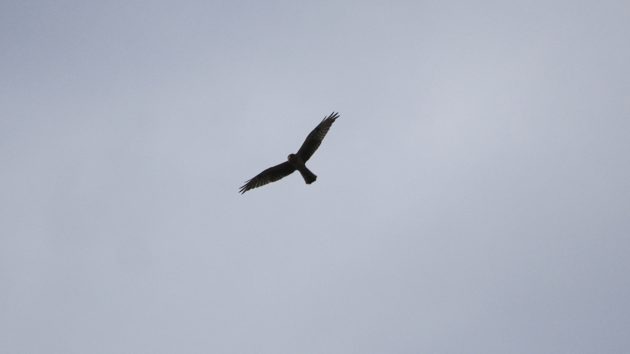
Montagu’s or Pallid Harrier? It seems most likely to be the latter. The two species have a similar flight silhouette, and I only saw the bird soaring high above me
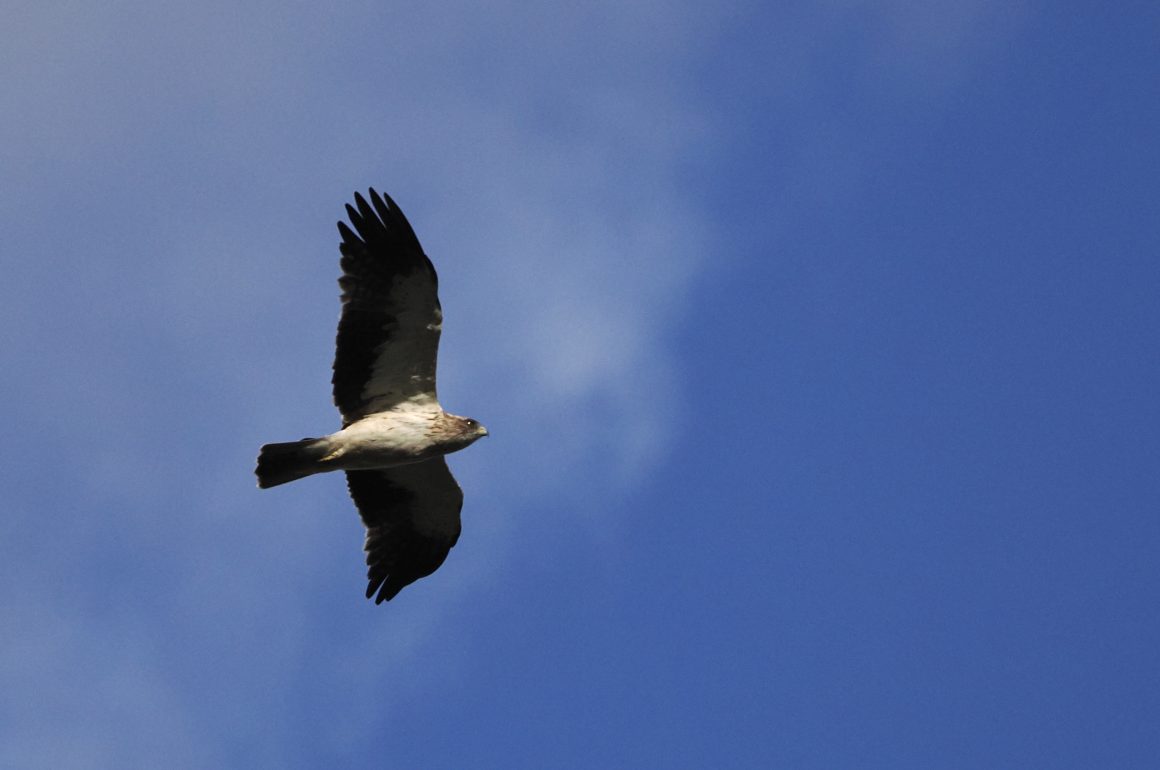
A couple of young Marsh Harriers were not unexpected, and nor was the Booted Eagle (header photograph) soaring high over the marsh, as these small eagles are common on the island. However, much more exciting was the slim-winged harrier flying with it (above). Was it a Montagu’s or a Pallid? I snapped a few pictures of it soaring overhead: not great shots, but they show its long, slim wings and long tail. I reported it on eBird as a Montagu’s. This prompted a response from Pau Castell via eBird that it was most likely a Pallid, as one had been reported from the same area in previous days. Pallid Harriers are rare birds in Spain, but have been recorded increasingly often in recent years.
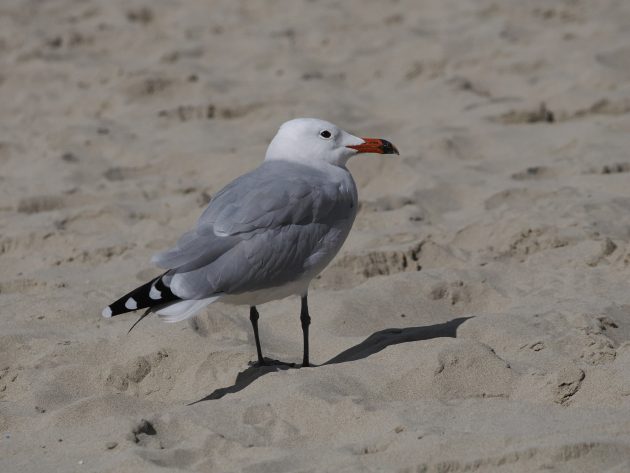
Audouin’s Gull on Son Big beach: ridiculously tame, as usual
Son Bou is popular with tourists because of its long, sandy beach. It was a near-certain stake out for Audouin’s Gull, as I’ve never failed to see one here, and I wasn’t disappointed this time. There were several dotted along the beach, watching the sunbathing tourists in the hope of a hand out. Once regarded as the world’s rarest gull, it is a species that has enjoyed something of a population boom in recent decades. It’s a handsome bird, and one that I always enjoying seeing and photographing. The latter is not a challenge, as they are usually ridiculously tame. The beach gave me one additional (and predictable) bird: Shag. I spotted three distant individuals.
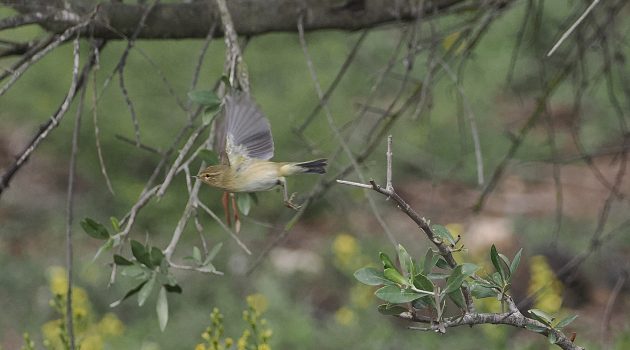
A Chiffchaff behind Son Bou beach
The list was now in the high 30s, but this wasn’t a high-pressure day’s birding, so it was time for lunch in the nearby town of Es Mercadel. A local speciality is tomato bread – that’s toasted bread, spread with crushed tomato then topped with ham. It’s what we ordered, and very good it was too. Washed down with a glass of rosé, it set me up for the afternoon.
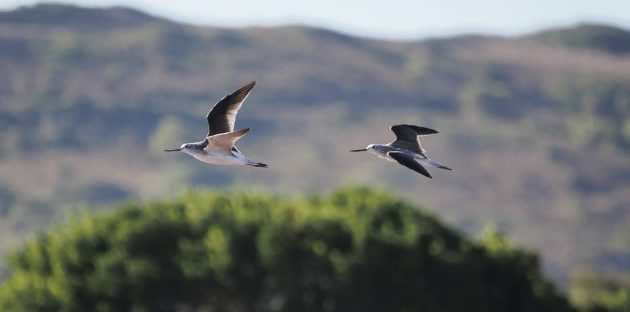
Two of the Greenshanks at ses Salines
I went back to the disused salt pans (ses Salines) in the Bay of Fornells. Getting close to the pans is a challenge: I took of my shoes and socks and paddled along the beach. The water was warm, the beach soft and sandy, so it was a pleasant experience. It was a rewarding one, too. Common and Green Sandpipers, nine Greenshanks, at least 20 Kentish Plovers and a couple of Ringed Plovers boosted my day’s tally nicely, while an unexpected bonus was a good view of a Bluethroat, a secretive species that winters on the island in small numbers.
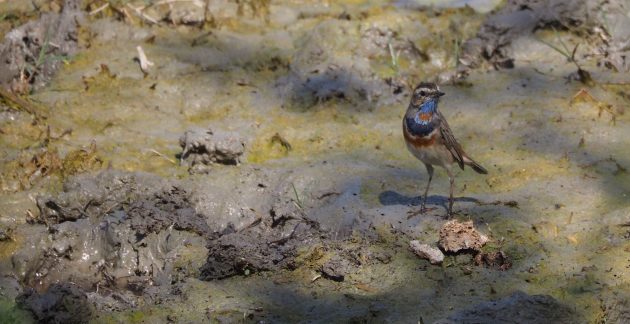
Bluethroat: an unexpected bonus bird
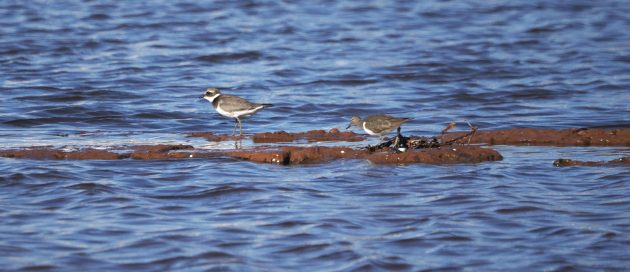
Ringed Plover with a Common Sandpiper at ses Salines
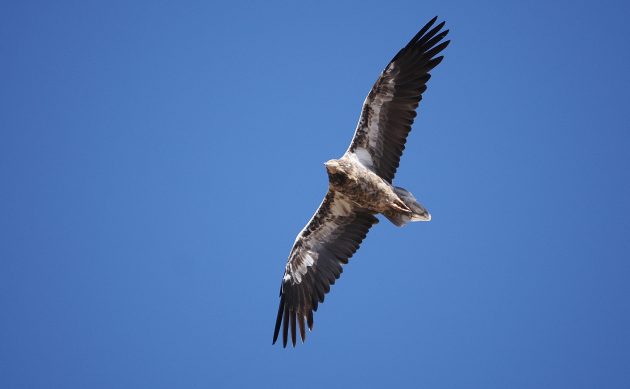
Immature Egyptian Vulture. You only need to see one individual on a big day
My last quest of the day was for an Egyptian vulture. Menorca has 60 breeding pairs, and unlike the population on the Spanish mainland, they are non migratory. I managed to see just one (above), but that’s all you need on a big day. I reckoned that would be my last new bird, but I drove back to base a Grey Wagtail flew up from a damp ditch next to the road: species No 53. Grey Wagtails don’t breed on Menorca, but are widespread wintering birds, and on subsequent days I saw several more.
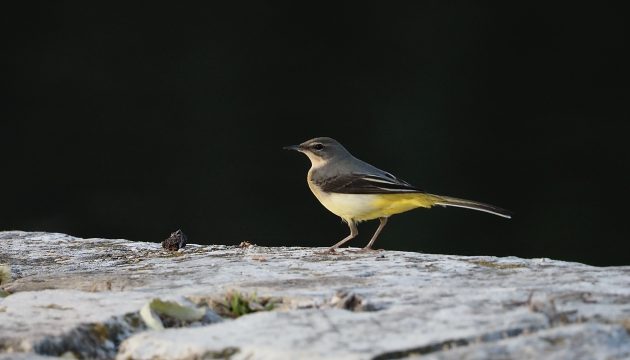
Grey Wagtail, my final (and 53rd) bird of the day
OK, 53 species is hardly an impressive total, and if I had tried harder I would probably have scored another three or four, but it was still an enjoyable day. That evening I had the satisfaction of logging my list on eBird. It also contributed, in a small way, to the 10000 Birds team total.
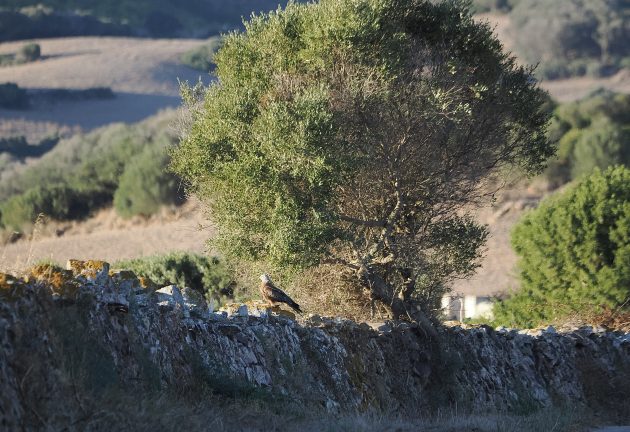
A Red Kite perched on a typical Menorcan drystone wall. They are common on the island





Leave a Comment