

The biweekly reminder on my phone “10,000 Birds” generally equates to a routine (but much appreciated) conundrum of what can be shared that is interesting enough, bird-related, and politically appropriate. The last of those, of course, is applicable not because of what can be considered controversial, but what can get visas revoked. I’m trying my best to avoid speaking of how we’re living in a rapidly expanding police state and that fascism is only capitalism that’s becoming desperate to hold on to power. Oh, dear reader, see how easily I fall victim to this? I really should see a shrink about this condition.
Anyway, the escape from human societal collapse almost always involves birds, for which I’m grateful. I’m also immensely grateful for my life as a bird guide — you can learn about my journey (as well as David’s and Rolf’s) here — which has allowed me to share space and time with species I had never even known about. Having to pen another article for this blog, I began leafing through my library which has now grown to unwieldy proportions. Checking some of my previous posts, I noted a strong preference for LBJ’s — I seem to enjoy sharing selections of small, nondescript birds. In light of that, I considered sharing some images from a more vividly plumaged family, and as it turns out, I had quite a few frames with sunbirds in them.
In my annual pilgrimages to East Africa, the mecca (and birthplace) of safari, I’ve photographed 21 of approximately 60 species of sunbirds that can be found in the region. Some, like Blue-throated Brown Sunbird, I’ve seen but didn’t manage a photo. There have been other sightings of brownish, olive, sleek sunbirds with decurved bills that were too fleeting for me to identify. Typically, only adult males in breeding plumage show the fantastical iridescent plumage the family is known for. Adult females and juvenile birds are notoriously difficult to identify most times, especially within species groups that are closely related. Sharing 21 of 60 may not seem like much, but I’m proud of it nevertheless — I’ve only been to Kenya, Tanzania, and Uganda, and most of these have been general, casual safaris during which I was birding with my usual nonchalance. It should also be noted that the total number here also includes vagrant, migratory species. So maybe I’m doing better than I give myself credit for?
As I prepared this selection, I contemplated which was the best way to share. Alphabetical? My usual go-to is taxonomic order, where the relations across species can often be easily visually appreciated. And so, here I present a cross-section of members of the mostly nectarivorous Nectariniidae family.
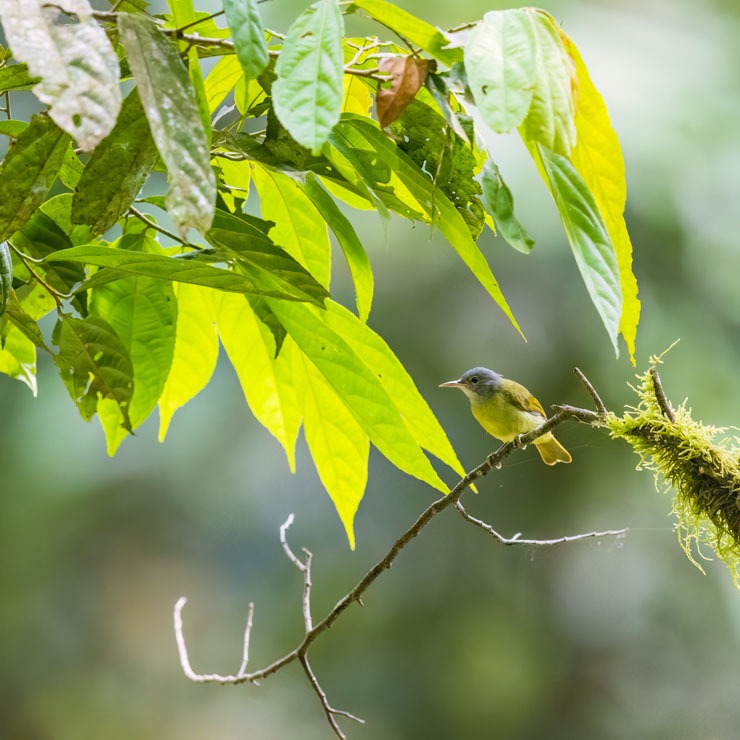
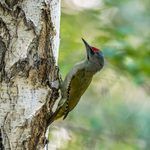
The Grey-headed Sunbird doesn’t look much like a sunbird at all, and if it wasn’t for our local guide I’m certain this would’ve gone unnoticed. This bird has a fairly wide distribution across the Congo basin; it surely is much more common than eBird suggests.
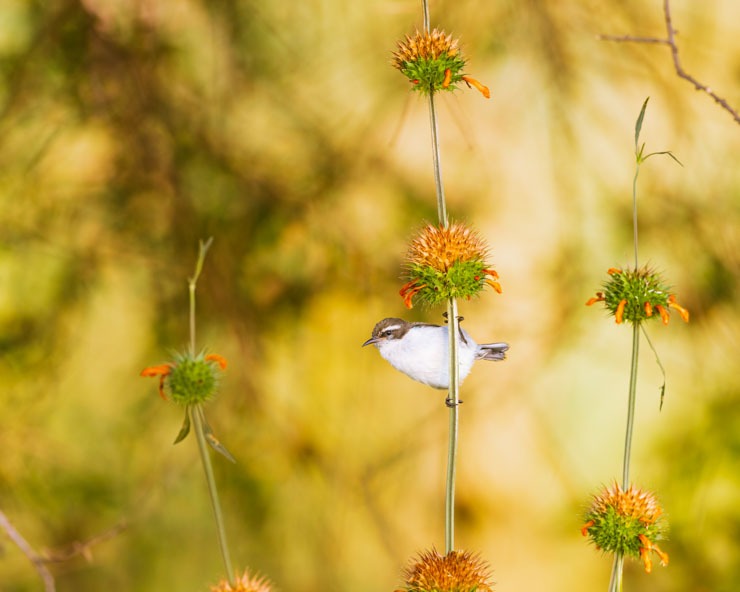
I’ve seen Eastern Violet-backed Sunbird a couple of times, the namesake violet is not visible here as this is firstly the front of the bird, and secondly it’s likely a young female so therefore didn’t have a violet back at all. It did have a back, though.
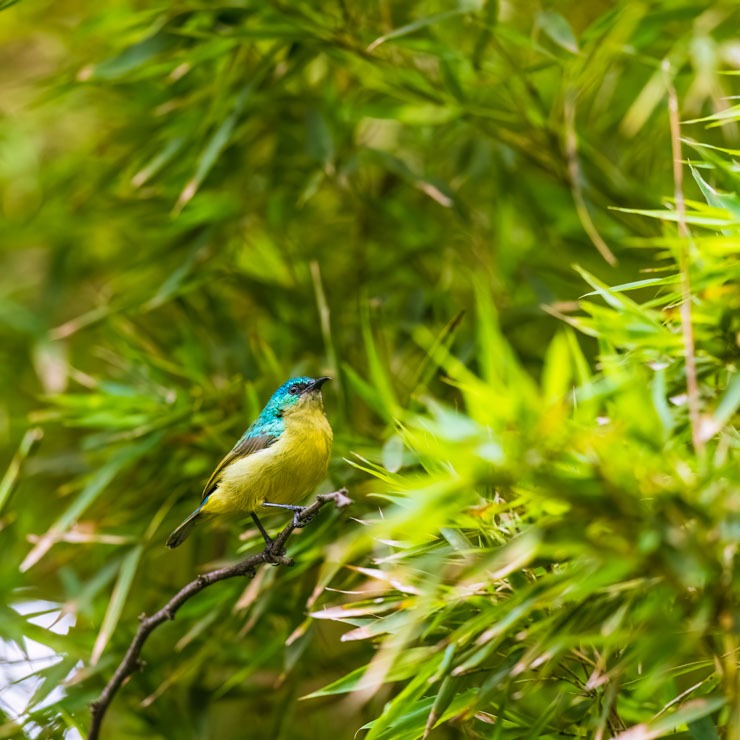
The Collared Sunbird is another of the short-billed, chunky sunbirds. As many of these sturdier-billed birds are, they consume a lot of insects and small arthropods in addition to small fruit and nectar.
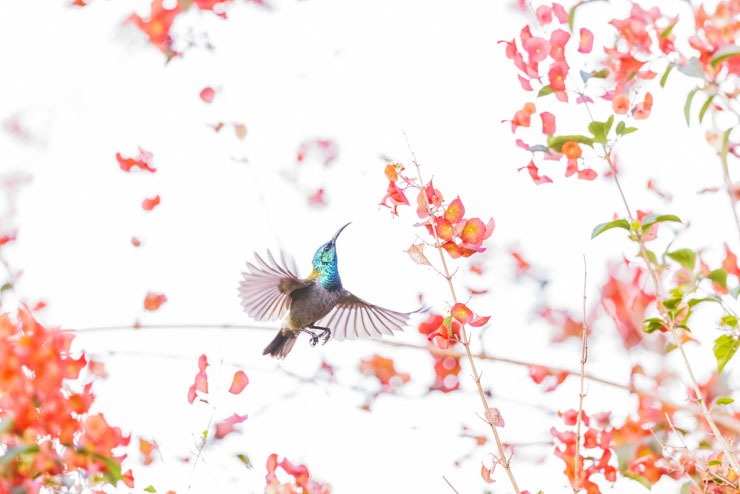
We’re now entering the world of the distinctively curve-billed sunbirds with the Green-headed Sunbird, seen here hovering as their New World equivalents do.
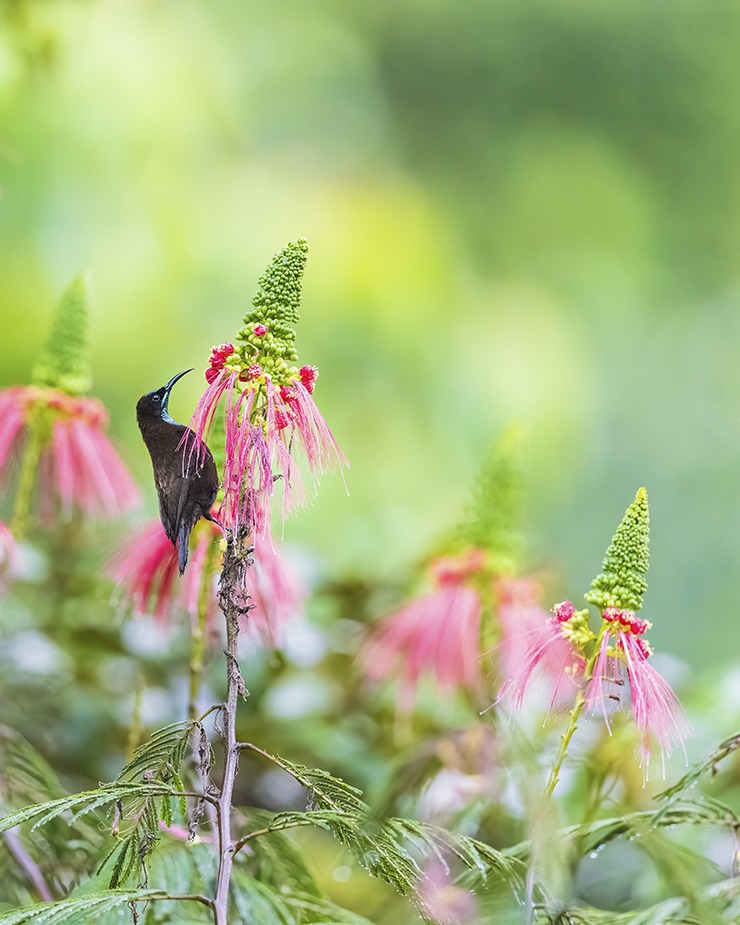
Another forest denizen of the Congo basin (also extending to West Africa) is the Green-throated Sunbird, extreme western Uganda is the only area where I’ve crossed paths with it. Most people visit Bwindi Impenetrable Forest for Mountain Gorillas, but the birding isn’t bad at all.
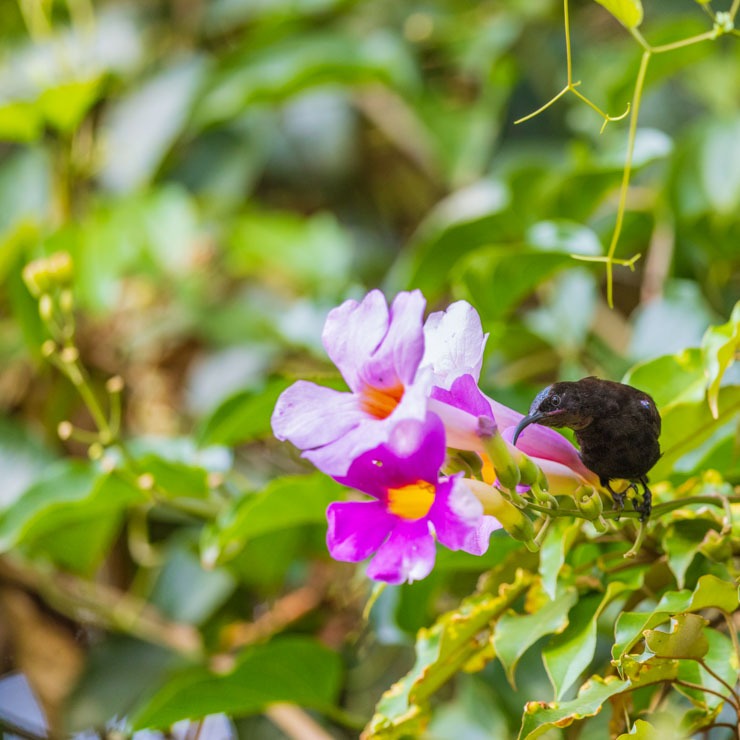
I always struggle to photograph Amethyst Sunbirds as whenever they give me a decent head turn, their iridescent amethyst throat and greenish-blue crown shift to a coffee-infused hue I actually quite like. I’m so conflicted. Pictured here is a male piercing the base of a flower for nectar without shouldering the responsibility of pollination.
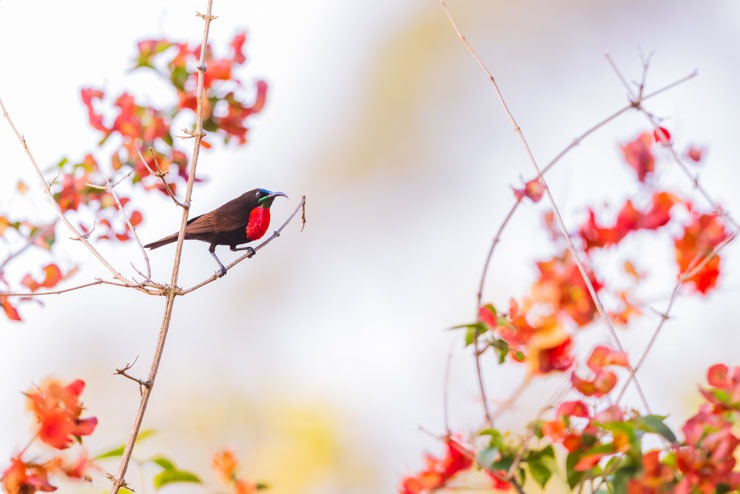
As most birds tinged with any degree of red do, the sight of a Scarlet-chested Sunbird elicits widespread gasps.
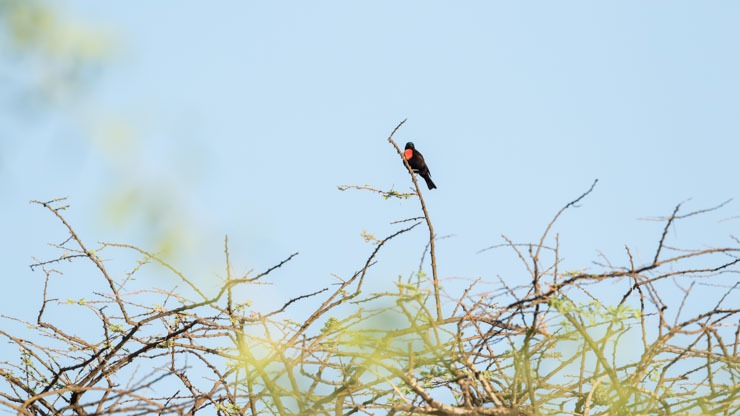
Extremely similar to the previous species is Hunter’s Sunbird, adult males separated by throat colour. Female Hunter’s Sunbirds are slightly lighter brown below than females of the previous species. Good luck. Although to be fair there is little overlap in habitat preference for these two species, so it’s usually one or the other, depending on where you are. This very distant male was photographed on our first safari in Kenya seven years ago.
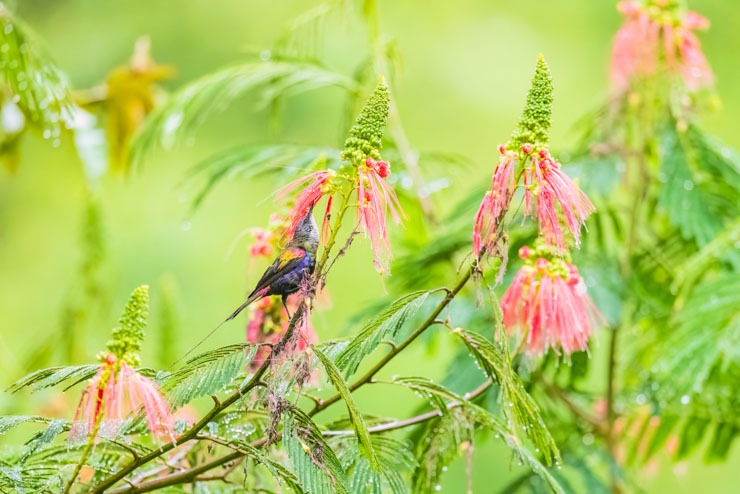
The excessively streamlined Purple-breasted Sunbird is endemic to the Albertine Rift which straddles Uganda, Rwanda, Burundi, and the Democratic Republic of the Congo. Pictured here is a moulting male.
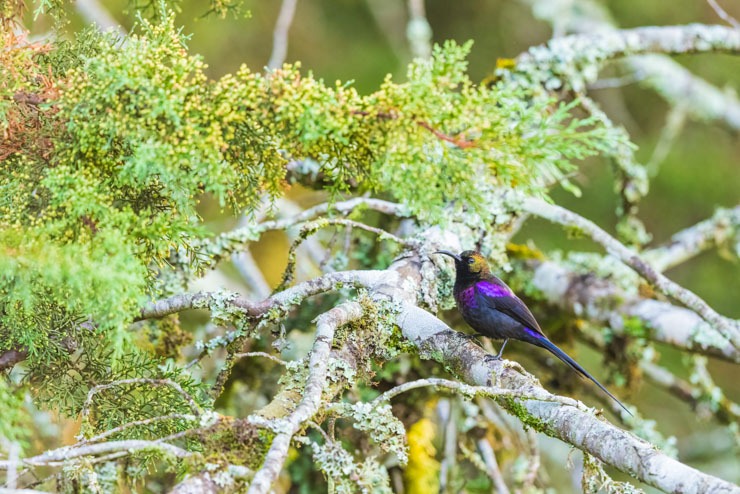
Confined to the highlands of East Africa is the Tacazze Sunbird, its name is derived from the ancient Ethiopian Ge’ez language.
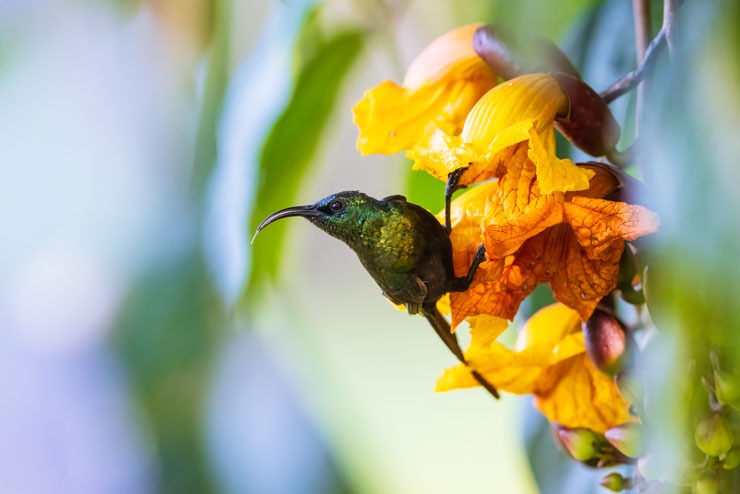
We can argue about gold, copper, and bronze all day, but the Bronze Sunbird certainly has no silver.
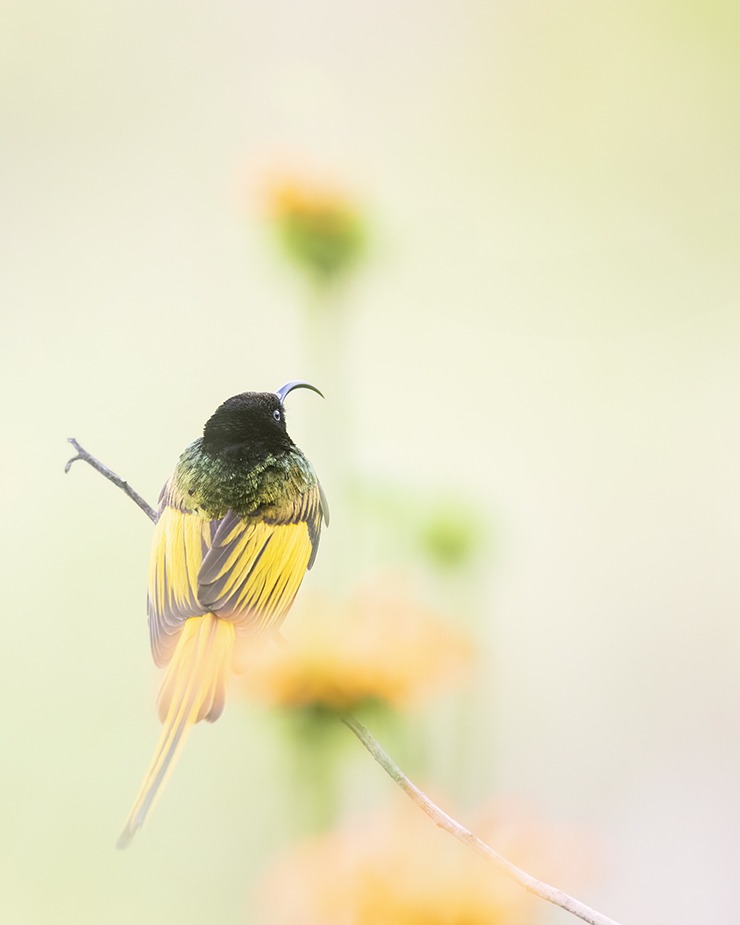
One of the most distinctive sunbirds for its languid profile and golden wings, both male and female Golden-winged Sunbirds have the namesake field mark. Like the previously mentioned trio of long-tailed sunbirds, this species is also considered a highland sunbird, rarely (if ever) found below 1,800m above sea level. Pictured here is a male, also with a golden-edged tail, seemingly contemplating his choices.
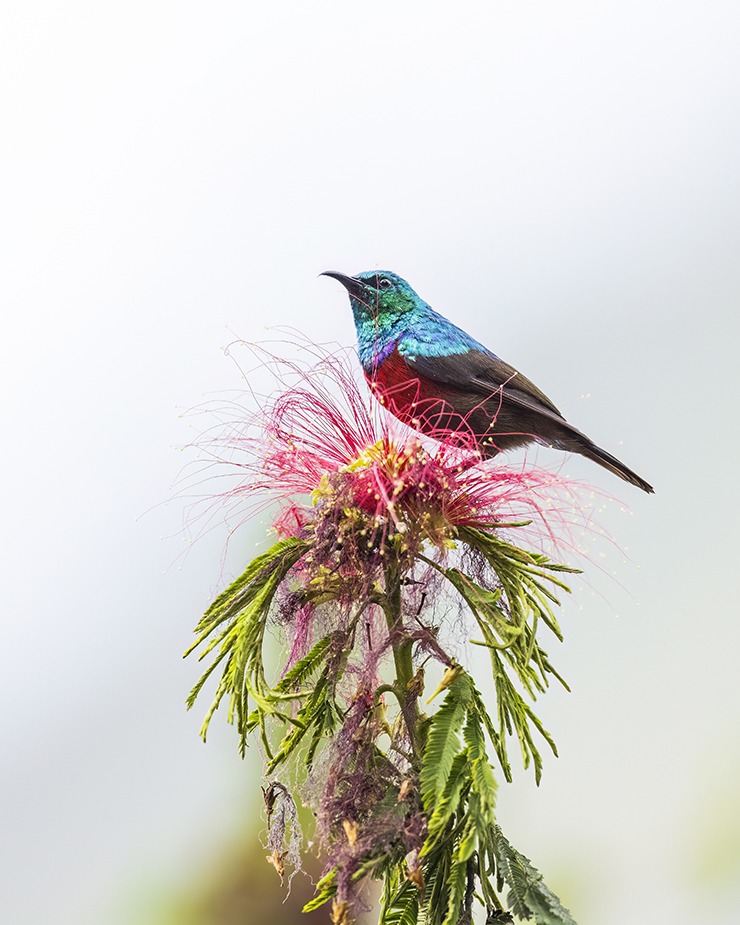
The group of double-collared sunbirds comprises some frustratingly similar species, separated very often by merit of location, habitat, and vocalisation. Try measuring the width of that breast-band, better yet the violet border is definitively wider than that of another species seen 30m up in the canopy. And yes, there is some range overlap. Pictured here is a Northern Double-collared Sunbird.
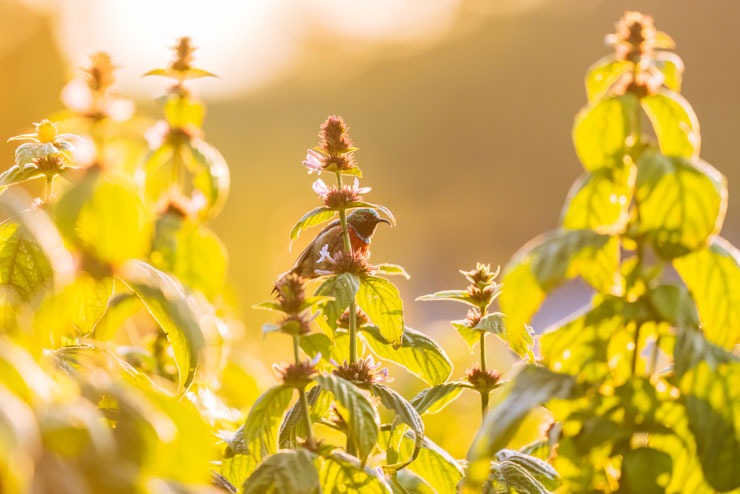
Steel-blue versus violet uppertail-coverts seems to be the key to differentiating an Eastern Double-collared Sunbird from the previous species. As well as a narrower red breast band and lighter underparts. But sometimes they hide behind vegetation and the sun decides to rise behind them.
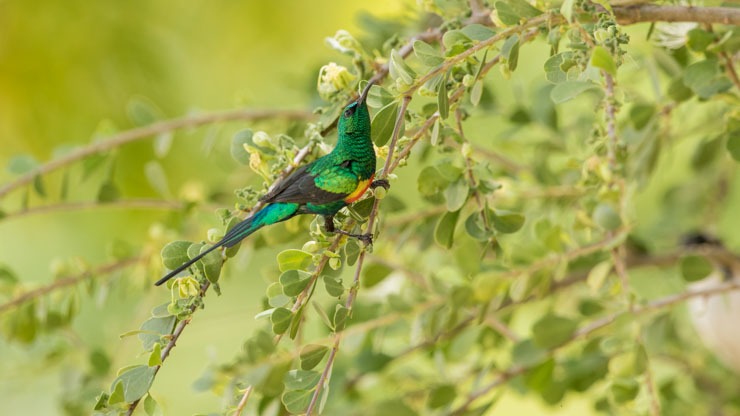
If it were up to me, I’d name all birds “beautiful”. Here’s a Beautiful Sunbird.
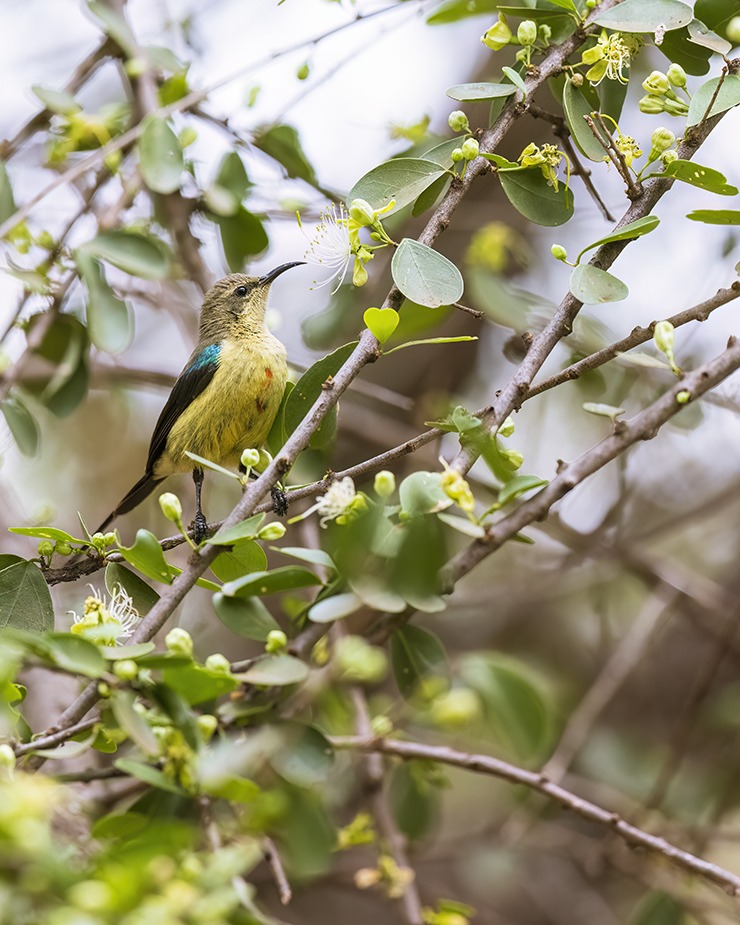
Another strong contender for the “beautiful” moniker is the Gorgeous Sunbird. Full disclosure, both were considered conspecific until recently. Compliments are also difficult to differentiate, so choose your words wisely.
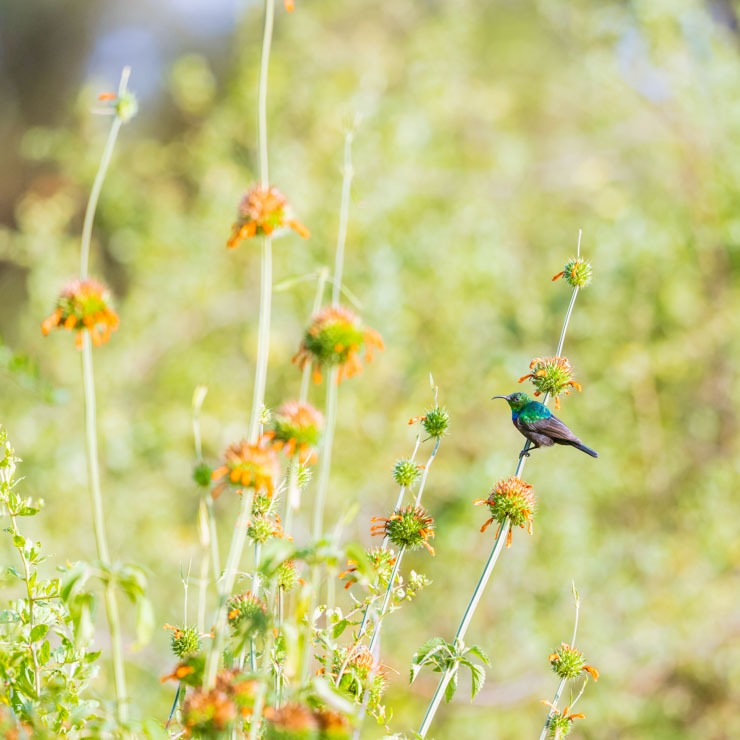
The best advice I can dispense for someone keen on seeing sunbirds is to find the plants they feed on. Areas with groups of flowering shrubs attract several species like this Marico Sunbird. The closer the flowers are to the ground, the easier the viewing.
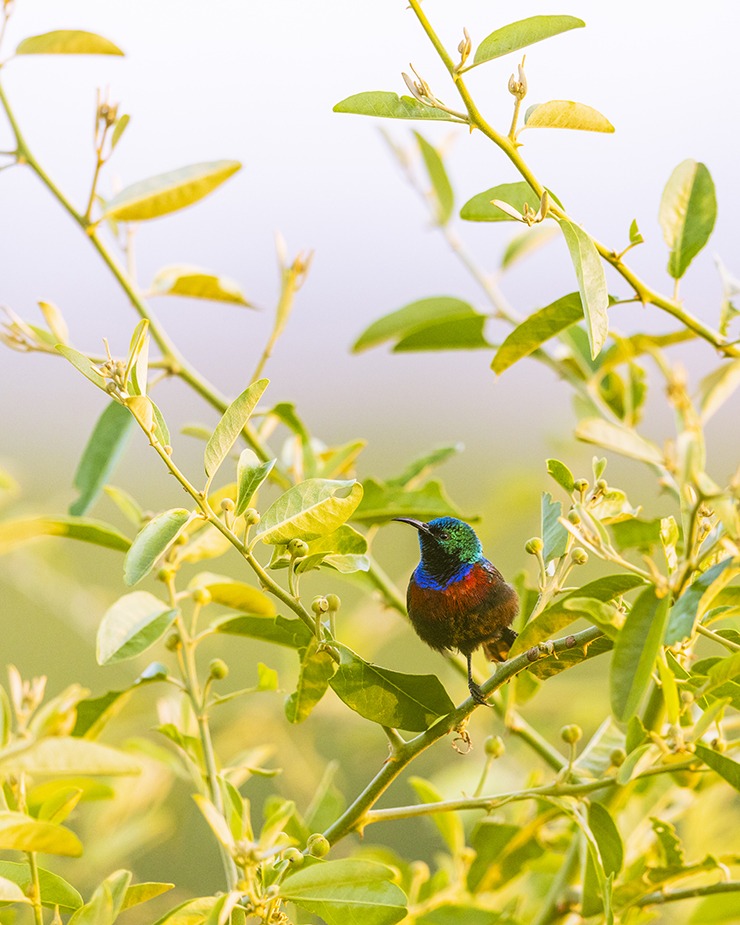
Much more blue than green, the Red-chested Sunbird is one of my favourite species for its dark sapphire undertones.
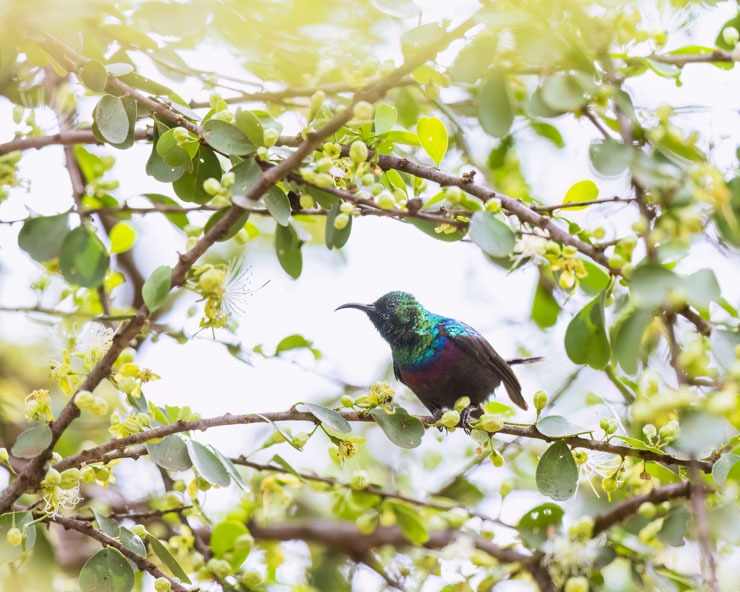
A small bird with a small range, it took me many visits to Tsavo before I was able to find a Tsavo Sunbird. Naturally, after the first (distant) sighting, I managed to find a couple others outside our room.
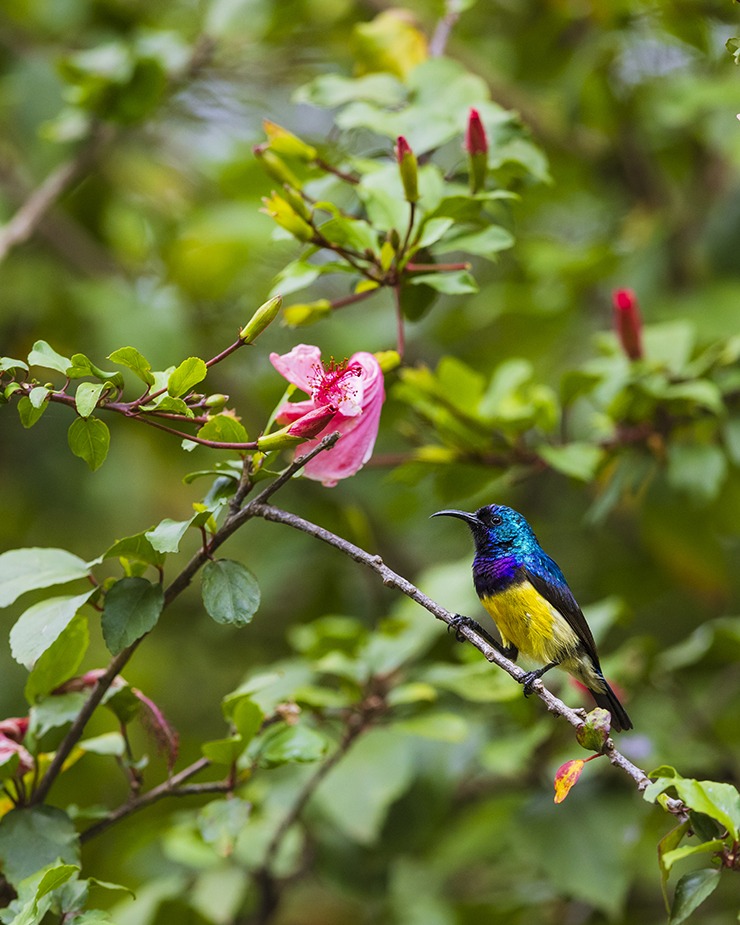
I had always thought that the Variable Sunbird was named for its extensive plumage variation, but according to one of our local guides in Tanzania, it is named for its incredibly variable habitat preference. It makes perfect sense given its range across much of sub-Saharan Africa, save for the dense jungles of the Congo basin.
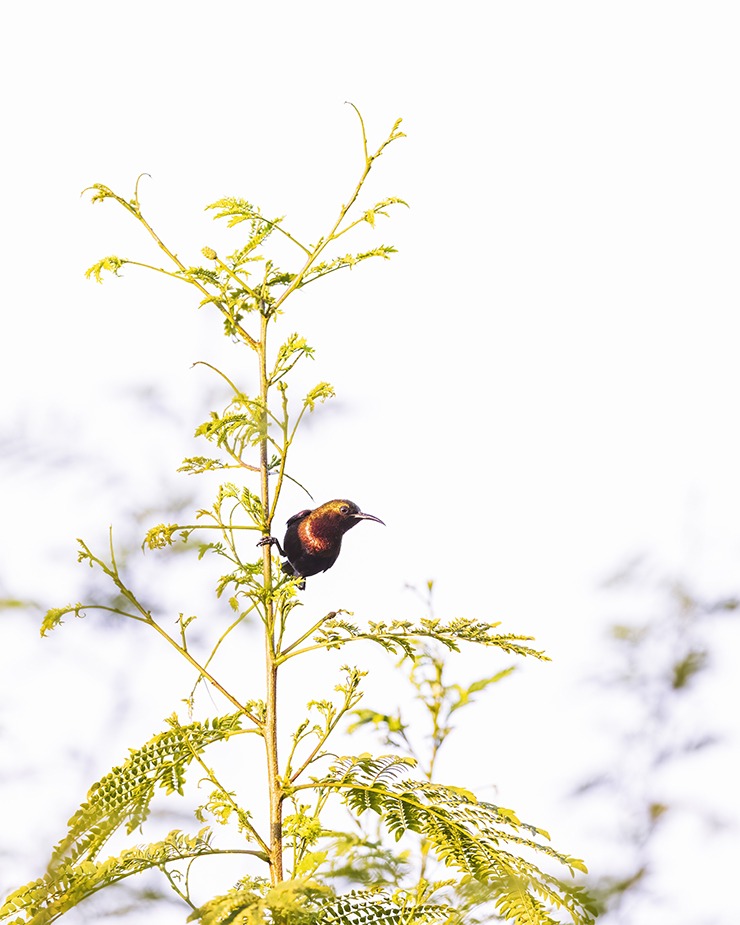
Incredibly iridescent, if that was ever a thing, is the Copper Sunbird.
Which one of these is your favourite? Have you seen any of these? Did I exclude a species (or more) which you were expecting to see included in this collection?







Leave a Comment