

Where’s the best seat on a RIB if you are out at sea on a pelagic birding trip? It’s a question that my companion David Tipling and I debated a lot last week in Portugal. We had travelled to Sagres, the south-westernmost town in mainland Europe, to see and photograph seabirds, and had booked three pelagic excursions. On the first two we sat in the front row, on the last we sat at the back. Our conclusions were that the front is definitely the best for photography, but also the least comfortable. The back, on the other hand, is much more comfortable, but you are more likely to get wet from spray, while it’s also more difficult to take photographs, as there’s bound to be someone sitting in front of you. So take our advice – go for the front, but be prepared for an exhilarating time, a bit like riding a galloping horse jumping over fences.
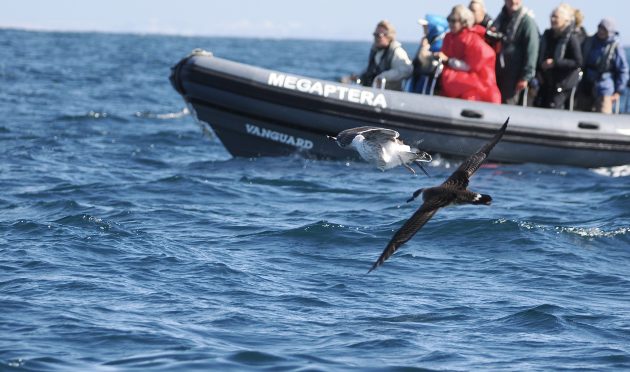
Great Shearwater, with a RIB behind. None of the passengers on the RIB (they were all keen birders) seems to have noticed the shearwater
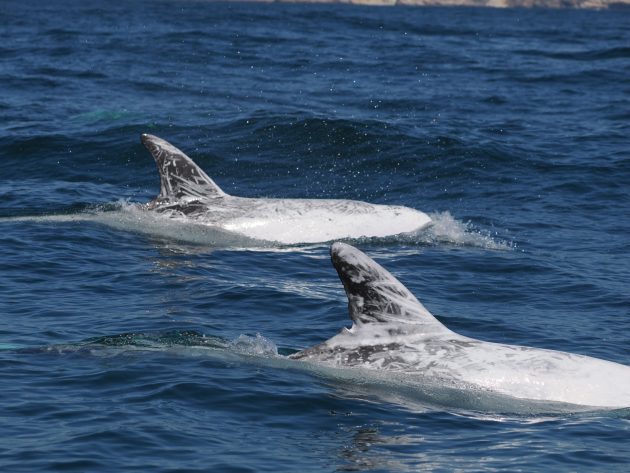
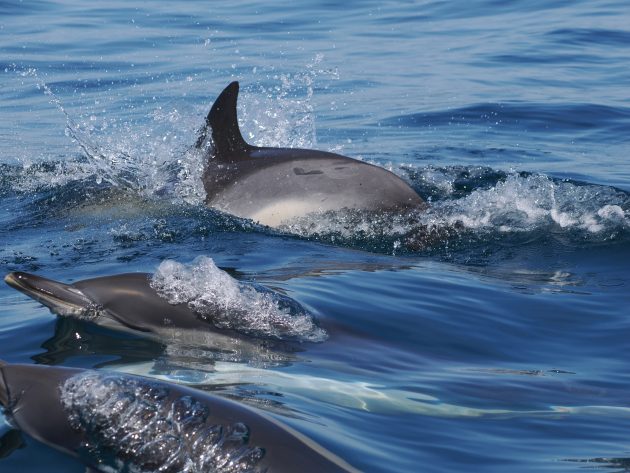
We travelled with Mar Limitado, a company run by marine biologists. Each of our pelagics was different. Our first was a two-hour dolphin-watching excursion, our second a two-and-half-hour specialist seabird pelagic, the third a three-hour ocean safari. Perhaps surprisingly, the first outing was in many ways the most successful. We started with an encounter with a small school of Risso’s Dolphins, an animal that I’d never seen before, and went on to find a much larger school of feeding Common Dolphins.
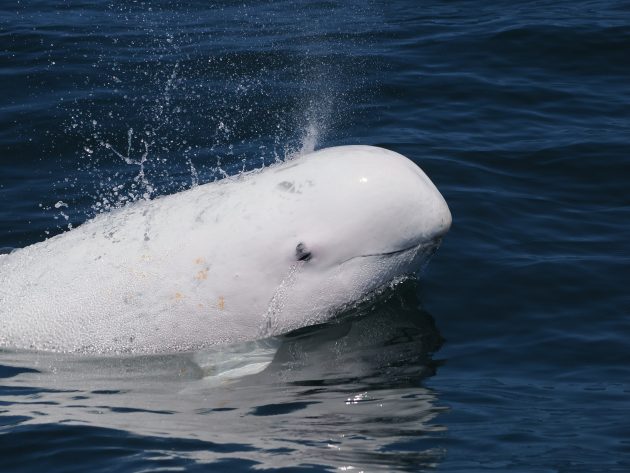
Risso’s Dolphin (above and below)
Finding dolphins in a featureless ocean is a challenge even for an experienced skipper, and it’s usually the seabirds that give the game away. It was the seabird activity that drew us to the Common Dolphins – scores of Cory’s shearwaters, along with a few Gannets, lots of Lesser Black-backed Gulls and a dozen or more storm petrels.
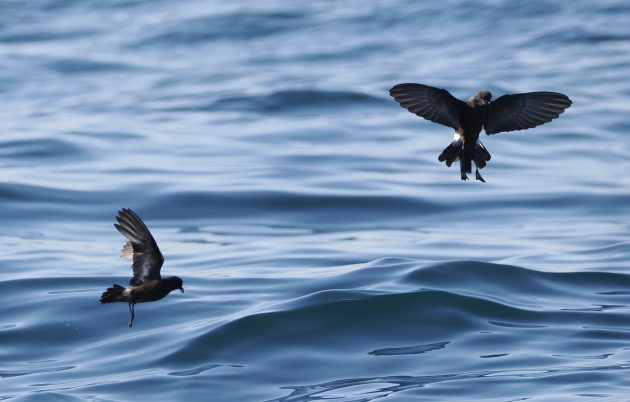
European Storm Petrel and (right) Wilson’s Storm Petrel. The latter is slightly bigger and longer-legged. The yellow webs of the Wilson’s Petrel are just visible
Identifying the storm petrels at sea from a small boat rising and falling on the swell is almost as big a challenge as trying to photograph them. Using non-stabilised binoculars at sea is a waste of time, so I concentrated on trying to photograph them, with the aim of identifying them specifically later. My photographs showed that both European Storm Petrels and Wilson’s Petrels were present; I reckoned that the latter were outnumbered by the former by a factor of perhaps ten to one, but I might well be wrong.
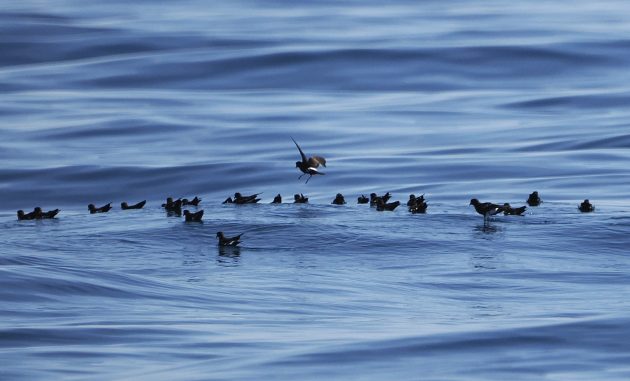
A raft of Storm Petrels
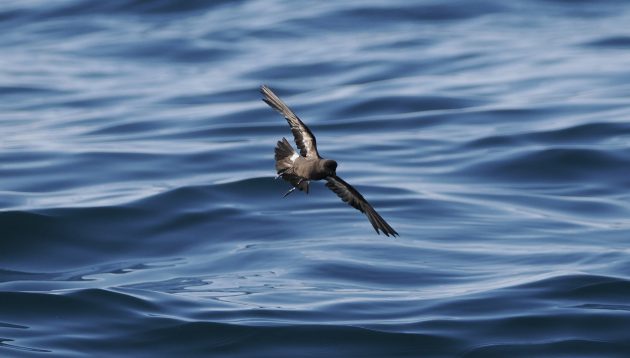
European Storm Petrel (the white under the wing is diagnostic)
With practice separating the two very similar species should be quite straightforward – Wilson’s are longer legged, their toes project beyond the tail, and they glide more than European Storm Petrels. They also have yellow webs to their feet. Another clue is that in late summer that have largely completed their moult, unlike the European Storm Petrels. I was well aware of all these features, but separating the two was difficult, and I took many photographs where it’s almost impossible to be sure of the bird’s identity.
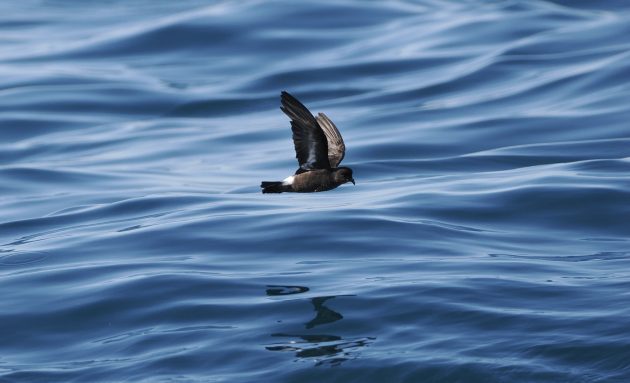
European Storm Petrel
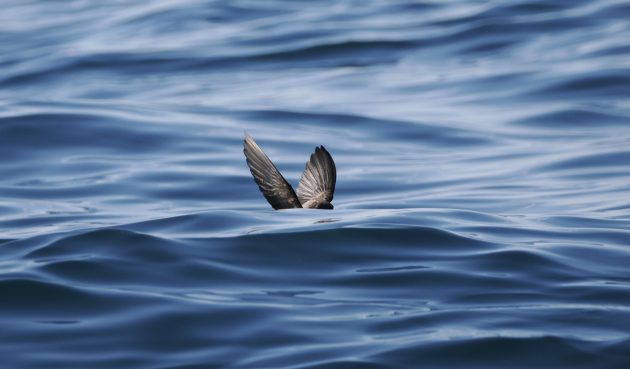
Mystery storm petrel. Photographing storm petrels is a challenge
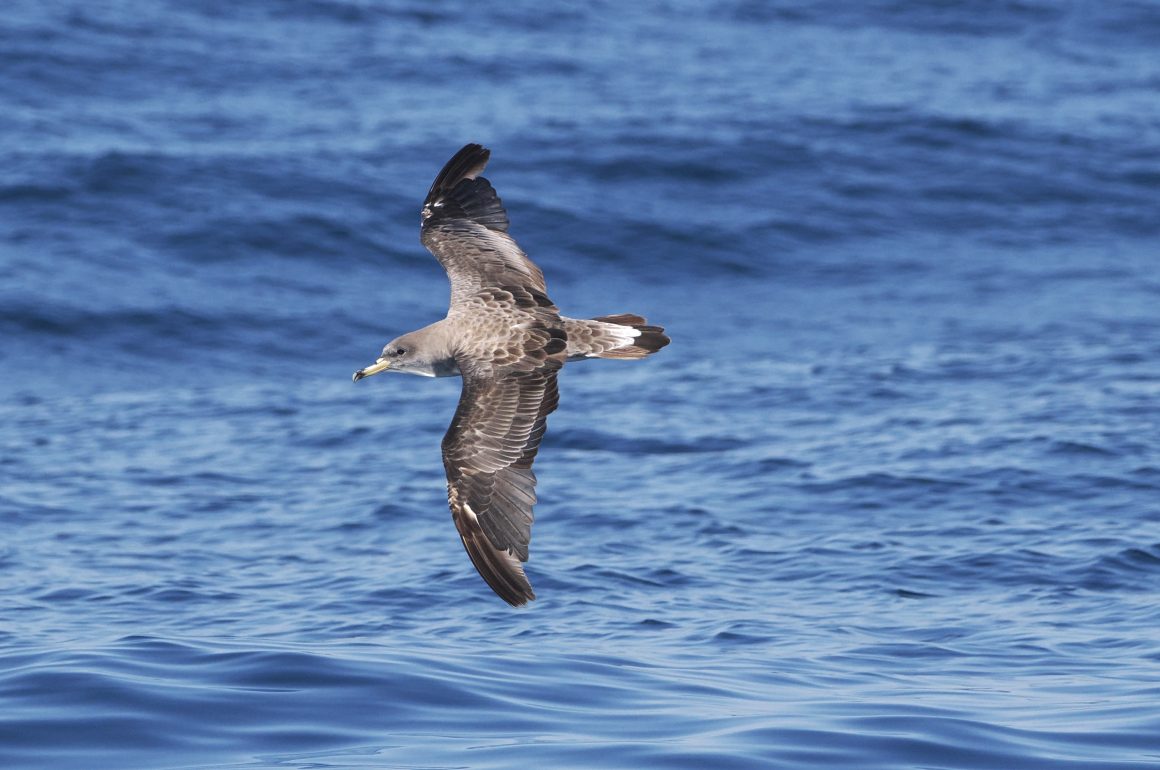
By far the most numerous of the pelagic birds off Sagres in September is Cory’s Shearwater: we saw many hundreds of them. They are big, impressive birds, and I never tired of trying to photograph them. Regular readers of my contributions here may recall that I also did a Sagres pelagic a year ago: this time I did rather better with my photographs of Cory’s shearwaters as they were much more numerous this year than they had been a year before. Why? I’ve no idea.
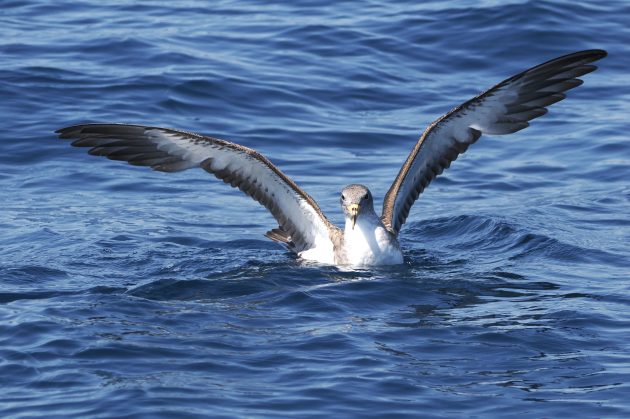
Cory’s Shearwater
Cory’s breed on the oceanic archipelagoes of the Azores, Madeira and the Canary Isles. Most winter in the south Atlantic, so September, before they start to move south, is a good time to see them. Many were in wing moult: presumably they don’t start to move south until their moult is complete. There was also a reasonable chance of seeing the closely related (and recently split) Scopoli’s Shearwater. We had a brief view of one pale bird that might have been this species, but we failed to photograph it. We also saw a few Mediterranean Shearwaters, but they never came close enough for a photograph.
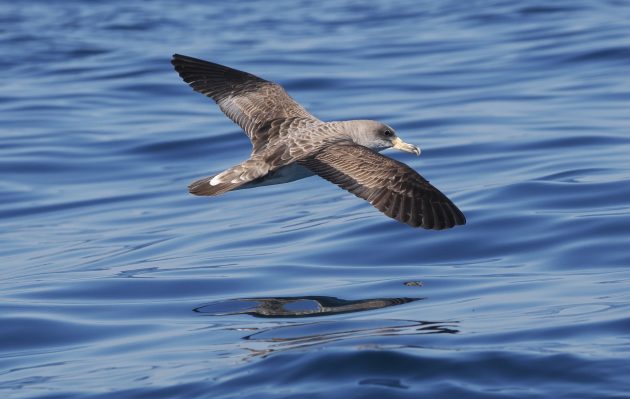
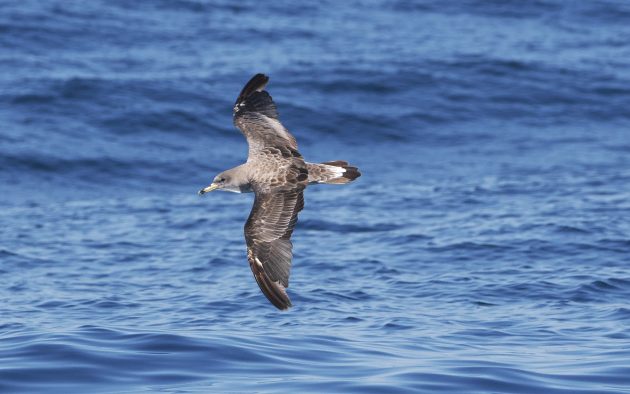
Cory’s Shearwater. This is a juvenile in fresh plumage. The bird below is a moulting adult
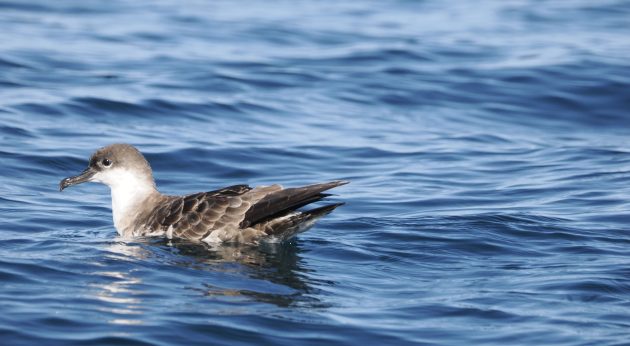
The prize shearwater to find on a Sagres pelagic is Great, one of the few birds that migrates north from breeding grounds in the south Atlantic to the north Atlantic (Wilson’s Storm Petrel is another). We saw Great Shearwaters on each of our excursions, but a maximum of three birds each time, so they were outnumbered by Cory’s by around 500:1. They are birds you have to look for. On one occasion one landed next to our boat, paddling around no more than a few feet away, much to the delight of the photographers. My pictures make it look no more interesting than a tame duck in the park. My flying shots are much more pleasing of this handsome ocean wanderer.
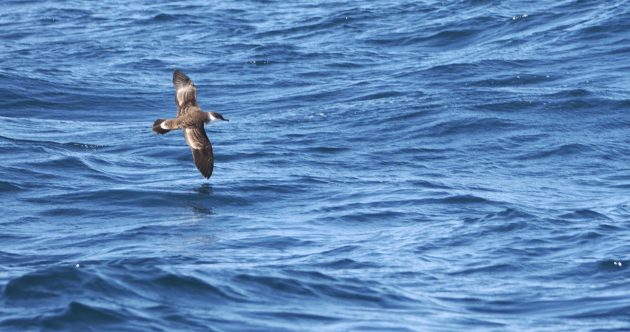
Great Shearwater (above and below). Note the dark beak – Cory’s has a yellow beak
On the second of our excursions our skipper spotted a distant fishing boat, which we homed in on. It was actively trawling, attracting a huge following of birds. These were mainly Lesser Black-backed Gulls, the great majority of which were immature birds. The adults were a mixture of two races: graellsii and intermedius. There were a few Yellow-legged Gulls, too. There were also a number of Gannets. Such concentrations attract skuas, the pirates of the sea. We saw three: one Great, a dark-phase Arctic and a third bird that remained unidentified.
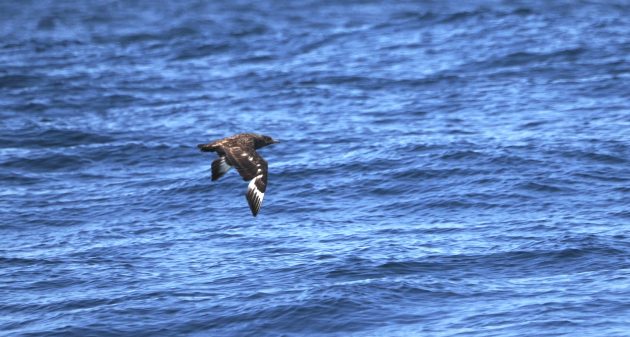
Great Skua – the only we saw – it didn’t stay around to have its photograph taken
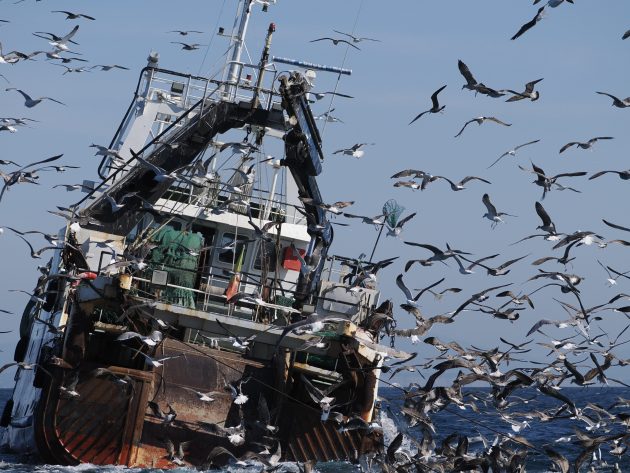
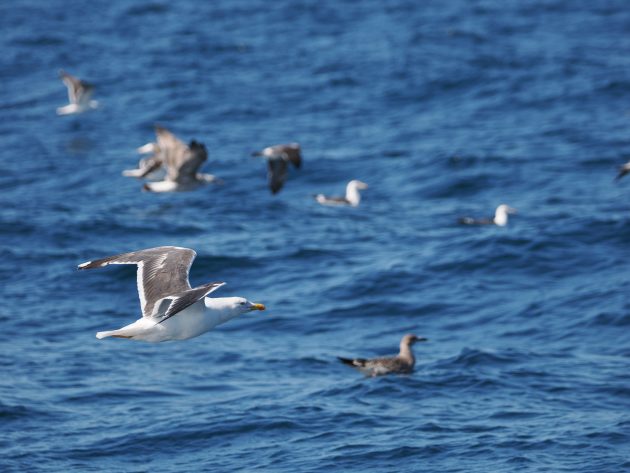
Gulls following a trawler, the only one we encountered
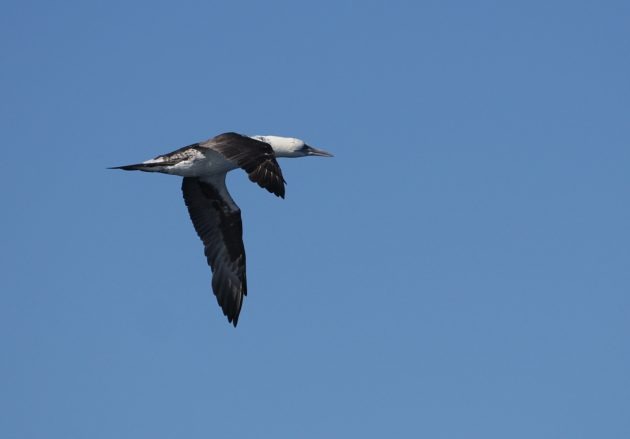
An immature Gannet
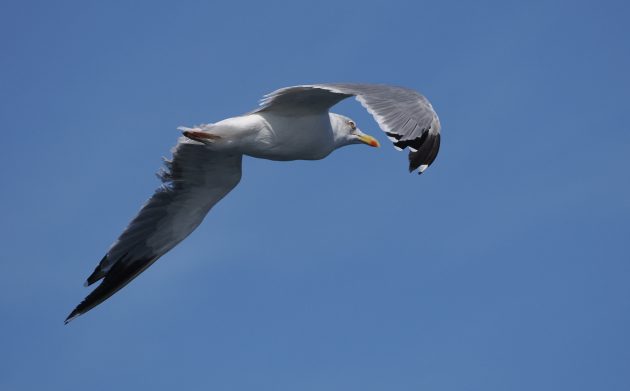
Yellow-legged Gulls (above) were greatly outnumbered by Lesser Black-backed Gulls (below)
Cetaceans are the principal target of many, if not most, people who go out on pelagic trips from Sagres. We saw four species of dolphins (Common, Bottle-nose, Risso’s and Harbour Porpoise), plus two whales: Bryde’s and Minke. The latter was a very close encounter, as the animal swam right underneath our boat. (The skipper didn’t seem worried about the possibility of it coming up under the boat and tipping us all out. I presume that they don’t do such things.) Seabird photography is difficult, but cetacean photography another challenge altogether. How do you make a close-up of a Minke’s beak look interesting?
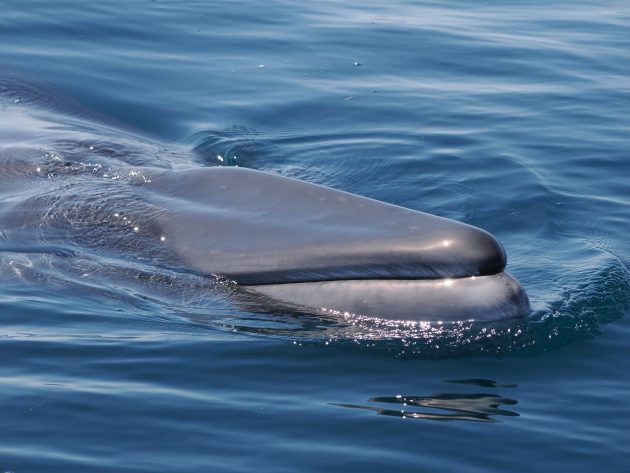
The beak of a Minke Whale
Until recently the charm and challenge of pelagic seabird had largely eluded me. I’m now hooked. However, if I want to see more I’ve clearly got to travel farther – Madeira, or even the Azores? Something to think about this winter.
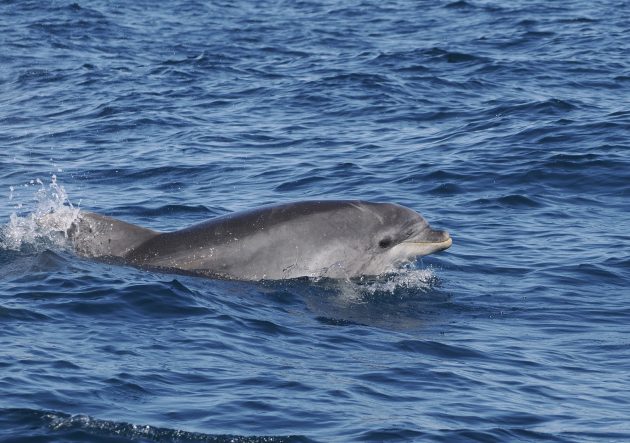
Bottlenose Dolphin (above) and Common (below)






Leave a Comment