

Which bird species do you think is the biggest attraction for visitors to your lodge?
Thraupis glaucocolpa is undoubtedly the star of our garden and our favorite tanager.
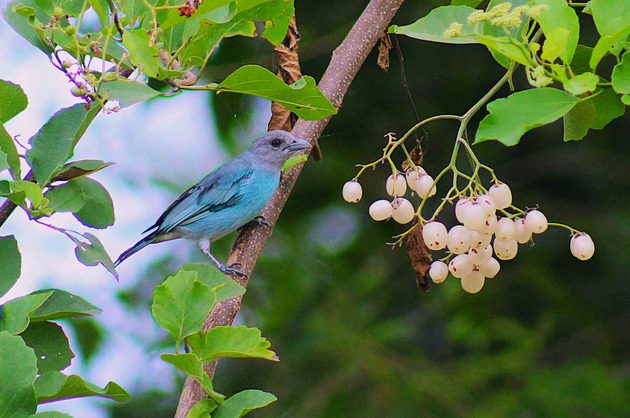
It is a particularly interesting species for birders because of its restricted geographic distribution, occurring mainly in northern Colombia and Venezuela. For many international birdwatchers, seeing this species can therefore be one of the highlights of a trip to this part of the Caribbean.
We see it regularly in our garden and enjoy sharing not only its beauty with our guests, but also the biogeographical story behind the species.
Jui Chi MaMa also offers the opportunity to see all three Thraupis species found in Colombia: Thraupis glaucocolpa, Thraupis episcopus, and Thraupis palmarum.
For us, this little tanager represents the way we understand birdwatching. A single species can be the beginning of a much larger conversation about the territory, the ecosystems that sustain it, and the relationships between birds, plants, water, and people.
What is the name of your lodge, and how long has it been operating?
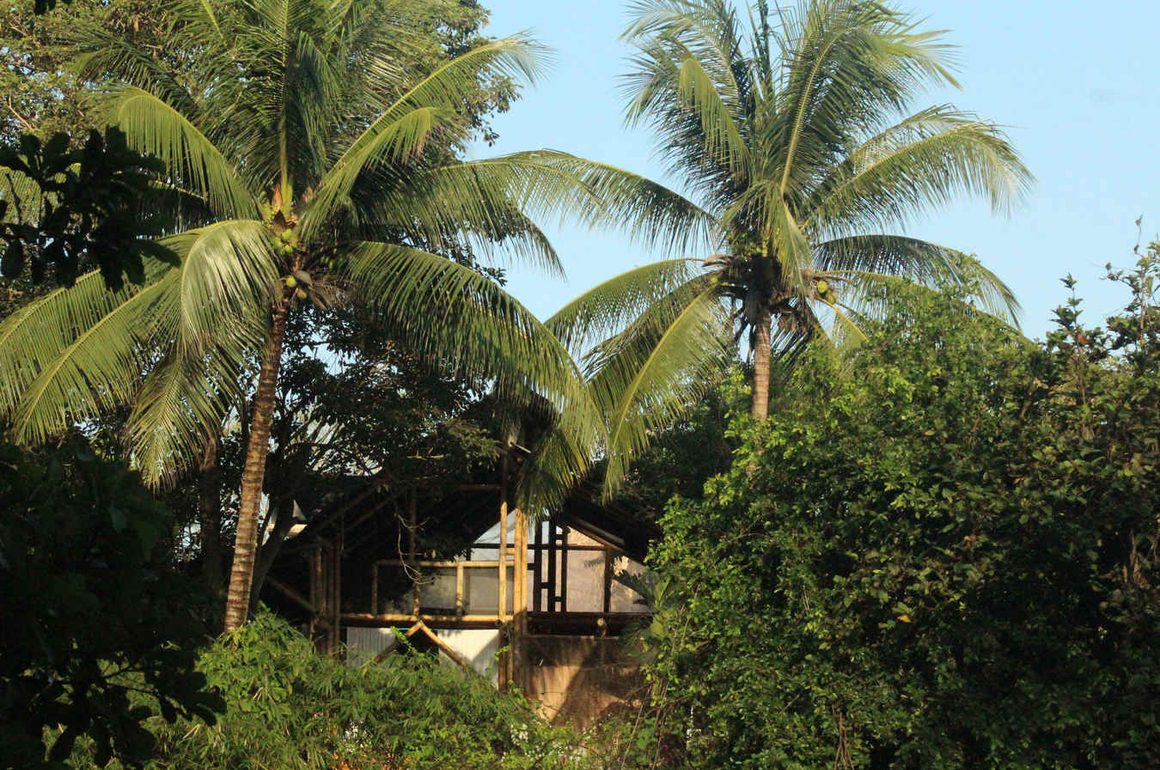
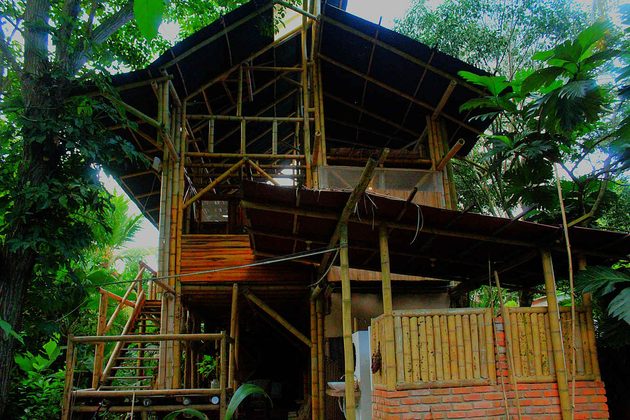
Jui Chi MaMa Ecolodge & Birding has been operating for five years in Palomino, La Guajira, in the foothills of the Sierra Nevada de Santa Marta.
Jui Chi MaMa began as a family-run accommodation and gradually grew together with our own relationship with the territory. We are a family of professional tourism guides, and we have lived in the Sierra Nevada de Santa Marta for approximately ten years — a place we consider our home and which Indigenous peoples recognize as the Heart of the World.
Living here for a decade has allowed us to get to know its trails, rivers, mountains, forests, communities, and, of course, its extraordinary diversity of birds.
Today, Jui Chi MaMa is our home, our family project, and a gateway for travelers who want to experience this region in a deeper and more meaningful way.
What is the best way to reach your lodge?
Palomino is located along Colombia’s Caribbean highway, between Santa Marta and Riohacha, making it relatively easy to reach from either city. Visitors can arrive:
- By bus from Santa Marta.
- By bus from Riohacha.
- By private vehicle.
For travelers coming specifically for birdwatching, we recommend contacting us before arrival. We can help organize transportation, schedules, and experiences according to the time available, the season, and the species or ecosystems they are interested in exploring.
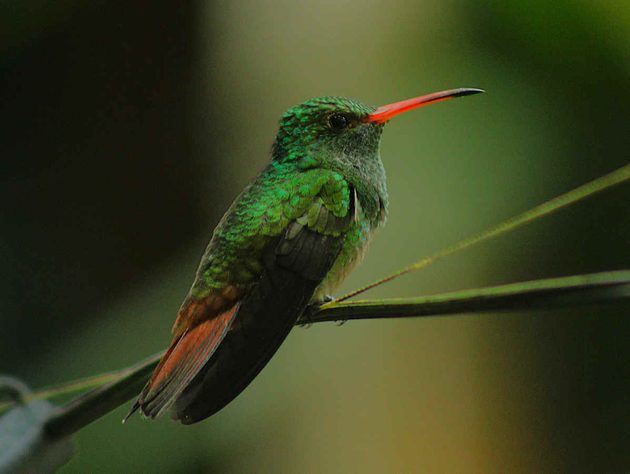
Rufous-tailed Hummingbird
What services, besides accommodation and food, do you offer birders?
Jui Chi MaMa brings together three dimensions that we believe belong together: we are an accommodation, a tourism agency, and a family of professional guides.
This allows us to offer visitors much more than a place to sleep. We provide a base from which to explore several ecosystems across the Caribbean region and the Sierra Nevada de Santa Marta.
We offer one-, two-, and three-day birding experiences, including:
Palomino — Madrevieja
A hiking and nature interpretation experience around Madrevieja, one of Palomino’s strategic wetland ecosystems. Here we combine birdwatching with the history of the river, wetlands, landscape, and the relationship between local communities and the territory. Species of particular interest include:
- Syrigma sibilatrix
- Gampsonyx swainsonii
- Ramphastos sulfuratus
- Cacicus cela
- Icterus nigrogularis
- Pionus menstruus
- Mimus gilvus
- Pyrocephalus rubinus
- Dryocopus lineatus
- Certhiaxis cinnamomeus
- Colaptes punctigula
- Buteogallus meridionalis
- Myiarchus panamensis
- Megaceryle torquata
- Herpetotheres cachinnans
- and many others.
Palomino — Sierra Nevada Foothills Trail
From Palomino, we can also ascend toward the foothills of the Sierra Nevada, gradually entering tropical humid forest. This transition allows us to encounter species associated with more forested habitats, including:
- Manacus manacus
- Chiroxiphia lanceolata
- Trogon caligatus
- Ramphastos sulfuratus
- Momotus subrufescens
- Eucometis penicillata
- Attila spadiceus
- and others.
It is a particularly rewarding experience for understanding how the bird community changes as we move from the Caribbean lowlands into the mountains.
Dry Forest and Wetlands
Another of our routes explores tropical dry forest and wetlands, two essential ecosystems of the Colombian Caribbean. Species of interest include:
- Jacana jacana
- Buteogallus nigricollis
- Porphyrio martinica
- Chrysomus icterocephalus
- Dendrocygna autumnalis
- Butorides virescens
- Nycticorax nycticorax
- Synallaxis candei
- Sakesphorus canadensis
- Picumnus cinnamomeus
- Hemitriccus margaritaceiventer
- and others.
Flamingos and the Guajira King
This experience takes us toward the Camarones area and Los Flamencos Fauna and Flora Sanctuary, where coastal lagoons, dry forest, saline environments, and the Caribbean shoreline create an exceptional combination of habitats. Species of particular interest include:
- Phoenicopterus ruber
- Rallus longirostris
- Haematopus palliatus
- Egretta rufescens
- Cardinalis phoeniceus
- Saltator orenocensis
- Coryphospingus pileatus
- Arremonops tocuyensis
- Inezia tenuirostris
- and others.
Sinduli Bird Feeder and Hummingbird Garden
It is a space designed for quiet observation and photography on the outskirts of Palomino, where visitors may encounter species such as:
- Chaetocercus astreans
- Heliomaster longirostris
- Chlorestes cyanus
- Glaucis hirsutus
- Chalybura buffonii
- Cyanerpes cyaneus
- Arremon schlegeli
- and others.
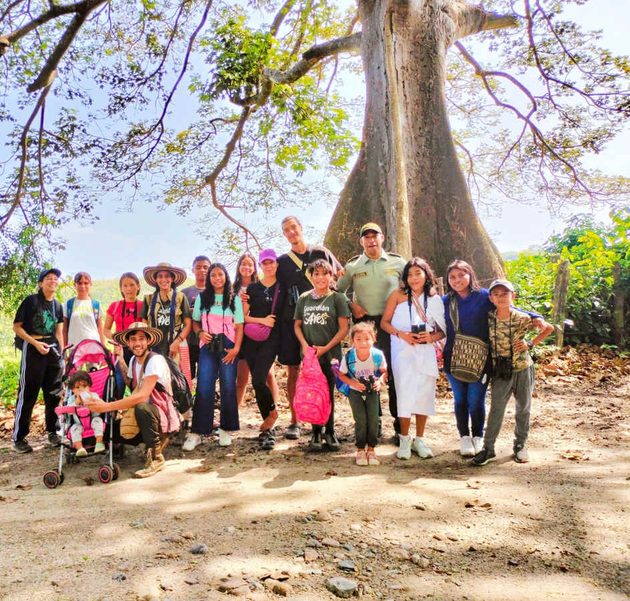
Beyond birding experiences, we also work with children and young people from local communities through bird monitoring and citizen science projects, using birdwatching as a tool for environmental education and a deeper connection with the territory.
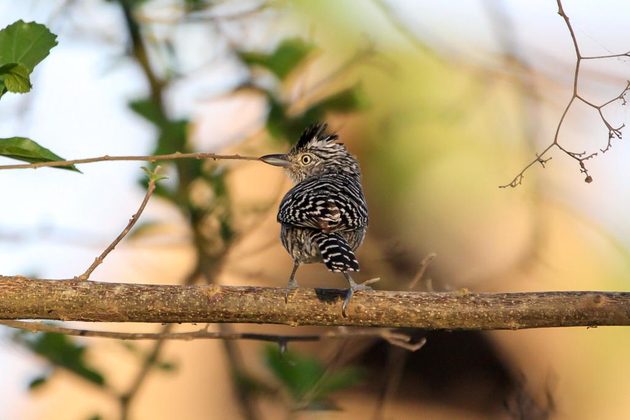
Barred Antshrike
What makes your lodge special?
What makes Jui Chi MaMa special is that the project grew out of our own life story. We are a family of professional guides who chose to make the Sierra Nevada de Santa Marta our home and build a project around nature tourism, biodiversity, culture, and conservation.
Jui Chi MaMa is an intimate and welcoming ecolodge in Palomino, led by bilingual professional guides who accompany conscious travelers on unique birdwatching, nature, cultural, and relaxation experiences. Our approach goes beyond sustainability: through Conscious Water Management and community-based work, every stay becomes an act of regeneration that contributes to peace, biodiversity conservation, and the preservation of the ancestral knowledge of the Sierra Nevada de Santa Marta. We are the first accommodation in the region to bring together comfort, authenticity, and measurable positive impact in the territory.
Our concept is that of an ecolodge specialized in birdwatching and nature, where accommodation is not simply a place to sleep, but part of an immersive experience in the territory. We live deeply connected to this place and have profound respect for the Indigenous peoples who have cared for the Sierra Nevada for generations. Their relationship with the land inspires us, and we seek to approach these principles through respect, learning, and an understanding of Law of Origin.
Our work with water is a fundamental part of the project. We have developed a Conscious Water Management system within the lodge because we believe that talking about bird conservation necessarily means talking about the conservation of the ecosystems and water sources that sustain life.
We are also interested in learning about and researching archaeology, anthropology, ethnology, archaeofauna, and the cultural expressions that reveal how communities have understood and protected biodiversity throughout the region. So when visitors come to Jui Chi MaMa, they discover more than birds. They discover stories. Stories of families, rivers, mountains, communities, plants, animals, and people who have built their lives in relationship with this territory.
We consider ourselves a family of bird guardians, and we develop community projects together with young people, local communities, and educational institutions.
We believe that staying at Jui Chi MaMa can become a simple way to contribute to conservation: every visitor has the opportunity to learn about, value, and support processes of ecological restoration, environmental education, and community strengthening.
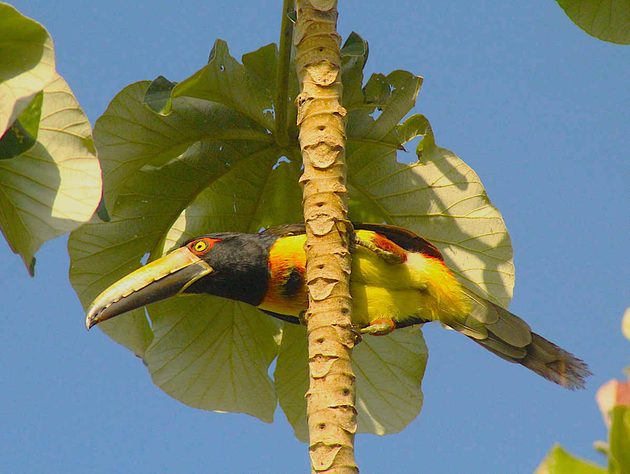
Collared Aracari
What are the 10–20 most interesting birds that can be easily seen at your lodge?
Our garden has a specialized feeder for tanagers, as well as spaces designed to attract hummingbirds and other birds.
Among the species that can be seen relatively easily at the lodge and its surroundings are:
- Ramphocelus dimidiatus
- Thamnophilus doliatus
- Formicivora intermedia
- Galbula ruficauda
- Piaya cayana
- Pteroglossus torquatus
- Myiarchus panamensis
- Hypnelus ruficollis
- Brotogeris jugularis
- Dendroplex picus
- Melanerpes rubricapillus
- Saltator maximus
- Icterus auricapillus
- Amazilia tzacatl
- Tolmomyias sulphurescens
- and others.
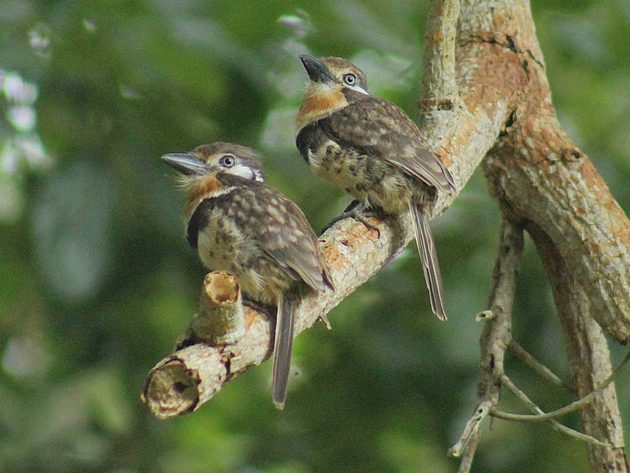
Russet-throated Puffbird
What is the best time of year to visit your lodge, and why?
Jui Chi MaMa can be visited throughout the year, and every season has something different to offer.
However, bird activity generally increases between October and April, when migratory species are present, and there is greater diversity of birds associated with wetlands and aquatic environments.
One of the great advantages of our location is that, within a relatively short distance, visitors can move from the Caribbean coast to tropical dry forest, wetlands, humid forest, and the foothills of the Sierra Nevada.
Rather than identifying one single “best season,” we prefer to say that each season tells a different story about the region’s birdlife.
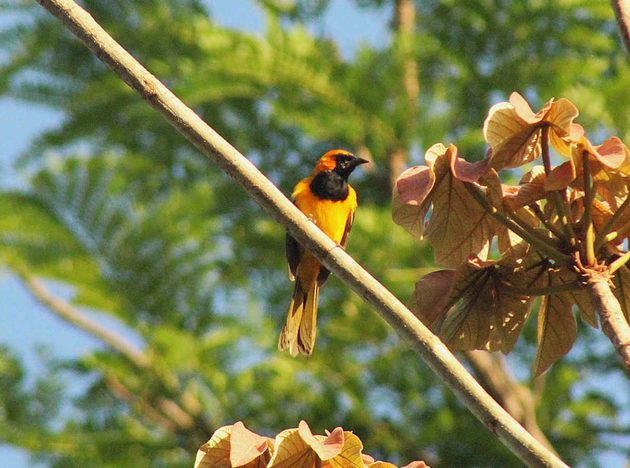
Orange-backed Troupial
Does your lodge participate in any conservation initiatives?
Yes. Conservation is a fundamental part of our project.
One of our most important initiatives takes place around Madre Vieja, a strategic wetland ecosystem in Palomino. We carry out environmental monitoring and citizen science activities, involving young people and members of different communities, including Indigenous and Afro-descendant communities and other vulnerable groups.
Birds are our great allies in this process. When young people learn to identify a species, they also begin to ask what it needs to survive, which plants it depends on, where its water comes from, what threats affect its habitat, and what can be done to protect it. Monitoring allows us to generate information about the health of the ecosystem while building an emotional and educational connection between younger generations and the wetland.
Our long-term goal is to contribute to the recovery and restoration of Madre Vieja, strengthening community participation and local knowledge. We also develop environmental education and birdwatching activities with children and young people because we believe that nurturing new birders also means nurturing future guardians of the territory.
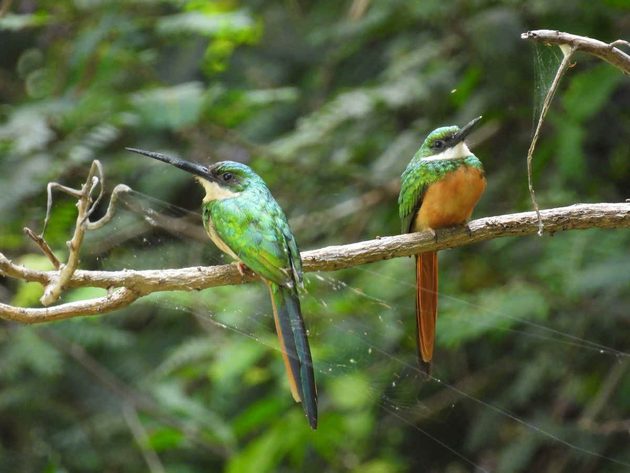
Rufous-tailed Jacamar
What other advice can you give birders interested in visiting your lodge?
Palomino is located in a tropical Caribbean environment, so visitors should be prepared for warm temperatures, humidity, strong sunlight, and occasional rain.
For a comfortable birding experience, we recommend bringing:
- Binoculars.
- A camera and protection for electronic equipment.
- Lightweight, breathable clothing.
- Neutral-colored clothing for birding excursions.
- Comfortable walking shoes.
- A hat or cap.
- Sunscreen.
- Insect repellent.
- A reusable water bottle.
- A lightweight rain jacket.
- A field notebook.
- A small flashlight for very early morning outings.
Birding excursions usually begin early, when birds are most active. We recommend getting a good night’s sleep beforehand and, above all, coming with time and patience.
Birdwatching in the Caribbean is not always about immediately finding the species you are looking for. Sometimes it begins with a song, a movement in the foliage, or simply waiting quietly beside a tree.
For us, the ability to slow down and observe is an essential part of the experience.
Do you offer activities for non-birders?
Yes. Birds are one of our gateways into the territory, but they are certainly not the only one. We offer experiences for visitors who want to discover the region from different perspectives.
- Purposeful Hiking: Interpretive walks through different ecosystems, combining nature, history, culture, and conservation.
- River Tubing: A peaceful way to experience the landscape from the water and understand the importance of the river within the territory.
- Agroecological Farms: Visits to agricultural projects where guests can learn about responsible food production and the relationship between agriculture, biodiversity, and the land.
- Archaeology and Territorial Memory: Visits to archaeological and historical sites that help us understand the people and cultures that inhabited this region before us.
- Cultural Encounters and Weaving: One of the experiences we are particularly interested in strengthening is cultural encounters through traditional weaving. For us, weaving is not simply a craft. It is also a way of telling stories and transmitting a worldview. Through these encounters, travelers can respectfully learn about aspects of Indigenous cosmology, cultural practices, traditional plant knowledge and uses, and stories passed down through generations. Weaving can therefore become a language through which visitors begin to understand relationships between territory, family, nature, spirituality, and memory.
- Indigenous Cultural Experiences: We can also facilitate respectful encounters with Kogi, Arhuaco, and Wayuu communities, always seeking to honor their own processes, rhythms, knowledge, and ways of life.
- Kayaking and Nature Experiences: Water-based activities and nature excursions allow visitors to experience the landscape from another perspective.
All these activities share the same underlying idea: We do not want visitors simply to consume a landscape; we want them to have the opportunity to understand it.
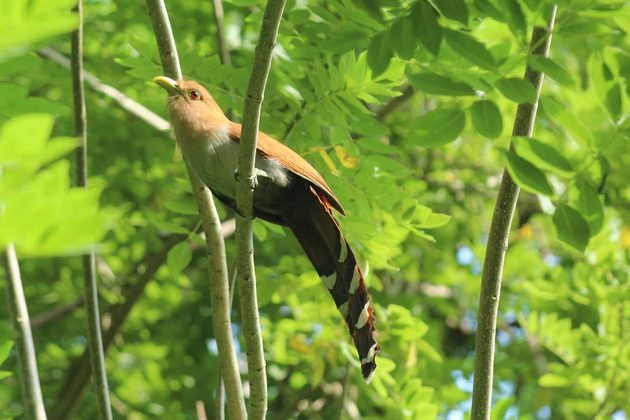
Common Squirrel-Cuckoo
If a reader of 10,000 Birds is interested in staying at your lodge, what is the best way to contact you?
Visitors can contact us directly through WhatsApp:
- +57 300 202 5806
- +57 304 603 6532
We will be happy to help organize accommodation, birding excursions, and other experiences according to each traveler’s interests and available time.
Is there anything else you would like to share with the readers of 10,000 Birds?
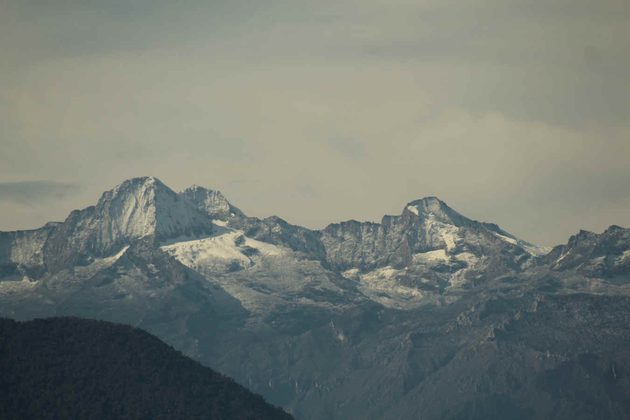
Our love for birds is deeply connected to our love for the Sierra Nevada de Santa Marta, water, family, and this territory.
After ten years of living here, we have learned that every bird is part of a much larger story.
A tanager tells us about the forest and the plants that sustain it. A heron leads us toward a wetland. A kingfisher reminds us of the importance of a healthy river. A flamingo takes us toward the coastal lagoons. And behind every landscape are communities and bodies of knowledge that have maintained these relationships for generations.
Being guardians of this territory has allowed us to gradually understand the subtle relationships that sustain the balance of a mangrove, a tropical rainforest, a wetland, or even a páramo.
That is why we want to invite birdwatchers to travel differently.
Yes, come looking for species and adding birds to your list.
But also come to listen to stories.
Walk through a forest and ask what keeps it alive.
Meet a community and discover the knowledge it has protected for generations.
Wake up to the sound of birds and end the day sharing stories about what you encountered along the trail.
At Jui Chi MaMa, we believe tourism can be an opportunity to weave the relationships between people and the territories we visit back together.
We want every traveler to feel that they can be part of that process.
Because for us, seeing a bird is not simply about finding a species.
It is about slowing down.
Looking.
Listening.
Understanding.
And finding one more reason to protect the place that made that encounter possible.
Welcome to Jui Chi MaMa, a small home between the Caribbean and the Sierra Nevada, where birds are the beginning of a much larger story.




Leave a Comment