
Could you introduce your organization and the main conservation work you do?
Vogelbescherming Nederland is the oldest nature conservation organization in the Netherlands. The association was founded in 1899 as a protest against the fashion of the time, which involved placing feathers and even entire stuffed birds on hats. It was widely condemned as a cruel trend.
Thanks to Vogelbescherming, the Netherlands became the first country in Europe to introduce legislation protecting all native bird species, in the 1920s.
Since then, Vogelbescherming has grown into an organization with approximately 150,000 members. We operate independently and were a founding partner of BirdLife International and its predecessor organization. Today, BirdLife works in around 120 countries on bird and nature conservation and is the world’s largest nature conservation partnership.
Is there a particular project, species, or place you’d like to tell our readers about?
Due to its geographical location and its role as a delta, the Netherlands is of great importance for migratory birds. This is especially true for the province of Zeeland and the Wadden Sea region, which is also the Netherlands’ only natural UNESCO World Heritage Site. Many millions of birds rely on these areas every year.
Improving the protection of these regions is therefore crucial to the work of Vogelbescherming. Species such as the Bar-tailed Godwit and Red Knot directly benefit from this protection.
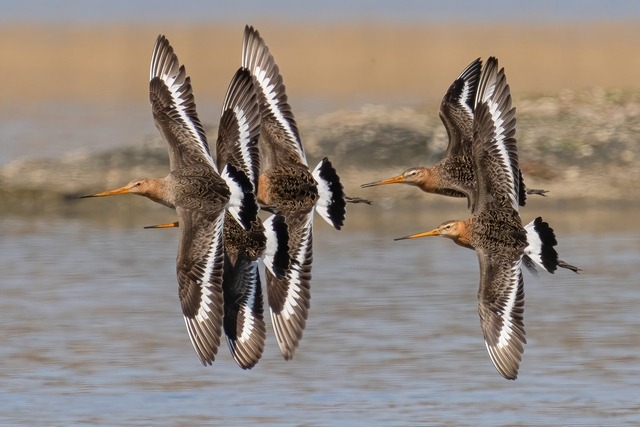
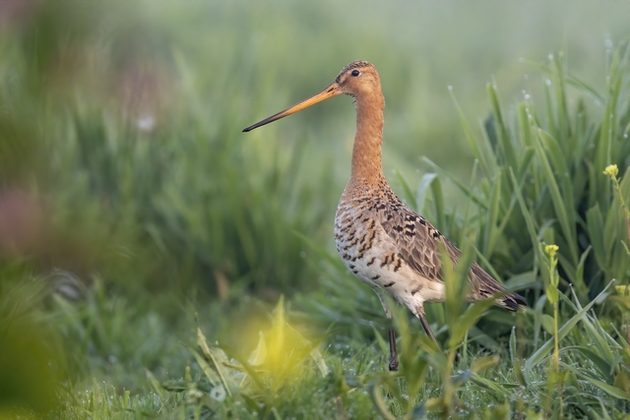
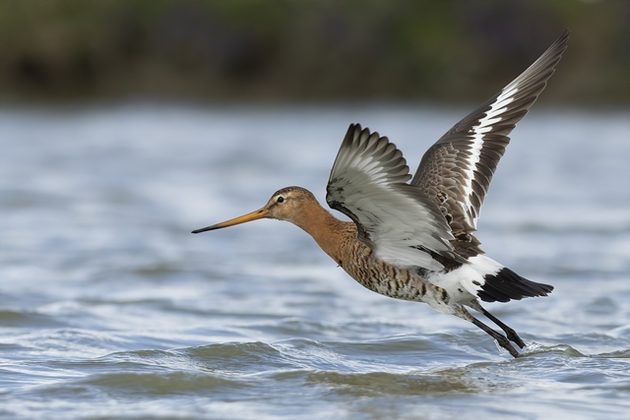
Another priority for Vogelbescherming is the conservation of birds that breed in Dutch grasslands and meadows, such as the Black-tailed Godwit, Common Redshank, and Eurasian Oystercatcher. The Netherlands is internationally important for these species.
For about fifteen years now, as of 2026, Vogelbescherming has also operated an urban bird conservation programme. Even common species such as House Sparrows and European Starlings are declining in the Netherlands and require attention.
Protecting the East Atlantic Flyway, the international migratory route on which the Netherlands is located, is another important part of our work. For this reason, we work closely with bird conservation organizations in Africa, providing support through advice and funding based on their needs and priorities. Many birds that breed in the Netherlands spend the winter in countries in (West) Africa.
What are the biggest challenges facing birds or their habitats in the areas where you work?
Intensive agriculture is the greatest threat to birds in the Netherlands. Most species on the Dutch Red List of threatened breeding birds depend on farmland habitats.
Low water levels, which benefit agricultural machinery but not birds, vast monocultures of ryegrass, and mowing grass too frequently and too early for dairy farming all make it difficult for meadow birds to survive and reproduce.
We are also concerned about the economic use of Natura 2000 sites. Activities such as fishing, offshore wind farms, recreation, and sand and salt extraction can put significant pressure on these protected areas.
In addition, towns and cities are becoming increasingly densely developed, resulting in the loss of valuable green spaces that many bird species depend on.
Could you share a recent success or a moment that shows why this work matters?
Thanks in part to Vogelbescherming’s advocacy, a vast area of the North Sea has been designated as a Natura 2000 site with a strict protection regime for various seabird species.
Vogelbescherming has also played an important role in making nature-inclusive building a mainstream concept in the Netherlands. As a result, many new buildings now incorporate nesting facilities for species such as House Sparrows and Common Swifts as a standard feature.
Another achievement is the widespread adoption of the concept of “Basic Nature Quality” by governments, businesses, and conservation organizations. While its effectiveness will ultimately depend on implementation, the concept aims to improve and protect nature outside formally designated nature reserves as well. It also helps authorities meet the requirements of the EU Nature Restoration Law.
How do local communities, volunteers, or other partners take part?
Vogelbescherming works with around 700 volunteers who, for example, advise people on how to attract more birds to their gardens or take action when valuable nature areas are under threat.
We also run programmes that connect volunteers from all kinds of organisations who are committed to nature conservation, while providing them with the information and tools they need to be effective.
In addition, we maintain close relationships with the hundreds of local bird study and conservation groups that are active throughout the Netherlands.
6. What can people do to support your work
“Everyone can do something for birds” is one of our core mottos.
People can support birds by making their gardens more wildlife-friendly, volunteering their time, or contributing financially in various ways. This can be done by becoming a member, making a donation, including Vogelbescherming in a will, or investing in the conversion of conventional farmland into nature-friendly agricultural land.
Are there a website or social media pages you’d like us to link to?
You can follow Vogelbescherming Nederland in many ways, including on Instagram at:
https://www.instagram.com/vogelbeschermingnederland
and via our website:
https://www.vogelbescherming.nl
There you can find information about our conservation work, campaigns, events, and ways to support birds and nature in the Netherlands.
Photos: Black-tailed Godwit (national bird)



Leave a Comment