

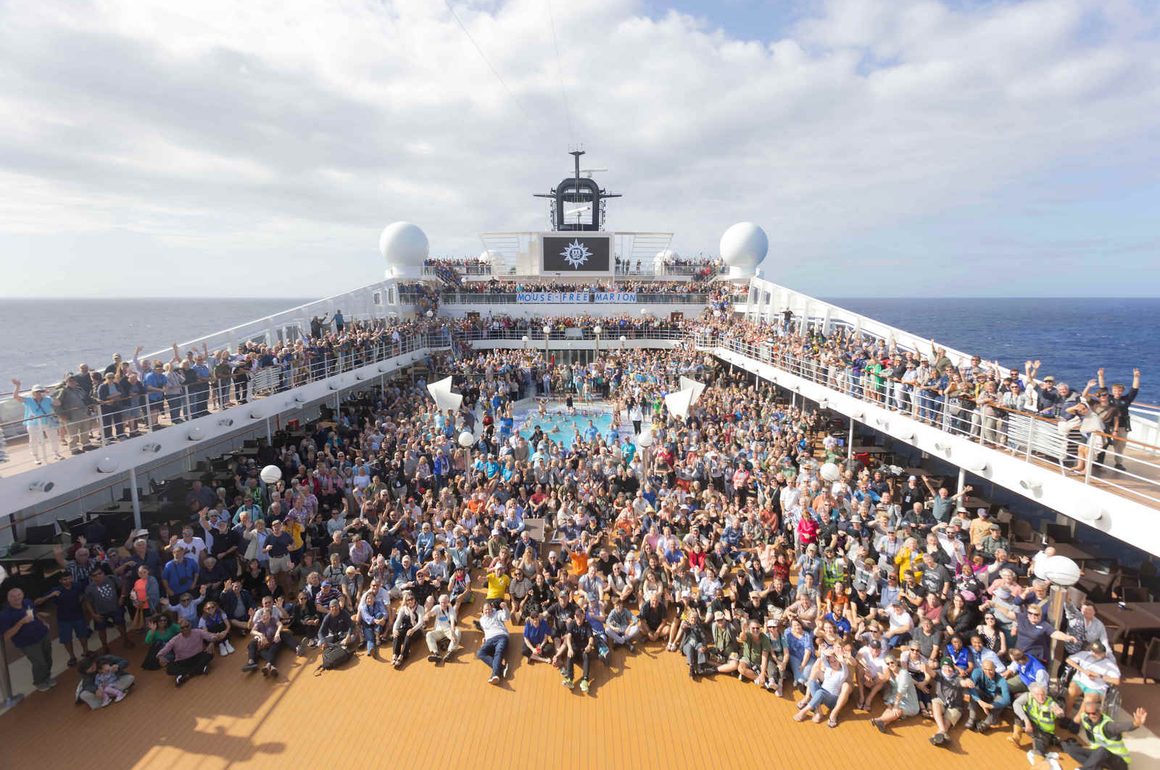
BirdLife South Africa is organizing a birding trip to Marion in early 2028. We asked the organizers to tell us more about the trip.
What is the broad outline of the trip?
Flock to Marion 2028 is an 8-day voyage from 31 January to 7 February 2028 on the MSC Sinfonia. It leaves Cape Town, sails to the waters around Marion and Prince Edward Islands in the sub-Antarctic, and ends in Durban (both harbours are in South Africa). That means passengers see both the Atlantic and the Indian Oceans. It is BirdLife South Africa’s flagship fundraising and awareness voyage, and the third in the series after the voyages in 2022 and January 2025. Bookings open to everyone on 30 November 2026 through MSC Cruises. Conservation League Donors get an earlier booking window if they join before 15 November 2026.
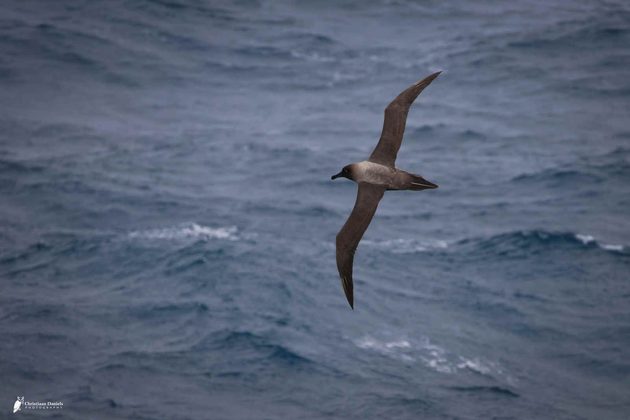
Light-mantled Albatross (photo: Christiaan Daniels)
Who are the target participants?
- Birders and nature lovers more generally, including people interested in marine mammals, with any level of experience or interest – we will have around 60 specialists across all suitable decks who will provide information, guide guests, and help identify birds and marine mammals, etc.
- South African/international listers who want to add species to their SA or global bird list.
- International visitors, who are encouraged to add birding on land before or after the voyage.
- Families. There are child fares and kids’ and teens’ clubs.
Why should they consider participating?
- The fare directly supports BirdLife South Africa’s conservation work, including Mouse-Free Marion.
- As far as we are aware, it is the most affordable voyage of its type and therefore the most affordable way for nature-lovers to reach the sub-Antarctic on a dedicated cruise.
- Visiting the sub-Antarctic and going halfway to Antarctica
- More than 60 seabird and marine mammal specialists will guide on deck all day, and leading experts will give lectures throughout the week.
- Passengers travel with a community of like-minded people.
- Birds seen within 200 nautical miles of the SA coast or the Prince Edward Islands count toward a South African list.
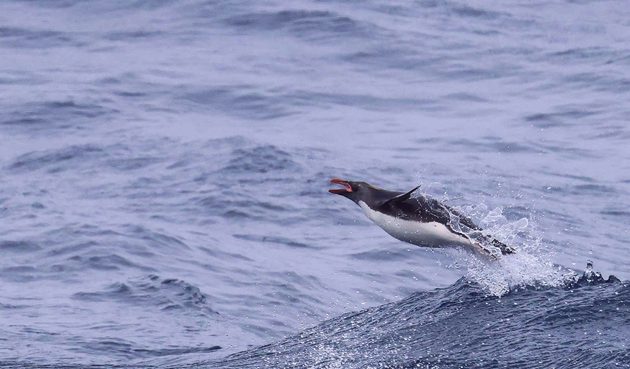
Macaroni Penguin (photo: Nick de Blocq)
What can they expect to see and experience?
The 2025 voyage recorded 53 seabird species and 17 mammal species, and some of the mammal sightings were extremely rare. Highlights include:
- Albatrosses: Wandering, Grey-headed, Sooty, Light-mantled and Indian Yellow-nosed
- Penguins: King, Gentoo, Macaroni and Southern Rockhopper
- Petrels: giant petrels, Kerguelen, Grey and Blue petrels, and prions
- Others: Subantarctic Shearwater, Common and South Georgian diving petrels, and Grey-backed and Leach’s storm petrels
- Whales, dolphins and seals
Conditions near the islands are cool, damp and windy, around 12–13°C by day and 5–6°C at night, with winds averaging about 50 km/h (which is what keeps albatrosses and petrels flying around the ship). Passengers should bring warm layers, waterproofs and seasickness remedies.
What are the costs?
Prices below are per person sharing and include mandatory fees:
- Interior: from about R21 500 (around US$1 300)
- Ocean View: from about R23 600
- Balcony: from about R29 000
- Suite: from about R32 000 (around US$1 930)
The balance can be paid in stages, with 50% due by 31 October 2027 and the full amount by 15 November 2027. Children sharing a cabin with two adults pay reduced fares. MSC uses dynamic pricing, so these figures are a guide only.
The fare includes the cabin, full board (x3 buffet-style meals a day), the lectures and deck guiding, ship facilities, entertainment and compulsory travel insurance. It does not include drinks other than basics, Wi-Fi, speciality dining, spa treatments, flights or transfers.
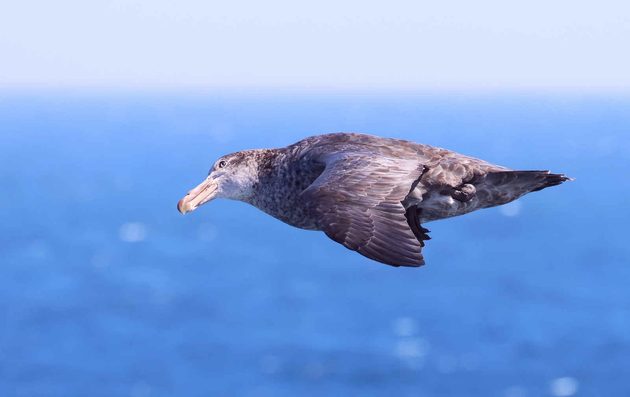
Northern Giant Petrel (photo: Nick de Blocq)
What can people do on board when there are no birds around?
- Attend the lecture programme by conservationists, seabird scientists and birding experts. The speaker line-up will be announced later.
- Use the gym, swimming pools (weather permitting), hot tubs, sun decks and sports facilities.
- Watch evening theatre shows and live music, or join other onboard activities.
- Send children to the kids’ and teens’ clubs.
- Pay extra for the spa, salon or speciality restaurants.
- Join the Flock to Marion Facebook group, which runs before, during and after the voyage.
Will there be any land excursions?
No. The Prince Edward Islands are a Marine Protected Area, so the ship stays at least 12 nautical miles offshore and nobody goes ashore. The only time on land is embarking in Cape Town and disembarking in Durban. We do promote pre- and post-voyage birding in South Africa. Partner tour operators will offer trips, and a list of them is to be posted later. GoBirding is suggested for planning trips with accredited guides.
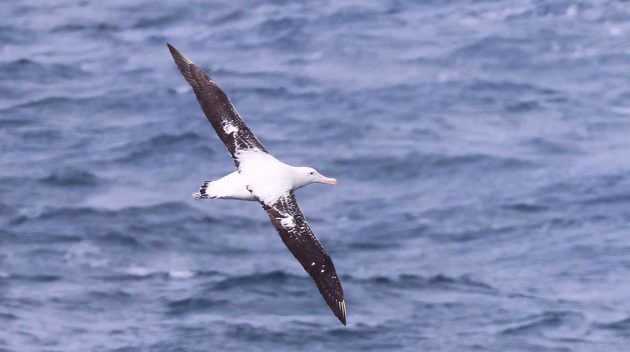
Wandering Albatross (photo: Nick de Blocq)
What is in it for the birds?
The voyage raises money and awareness for BirdLife South Africa’s conservation work, especially the Mouse-Free Marion Project. That project aims to eradicate the invasive house mice that are killing seabird chicks and adults on Marion Island. Without action, the mice could drive 19 of Marion’s 29 breeding bird species to local extinction, including the Wandering Albatross. Marion and Prince Edward together hold almost half of the world’s breeding Wandering Albatrosses. Flock income also supports BirdLife South Africa’s wider work, which includes our seabird conservation programme and Albatross Task Force, which works on reducing the number of albatrosses and petrels killed by fishing.
Cover photo: Flock to Marion 2025






Leave a Comment