

Feeding garden birds has, in my lifetime, changed radically. When I was a child the tube feeders we know today had yet to be invented, nor was there any commercial bird food available, except what you might buy loose in a pet shop. I remember my father buying a whole coconut, drilling it to empty the milk, then sawing it in half. The half coconut was then strung up on a tree in the garden, where it would draw in a variety of tits. We also used to buy unshelled peanuts and thread them together, and then hang them in the tree. Tits soon learned to peck through the soft shells to get at the nuts inside.
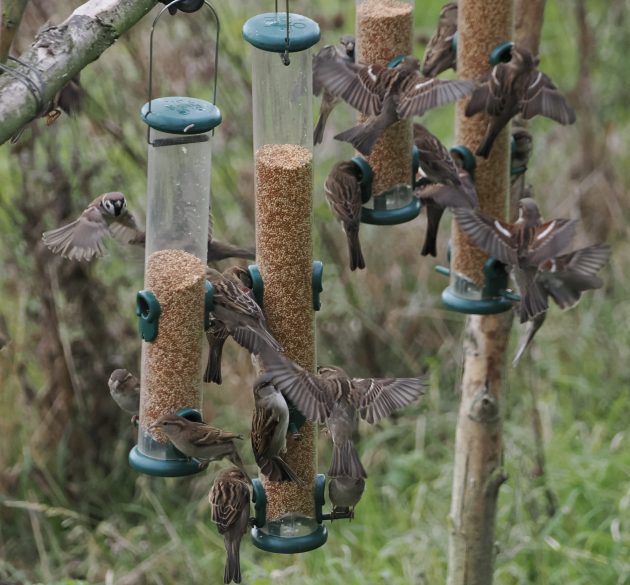
Sparrows cluster around feeders. Such concentrations of birds can spread disease
Hanging up suet from the butcher was also standard practice in those distant days, and I can remember a whole turkey carcass being strung out after Christmas: it would attract hordes of hungry Starlings. We also threw out chopped-up crusts of bread for ground-feeding birds like Woodpigeons. I believe that the first commercial wild-bird food to be marketed in the UK was launched in the early 1960s. It was called Swoop, but I remember little else about it except that it was marketed in the sort of box you might buy breakfast cereal.
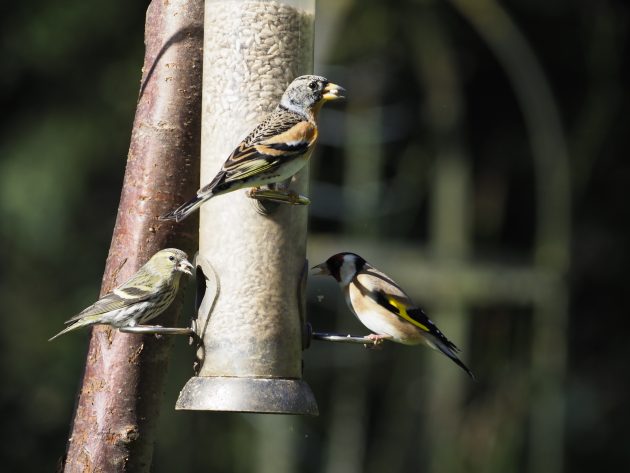
Siskin, Brambling and Goldfinch on a feeder offering husked black sunflower hearts
Today feeding garden birds is a multi-million pound business in the UK. Specialist companies sell nothing other than bird foods and feeders. Both come in great variety. I have always been a keen garden-bird feeder, and over the years have tried all sorts of different foods and feeders.
Thirty years ago nyjer seed was marketed in the UK for the first time, and it soon became a favourite of Goldfinches. Before nyjer, Goldfinches were scarce visitors to my garden, but once I offered nyjer I attracted them in numbers, with my peak count a visiting flock of over 50 birds. Nyjer continued to be popular with these delightful finches for many years, but them quite suddenly, they went off it. I was mystified. I tried a fresh supply of the seed, but it remained in the feeder uneaten. Eventually I gave up offering it, as it no longer had the same appeal it once had.
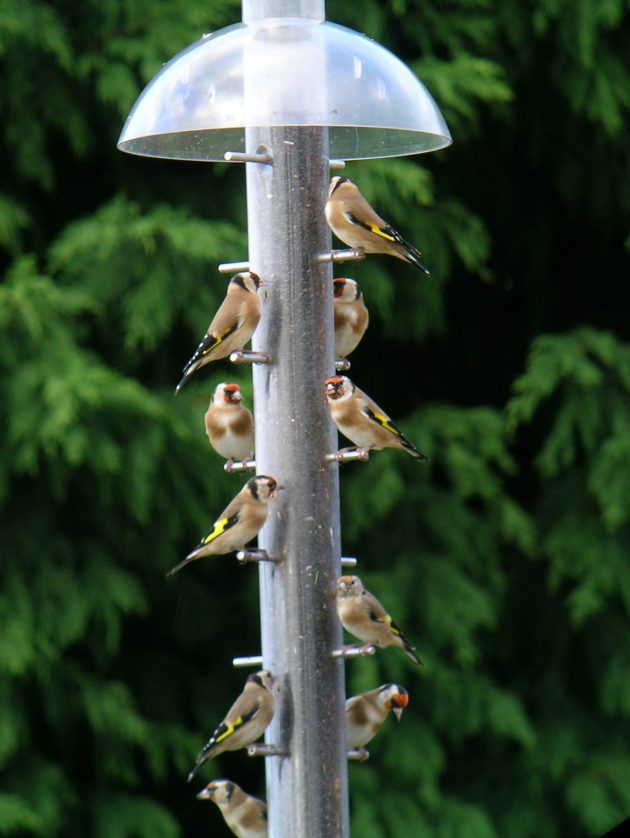
Goldfinches on a nyjer feeder in my garden. This photograph was taken in 2006, before these finches lost their taste for nyjer
Quite why the Goldfinches lost their appetite for nyjer remains a mystery, and I haven’t found anyone who can explain it. The bird-food suppliers still offer it for sale, so presumably there must be parts of the country where the Goldfinches continue to eat it, but they certainly don’t in my corner of Suffolk.
Curiously, the same thing happened with shelled peanuts. This was once a garden staple, and it was popular with both finches and tits, and would also attract Starlings and House Sparrows, neither of which I was then keen to feed. I recall spending a great deal of time trying to devise ways of keeping them off the feeders. (Both species have become rare visitors to my current garden – they are welcome back, all is forgiven!) Then, just a few years ago, the birds lost interest in the peanuts, which would remain uneaten in the feeder. After a long gap I’m offering peanuts again. It will be interesting to see whether it gets eaten.
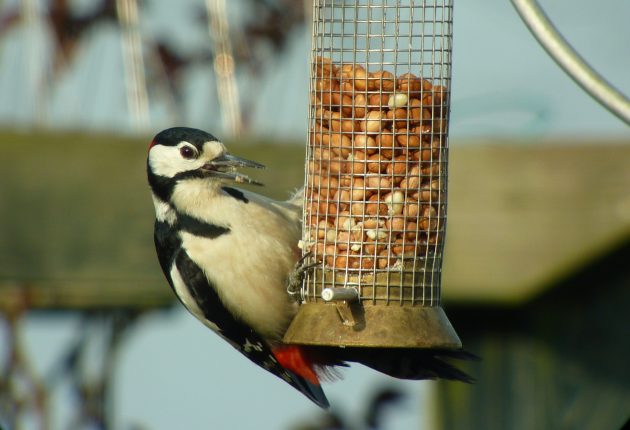
Peanuts: popular with Great Spotted Woodpeckers
What my garden birds do like, and what I can’t imagine them ever going off, is black sunflowers. I provide husk-free black sunflowers: this avoids the mess the from unshelled sunflowers whose husks soon pile up underneath the feeder. I also provide fats in a variety of forms, from fat balls (only buy the best) to a delight called Flutter Butter that comes in small pots that screw into a dedicated feeder. It’s a favourite throughout the year.
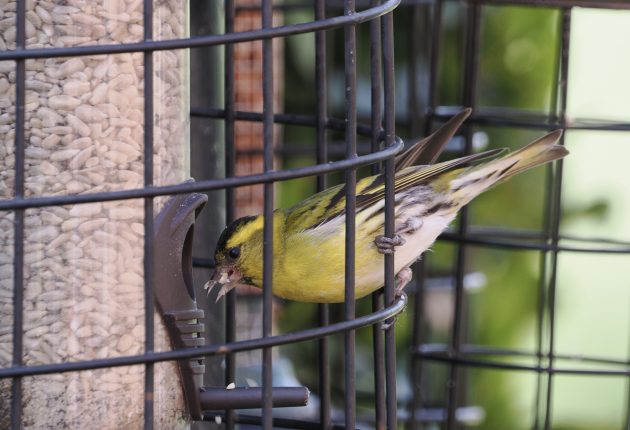
A cock Siskin on a feeder designed to deter bigger birds
I suspect that most of us feed the birds in our garden because we believe that we are helping them to survive in an increasingly hostile world. I also readily admit that I feed them because I delight in seeing birds in both variety and number in my garden. However, feeding them has its dangers, as the RSPB warned last summer, at the same time urging people to stop feeding until the autumn. The Society’s main concern was that concentrating birds at popular feeding points, such as bird feeders, made them vulnerable to diseases, especially when the feeders were simply topped up and never cleaned. The disease Trichomonosis is thought to be responsible for reducing Britain’s Greenfinch population by over 70% in 20 years. Greenfinches are particularly vulnerable to Trichomonosis, but it does affect several other species, too, from Collared Doves to Sparrowhawks.
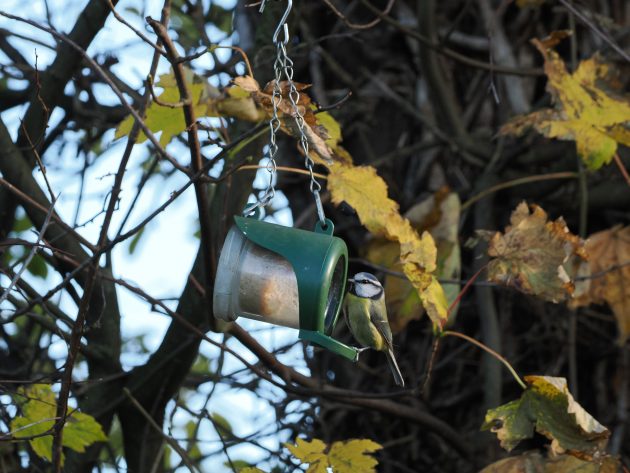
A Blue Tit attracted by Flutter Butter
I have lots of spare feeders, so have always rotated my feeders frequently, with a clean feeder replacing the one that has been used. Unfortunately not many people follow such a strict hygiene regime, though I believe that, thanks to publicity, many more people now understand that clean feeders are essential for healthy birds.
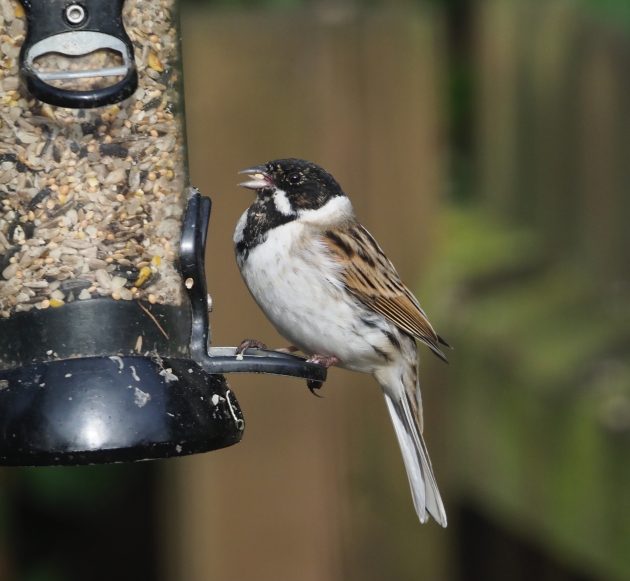
Cock Reed Bunting enjoying a feeder filled with mixed seed
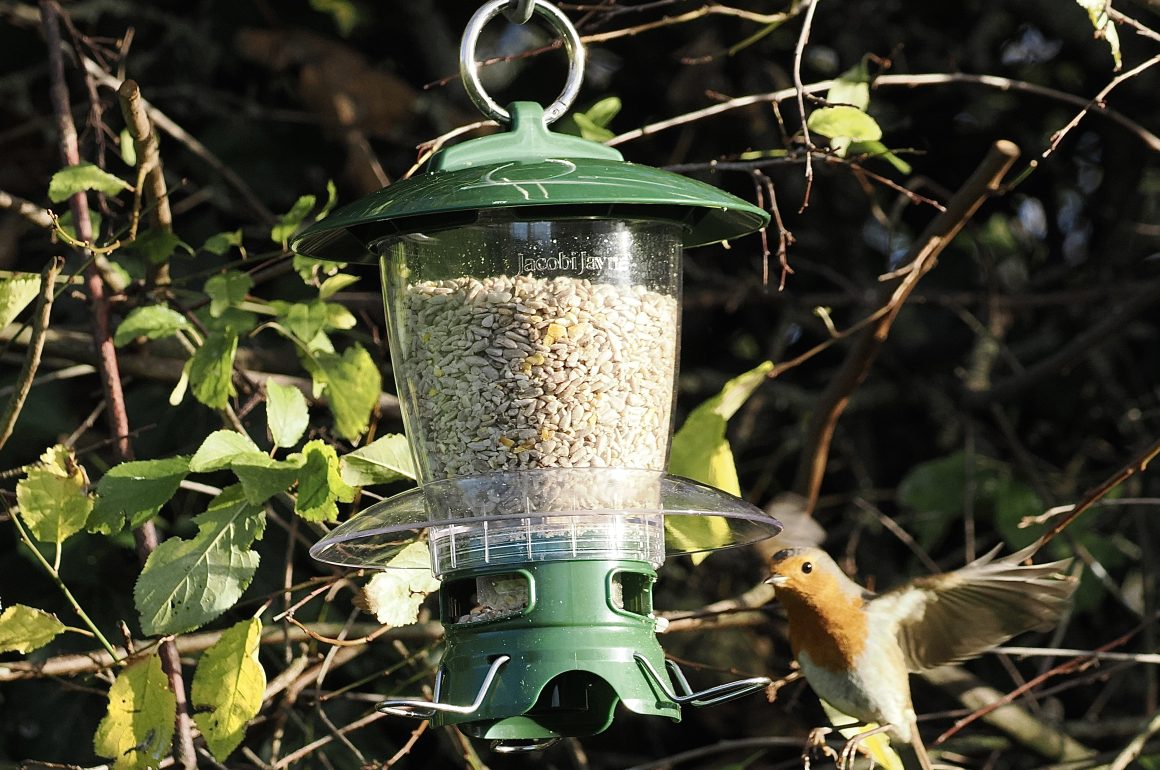
In response to the RSPB’s concerns about dirty feeders, the manufacturers are now introducing new feeders that are not only easier to clean, but are also designed to reduce the risk of disease being spread. The first I have tried is called Feeder Fresh, designed and sold in the UK by Jacobi Jayne. (www.jacobijayne.com).
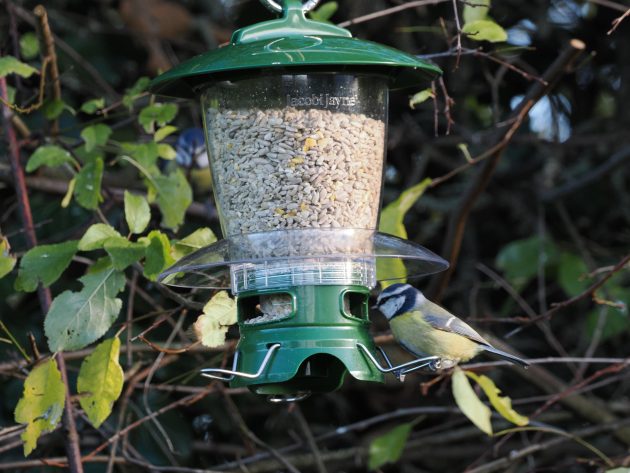
Blue Tit on the Feeder Fresh, an innovative new design of feeder now being sold in the UK by Jacobi Jayne
The Feeder Fresh has just three perches, so avoiding over crowding. The birds can’t stand in the food, nor can their droppings taint it. A small rain guard protects both birds and food from the rain, and helps prevent food becoming damp or mouldy. It is made of non-porous materials that don’t harbour germs. Most important of all, its twist-off base and lid make it simple to both fill and clean. It’s a relatively low-volume (1-litre) feeder, and comes with recommendation to clean out uneaten food before refilling – never add fresh food on top.
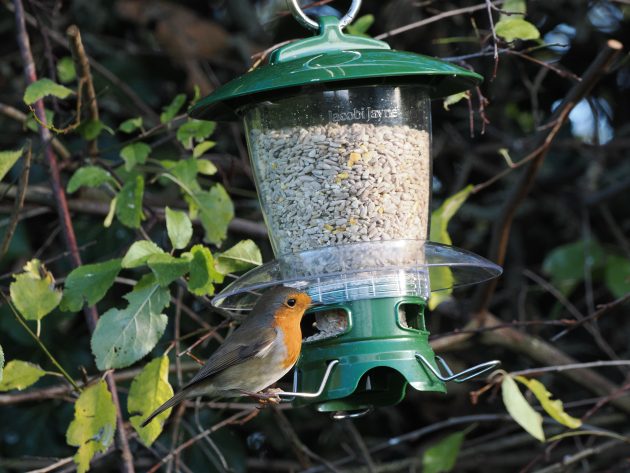
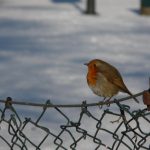
Robin on Feeder Fresh
Birds are often reluctant to try new feeders, but my garden birds accepted Feeder Fresh as soon as it was erected (it replaced a conventional tube feeder). It can be used with seed, suet pellets or dried mealworms. For garden birds Feeder Fresh is a game changer, and looks likely to make old-fashioned tube feeders redundant. Its introduction is very good news for garden birds.
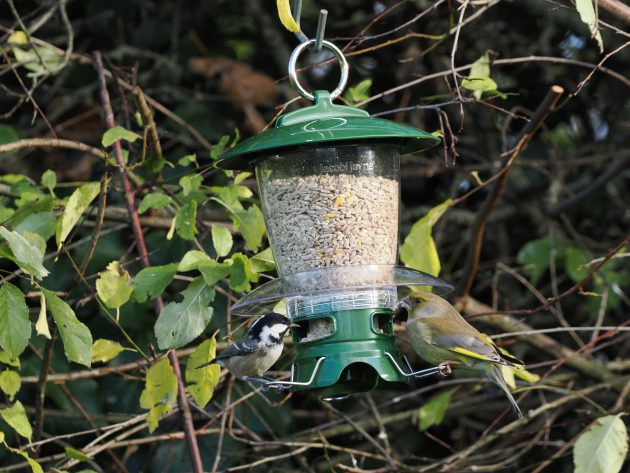
Coal Tit and Greenfinch share the Feeder Fresh. With only three perches over-crowding is impossible, reducing the risk of disease transmission




Leave a Comment