

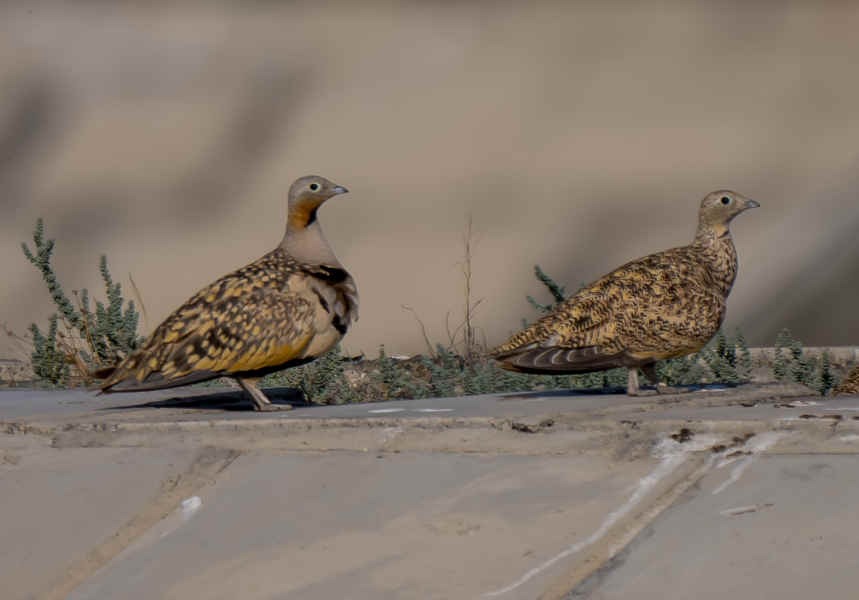
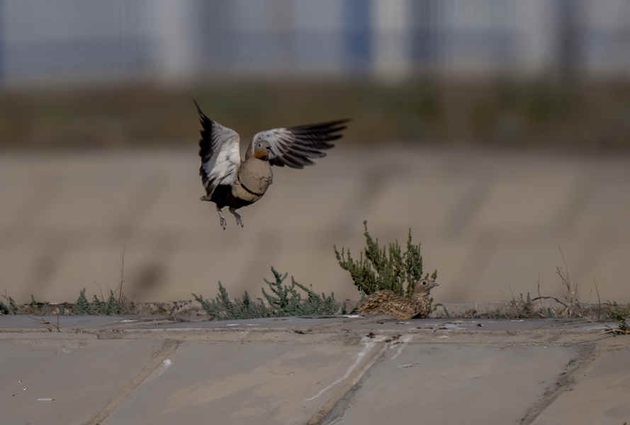
According to the HBW, while it is overall classified as Least Concern, the Black-bellied Sandgrouse is rare in Xinjiang. Its preferred habitats are semi-arid plains with steppe to semi-desert vegetation – maybe many parts of Xinjiang are already too dry for it? In any case, the ones I saw were all at a water reservoir in what indeed looked like at least semi-desert to me.
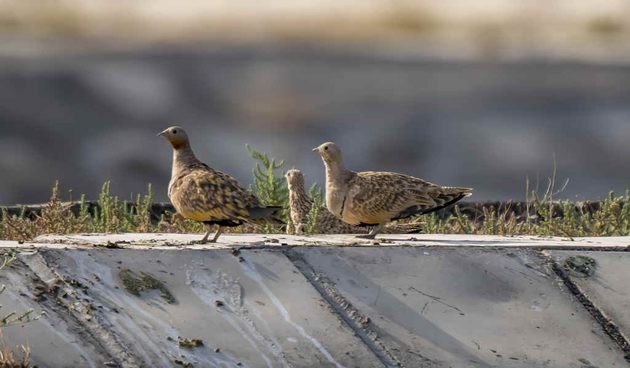
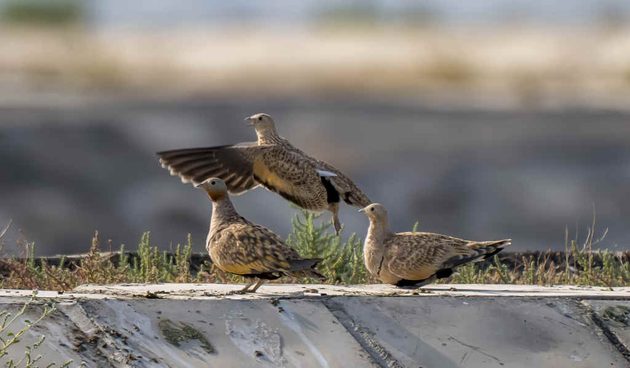
In Spain, its numbers have been declining by about 4-5% per year, and its future depends on the maintenance of fallows, semi-natural habitats, and pastures for extensive grazing (source).
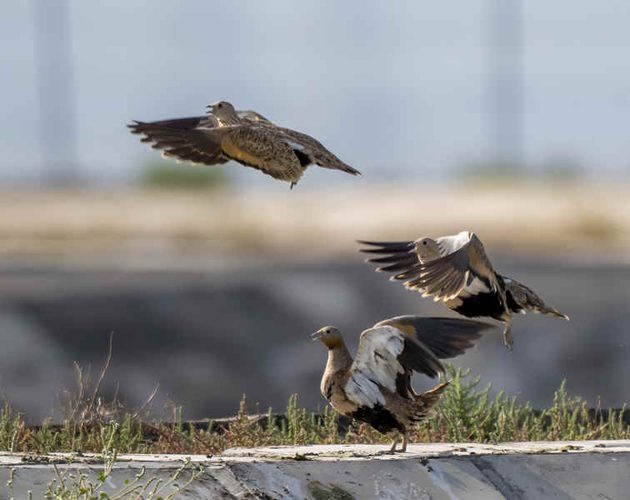
Another paper on the distribution of the species on the Canary Islands evokes images of sandgrouse lazing around on deckchairs: “Sandgrouse were closer to human settlements in midsummer than in March, perhaps being attracted to artificial pools surrounding villages.”
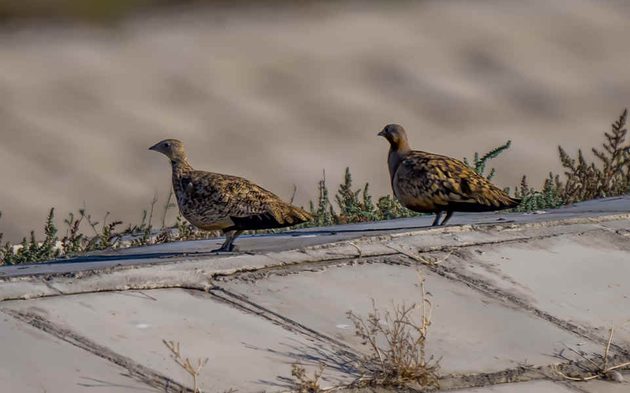
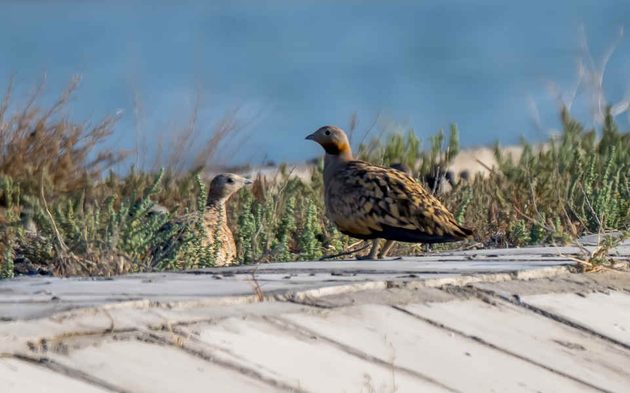
Closeness to water, cereal crops, and rock cover makes locations in Algeria more attractive as nesting sites for the sandgrouse, while the proximity of roads has a negative effect (source).
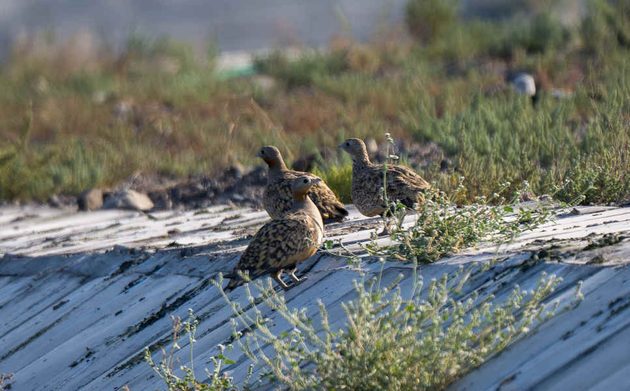
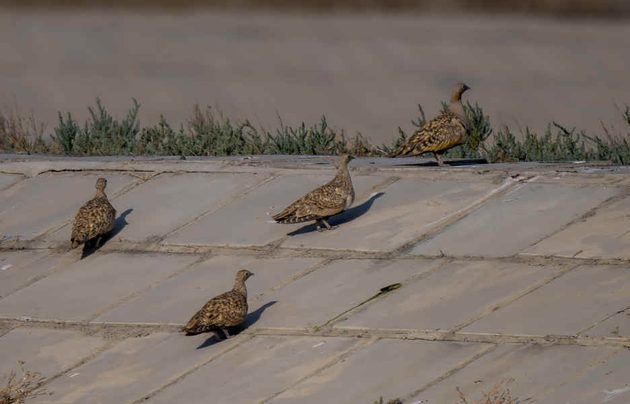
These studies show that, despite being a kind of desert bird, sandgrouse need water. What the water does not need is to be very close to sandgrouse chicks. Rather than taking chicks to the few puddles or pools available in a semidesert, the sandgrouse bring water to their chicks. Lacking any suitable conventional containers, they transport the water by letting it soak into their breast and belly feathers, which are adapted to hold water, then fly back to their chicks, which do not seem to mind this method (I shiver to imagine having to drink water from my mother’s wet clothes, but I do not live in the desert anyway).
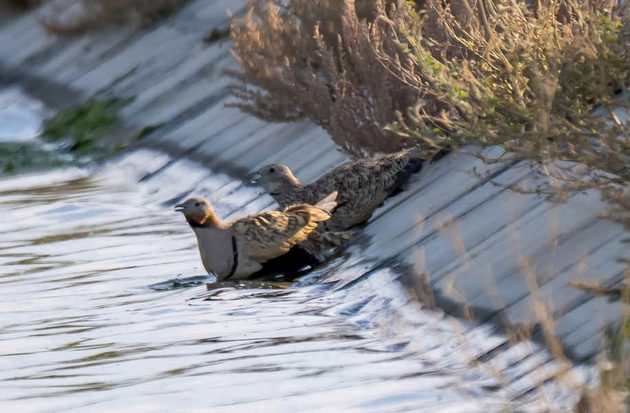
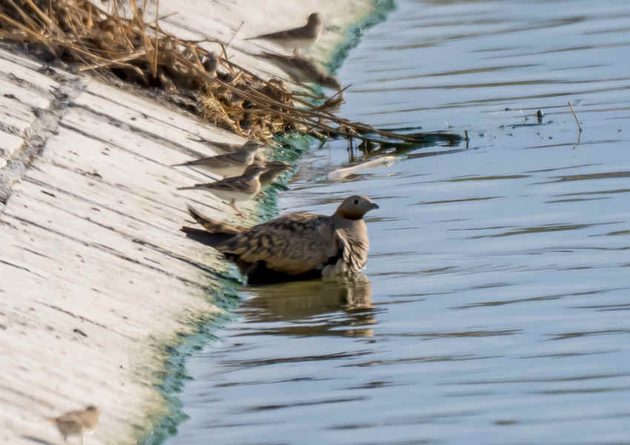
It is an interesting way of solving a relatively simple problem. Most birds drink water when they find it; sandgrouse drink it, soak themselves in it, and then carry it home. Thirsty chicks must love the wet look of their parents.
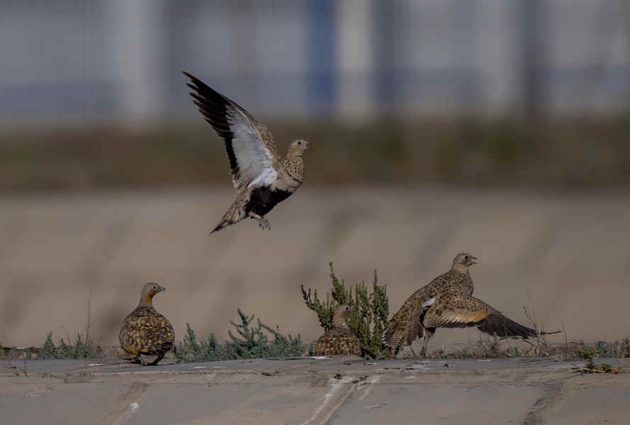
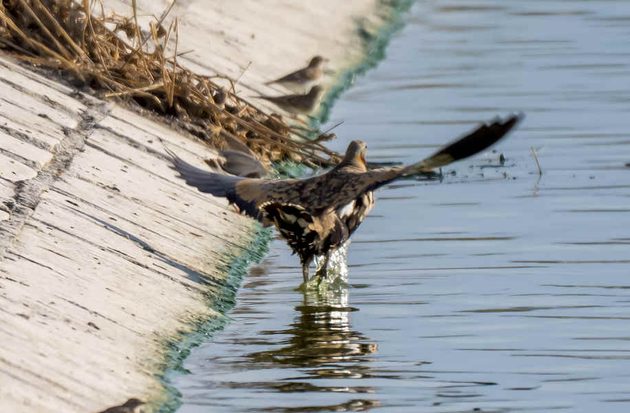
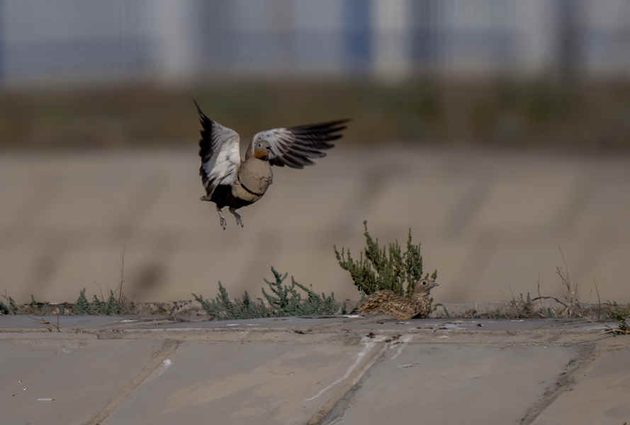
Photos taken in Northern Xinjiang in August 2026









Leave a Comment