

By Claire Bennett
Claire is a travel writer for Hotel Hot Tubs, covering hotels in the USA offering exceptional bathing experiences. She’s also an amateur birdwatcher.
Last February in Ouray, I watched an American Dipper dive in the Uncompahgre River for twenty minutes while steam billowed off the pool behind me. The bird had chosen the cold water. I had come for the hot water. For a while, neither of us seemed interested in getting anywhere fast.
Hot springs and birding are an easy pair to enjoy in this corner of Colorado. Across Ouray, Pagosa Springs and Glenwood Springs, rivers flow right past the pools, allowing for a unique birding experience while you relax in the water.
Hot Springs, Arkansas, which is covered later in this article has a slightly different set-up, with a hillside forest optimal for birding that offers a gorgeous backdrop for its historic bathhouses.
If you’re looking for a relaxing weekend without having to sacrifice checking a few birds off, or if you’re accompanied by a partner that doesn’t quite share your zest for birding, a birds and bathwater combination might be the perfect choice for your next trip.
Ouray, Colorado
Ouray, Colorado, sits in a narrow valley in the San Juan Mountains (part of the Rockies), with incredible hiking trails and waterfalls close to town. The outdoor hot spring pools stay open through winter, enabling a beautiful hot spring experience amidst the snow-covered backdrop.
Common Ravens are present year-round in Ouray, flying above town and calling from the slopes with deep croaks. Black-billed Magpies can also be sighted here above the grounds.
If you’re looking to catch a sight of either while taking a dip, make sure you visit the pools while there’s still daylight for you to see what’s flying overhead.
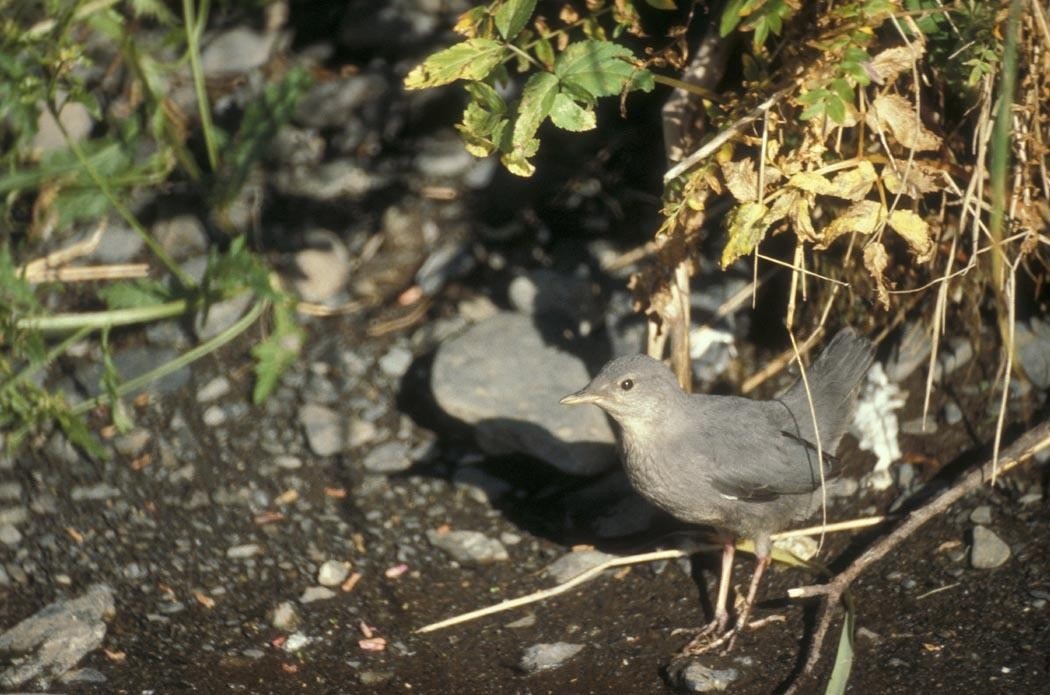
For a chance at spotting an American Dipper, follow the Uncompahgre River Walk north from the pools. Scan the rocks along the water for a small gray bird bobbing up and down. In winter, look around stretches of open water, where dippers continue to feed even in the cold.
If you find one, take some time to watch it. Dippers dive beneath the current in search of aquatic insects and larvae, using their wings to move underwater. You might see one surface, return to a rock for a moment, and plunge right back in.
Summer brings an entirely new reason to visit Ouray: from June through early September, Box Cañon Falls is home to a colony of Black Swifts. To find them, follow the short Falls Trail into the canyon and ask the park staff if any nests are visible from the walkway. Make sure to arrive early enough to give yourself time to look, as you may need some patience: the swifts nest on damp ledges near the waterfall, but they can often spend hours away from the canyon feeding.
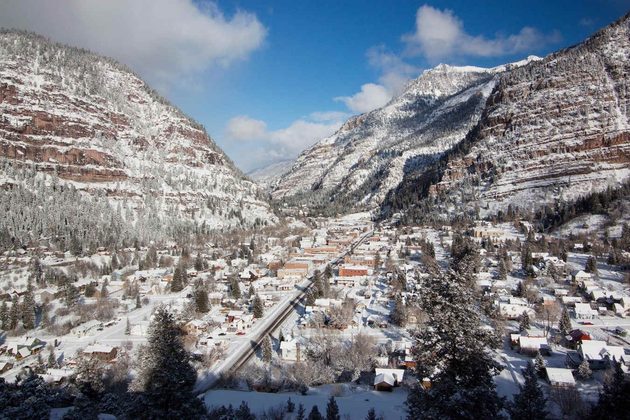
Ouray after a snowfall. Photo: Alan Stark, Ouray, CO in the Winter (2012), CC BY-SA 2.0. Unmodified.
Pagosa Springs, Colorado
Of the four towns, Pagosa Springs makes it easiest to combine birding and bathing. The San Juan River runs through downtown, and the pools at The Springs Resort overlook it.
Mallards and Common Mergansers are common on the river. Female mergansers are easy to pick out among the Mallards, with rusty heads, shaggy crests and long, narrow bills. Both species raise young along this stretch, and by late summer a line of ducklings can be more entertaining than anything happening in the pool. In the warmer months, look up for Ospreys hunting over the water.
Winters are as good a time to visit. Warm water from the springs keeps the river and nearby wetlands from freezing, so birds gather here when other water has iced over.
For a closer look at the birds, walk the San Juan Riverwalk early in the morning before you soak. From Town Park to the Community Center is about three-quarters of a mile each way. Blue-winged Teal stop at its shallow wetland ponds during spring and fall migration, and Song Sparrows sing from the cattails.
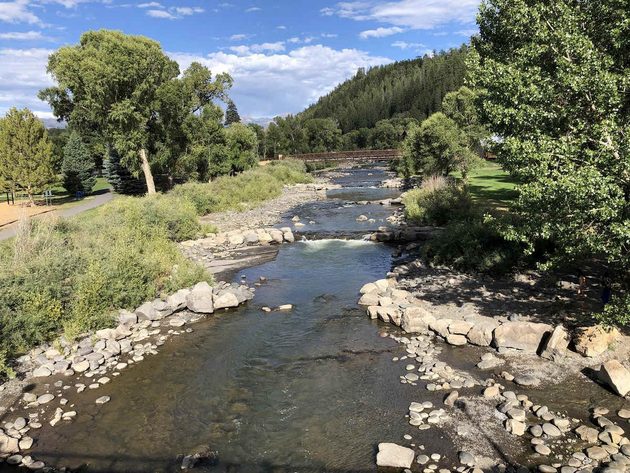
Rock-lined pools beside the San Juan River in Pagosa Springs (2021). Photo: Netherzone / Wikimedia Commons, CC BY-SA 4.0. Unmodified.
Glenwood Springs, Colorado
The Roaring Fork meets the Colorado River at Glenwood Springs. To birdwatch while you soak, go to Iron Mountain Hot Springs, where the pools sit on terraces above the Colorado.
In winter, scan the far bank and riverside perches for Bald Eagles. A white head and tail mark an adult, and a huge brown bird may be a young one. Ospreys hunt the river in the warmer months. A morning soak gives you the best light and leaves time for a walk along the river afterward.
Listen for the dry rattle of a Belted Kingfisher, which you’ll usually hear before you see it.
Veltus Park, on the Roaring Fork, makes a good walk after your soak. The Colorado Birding Trail lists it for the American Dipper, especially in winter, and Lewis’s Woodpecker is also a possibility.
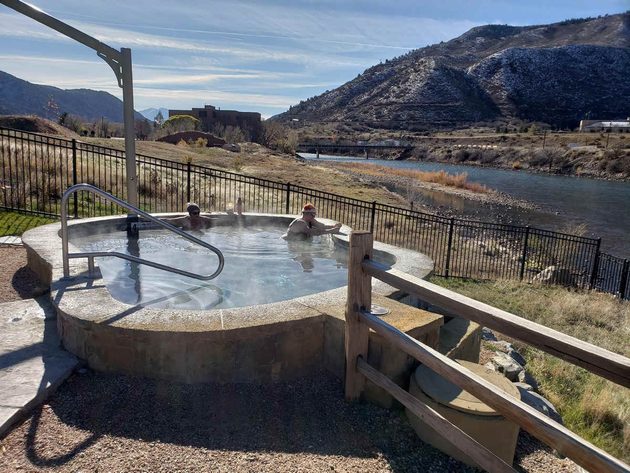
A soaking pool beside the Colorado River at Iron Mountain Hot Springs, Glenwood Springs (2020). Photo: Jbirkby / Wikimedia Commons, CC BY-SA 4.0. Unmodified.
Hot Springs, Arkansas
Eight historic bathhouses line Central Avenue on Bathhouse Row, with wooded national parkland right behind them. Unlike in the Colorado towns, the thermal bathing here at Buckstaff and Quapaw is indoors, so you’ll do your birding before or after (I recommend before).
The Grand Promenade, a half-mile brick walkway behind the bathhouses, is best in the first hour after sunrise. Northern Cardinals, Carolina Chickadees and Tufted Titmice are here all year, and with luck you’ll spot a Carolina Wren in the undergrowth.
In winter, White-throated Sparrows feed in the leaf litter and Yellow-rumped Warblers work the branches above. Spring and fall migration bring more songbirds. When a small flock moves through, stay with it, because the first bird you see often has company of other species.
By late spring, Red-eyed Vireos and Summer Tanagers are back. They’re hard to see through the leaves, so listen as much as you look. An early start gives you time to track down a singer without rushing.
Then walk downhill to Bathhouse Row. After craning your neck at a vireo you can’t find, you’ll be ready for the bath.
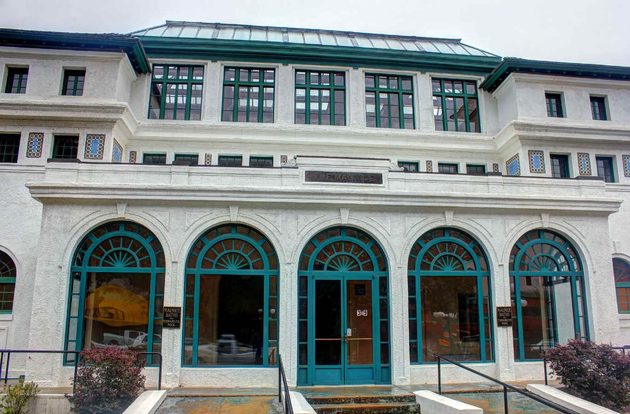
The Maurice Bathhouse on Bathhouse Row in Hot Springs, Arkansas (2014). Photo: Yinan Chen / Good Free Photos. Public domain; unmodified.
In all four towns, the birding and the bathing are only a few minutes apart. In the Colorado towns you can watch from the pool, and in Hot Springs the birds are in the woods behind the bathhouses. Go for a walk in the morning, when the birds are most active, and save the afternoon for a long soak. Bring binoculars and take your time with both.
Cover Photo: American Dipper. These small songbirds dive beneath fast-moving water to feed. Photo: Bob Olendorf / USFWS. Public domain; illustrative species photograph.






Leave a Comment