

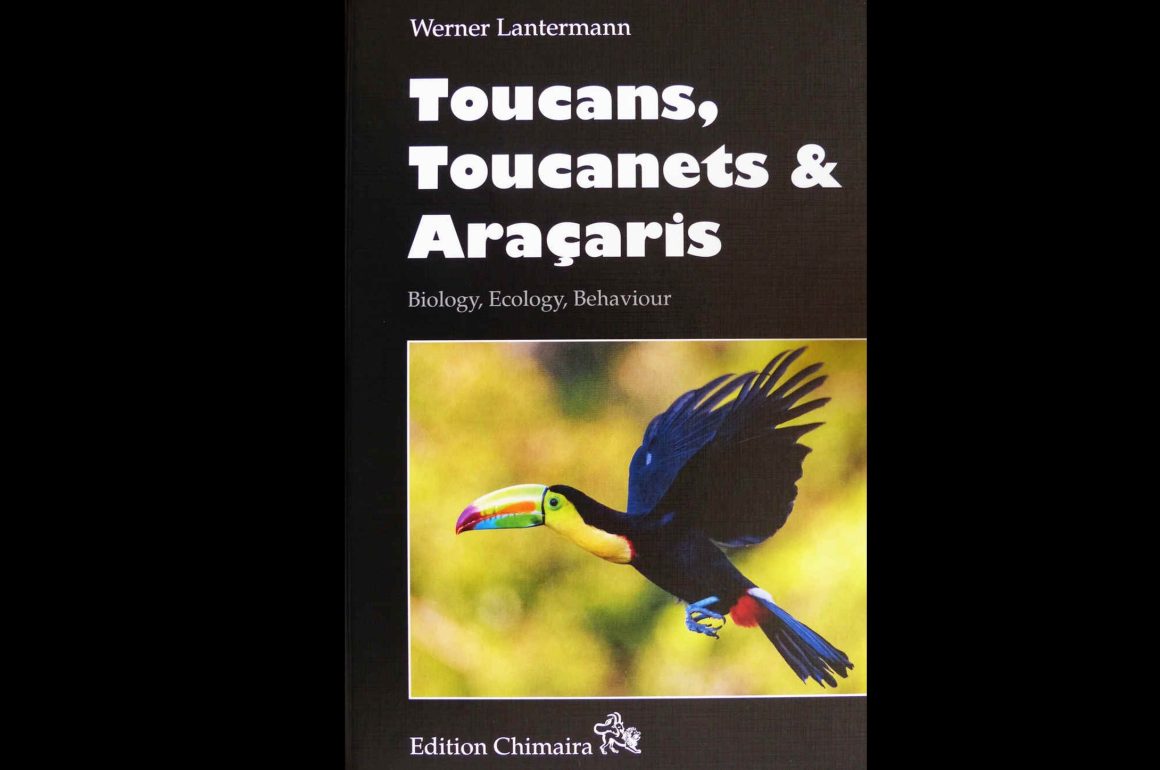
Let me start with a disclaimer: I have not yet seen any of the birds covered in this book in the wild. So I cannot really comment on the veracity of the facts presented here—though, having worked with Werner Lantermann before, I have no doubt there will be no issues in this regard.
What I did realize after receiving this book is how much I have been missing. It is a wonderful introduction to these 43 species, rich in scientific information and illustrated with spectacular photos.
The author has been working with birds in aviculture since the 1980s, initially focusing on parrots, later expanding to toucans and araçaris, and most recently to starlings (which is how we became acquainted). This background explains one somewhat unusual feature of the book: a section on toucans and their allies in captivity. While this may be less immediately relevant to the typical birder, it contains plenty of fascinating material—particularly on captive breeding efforts in zoos around the world. For me, the frequent references to Weltvogelpark Walsrode were especially interesting, as it is located only about 15 kilometers from where I spent much of my childhood and was a regular destination for school trips—though I freely admit this detail may resonate less with other readers.
Before the detailed species accounts, the book offers several broader sections on topics such as speciation and evolution. These are clear, well-structured, and answer exactly the kinds of questions I tend to ask—such as the function of the toucan’s bill. Some of the smaller digressions are particularly engaging, including a discussion of aggressive mimicry in two species pairs.
Additional sections cover ecology, reproduction, and conservation. The conservation chapter includes all the depressingly familiar threats—deforestation, hunting for food and trade—but also presents some realistic and cautiously optimistic ideas about sustainable use of wild populations. My own (admittedly cynical) view is that conservation without economic incentives rarely succeeds, so it was refreshing to see this aspect addressed in a pragmatic way.
The main part of the book consists of about 160 beautifully illustrated pages covering the 43 species, each typically allocated 2–4 pages. For each species, the book provides:
- Common and scientific names (as well as the German name—sometimes amusing to those of us who bird primarily in English; “Rotnackenarassari,” anyone?)
- Species description
- A selection of photos highlighting key features (and simply a pleasure to look at)
- Subspecies
- Distribution (with maps)
- Ecology, vocalization, and status
- Captive husbandry (again, an unusual but informative inclusion)
Overall, Toucans, Toucanets & Araçaris is an excellent overview of these fascinating birds. It would be easy to fall back on the cliché that this is “a book for both beginners and experts.” Given my lack of firsthand experience with these species, I can only confidently vouch for the first half of that claim—but on that level, the book succeeds admirably.
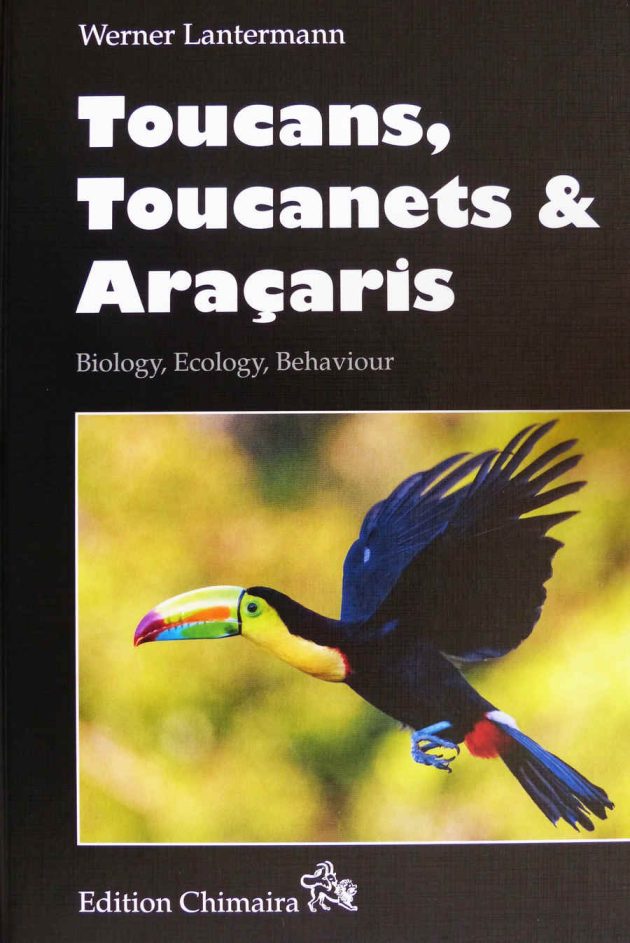
Werner Lantermann
Toucans, Toucanets & Araçaris — Biology, Ecology, Behaviour
Frankfurt am Main 2026
Edition Chimaira
ISBN 9783-89973-512-3















Leave a Comment