

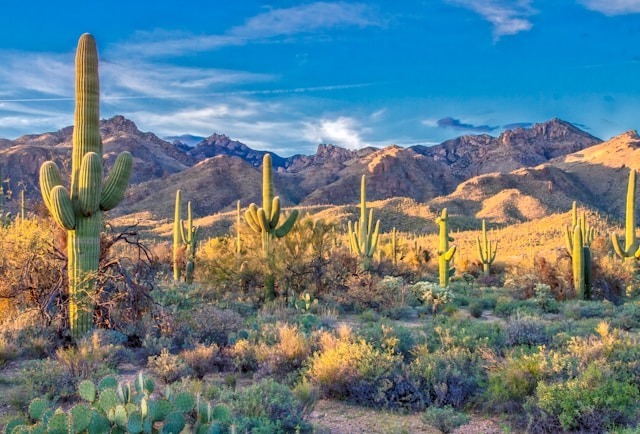
As the sun descends below the horizon, the desert terrain comes to life. This arid world, made up of hardy brush and thorny plants, is the domain of the Elf Owl, a tiny hunter who reigns over the scrubland.
While the sparse, desert landscape may look empty to an outsider, it’s a vibrant oasis for countless avian inhabitants that depend on its vegetation — it’s also facing several threats.
What Is a Desert Scrub Ecosystem?
Desert scrub ecosystems are plant communities found at elevations of 3,500 feet or lower. These harsh regions often experience hot summer temperatures and mild winters, receiving 9 inches of rain or less per year. Some of the most common herbs, shrubs, succulents and grasses you’ll find in these biomes include:
- Creosote
- Velvet Mesquite
- Ocotillo
- Fairyduster
- Catclaw Acacia
- Palmer’s Century Plant
- Tulip Pricklypear
Two of the most renowned desert scrub ecosystems include the Mojave Desert and the Grand Canyon. The plants and wildlife in these areas are well-adapted to the minimal water supply and weather patterns.
Arizona’s Sonoran Desert is another unique, richly biodiverse scrubland, with 44% of the area under federal protection. In addition to an array of annual plant species that emerge with its seasonal precipitation, it is home to the Elf Owl.
The Tiny Elf Owl and Its Vast Kingdom
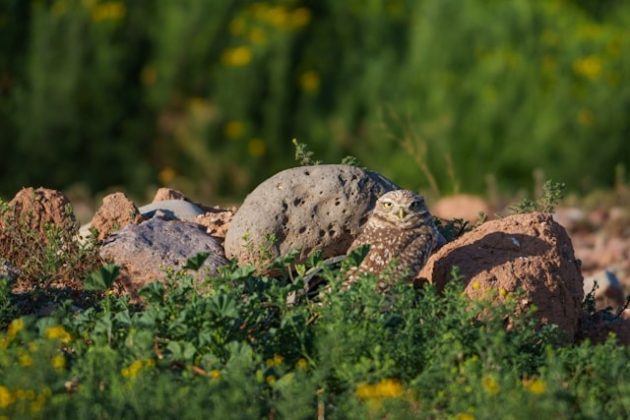
Elf Owls are only 4 to 6 inches long and weigh about 1.4 ounces. Although they might be the smallest known owl, they’re mighty, teaming up with fellow Elf Owls to attack predators, such as larger owls and snakes. Unfortunately, the Elf Owl is also prey for Titmice, American Robins and others that have made the desert scrub their home.
The Elf Owl has developed a deep, symbiotic relationship with the arid landscape. Its lowland domain provides excellent shelter and nesting cavities among tall saguaro cacti and mesquites. It also prefers the large sycamores and oak trees found in the canyon foothills.
Although desert plants offer critical habitat, the rest of the ecosystem supplies a smorgasbord of scorpions and flying insects for them to feed on. Without these essential scrubland biomes, the Elf Owl’s food sources would disappear.
A Hidden Chorus of Scrubland Songbirds
Although the Elf Owl is one of the more elusive wonders of the desert night, the scrubland hosts many daytime songbirds that also rely on the ecosystem for survival. The Phainopepla is a silky-black bird found in the southwestern U.S. and Mexico. During the winter months, it feeds almost entirely on mistletoe berries, eating nearly 1,100 berries each day and dispersing seeds throughout the area.
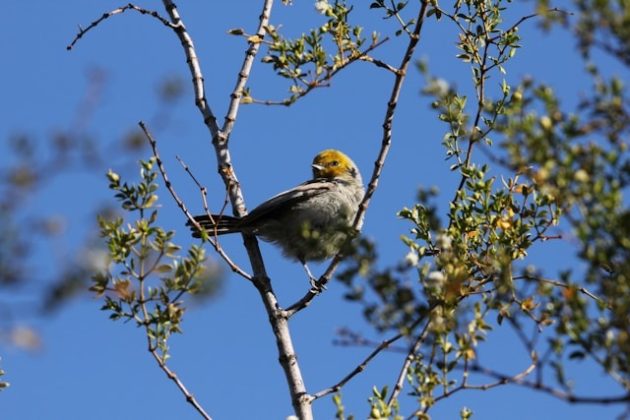
The Verdin is another desert songbird that expertly builds its nests with twigs, nestling within thorny bushes to create a fortress of protection. It eats spiders, insects, fruit and nectar, sometimes hanging upside down from branches to scan underneath leaves for food. Foraging occurs primarily in low-lying, small trees about 10 feet above the ground.
Likewise, the Black-Throated Sparrow is found throughout the Arizona desert scrubs, as well as the Colorado Plateau. It prefers a semi-open landscape of Creosote bushes, Ocotillo, Velvet Mesquite and Pinyon-Juniper. As a ground forager, it often feeds on grasshoppers, caterpillars, dragonflies and walking sticks. Scientific research has shown that this avian species can withstand extreme temperatures and drought.
A Fragile Desert Facing Many Threats
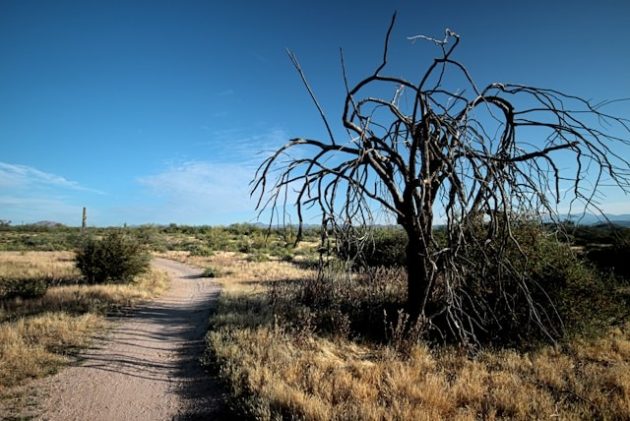
Desert scrubs might be adapted to harsh conditions, but environmental and human threats greatly compromise their resilience. The degradation of these habitats, caused by urbanization and invasive species, jeopardizes the Elf Owl and other songbird populations.
Urbanization and Climate Change
Urban sprawl is among the most perilous threats to desert scrub and also exacerbates climate change. For example, Phoenix, Arizona, has been among the fastest-growing cities in the desert since the mid-1960s. As its population has reached over 5 million people across 6,500 square kilometers, its city limits have encroached on the scrublands.
With this expansion, temperatures have climbed, and warming trends are expected to continue rising. Today, the region often sees temperatures exceeding 45° Celsius — 113° Fahrenheit.
Light Pollution
Urban sprawl can lead to other threats to desert scrub birds, such as light pollution. Artificial light can alter flight patterns and lead them away from their destination. Light may also draw them to cities where they risk collisions. For owls, it can change nocturnal habits and hinder their ability to hunt prey.
Invasive Species
Desert scrubs are increasingly susceptible to invasive plant species, which may overrun the vegetation used by Elf Owls. According to the National Park Service, Red Brome and Cheatgrass are nonnative species that displace native flora and alter regional ecological processes.
The presence of invasive grasses also increases the frequency and intensity of wildfires. The slow-growing native desert plants are not used to wildfire conditions and may not survive.
You Can Become a Guardian of the Desert
Scientists are working tirelessly to understand desert impacts and the threats to Elf Owls. However, there are several conscious choices you can make to become a scrubland guardian for these remarkable birds.
Observe the Wildlife with Respect
It’s exciting to see Elf Owls and other songbirds in the wild, but avoid getting too close. You can reduce their stress and encourage natural nesting and foraging behaviors by viewing them from a distance with high-quality binoculars.
Deepen Your Ecological Knowledge
Gaining a deeper understanding of the desert scrub ecosystem is your first step to truly protecting it. A field guide is often an indispensable tool for identifying birds and the plant species they depend on. It also helps you develop a deeper appreciation for nature’s complex relationships.
Support Active Conservation Efforts
Conservation groups have the resources and knowledge to spearhead habitat preservation. Your participation in volunteer events or donations to related nonprofit organizations contributes to restoration efforts, research and advocacy.
Travel with A Conservation Purpose
Desert scrublands make exciting vacation destinations for nature enthusiasts. Rather than traditional tourist excursions, look for certified eco-tours and lodges that put sustainability and local preservation at the heart of their business. Specialized operators can teach you about local wildlife and operate with minimal environmental impact.
A Thriving Desert is a Legacy for Everyone
The desert’s resilience lies in the intricate connections with the humble scrubland. Protecting these plants is among the most crucial measures in ensuring the Elf Owl and fellow songbirds continue to thrive.








I enjoyed reading and learned a lot about the Elf Owl. I would like to see this bird in its home, thriving. Thank you for the good information and beautiful writing.