
Which bird species do you think is the biggest attraction to visitors of your lodge (please only name one species)?
Andean Cock-of-the-Rock
What is the name of your lodge, and since when has your lodge been operating?
Butterfly and Birds Julio Tours Ecolodge, operating since 2025.
How best to travel to your lodge?
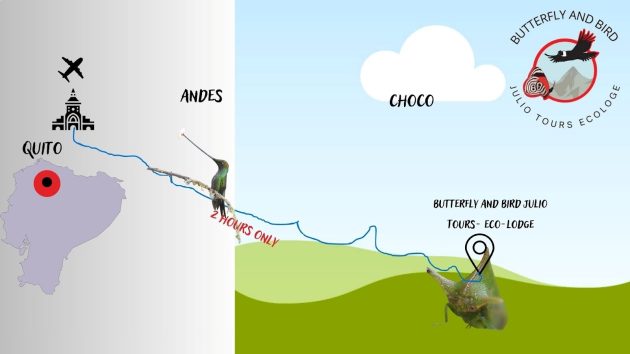
Drive from Quito (2 hours).
What kind of services – except for accommodation and food – does your lodge offer to visiting birders?
- Early morning birding at feeders: Observe and photograph hummingbirds, tanagers, euphonias, and toucans visiting the feeders in excellent natural light.
- Guided forest trail walks: Explore the cloud forest trails with an expert guide to find mixed flocks, antbirds, woodcreepers, and rare endemic species.
- Observation deck birding: Watch canopy species such as toucans, aracaris, and flycatchers from elevated observation points.
- Afternoon photography sessions: Take advantage of ideal lighting conditions to photograph birds and butterflies around the lodge gardens and forest edges.
- Full-day birding excursions: Visit nearby reserves such as Milpe or other Chocó hotspots to increase species diversity and photography opportunities.
- Multi-day birding experience: Stay 2–4 days to fully explore different elevations and habitats, maximizing chances to see a wide variety of Chocó specialty birds.
- Optional night walk: Look for nocturnal species such as owls and other wildlife around the lodge and forest trails.
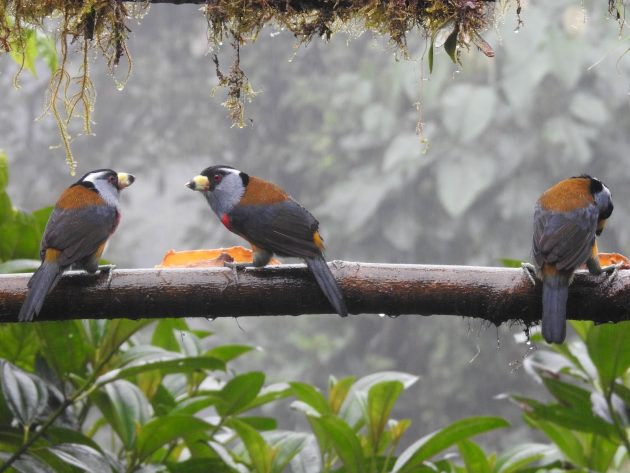
Toucan Barbet
What makes your lodge special?
The lodge location is highly attractive for birders due to its position in the biodiverse Chocó cloud forest, home to an incredible variety of colorful and endemic bird species. Visitors enjoy close views of hummingbirds, tanagers, and toucans from well-placed feeders, trails, and observation areas. The combination of expert local guides, excellent photography opportunities, and year-round bird activity makes the lodge an ideal destination for unforgettable birdwatching experiences.
What are the 10 – 20 most interesting birds that your lodge offers good chances to see?
- Toucan Barbet (barbets)
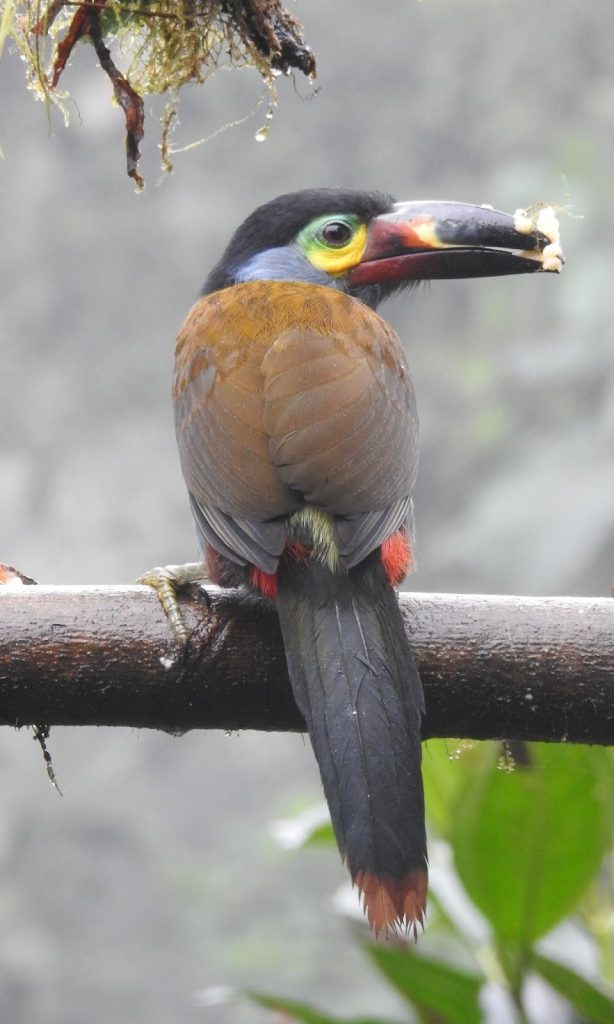
- Plate-billed Mountain-toucan (toucans)
- Anden Cock-of-the-Rock( contingas)
- Banded Ground Cuckoo (cuckoos)
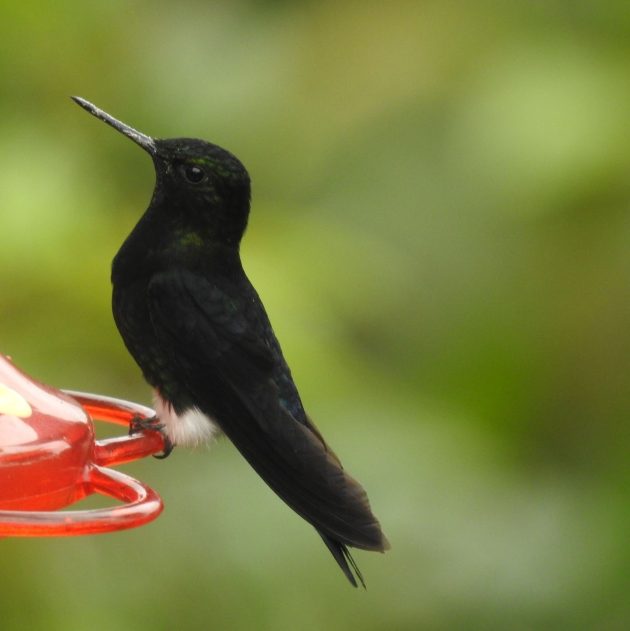
- Black-breasted Puffleg (hummingbirds)
Plate-billed Mountain-toucan
What is the best time to visit your lodge, and why?
September to March
Is your lodge involved in conservation efforts? If yes, please describe them.
Yes, Butterfly and Bird Julio Tours Ecolodge actively participates in conservation activities. Our project helps protect the cloud forest habitat in Nanegal by preserving native vegetation, maintaining butterfly and bird feeding areas, and promoting sustainable ecotourism. We also support environmental education and work to conserve the biodiversity of the Chocó region, one of the most important biodiversity hotspots in the world.
Black-breasted Puffleg
What other suggestions can you give to birders interested in visiting your lodge?
- Bring raincoats to protect your cameras or binoculars.
- Bring comfortable and non-colorful clothing.
- Provide information about your diet
- Bring a telescope
Do you have activities for non-birders? If so, please describe.
Guests can enjoy butterfly watching and photography, nature walks, forest exploration, scenic landscapes, insect and macro photography, relaxation in the cloud forest, and learning about local biodiversity. Our ecolodge is also a perfect place to enjoy nature, beautiful views, and the peaceful environment of the Chocó cloud forest.
If any reader of 10,000 Birds is interested in staying at your lodge, how can they best contact you?
They can contact me, Julio Ayala, at birdsforesttours@gmail.com. I am a professional bird and butterfly guide and lodge owner in Nanegal, Pichincha, Ecuador, and the founder of Butterfly and Bird Julio Tours.
I welcome visitors interested in birdwatching and photography tours in the Chocó cloud forest. The website of the lodge is at https://birdandbutterflyjuliotours.com/about-the-ecolodges/
Is there anything else you would like to share with the readers of 10,000 Birds?
Recommended bird guide book: Birds of Ecuador – Helm Field Guide. Authors: Robert S. Ridgely and Paul J. Greenfield. This is the most authoritative and widely used field guide for birding in Ecuador. It includes full-color illustrations, detailed descriptions, and distribution maps covering nearly 1,600 bird species found in the country, making it an essential resource for identification in the field.
Alternative modern option: Field Guide to the Birds of Ecuador Authors: Juan Freile and Robin Restall
This newer guide covers more than 1,630 species with updated maps, illustrations, and identification information. It is considered a definitive and portable guide for birdwatchers exploring Ecuador.
Further Information:
- All About Birds – Cornell Lab https://www.allaboutbirds.org An excellent educational site with bird identification guides, photos, and birding tips for beginners and experts.
- BirdLife International – Chocó-Andes Region https://www.birdlife.org This site provides detailed conservation information about the Chocó-Andes, one of the most biodiverse regions in the world, home to dozens of endemic bird species and many rare and threatened birds.
- Cornell Lab of Ornithology – Birds of the World https://birdsoftheworld.org A scientific resource with detailed species accounts, photos, sounds, and distribution maps for birds found in Ecuador and the Chocó region.
- eBird – Explore Bird Species and Hotspots https://ebird.org A global database where birders can explore species lists, maps, and recent sightings in northwestern Ecuador and cloud forest habitats.
- Aves y Conservación (BirdLife Partner in Ecuador) https://avesconservacion.org Ecuador’s leading bird conservation organization, with information about important bird areas, conservation projects, and endemic species.


Leave a Comment