

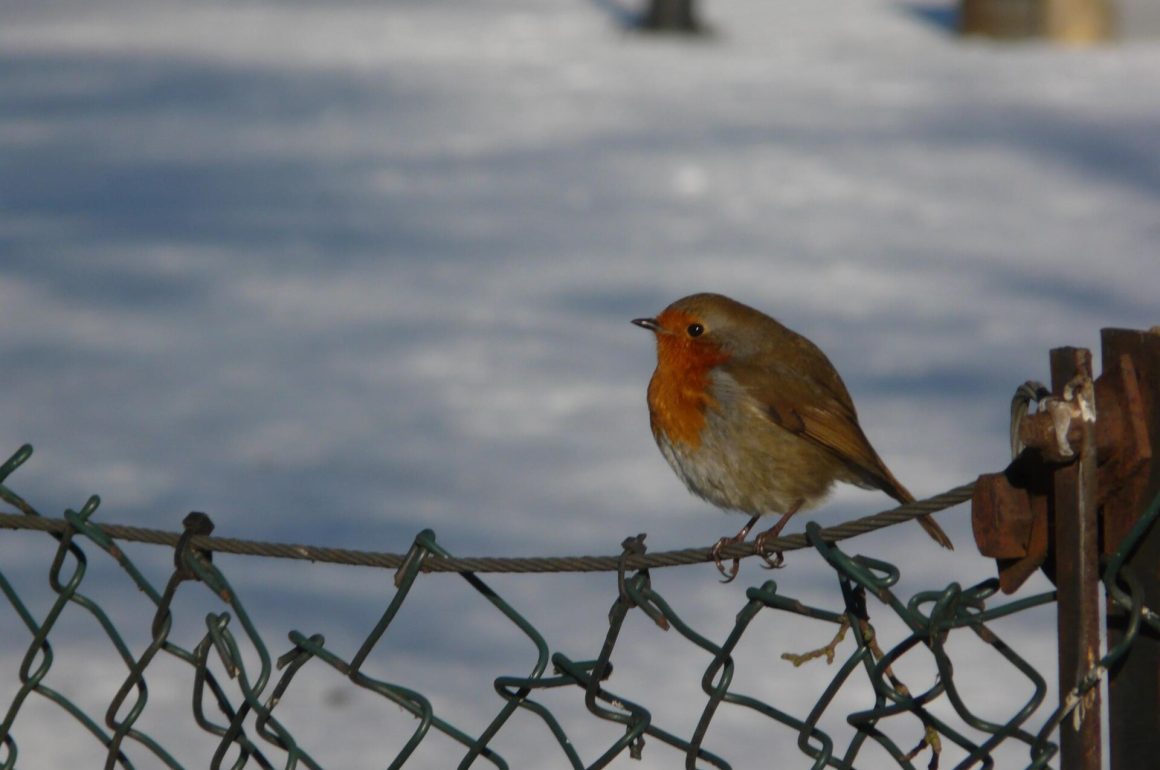
Every winter, the advice is the same: put out seed. Fill the feeder, hang the suet, scatter the mealworms. Water barely gets a mention, and I understand why. In my own garden, in Pakistan, winter never locks the water into ice. The birds here drink all year from the same shallow dish, and I never had to think about what happens when the dish itself turns solid. Then I started reading, and the picture changed. A bird can dig seed out from under snow. It cannot dig liquid water out of ice. When every pond, puddle and birdbath is frozen, water becomes the hardest thing in the garden to find, and for a small bird on a cold night, it can matter as much as food.
Why water does two jobs, not one
Cornell Lab of Ornithology puts it plainly: most birds drink water every day, and they also bathe in it. The second job is the one people forget. Bathing keeps feathers clean, and clean feathers are what keep a bird warm. A bird dries itself by fluffing its feathers and preening each one, adding a thin coat of oil from a gland at the base of its tail. The fluffed feathers trap a layer of air, and that trapped air is the insulation. Matted or dirty feathers cannot trap air, so a bird with unkempt plumage is a colder bird, whatever it ate that day. That is why a bird will bathe in the middle of winter if it gets the chance, and why water is not only a drink. It is part of the bird’s heating system. A veterinary guide quoted by the Poynter Institute puts it more bluntly: dehydration can be a bigger threat to birds in winter than starvation, because there is so little unfrozen water about. I found that startling, and it changed how I think about the dish in the garden.
Snow is not a free drink
When there is no open water, birds do eat snow. Black-capped Chickadees have been watched drinking from dripping icicles and pecking at snow on branches. Cedar Waxwings have been seen snapping snowflakes out of the air, the way they would catch insects in summer. Dark-eyed Juncos peck at soft snow on the ground. It looks clever, and it works, but it is not free. Snow has to be melted inside the body and warmed to body temperature, and the heat for that comes out of the same small budget a bird uses to stay warm through the night. The Nature Conservancy puts it simply: if water is frozen, it will cost birds a lot of body heat to melt. So birds take snow in small amounts through the day, a beakful at a time, and they prefer liquid water whenever they can find it. A bird that eats a lot of snow to quench its thirst is spending warmth to buy water, and on a cold day that is a poor bargain.
Where the open water hides
In the wild, birds look for the places that refuse to freeze. A stream that keeps moving holds pockets of open water even when the banks are white. Springs seep up from ground that stays warmer than the air. Icicles drip in the afternoon sun. Birds learn these places the way they learn a feeder: they visit them daily, on a circuit, and they remember. The European Robin is a good example. Robins hold a territory and patrol the same ground every day, and a garden with a reliable supply of clean water becomes a regular stop on that circuit. The RSPB calls clean, unfrozen water a necessity for birds throughout winter, and its experts say robins need it both to drink and to bathe, so their feathers stay in the best possible condition. The Woodland Trust notes that a robin can lose up to ten percent of its body weight during a single freezing night, which is why every small saving of energy matters. Finding water without a long flight, and without the cost of melting snow, is one of those savings.
What helps, and what must never go in the water
The help itself is simple, and the rules are firm. A shallow dish, no deeper than about two inches, with a stone or a branch rising above the water so a bird can stand and drink without getting its whole body wet. Fresh water, put out in the morning and replaced when it freezes. A sunny, sheltered spot near a shrub, so a bird can drink and dart straight back to cover. If you live where the freeze lasts for weeks, an immersion heater made for birdbaths will keep the water liquid, and a dark coloured basin and a floating ping-pong ball can slow the icing on milder days. Plastic is the safer material in cold weather, because ceramic baths can crack when the water freezes. And then there is the rule that every authority repeats in the same words: never add anything to the water to stop it freezing. Not glycerine, not antifreeze, not salt. The RSPB says no chemical of that kind should ever be added, because it can destroy the insulating and waterproofing properties of the feathers and even prove toxic. Cornell warns that glycerine can be harmful or even fatal if a bird drinks a lot of it, and that it mats the feathers, which are then poor insulators. The Nature Conservancy adds that glycerine can raise a bird’s blood sugar. Warm water poured over the ice in the morning is fine. Boiling water is not, because it can crack a cold basin. There is one more caution worth knowing, and it surprised me. On a truly bitter day, a wet bird can be in trouble. The Nature Conservancy reports cases of birds whose wet feathers froze after bathing in a heated bath, including Northern Cardinals found unable to fly. Audubon, for its part, treats cold-weather bathing as ordinary, and healthy birds do bathe in the cold. The practical reading is that risk grows with the cold. If the day is bitter, the kindest design is a bath that lets birds drink but not plunge in, for instance by laying a small grille over part of the water, so only the head can reach it.
A small honesty before you start
One thing Cornell says is worth repeating, because it takes the pressure off. Keeping a bath ice-free is not critical. Birds conserve water well, and they can usually get what they need from snow or dripping icicles. Offering liquid water is a help, not a rescue. That matters, because the best help is the kind you can keep up all winter. A dish you refresh every morning beats a heater you forget to check. If you can manage only a bowl swapped in the morning and brought in when it freezes, that is enough. The birds will find it, and they will remember where it is.
I will never see a birdbath freeze in my own garden, and that is a strange thing to admit in a piece about winter. But the birds that visit me have cousins doing the same work in snow, and the physics is the same wherever a bird has to stay warm through a long night. Water is the quiet half of winter care, the half that does not come in a bag from the shop. Put out seed, by all means. Then look at the dish beside it, and ask the question I now ask myself every cold morning: if everything froze tonight, where would they drink?









Leave a Comment