

By Troy
Troy writes about birds and the outdoors, with a soft spot for winter birding and quiet nights spent listening for owls.
There is a particular kind of quiet that only a cold winter night can make. The wind drops, the neighborhood dogs settle, and the whole world seems to hold its breath. That is when the owls start talking—and if you are standing outside in it, coat zipped to your chin and ears wide open, you can hear a whole conversation most people sleep right through.
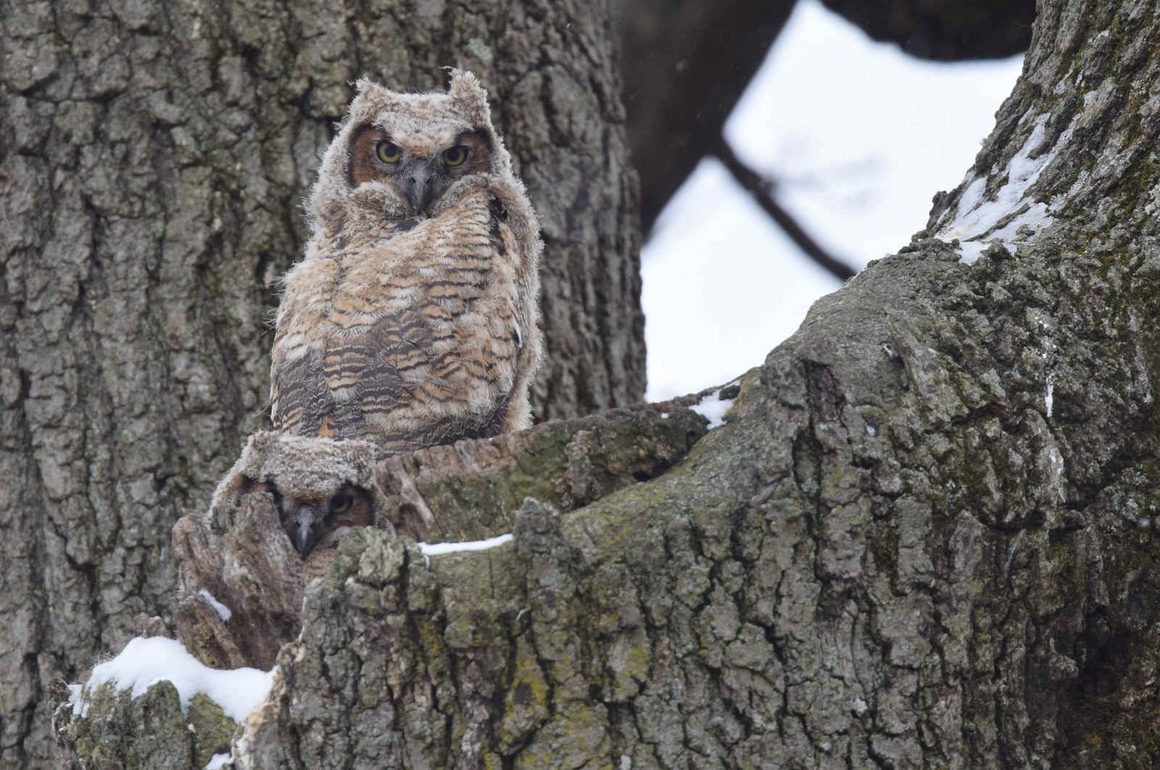
Winter is the best season for listening to owls, and it is not only because the trees are bare. Cold, still air carries sound farther than warm summer air, and the long nights give owls more hunting hours. Many species are also pairing up and defending territory in late winter, which makes them far more vocal than they are in summer. A Great Horned Owl that was silent in July will hoot from the same pine all February, night after night, as regularly as a clock.
Learn the voices first
The single most useful thing you can do before your first owl walk is learn three or four calls by heart—not from a book, but by listening to recordings until you can tell them apart in the dark.
The Great Horned Owl is the classic: a deep, soft “hoo-h’HOOO-hoo-hoo,” usually in a slow, even rhythm. The Barred Owl is louder and stranger, with its famous “Who cooks for you? Who cooks for you-all?” The Eastern Screech-Owl does not screech at all; it gives a soft, descending whinny like a tiny horse, and a long, even trill. And if you are lucky enough to be in open country in a snowy winter, the Snowy Owl is mostly silent—it is the one you see, not hear, sitting pale on a fence post at dusk like a piece of the snow itself.
Knowing these voices matters because owls are heard far more often than they are seen. On a good night you may hear three species and see none, and that still counts as a wonderful evening.
Pick the right night
Not every winter night is an owl night. The best ones are cold, clear, and calm—the kind of night when your breath hangs in the air, and the stars look close. Wind is the enemy of owl listening; even a light breeze can smother a distant hoot. The hour after sunset and the hour before dawn are usually the most active, though on the coldest, stillest nights owls may call at any hour.
Dress warmer than you think you need to. You will be standing still for long stretches, and standing still in winter is a different kind of cold than walking in it. A thermos of something hot, a red-filtered flashlight (white light ruins your night vision and disturbs the birds), and a notebook are all you need.
Stand still and let the night come to you
The beginner’s mistake is walking and calling. The better way is to find a good spot—the edge of a woodlot, a field with a line of old trees, a quiet park—and then simply stop. Give the night ten or fifteen minutes of silence before you decide nothing is there. Owls often wait. They are listening to you, too.
Resist the urge to play recorded calls to lure them in. A short burst now and then is one thing, but repeated playback can stress a bird that is already spending its winter energy defending a territory and hunting in the cold. The joy of this hobby is in the listening, not in forcing an answer. If an owl answers on its own, that is a gift. If it does not, you have still spent an hour in a beautiful, quiet world—and you will hear the next one sooner because you practiced.
What the cold tells you
Pay attention to what the night itself is doing. On a still night, sound bends and travels in strange ways; an owl that sounds fifty yards away may be two hundred, and one that sounds far off may be right above you. The cold also sharpens your own hearing. After twenty minutes outside, with your ears adjusted and the world quiet, you will start hearing things you missed at first—the soft landing of a bird, the rustle of a mouse under the leaves, the far-off train that sounds like it is underwater.
That is the real reward of listening for owls on cold, still nights. You came out to hear a bird, and you ended up hearing the whole winter.
Cover: a young Great Horned Owl in the snow. Photo by Wildreturn, CC BY 2.0, via Wikimedia Commons.










Leave a Comment