

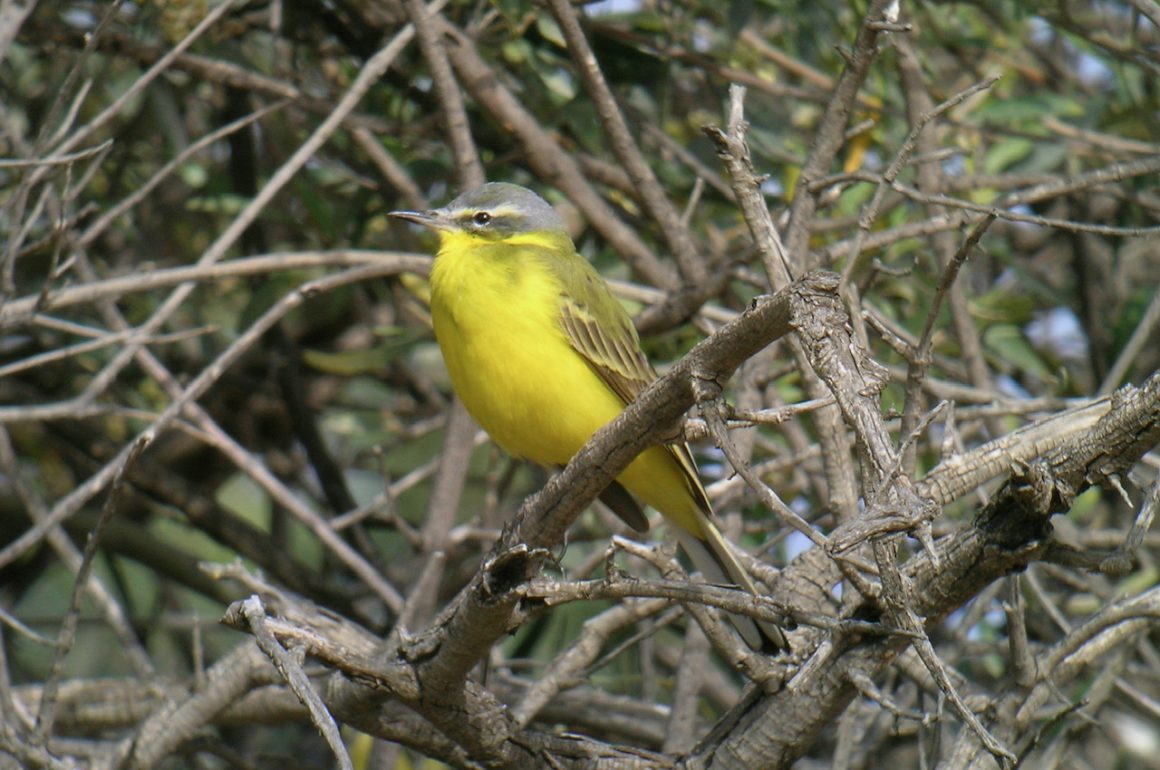
English bird names can be a funny lot. Black-headed Gulls, for example, have brown heads, not black, while do you really believe that the Short-toed Treecreeper has shorter claws than the Eurasian Treecreeper, or that Iceland Gulls come from Iceland? Misleading might be the polite way of explaining these names. Yellow Wagtail is another confusing name, for it’s only in the spring that Yellow Wagtails are really yellow, and for much of the year there’s nothing very yellow about them, in contrast to Grey Wagtails which have a vivid splash of yellow throughout the year.
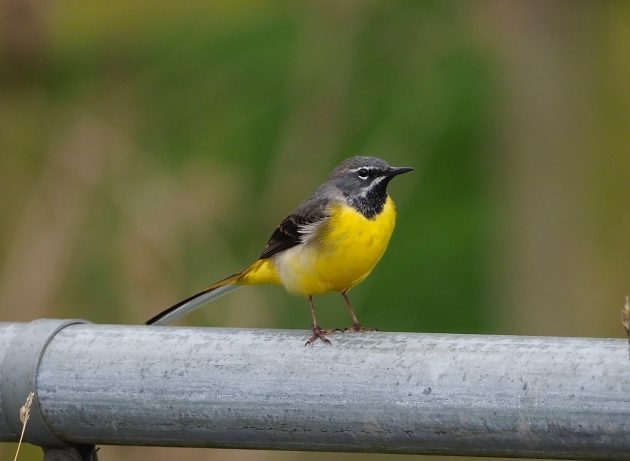
No, not a Yellow Wagtail, but a Grey Wagtail in breeding plumage. Grey is not a name that flatters such a handsome bird
However, when Yellow Wagtails are yellow they’re very yellow – a brilliant, saturated colour that wouldn’t look out of place on a canary. I was reminded of this yesterday when I saw my first Yellow Wagtails of the year, freshly returned from their wintering grounds in West Africa. They looked magnificent.
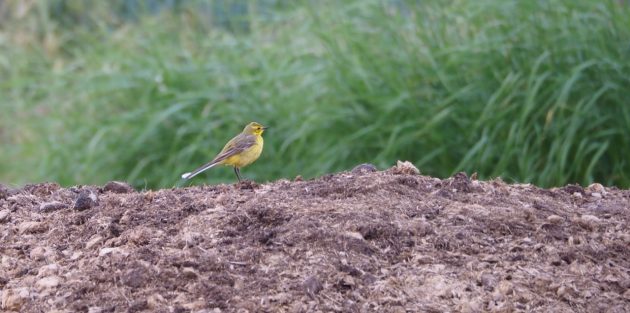
This Yellow Wagtail, photographed in Suffolk in mid June, has already lost much of the intensity of its spring colouring
The Yellow Wagtail is part of a complex of closed related birds that all come under the Latin name Motacilla flava. There are numerous different sub-species: the Collins Bird Guide illustrates no fewer than nine of them, from flavissima, the bird that breeds here in England, to feldegg, the race that is found in the Balkans. The key to separating them is the head. In full breeding plumage, flavissima has a yellow head, while feldegg, for example, has a black head. They look like different birds, not just a race of the same super species.
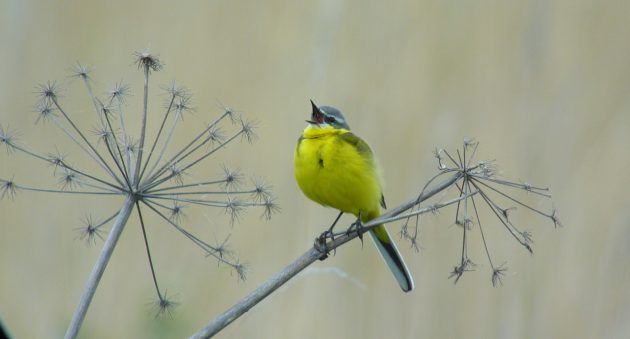
A singing Blue-headed Wagtail, Motacilla flava flava, photographed in Estonia
The most widespread of the group is flava, which breeds throughout much of mainland Europe. We usually call it the Blue-headed Wagtail, though conversely we never refer to flavissima as the Yellow-headed Wagtail, though it is. Spain and Portugal have their own race, too, called iberiae. It looks like flava, but has darker feathering on the cheek.
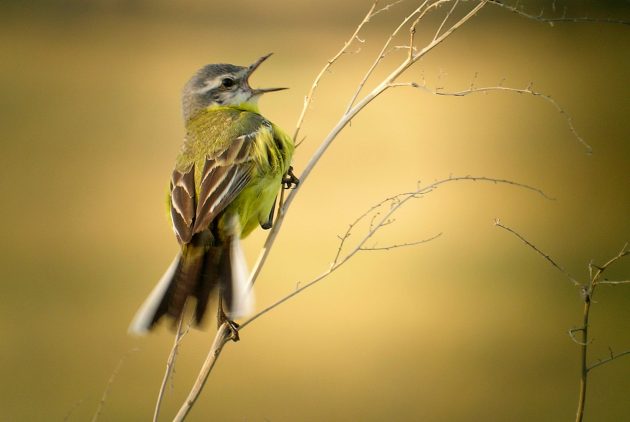
An Eastern Yellow Wagtail, M.f.tschutschensis, photographed in Kazakhstan
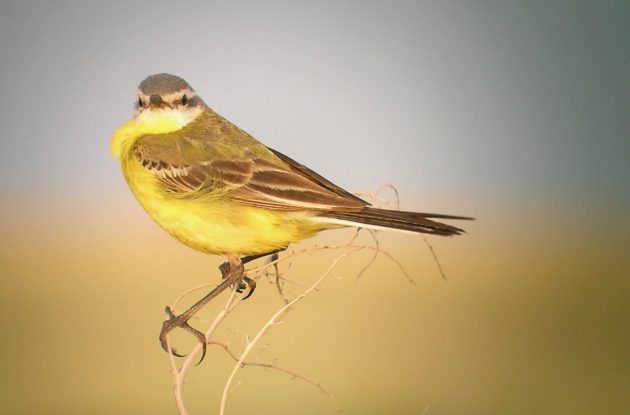
Eastern Yellow Wagtail
Interestingly, all the various races mix on the wintering grounds, but they are clearly genetically programmed to return to the area where they hatched. It’s not unusual, though, for Blue-headed flava wagtails from the Continent to turn up in southern England, and occasionally they will even breed here. On many occasions I have watched flocks of perhaps 50 or 60 Yellow Wagtails on migration in Cyprus in the spring, and in such gatherings I expect to find three or four different sub species.
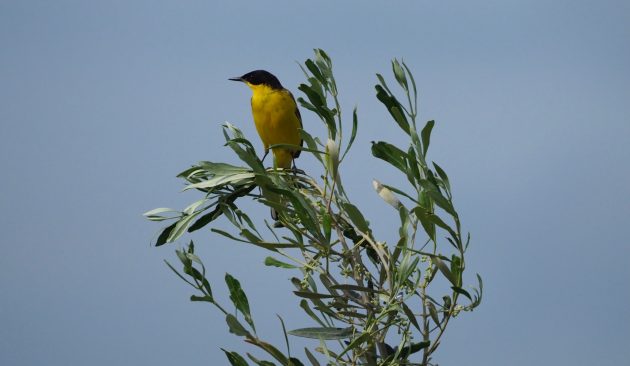
Black-headed Yellow Wagtail (feldegg) photographed in Greece (above) and Bulgaria (below)
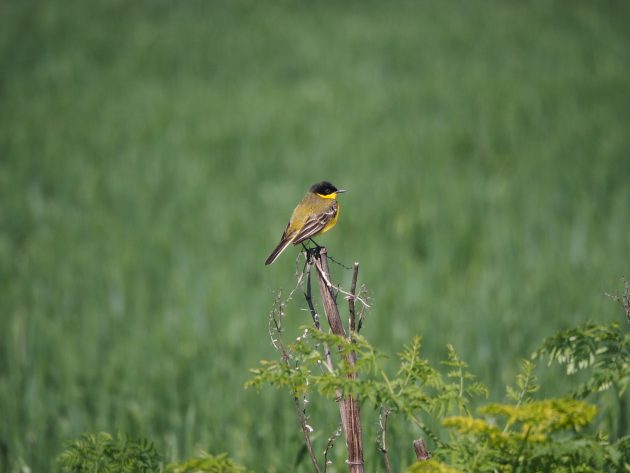
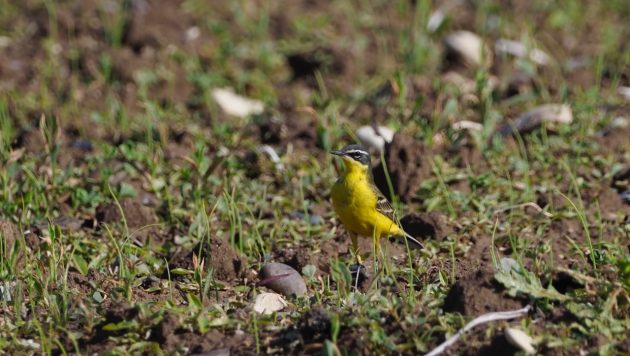
M.f.dombrowskii, the race that breeds in Romania, photographed on passage in Cyprus
Yellow Wagtails are early migrants, with the first birds usually back on their breeding grounds in England in the first week of April. We may expect them back, but it’s always a thrill to spot the first one, especially as this is a bird that has suffered a widespread decline in Britain in recent years, with a 78% drop in numbers between 1968 and 2023. It is a bird that I used to see in good numbers every spring; now I have to go and look for them.
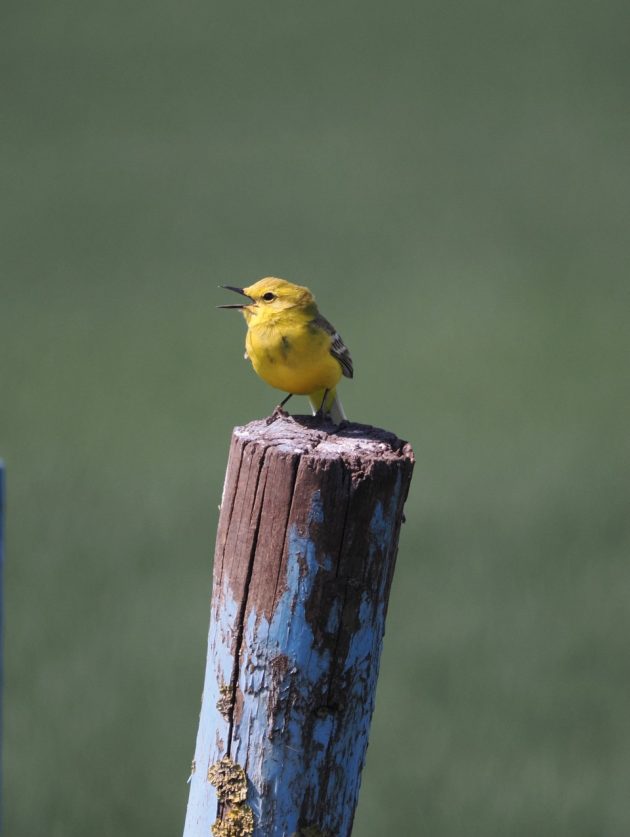
The Yellow Wagtail’s simple song is best described as “modest”. This is a flavissima bird, photographed in Norfolk in May 2025
According to the Collins Bird Guide, these birds “breed in lowland areas on marshy pastures, waterlogged meadows, beside lakes and sewage farms”, but here in eastern England they are increasingly found breeding in arable fields, and are often absent from what looks like eminently suitable habitat. My most reliable site to find them is in the Norfolk Fens, the flat, intensively farmed land that was drained several centuries ago. Here the soil is a rich, peaty black, and the road I drive along to find the wagtails is appropriately called Black Drove.
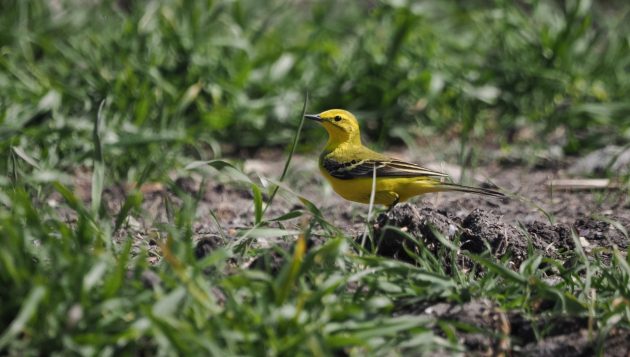
A freshly arrived wagtail. Black Drove, Norfolk. 7 April 2026
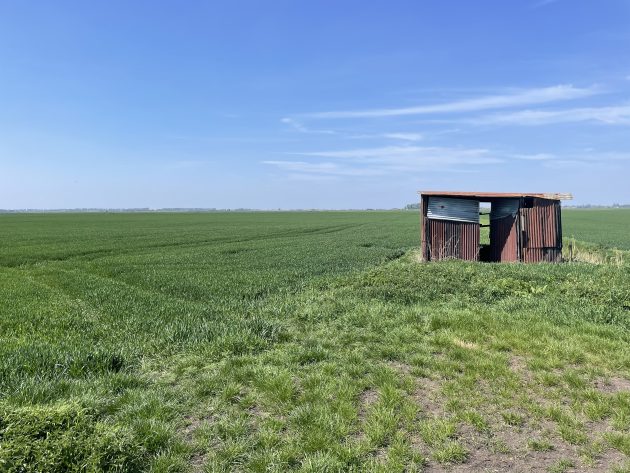
The Fens: not promising bird habitat, but the Yellow Wagtails like it
The secret of finding them is driving slowly across the fen looking and listening – I have an open-top car which is ideal for this. As you can see from my photograph (above), it is a featureless landscape. Yesterday I drove for a couple of miles without seeing anything other than Stock Doves and a pair of Pied Wagtails, until suddenly I found a pair close to the road. With a little manoeuvring I managed to grab a couple of pictures. Driving on, I found three more – all males. The females usually arrive a few days later than the males, as is the case with most migrants. One bird was feeding in a muddy pool surrounded by sheep (below). The field guides tell you that Yellow Wagtails like the company of cattle (which disturb the insects they feed on), but in the absence of cattle, sheep will clearly do.
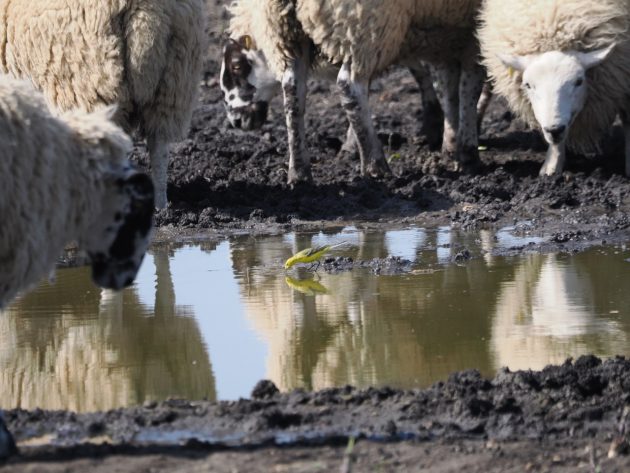
Yellow Wagtails can often be found feeding in close proximity to livestock
Regardless of plumage, all the flava wagtails have a similar distinct call, fine and highly pitched, though the call of feldegg wagtails is said to be more grating. It’s often the call that alerts you to one of these birds flying over. The song is a disappointing affair – the Collins Bird Guide generously describes it as “one of the most modest of all bird songs”, but the singers are so pretty that you can forgive them their lack of musical ability.







Wonderful birds!