

At the Maputi Bird Reserve in Mindanao, a young, environmentally conscious, and possibly also somewhat entrepreneurial local has set up two hides in close proximity to each other (ideal for lazy birders, those carrying overweight and overpriced cameras, and those to whom both attributes apply).
The star bird there is probably the Blue-capped Kingfisher, which is why it is left out of this post (said he, quietly enjoying the perverse logic of his statement). But there are other birds too, and they are well worth visiting.
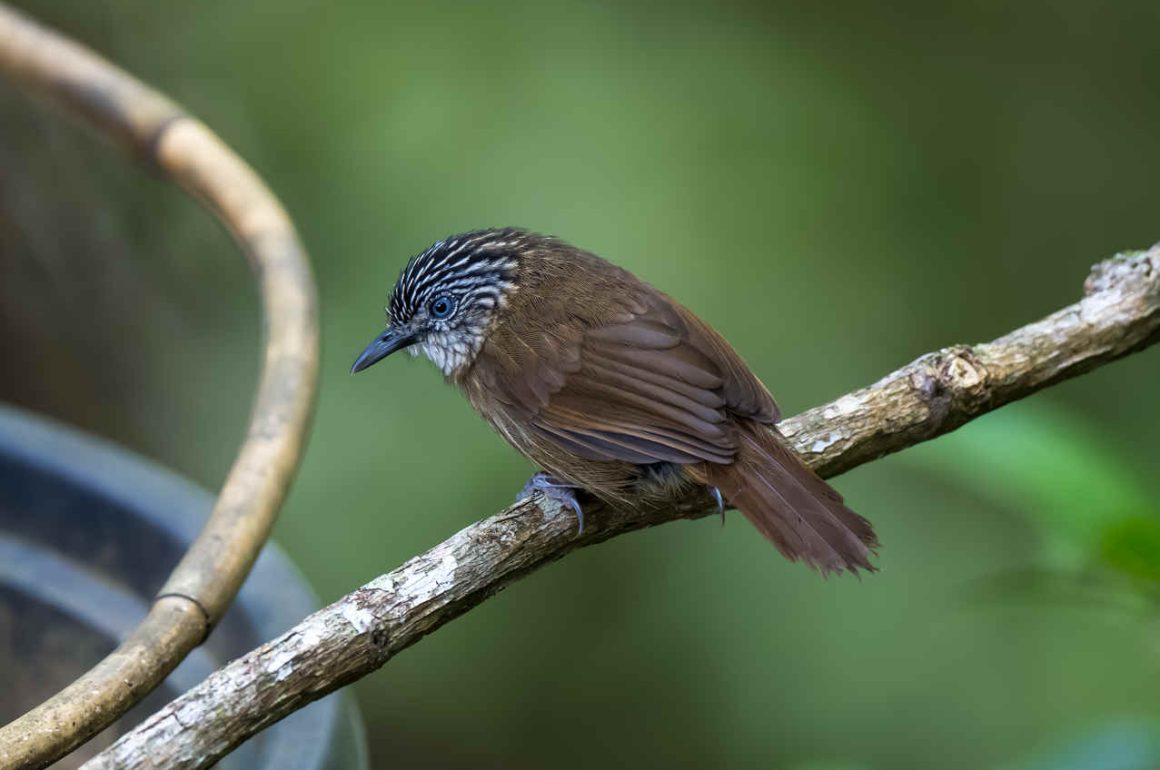
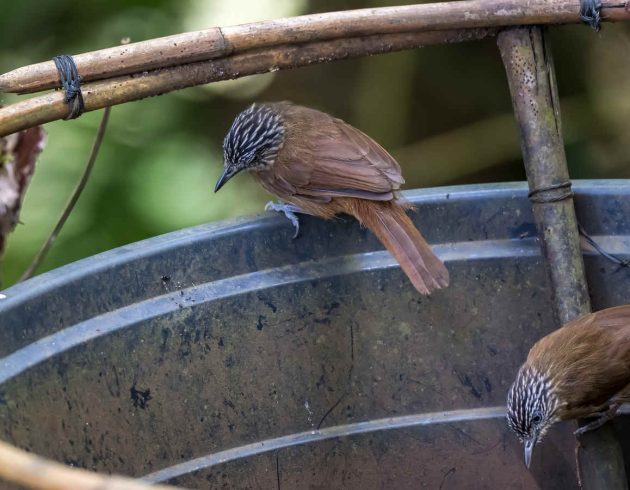
Hearing the bird name Brown Tit-babbler was not something that got my heart racing. That changed when I saw the species, which I now to myself refer to as the Weirdo Bird.
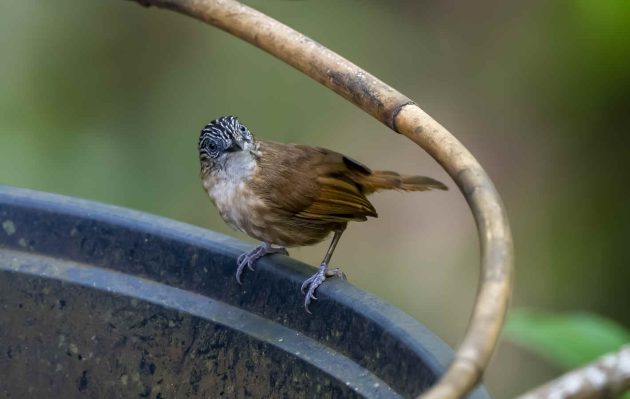
The HBW description does not really do the bird justice: “Smallish babbler, brown with white streaks above, whitish with diffuse grey streaks below”, and the description of the eyes of the bird is similarly underwhelming.
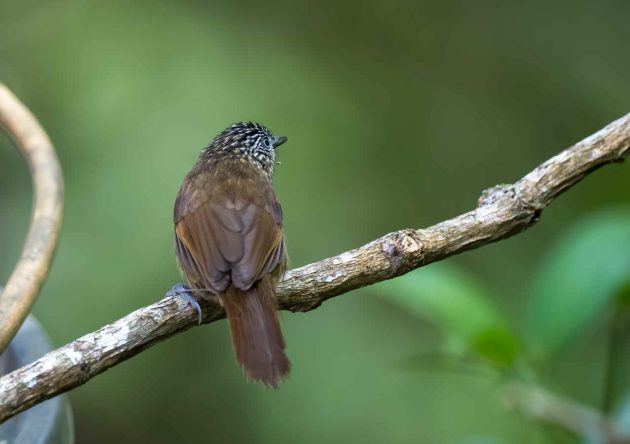
The scientific name Macronus striaticeps also focuses on the weirdly streaked head of the bird.
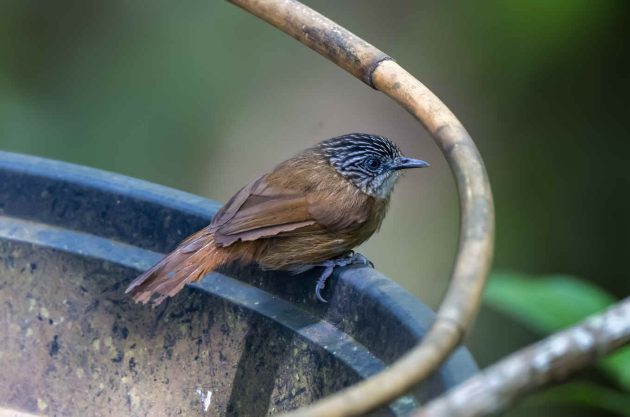
I have a strong suspicion that this species is not found on any university campuses – how else to interpret (in the “Diet” section of the HBW) the “information”: “Diet unreported”.
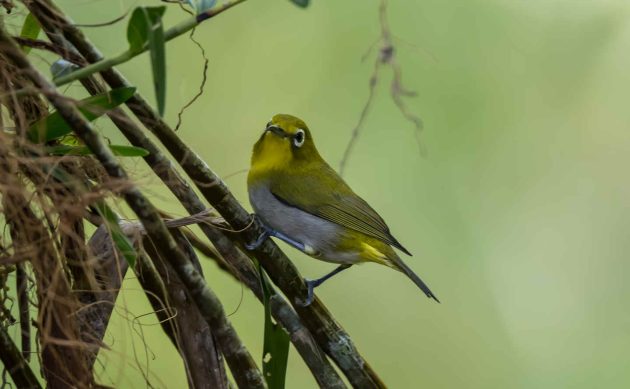
Another bird was much easier to ignore – probably a Warbling White-eye (though it is not impossible that it was an Everett’s instead). I say that mostly because I generally think white-eyes are kind of boring and overrated, and also because writing this will force my writer colleague Peter Penning to come up with a clever comment that puts me directly in the lower ranks of the birder hierarchy …
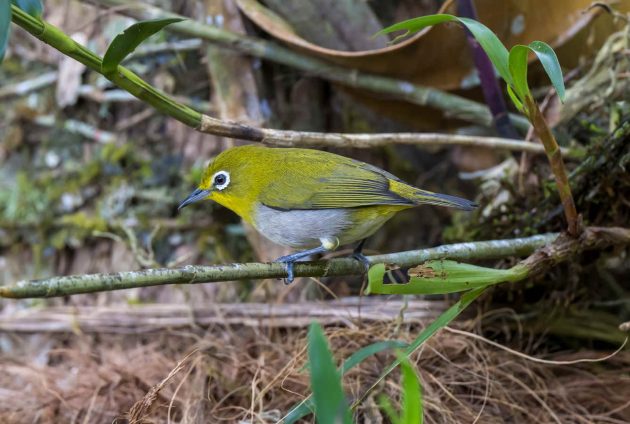
Still, to please him, at least two photos of the whatever white-eye.
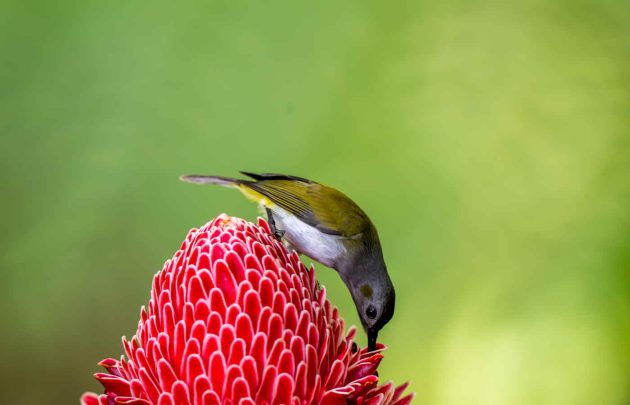
Fortunately, we both agree on liking sunbirds. The one seen here, the Grey-hooded Sunbird, is among the more stylish ones of the family – fewer colors, but exquisitely used.
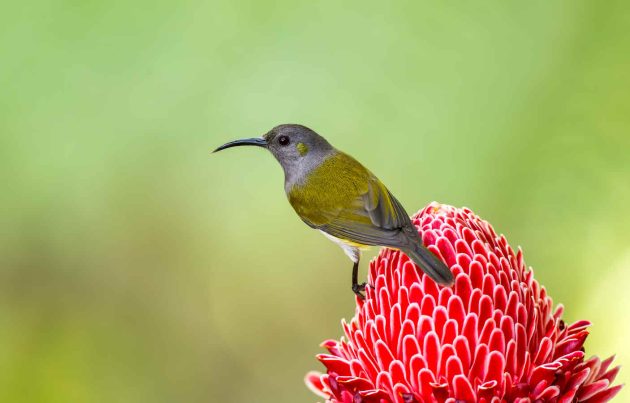
Most or all of my photos seem to show a male, which has this extra green spot behind its eyes (or in HBW speak, “iridescence on forehead and ear-coverts”). I know which of these two phrases my mother could understand.
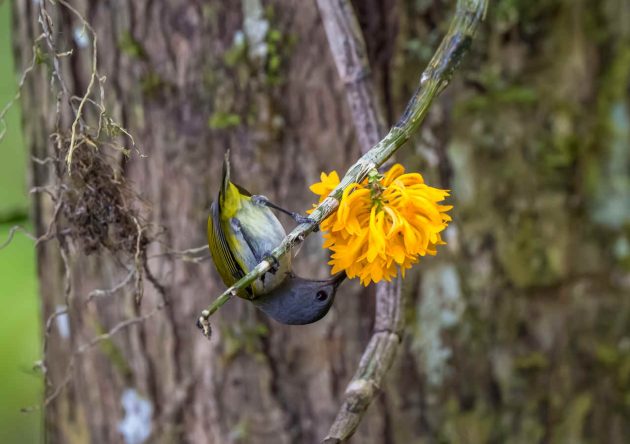
The scientific name Aethopyga primigenia was only given to the species in 1941, and it seems to indicate that the species is somewhat primitive (primigenius is Latin for primitive). If this bird looks primitive, I want to see how a sophisticated one looks …
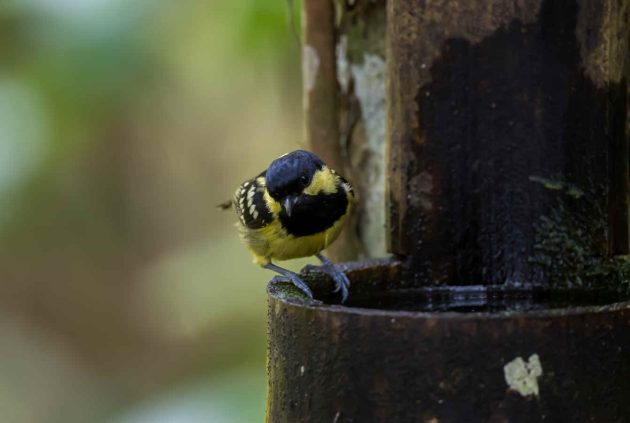
In terms of name, the Elegant Tit is a bit of a letdown – to me, it does not look a lot more elegant than other tits. But it probably has a good agent.
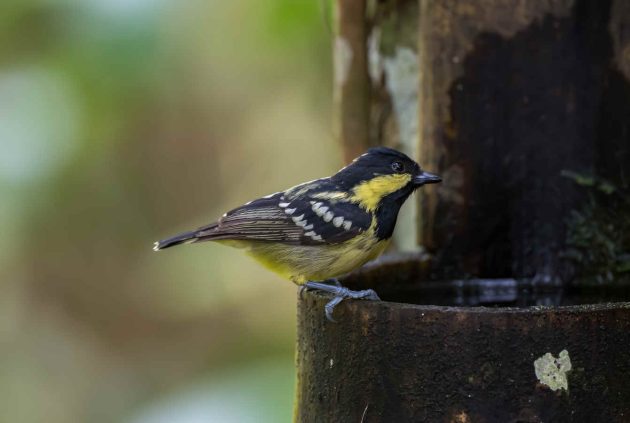
And this agent even managed to get the same positive note into the scientific name: Periparus elegans.
I am pretty sure we will meet the Philippine Bulbul again at a later location in the Philippines, so just one photo of it here.
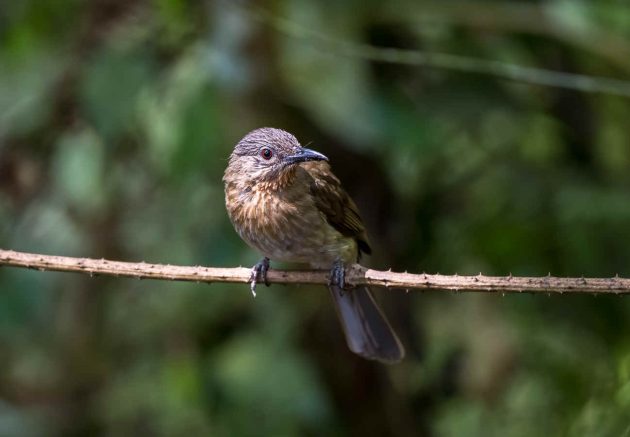
Not having prepared sufficiently for the trip to the Philippines due to some messy personal circumstances, I failed to realize the luck and significance of seeing a Bagobo Babbler.
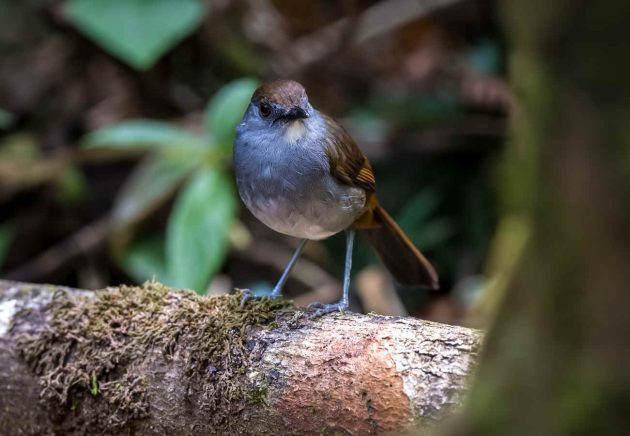
This would have been different had I consulted the HBW beforehand: “Unquestionably the most secretive bird in the Philippines, the Bagobo Babbler is an exceedingly shy species found only in the mountains of Mindanao. It is an elusive bird; more commonly heard than seen (if at all)”.
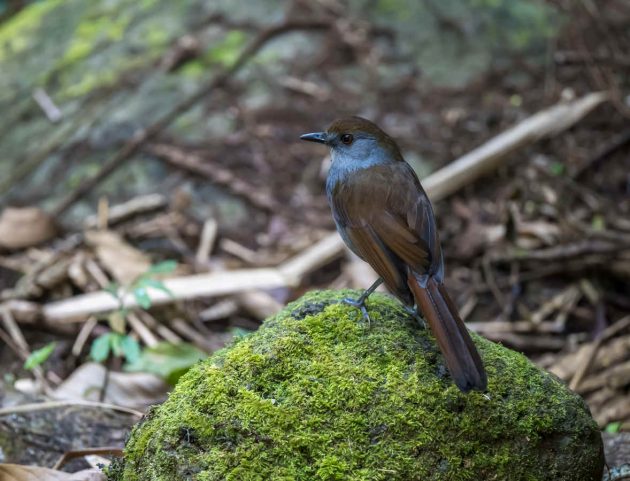
Still, to be honest, it does not look all that special to me. Even though the HBW writes a lot more about what an exciting species it is – not actually a babbler but the first robin known from the Philippines. Well, ignorance sometimes has its own rewards, but not for me in this case.
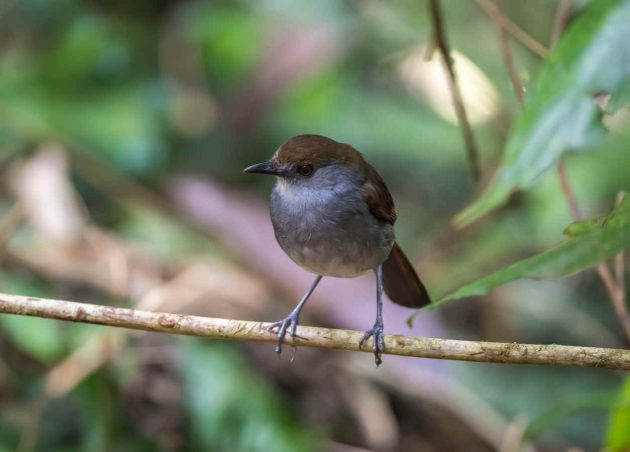
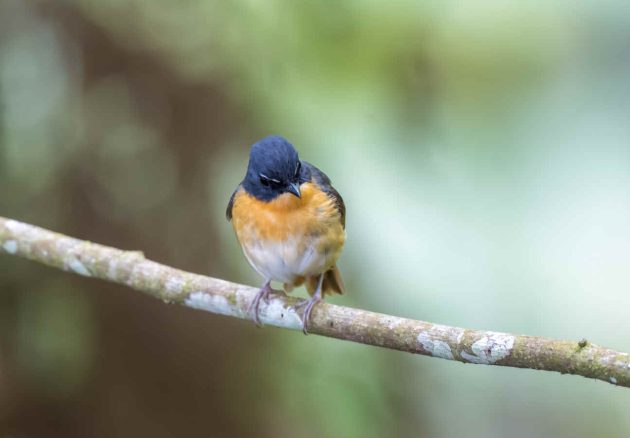
To add a bit more color to the population of the two hides, a pair of Bundok Flycatchers also showed up.
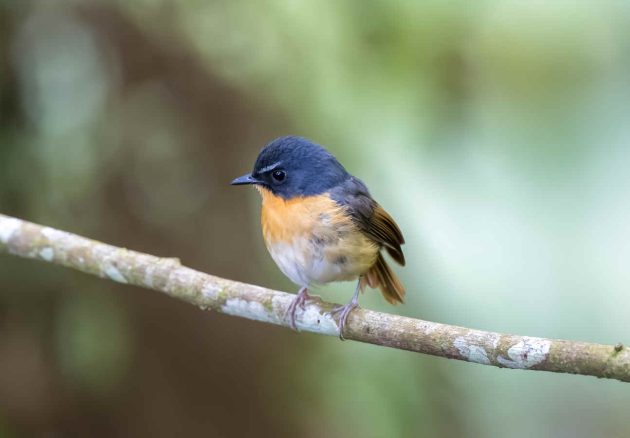
Seeing it on Mindanao made me feel that maybe the scientific name Ficedula luzoniensis has some room for improvement (carefully phrased way a management consultant says that something is completely wrong or stupid).
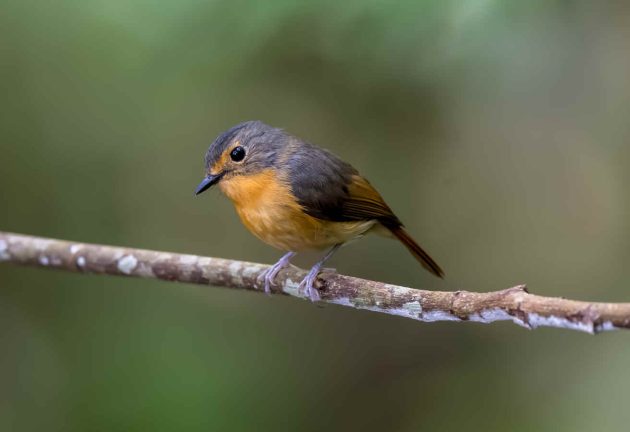
The HBW adds an insulting photo of the bird that – while I am sure it was taken digitally – looks like it fell into the wrong pots in the analogue color development process. Boy, I am not in a very forgiving mood today, it seems.
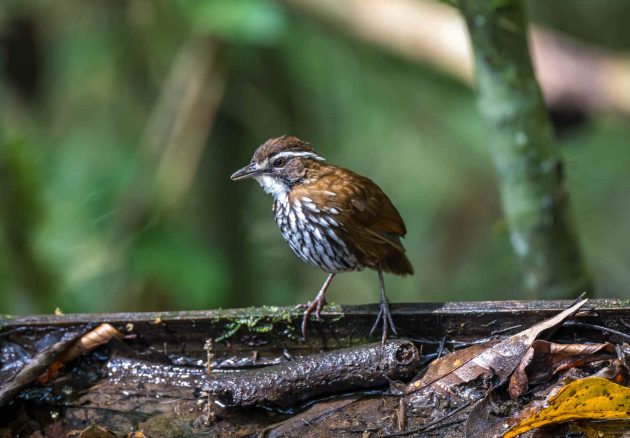
Finally, the Striated Wren-babbler (not to be confused with the Brown Tit-babbler mentioned at the beginning, though that bird is quite striated indeed. But ok, I realize there is a difference between a wren and a tit).
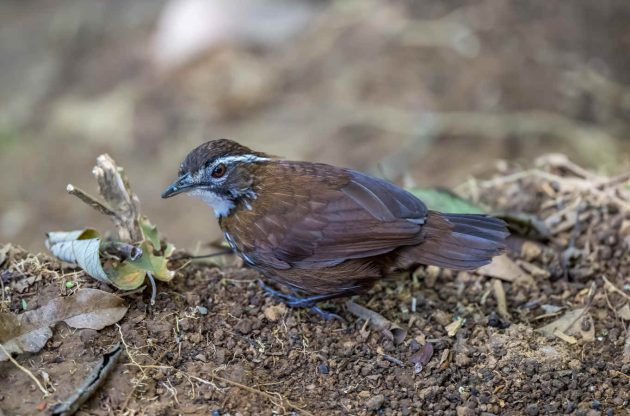
Maybe to compensate for the “luzoniensis” of the previous species, this one is named after Mindanao (Ptilocichla mindanensis).
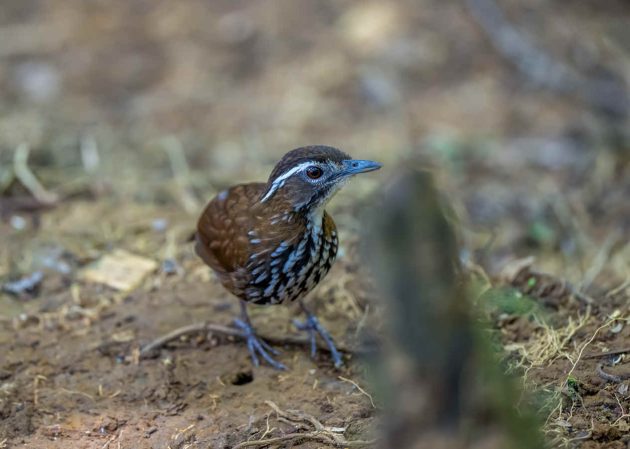
And it is kind of a good bookend for the post, with the same striatedness (?) as a key characteristic as the one that opened the post.
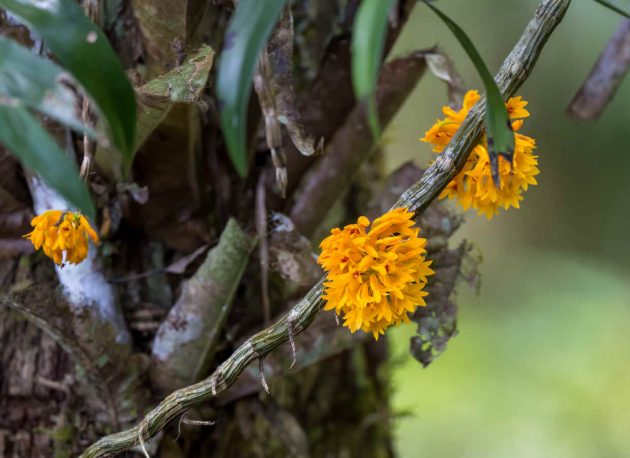
But to really end on a sufficiently boring note, here is some kind of flower. An orchid, apparently. Nice, but not a bird.










White-eyes: a lister’s dream, I guess. According to Wikipedia: “There are currently between 130 and 150 recognized white-eye species within the bird family Zosteropidae”. That’s a potential for 20 armchair ticks.