

Adam Cruickshank is a team member at Birding Ecotours and the host of The Birding Life Podcast. He is based in South Africa and spends much of his time exploring African birding destinations, sharing personal field experiences, and working with local guides across the continent.
Travel allows us to experience small specks on maps that many people may never get to visit. Some of these places are well known, layered with stories added over decades. Others remain different. Largely unvisited. Quiet.
Some of these lesser-known places hold a special pull for birders. They are home to species that only a handful of people have recorded. They draw those who want to be part of a very small group, privileged enough to have seen birds that most only know from books and field guides.
Zomba Plateau in Malawi is one of those specks on the map. It is a mountain in the Shire Highlands overlooking the town of Zomba. Once covered in montane grassland, much of the plateau is now planted with timber plantations. Even so, scattered pockets of montane and riverine forest remain along the slopes, and these patches offer outstanding birding.
Species recorded on the plateau include Evergreen Forest Warbler, Olive-headed Greenbul, Forest Double-collared Sunbird, Thyolo Alethe, and White-winged Apalis.
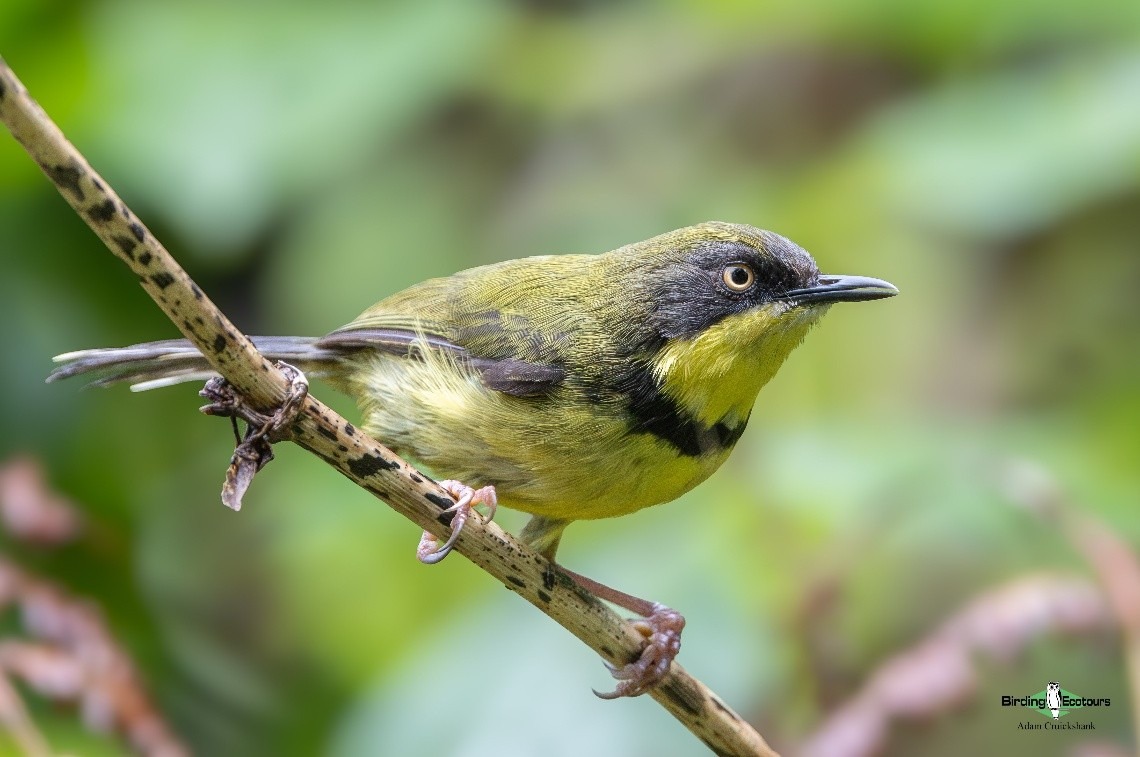
There was, however, one bird that mattered more than the rest. While it is not a perfect measure, eBird does give a useful sense of how many people have encountered a species. At the time of our visit, Yellow-throated Apalis had only 179 records on eBird worldwide. What makes this bird especially significant is that it is Malawi’s only endemic species. Every other bird in the country can be found elsewhere. If you want to see Yellow-throated Apalis, you have to come to Malawi.
My first visit to Malawi was in April 2024. We spent only a few hours on Zomba Plateau, but I did manage to see the Yellow-throated Apalis. Technically, it went onto my life list. In reality, it was not a satisfying sighting. The bird showed briefly, high in a tree. The person I was traveling with managed a record shot. My own camera and lens were too slow to focus in time.
I left the plateau frustrated and, if I am honest, a little grumpy. I had likely missed my only chance to photograph a bird I might never see again.
In December 2025, I was fortunate to return to Malawi. Part of the purpose of the trip was to gather destination knowledge for Birding Ecotours, but I also carried something unfinished with me. This time, I did not want to leave Zomba Plateau with regret.
Our time in the country was limited. We could only visit a few places during the week. Zomba Plateau was scheduled for the second last day, and long before we arrived, my mind was already racing. I had missed the photograph before. This time, I wanted to come away with an image I could be proud of. Not for competition, but for myself. A photograph that reflected the importance of the moment and, hopefully, encouraged others to care about this small corner of the planet.
I made sure I was properly prepared. I traveled with my Canon R7 and borrowed a Canon RF 100–500mm lens, knowing that low light would be a challenge in the forest.
Things did not unfold smoothly. Five hot, humid days in Malawi led into our drive up the winding road that skirts the base of the plateau. Dark clouds gathered overhead. The kind that leaves no doubt about what is coming next.
We began birding as soon as we arrived. Light rain turned into steady rain. The forest was silent. No calls. No movement. I had spoken up the birding beforehand and was starting to feel the pressure build.
Then the clouds opened properly. Within minutes, it was impossible to stay outside. We retreated to the car, soaked and deflated, and drove up to the hotel at the top of the plateau. Dry clothes, hot coffee, and food helped lift spirits. The birds were still missing, but at least we were warm again.
While we sat looking out over the landscape, the light began to change. The rain eased. Breaks appeared in the cloud. It was not perfect, but it was enough.
We headed onto the trail just below the hotel. The forest remained quiet, though we did pick up a few greenbul species moving through the canopy. I decided to try a short call playback for Yellow-throated Apalis.
It worked almost immediately.
An individual flew in and began moving through the branches. I scrambled to adjust my settings. I knew I would have one chance. The rain earlier had fogged my viewfinder, and I could barely see clearly. I kept shooting, adjusting by feel as much as sight.
Then, for a few seconds, everything aligned. The bird dropped down to eye level, only a few meters away. Through the misted viewfinder, I locked focus and took the shot. It perched just long enough.
That photograph had been years in the making.
This is part of the magic of traveling to these small specks on the map. The reward is never just the bird or the photograph. It is the tension, the waiting, the frustration, and the uncertainty. Perfect conditions might produce cleaner images, but imperfect days create better memories. Some moments only come together when the view is a little fogged over.
Photo: Yellow-throated Apalis, Malawi’s only endemic bird species




Great photograph – worth the effort.
As a professional musician I am very familiar with performance anxiety. Your description of getting that perfect shot is just as it is for playing a great concert. Beautiful photo.