

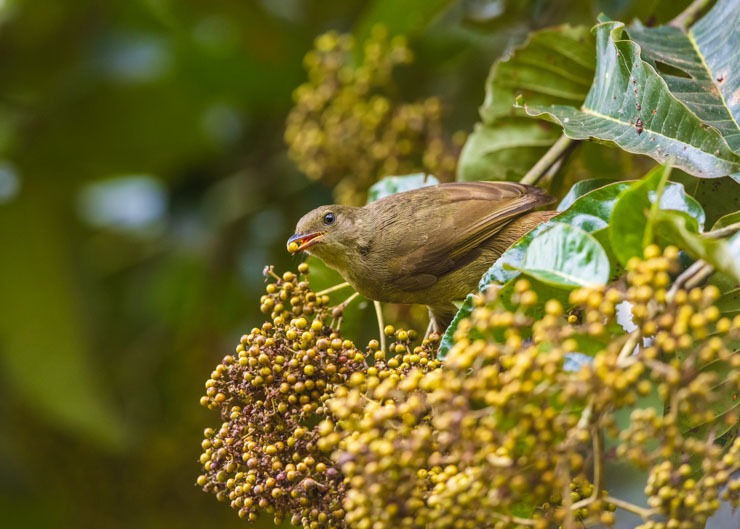
I’ve been reading a bit about bird and flower motifs – specifically those involving roses and nightingales – a curious path to take given that I’ve never seen a nightingale, nor do I possess any particular affinity toward roses. The pairing has been used to describe “young love in the springtime”; the rose as the ultra-beautiful, proud, delicate yet thorny feminine energy that gets endlessly caressed by the nightingale’s sweet, bubbly song. In Persian, the pairing is known as gol o bolbol, and I’m sure by now you’re beginning to piece together how I’ve wafted over here.
See, the Persian word for nightingale is bolbol, which ultimately gave rise to the name “bulbul” which describes members of a family of birds which we have all come to know and love: Pcynonotidae – Bulbuls. Naturally these birds are unrelated to nightingales, much like members of Furnariidae (Ovenbirds) being unrelated to the actual Ovenbird. According to Birds of the World, bulbuls were so named for some members of the family indeed possessing a bubbly song much like a nightingale. Yet, among birders, they are much more famous for being nondescript, brown flashes in the canopy, far more often heard than seen.
Even when seen, however, bulbuls present identification challenges that frustrate many, and excite a select few. Birds of the World goes on to describe their predilection for wild fruit as “A great many have an irresistible fondness for fruit, and fruiting trees in these areas are often bustling with pycnonotids of several species, challenging the identification powers of all but the most experienced observers.”
Overall, I haven’t seen a great many bulbuls, but while editing my images from my last trip to Uganda my memory got triggered, and I was transported right back to where I stood, under a fruiting tree, trying to track a pair of Red-tailed Greenbuls as they chased each other overhead, eye-level, and then lower down the steep, heavily forested slope. I didn’t manage a photo of any of those, but I enjoyed some good looks through my binoculars as one paused briefly on an open branch, flaring its bright white throat. Certainly, many would pass up on the opportunity to see a greenbul as they’re mostly olive, brown, and dull yellow – but a bird need not be bright for it to be beautiful.
On my sojourns through East Africa by far the most frequently encountered member of this family is the Common Bulbul, which partly inspired the title of this blog post. I’ve lost count of how many of my guests have noticed a sudden movement in nearby trees to then exasperatedly sigh “just another bulbul”. As the trip wears on, other words are added to that phrase, which I shall exclude such that we at 10,000 Birds can keep our content suitable for all ages.
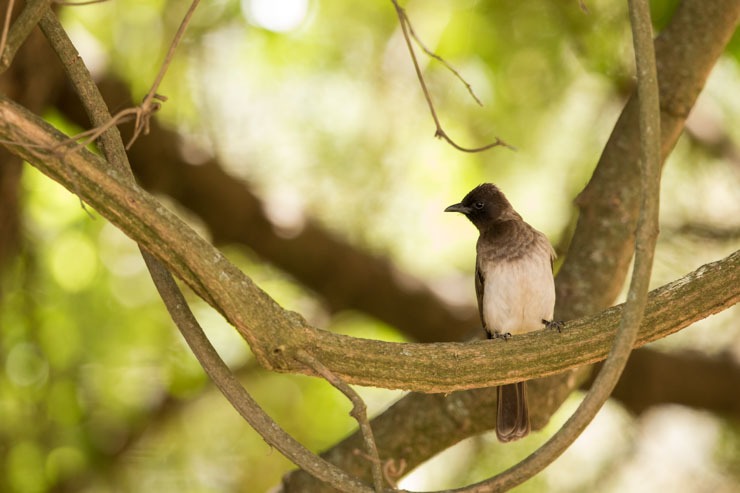
Common Bulbul
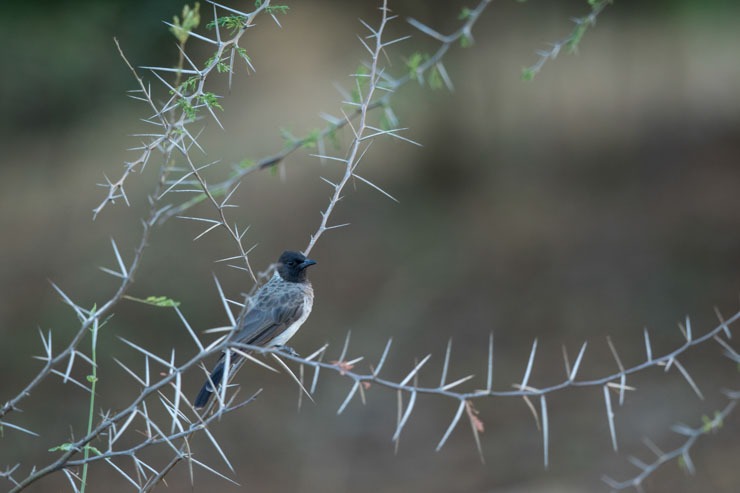
In northern Kenya the Common Bulbuls are a bit different, with a slight white splash on their ear-coverts. Some consider this to be a distinct species: Dodson’s Bulbul.
The Little Greenbul is famously nondescript, not particularly little nor is it green.
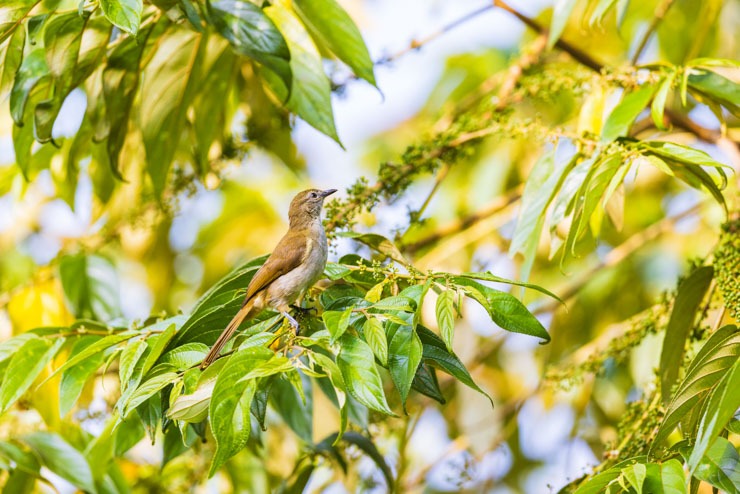
My field guide lists Slender-billed Greenbul as “distinctive”, which in the land of nondescript birds, I guess it is. Any clear delineation between colours can be considered distinct.
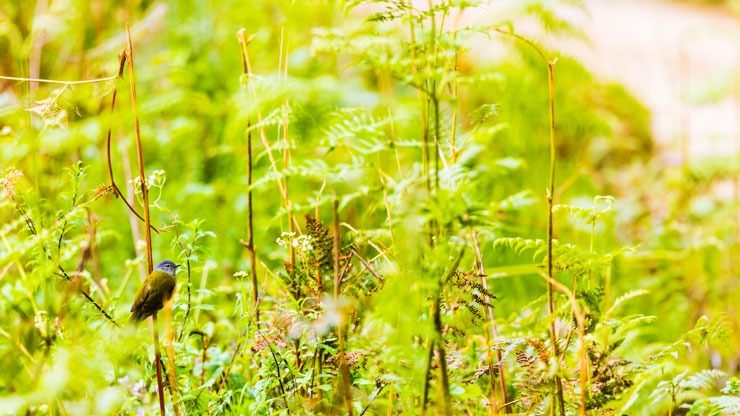
Species splits meant that what I had originally recorded as Eastern Mountain Greenbul now is Kikuyu Mountain Greenbul. A beauty of a bird that seems to be a bit more distinctive than the previous species.
I’ve seen Stripe-faced Greenbul, according to a tick in my field guide – somewhere in Tanzania – but no photo. I’m not entirely certain what criterion was used to change green to brown, but the preponderance of brown in the plumage of a Northern Brownbul may provide a clue.
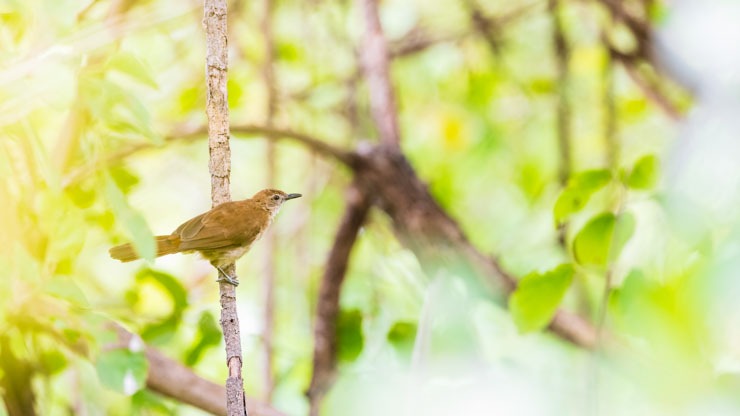
Northern Brownbul
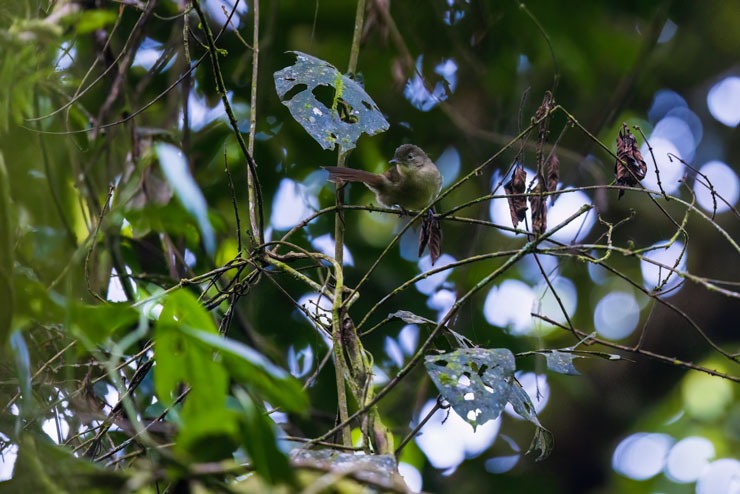
Seemingly equally brown, however, is another greenbul: Cabanis’s Greenbul.
Outside our room at our lodge in Bwindi, one of my guests photographed a greenbul I hadn’t seen before. She directed me to where the bird was seen, and I sauntered over there without much hope of seeing it myself. By some stroke of luck the bird was still there! I stepped into our room, retrieved my camera, and photographed it from our verandah.
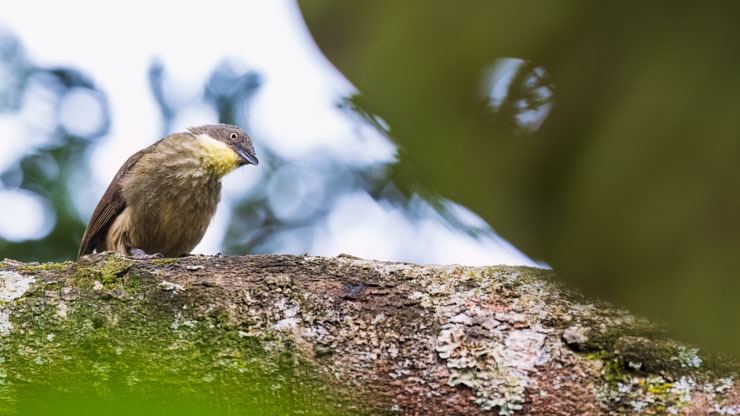
Pale-throated Greenbul
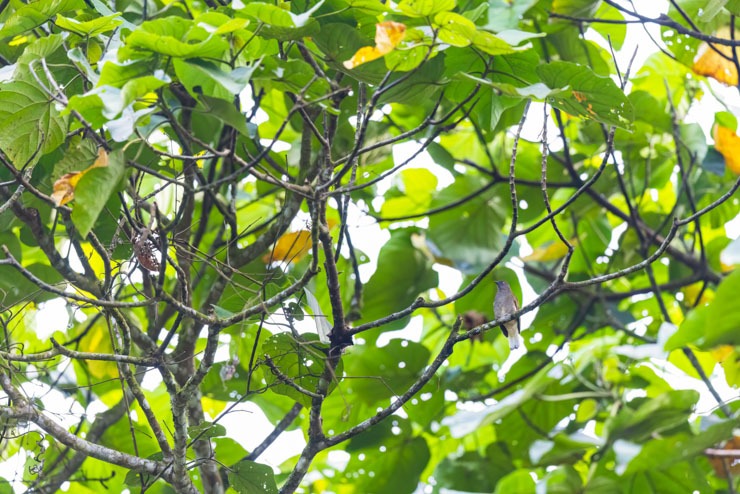
In terms of being distinctive, the Honeyguide Greenbul has my vote for easiest species to identify. Its upright pose, white eyes, white underbelly, and white tail feathers are many straightforward field marks to take note of.
There are other pycnonotids that escaped my eyes, as they tend to be quite vocal in the foliage. But they also tend to remain in said foliage, which is fine by me. That just leaves something else to see when I return!









The bul, a bird so nice you have to say it twice. Great spotlight!
Not to be confused with the bull, who can run you over. Thanks, Peter!