

Highlights
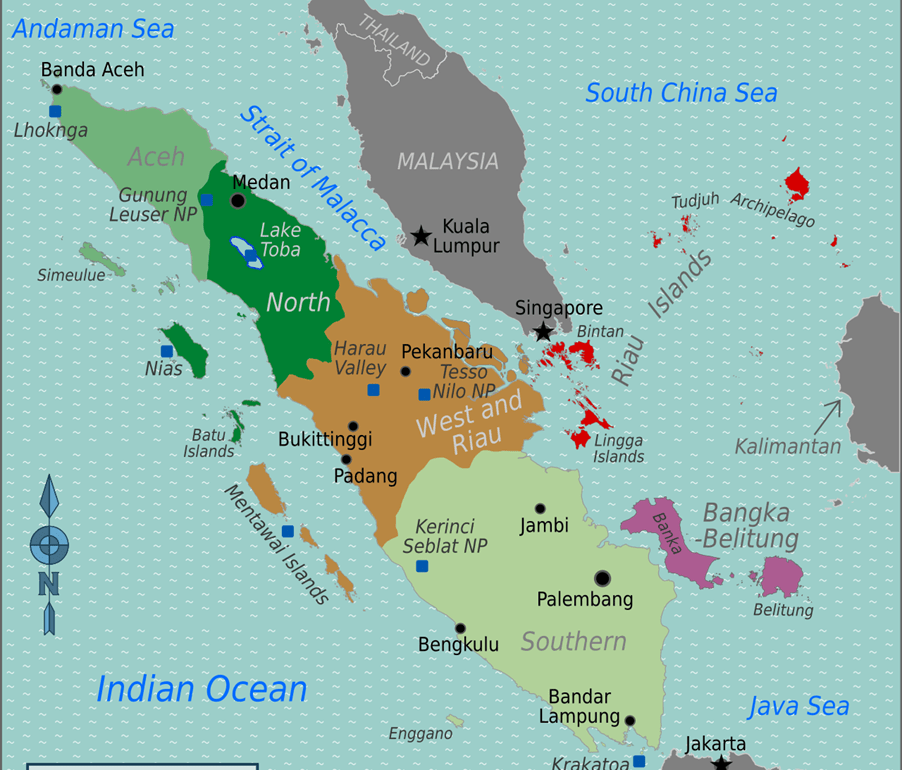
Kerinci Seblat National Park lies within the Bukit Barisan mountain range on the Indonesian island of Sumatra. Covering approximately 13,791 square kilometers (5,325 square miles), it is the largest national park on Sumatra and spans elevations from about 250m to 3,805m. The park is part of the UNESCO World Heritage Site “Tropical Rainforest Heritage of Sumatra” and encompasses an impressive range of habitats and landscapes, including volcanic peaks, montane and cloud forests, wetlands, lowlands, hot springs, waterfalls, and lakes. This remarkable variety of environments supports an equally impressive diversity of wildlife, making Kerinci Seblat an exceptional destination for nature and birding enthusiasts.
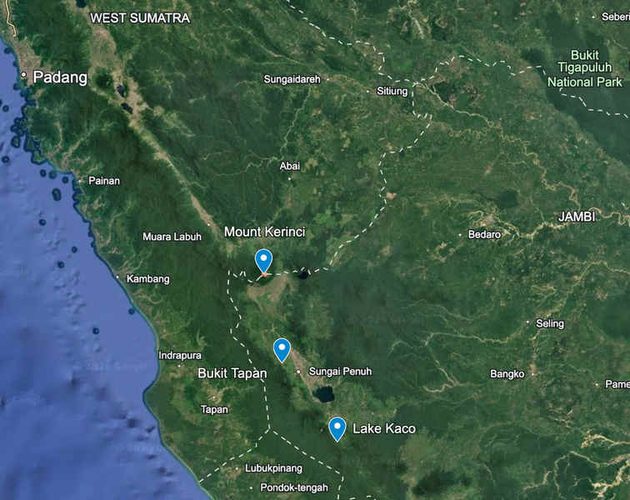
For adventurers looking to the skies to chase after Sumatra’s rarest species, Kerinci Seblat stands at the top of the list for birdwatching in Sumatra, and all of Indonesia. Home to 360+ species of birds, a birding tour in Kerinci offers a plethora of rare bird species, including many rare Sumatran endemics, like the Schneider’s Pitta, Sumatran Ground Cuckoo, and Sumatran Trogon. These can be found alongside charismatic birds like Rhinoceros hornbills and colorful barbets like the Fire-tufted barbet. Below you’ll find the three main regions where Sumatra birdwatching tours occur – on the slopes of Mt. Kerinci for the high-altitude endemics, Bukit Tapan for a range of elevations, and Hutan Adat Lempur for a well-protected mixed habitat with some species harder to see elsewhere. Each of the areas is about one hour apart from the next, with Mt. Kerinci furthest north, then Bukit Tapan in the center, and finally Lempur in the southern end of the Kerinci valley.
Although this is for birding specifically, it is important to note that Kerinci Seblat also hosts a vast number of living species. Over 85 species of mammals and 4,000 species of plants call Kerinci Seblat home. A small sampling of this diversity includes Siamang Gibbons, Malayan sun bears, Civets, Pitcher Plants, Wild cats, and of course the Sumatran Tiger. Kerinci Seblat is one of the world’s most important remaining strongholds for the Critically Endangered Sumatran tiger, a well-known and highly respected species among the Kerinci people. All of this contributes to an exceptional, one-of-a-kind birding location.
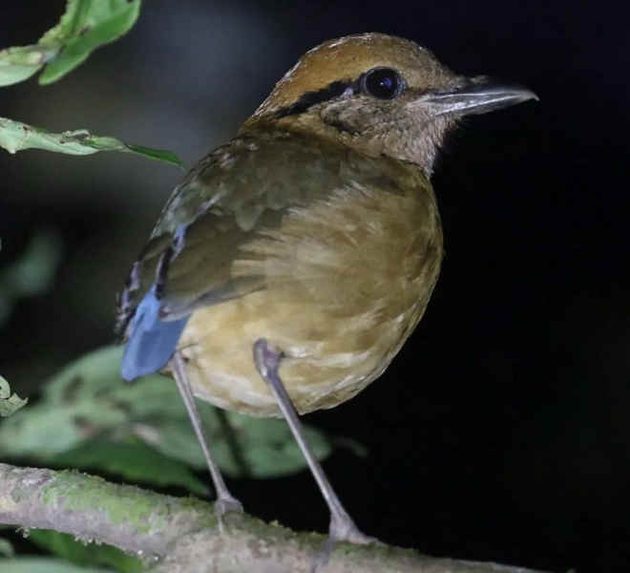
Schneider’s Pitta
Key Bird Species and Families
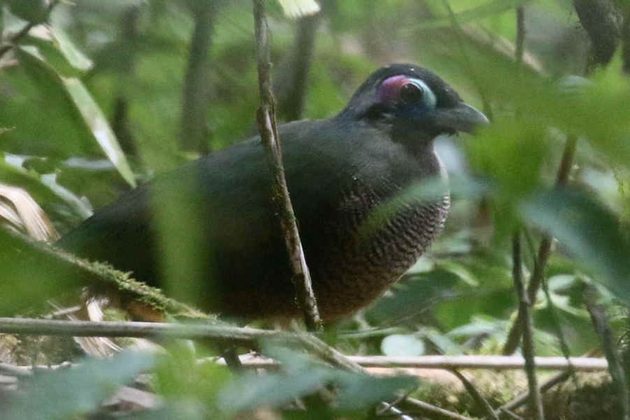
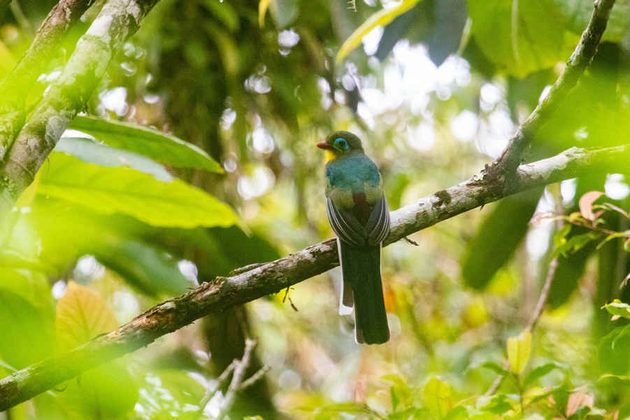
With the wide diversity of birds in Kerinci, it is challenging to limit it to just a few key families. Regardless, a commonly found bird family in the region is Pycnonotidae (Bulbuls), featuring the Cream-striped Bulbul and the Spot-necked Bulbul. Other target families include Phasianidae (Pheasants and Partridges), featuring Salvadori’s Pheasant, Sumatran Peacock-Pheasant, and the Red-billed Partridge; Pittidae (Pittas), featuring the Schneider’s Pitta; Turdidae (Thrushes), featuring the Sumatran Cochoa; and Trogonidae (Trogons), featuring the Sumatran Trogon; and finally, a rare flagship family, Cuculidae (Cuckoos), featuring the Sumatran Ground Cuckoo.
Some other key species to note in Kerinci include Black Laughingthrush, Black-browed Barbet, Black-crowned Pitta, Blue-masked Leafbird, Fire-tufted Barbet, Graceful Pitta, Great Hornbill, Long-tailed Broadbill, Marbled Wren Babbler, Rajah Scops Owl, Rhinoceros Hornbill, Rufous-chested Flycatcher, Rufous-vented Niltava, Rusty-breasted Wren-Babbler, Salvadori’s Nightjar, Shiny Whistling Thrush, Snowy-browed Flycatcher, Sunda Bush Warbler, Sunda Minivet, Sumatran Bulbul, Sumatran Drongo, Sumatran Frogmouth, Sumatran Green Pigeon, Sumatran Leafbird, Sumatran Treepie, Sumatran Wren Babbler, Sumatran Whistling Thrush, Temminck’s Sunbird, Wreathed Hornbill, Grey-cheeked Bulbul, and Grey-headed Woodpecker.
Kerinci Seblat is home to at least 17 bird species endemic to Sumatra.
Sumatran Ground Cuckoo
Best Regions for Birding
A diversity of birdlife in three regions of the Kerinci Seblat National Park
1. Mt. Kerinci
While Mt. Kerinci is the highest active volcano in Southeast Asia at 3805m, most of the birdwatching is done at elevations between 1600m and roughly 2000m. While there are a few branching paths you will take further into the forest, the majority of the time you’ll be searching on the main trail up the volcano. Optionally, spend a morning taking a boat into the Rawa Bento wetlands for different species opportunities, with a return to Mt. Kerinci in the afternoon.
A sampling of endemics and other targets in the area:
Schneider’s Pitta, Salvadori’s Pheasant, Salvadori’s Nightjar, Sumatran Trogon, Sumatran Cochoa, Sumatran Wren Babbler, Sumatran Whistling Thrush, Sumatran Frogmouth, Shiny Whistling Thrush, Red-billed Partridge, Rufous-vented Niltava, Wreathed Hornbill, Snowy-browed Flycatcher, Sunda Bush Warbler, Rajah Scops Owl, and many more.
Sumatran Trogon
2. Bukit Tapan
The Bukit Tapan Road gives a great range of elevation, from roughly 1500m to 250m, so there is a wider variety of species available compared to the higher elevations of Mt. Kerinci. It’s also much easier to see and photograph them because of the abundant light allowed into the canopy by the road you follow, and the farther distances you can see. Of course, going along a road also means you’ll occasionally be annoyed by trucks, cars, and motorcycles.
A sampling of endemics and other targets in the area:
Sumatran Leafbird, Graceful Pitta, Sumatran Green Pigeon, Sumatran Treepie, Sumatran Peacock-Pheasant, Sumatran Drongo, Sumatran Trogon, Cream-striped Bulbul, Spot-necked Bulbul, Black-browed Barbet, Long-tailed Broadbill, Temminck’s Sunbird, Fire-tufted Barbet, Sunda Minivet, Marbled Wren Babbler, Sumatran Green Pigeon, Rufous-chested Flycatcher, Black Laughingthrush, Great Hornbill, Rhinoceros Hornbill, and many more.
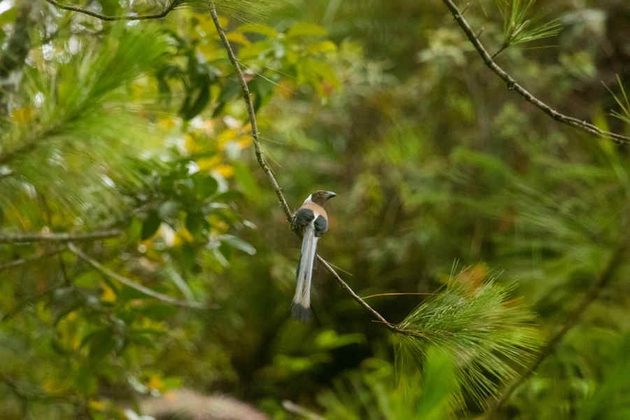
Sumatran Treepie
3. Hutan Adat Lempur
While not as famous as the two previous locations, Hutan Adat Lempur is a new birding spot the local community has been developing, and we believe it has some of the best birding in the Kerinci region. Elevation is between 1000 m and 1250 m, but there is a great variety of bird species, as this area has been hit much less by bird poachers than Bukit Tapan. There’s also a chance to see the extremely rare Sumatran Ground Cuckoo.
A sampling of endemics and other targets in the area:
Sumatra Ground-Cuckoo, Sumatran Peacock-Pheasant, Sumatran Leafbird, Graceful Pitta, Sumatran Green Pigeon, Sumatran Treepie, Sumatran Drongo, Sumatran Trogon, Sumatran Bulbul, Cream-striped Bulbul, Grey-cheeked Bulbul, Spot-necked Bulbul, Black-browed Barbet, Long-tailed Broadbill, Temminck’s Sunbird, Fire-tufted Barbet, Sunda Minivet, Marbled Wren Babbler, Sumatran Green Pigeon, Rufous-chested Flycatcher, Black Laughingthrush, Rhinoceros Hornbill, Wreathed Hornbill, and many more.
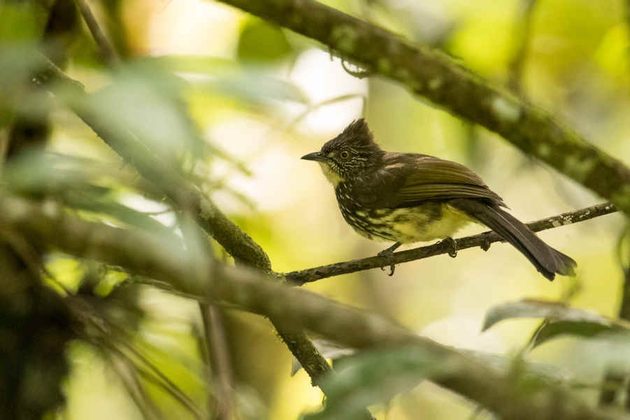
Cream-striped Bulbul
Best Birding Season
There is no true “dry season” as there can be rain or dry spells at any point in the year; however, Kerinci typically experiences less rainfall from May to September. Because of this, these months attract more birders, as the drier conditions can provide better visibility and more favorable conditions for photography.
Birding Trip Suggestion(s)
The following is an example of how to fit all three locations into one trip:
6-Day Kerinci Bird Tour
This 6-day Birdwatching Trip covers three main locations in Kerinci, with two days spent at each location. Travelling between these areas gives you a great mix of landscapes and elevations, while also increasing your chances of finding your target endemic species.
The Sumatran Ground Cuckoo has been consistent along the Hutan Adat trail, while Schneider’s Pitta is also fairly consistent on Mt. Kerinci.
Itinerary:
Day 1 – Pickup from Padang with private transport and drive roughly 9 hours to Lempur Village. Spend the night in a guesthouse there.
Day 2 – In the morning, bird along the Hutan Adat trail. This trail is where the elusive Sumatran Ground Cuckoo can be found. Come out of the forest and spend another night at the guesthouse there.
Day 3 – Spend another day birding along the Hutan Adat trail. Spend another night at the guesthouse there.
Day 4 – In the morning, drive roughly 1.5 hours to the Bukit Tapan Road. Bird all day on the road from higher to lower elevations and back. Return to Sungai Penuh and spend the night in a guesthouse there.
Day 5 – Spend another day birding on Bukit Tapan. In the late afternoon or evening, drive down the mountain for about 1 hour to Kersik Tuo. Spend the night in a guesthouse there.
Day 6 – Drop off at the edge of the forest at the foot of Mt. Kerinci, and hike in. Spend the day and into the evening birding and looking for wildlife – Siamangs are often seen here, and Schneider’s Pitta are in this landscape as well. Spend the night at the guesthouse in Kersik Tuo.
Day 7 – Continue birding at the lower elevations of Mt. Kerinci throughout the day. Spend another night at the guesthouse there.
Day 8 – Drive roughly 7 hours back to Padang with private transport.
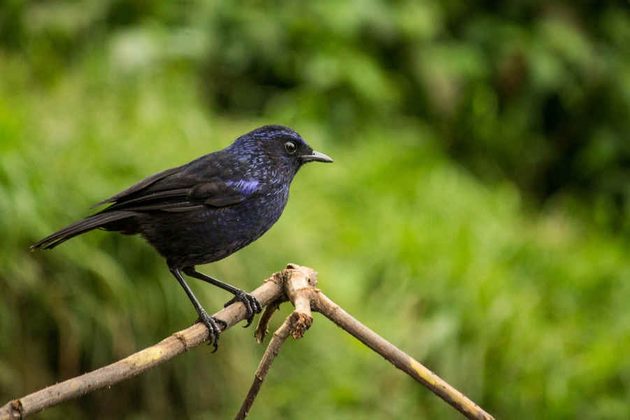
Shiny Whistling-thrush
Practical Tips
- Expect the Unexpected: Traveling in rural Sumatra can be a challenge and will stretch you outside of your normal comfort zone.
- Getting there: Most travelers reach Kerinci overland from Padang, about an 8-hour drive, though conditions can add 1–2 hours. Padang has direct flights from Kuala Lumpur, Jakarta, Medan, and Batam, and is about 2 hours from Bukittinggi. From Bukittinggi, Kerinci is roughly a 9-hour drive. Jambi is another option, with a more comfortable 9–11-hour drive. Susi Air also offers twice-weekly flights from Jambi to Kerinci on Monday and Thursday mornings.
- Gear: It is important to pack layers as most nights can be very chilly despite being on the equator.
- Waterproof hiking boots are essential. Also, bring a backup pair of socks to prevent blisters and sores, especially if you take a full week.
Book Recommendation
Birds of the Indonesian Archipelago by James Eaton, Bas Van Balen, Nick W. Brickle, and Frank Rheindt
Links
https://www.wildsumatra.com/itineraries/kerinci-bird-tour-sumatra-birdwatching/
About the Authors:
Profile compiled by the WildSumatra.com team. All photos attributed to WildSumatra.com unless otherwise noted.
Cover: Map by Burmesedays via Wikimedia Commons / Data © OpenStreetMap contributors










Leave a Comment