

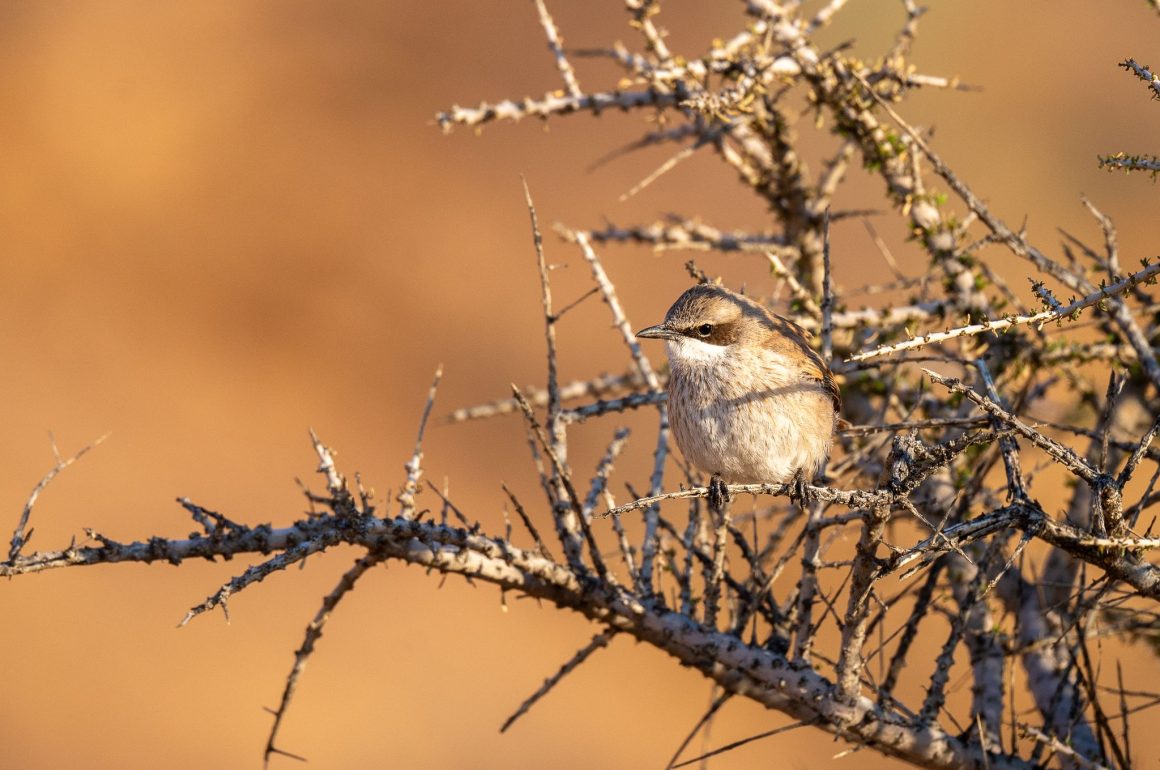
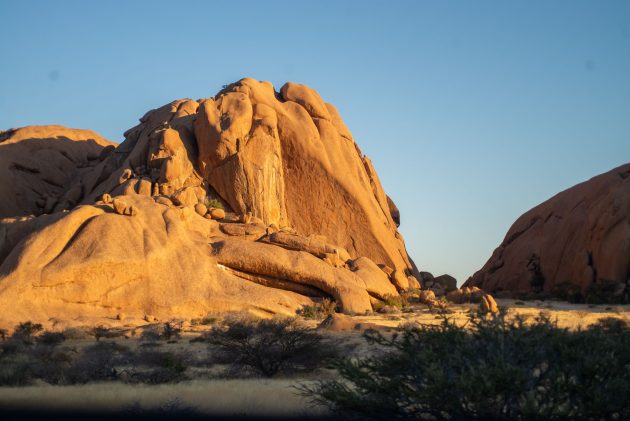
Spitzkoppe is often called the “Matterhorn of Namibia”. The comparison is not flattering for either mountain: the Matterhorn has no Herero Chats, and Spitzkoppe has no queue of mountaineers at the top. I don’t know, maybe they were referring to the cluster of granite peaks rising about 700 metres out of an otherwise flat plain. But even there, the glowing orange that the cliffs and boulders emit at either end of the day can surely not be compared to any other mountain, regardless how iconic. The Spitzkoppe is easily one of my favourite places in southern Africa, and I was desperate to visit again on a recent research trip to the country. Fortunately, I managed to squeeze in one night at the Spitzkoppe, with ‘squeezing’ being the appropriate term for how I spent the night, sleeping in the back of my rented Hilux between spare tyre and supplies.
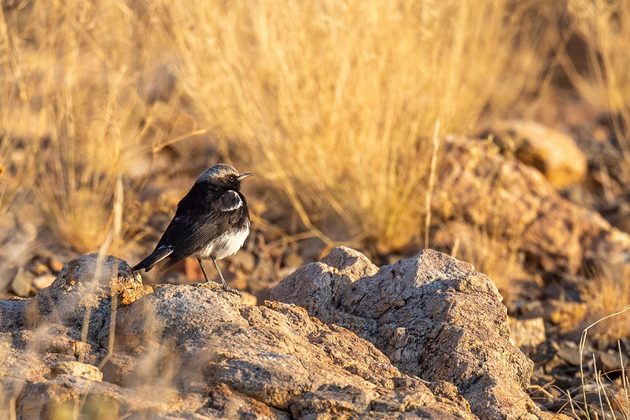
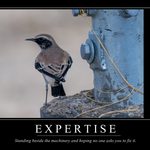
If you go looking for a chat at Spitzkoppe, chats will find you first. Mountain Wheatears (or Mountain Chats) are everywhere: on the boulders, in the bushes, on the campsite toilet block. The males’ smart black-and-white plumage and grey cap make them handsome birds, and on any other trip I would have given them their due. Here, I’m afraid, every one of them was mostly a reminder that it was not the chat I wanted.
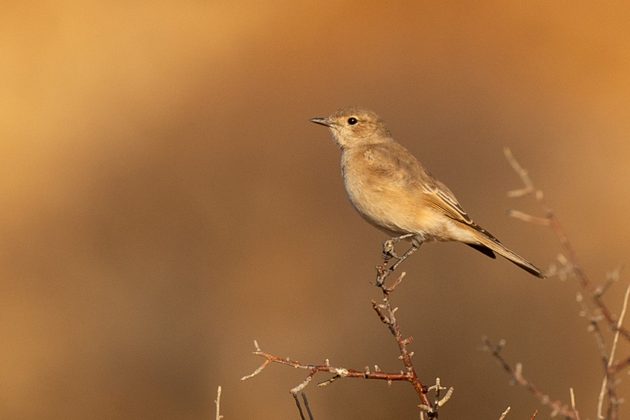
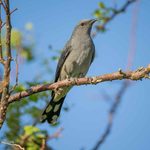
The chats appeared very well organised, however. Several times, I raised my binoculars to a distant bird that had just alighted on their perch with a grasshopper, hoping to have the desired chat in view. It was a chat, but invariably the Karoo Chat. In fact, the birds were so well aware of birders’ desire to see some chat, that they were desperate to be seen. This phenomenon even crossed taxonomic boundaries, as the evidence of several Chat Flycatchers demonstrated. These birds were perched suspiciously exposed, in a manner that could only be interpreted as an act of deception.
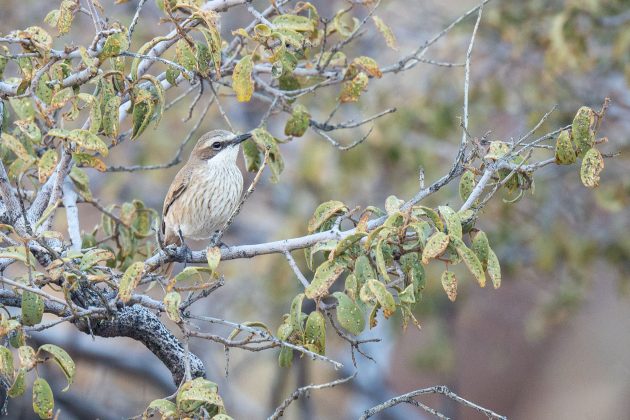
As many birders will know, the chat I wanted was the Herero Chat. It is a near-endemic of western Namibia and south-western Angola, and one of Namibia’s most highly-desired, and hard-to-see, birds. While it initially appears plain grey-brown, it has an intricately streaked chest and clean facial markings, if I may allow myself a description that is clearly indicates a birders’ affection toward a rare little brown job. Unlike its brash relatives, it sits quietly inside shrubs on rocky slopes and can easily go unnoticed even. I had hoped to see one for ages, ever since having unsuccessfully searched for them 10 years ago, also at the Spitzkoppe. This time, I came across a group in my first evening and again the next morning, and was awarded excellent views.
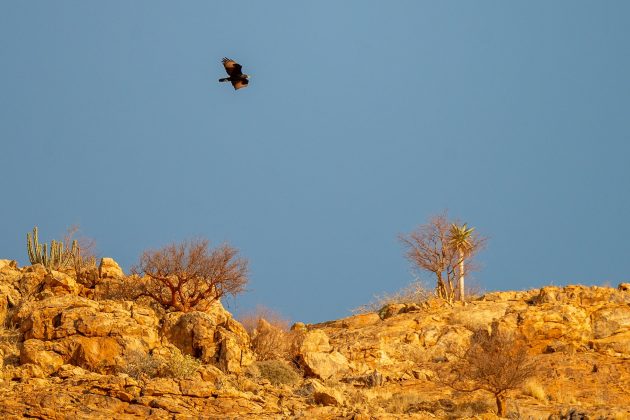
Above the cliffs, a Verreaux’s Eagle patrolled the ridgelines. These huge, mostly black eagles have a white V on the back that flashes as they bank, hunting hyraxes. I didn’t see them hunt, but given the abundance of hyraxes on the Spitzkoppe, they shouldn’t run out of options – though I’m still impressed how it’s possible to hunt a hyrax, given that they always notice you from what feels like a kilometre away.
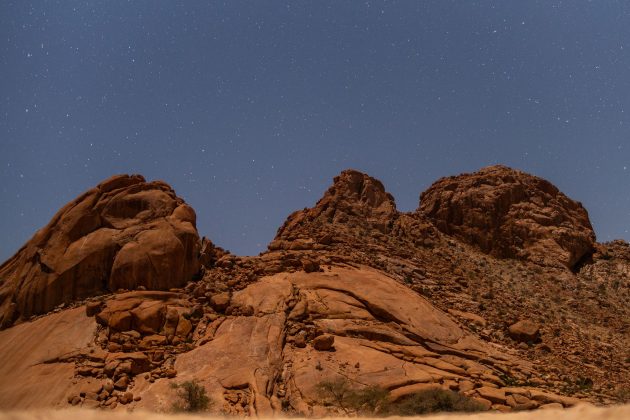
Spitzkoppe is also a great place to watch the night sky. With no town for many kilometres, the Milky Way shines very brightly over the granite domes, and the whole sky is covered in stars.
I left Spitzkoppe very satisfied by the bird sightings and the solitude of the desert and majestic mountain. This place definitely shouldn’t be missing from any birder’s itinerary to the country!







Leave a Comment