

“Experiencing nature-fueled joy in our everyday lives may be the surest hope we have of fostering peace with other species”. Priyanka Kumar
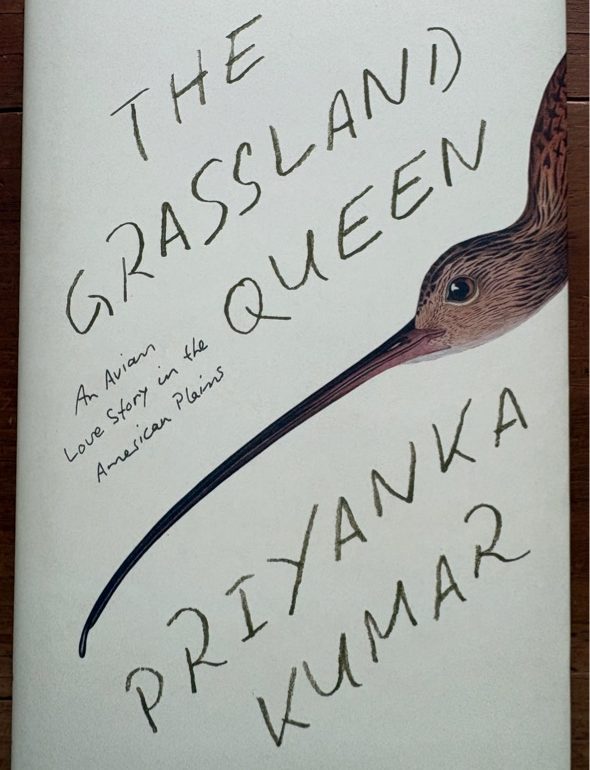
I recently read an advanced copy of, The Grassland Queen, An Avian Love Story in the American Plains by Priyanka Kumar. I was familiar with Ms. Kumar’s previous work, Conversations with Birds and was excited to learn of her next offering. Grassland birds carry a certain mystique. Our native prairies are disappearing along with the birds that depend on them and for me, it has become a real challenge to see these birds in their breeding habitat. I’ve written previously about my unsuccessful attempts to see the Attwater Prairie Chicken. In fact, many of my grassland bird sightings have occurred on the Texas Coast far away from the prairies, so reading about them in their breeding habitat was a treat.
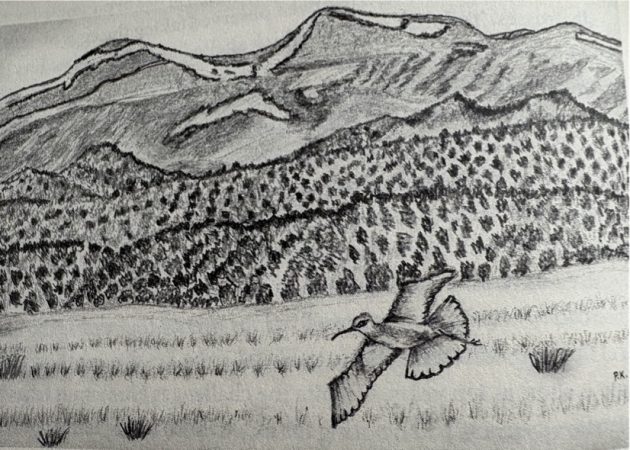
The title of Ms. Kumar’s new book is a reference to the Long Billed Curlew that breeds in the short grass prairies of the mid-west. The first half of this love story begins in New Mexico. We follow a pair of Long Billed Curlews as they face the challenges of one summer breeding season. Ms. Kumar uses what she calls a “bird’s on the ground perspective” to tell their story. She ascribes all manner of familiar emotions to the aspiring parents: love, pride, fear, grief, joy. I’m thrilled with this technique and grateful she ignored the common stricture to avoid anthropomorphizing. It is obvious to anyone who spends time around animals that these emotions are not unique to human people. It’s an effective way to build a connection between reader and curlew. Also, throughout the book Ms. Kumar’s daughters, Mia and Pika are active participants in her studies and travels. I suspect this “on the ground perspective” helped to build connections between daughter and curlew, as well.
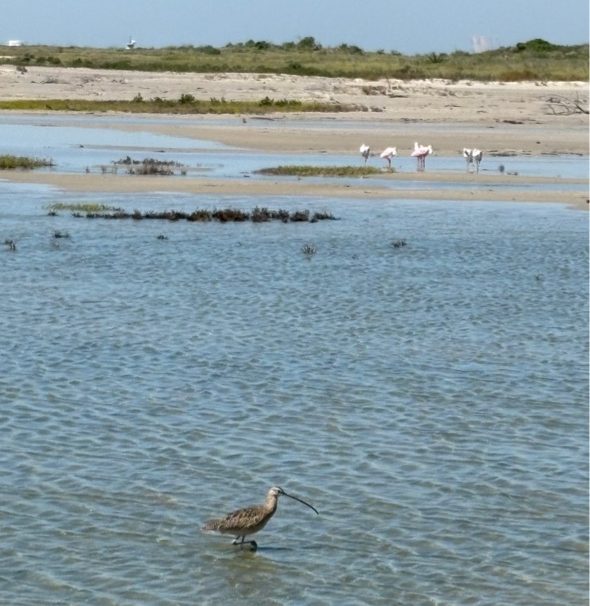
While following the curlews we learn about the prairie ecosystem, its diversity, the interdependence of plants and animals, its self sustaining nature, etc. She effectively illustrates how industrial agriculture, hunting, and even wide spread ignorance are a threat to this ecosystem. This is a theme she returns to throughout the book and for me, this part wasn’t an easy read. It never is, of course.
In the second half of the book we follow Ms. Kumar as she and her family set out on a road trip to visit various prairies in the mid-west. Most of these prairies are on public land which we learn doesn’t protect them from different forms of degradation, particularly if under the care of the US Forest Service, apparently. But not all is doom and gloom. She travels to Summer Lake Wildlife Area in Oregon where birds can be seen in pre-Columbian numbers and visits Twin Willows Ranch on the boundary of the southern Rocky Mountains and the southern Great Plains. This ranch is an example of what a conservation minded private owner can do to restore plant and animal diversity. In Texas, where I live 97% of land is privately owned so the public doesn’t often see the conservation work being done to restore native landscapes. How private land owners are becoming more and more involved in conservation is a topic for another post but one that brings me hope.
Ms Kumar confesses that her writing is an attempt to inspire change, “If I don’t do it who will?”. I suspect most authors writing about our current environmental predicament are also trying to inspire change. But she is also doing something undoubtedly more impactful. Because of their mother, her daughters have a connection to the natural world and the nature-fueled joy that that comes with it. What could be more important than that?
The Grassland Queen, An Avian Love Story in the American Plains will be released Nov 3, 2026.







Leave a Comment