
Could you introduce your station network and the main research, monitoring, and conservation work you do?
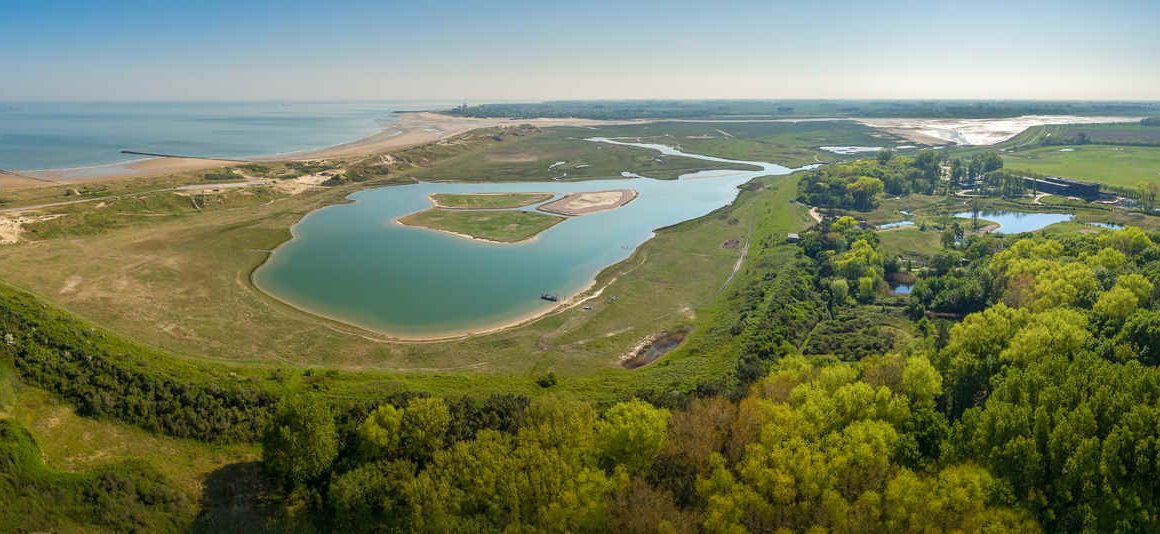
The Zwin Nature Park (https://www.zwin.be/en) is a nature education and research centre situated in the Zwin Nature Reserve, located in Knokke-Heist at the northern end of the Belgian coastline. The reserve, one of the oldest in Belgium (established in 1952), has a size of 560 hectares, with another 191 hectares of protected land adjoining the area just across the border with the Netherlands. It is one of the largest continuous expanses of protected land in western Belgium, a densely populated region with very intensive land use.
The reserve is the scene of quite a lot of research and monitoring of various species groups, with birds being an important group in this. This work is mostly done by the two scientific workers that are working at the Zwin Nature Park. Specifically on birds, there are a number of year-round monitoring and research programs:
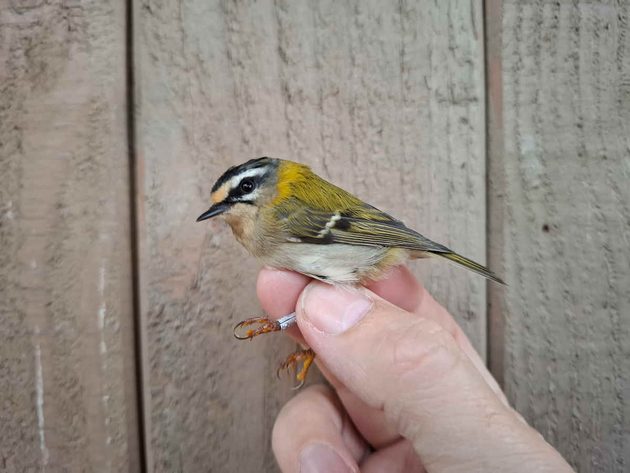
- A ringing (banding) station that is operational at various times of the year, with most focus being an annual daily and standardized capture effort during autumn migration, from August 1 until November 11.
- Several other bird ringing projects concerning White Stork (annual ringing of chicks in the nest + adjusting satellite transmitters on 3-8 chicks per year), Barn Swallow, Rock Pipit (colour ring project), breeding biology of Great Tits and Blue Tits, CES (Constant Effort Site)-project during the breeding season and a winter ringing effort at bird feeders.
- Annual breeding bird survey of rare and scarce breeding birds in the whole reserve.
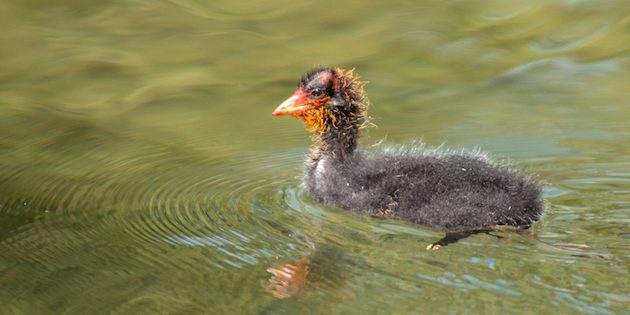
- Annual complete breeding bird survey (all species) in a 17-hectare survey plot in the central part of the reserve. For a number of species (Little Grebe, Moorhen, Eurasian Coot, Barn Swallow), this includes monitoring of breeding success.
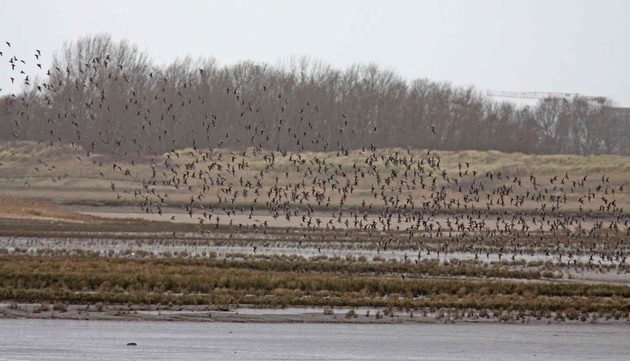
- Various long-running counting projects monitor bird species throughout the year: monthly standardized route covering the open areas of the reserve, twice-monthly standardized route in a woodland and scrubland survey plot, monthly high tide roost count of waders.
Is there a particular station, project, species, or place you would like to tell our readers about?
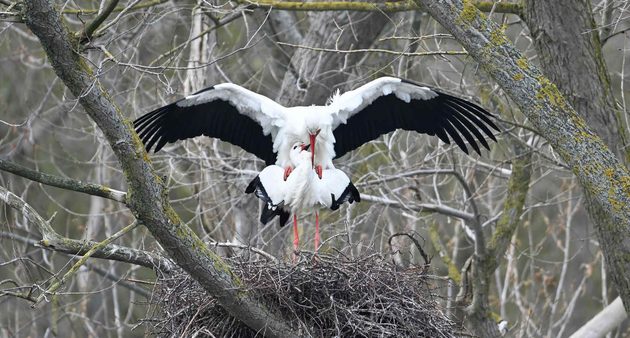
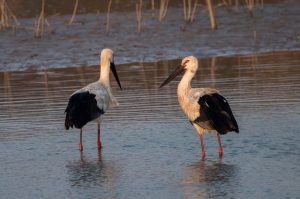
The local White Stork breeding population is of special interest. After going extinct as a national breeding bird at the end of the 19th century, the Zwin was the first place in Belgium where the species was reintroduced. The species has by now recovered very well as a Belgian breeding bird, with a strong increase in numbers (more than 300 breeding pairs) and a large expansion of its range, but for many years the Zwin was the most important and only breeding location. With some ups and downs, the species has always been the focus of specific research, with a renewed and stronger-than-ever effort since 2016. The population is surveyed in detail every year, including monitoring of breeding success and population turnover, annual ringing, and the placing of transmitters.
The ringing station is also a specific project that deserves highlighting. The Zwin was one of the very first places where birds were ringed when scientific ringing in Belgium started in 1927. A ringing station was active for a number of years in the last decades of the 20th century. After some years without effort, the station was started again in 2016, with a stronger, more coordinated, and standardized effort since 2019.
The annual effort to count all territories of a considerable number of rare and scarce breeding species is also well worth the extra attention. This effort provides a detailed insight into the populations and trends of a lot of breeding birds in the area.
Thanks to a long series of counts, waterbirds (especially ducks and waders) have been very well monitored in the area, allowing for decades-long count series to be available.
What has year-round banding or continuous monitoring helped you learn that occasional surveys might miss? If possible, could you share an example?
It goes without saying that continued and standardized monitoring (be it ringing or counting) provides a level of knowledge and insight that would be impossible to attain with random counts. Standardization allows for comparison of data over a longer time.
There are many examples that came to light in this respect from monitoring in recent years, including the following:
- Being able to show a clear and lasting trend of a number of breeding bird species over a number of years, including remarkable positive trends of species like Eurasian Skylark and Meadow Pipit, which have shown clear increases in the area, contrary to national and international (strongly) negative trends of these species (and these increases can be attributed to good habitat management).
- Poor breeding success in some species, like Barn Swallow, (in the most recent years) White Stork, Eurasian Oystercatcher, as well as strong annual fluctuations in breeding success for other species, like Eurasian Coot and Little Grebe.
- Being able to assess the importance of the Zwin for rare or scarce visitors such as Rock Pipit, Zitting Cisticola and others.
- The importance of the Zwin as a hotspot for migrant/dispersive Cetti’s Warblers.
What are the biggest challenges facing birds or their habitats in the regions where your stations work?
The western part of Belgium and the coastal zone in particular have been under a very strong impact of human activity for a very long time. This includes intensive and increasingly intensive agriculture, strong development of various kinds (such as housing and infrastructure) as well as strong pressure from recreational activities. The Zwin Nature Reserve has a decent size, especially compared to the average size of protected areas in western Belgium, but is nevertheless squeezed in among all the above-mentioned interests. Intensive agriculture is carried out right up to the borders of the reserve, with various carryover effects in the reserve, such as isolation from other protected areas, depletion of food sources in the surrounding agricultural areas, affecting food availability within the reserve, and nitrogen deposition on vegetation in all parts of the reserve. The reserve is set between two busy tourist towns (Knokke-Heist in Belgium and Cadzand in the Netherlands), and over time the number of tourist activities has clearly grown, and the impact of those activities has increased over time and expanded spatially. In short: more people are doing more activities on more days throughout the year in more parts of the surrounding landscape. Birds are exposed to tourist activities, especially during periods of warm and nice weather (which are increasing because of climate change, with activities starting earlier in the year and lasting longer in the autumn). Tourist pressure is also visible from a strong increase in the helicopters flying overhead and other flying devices.
Could you share a recent success or a moment that shows why this work matters?
10 years ago, bird monitoring in the Zwin had almost completely halted. The revival of the bird ringing station, with regular ringing work in various projects, and the establishment of various standardized bird monitoring projects to follow up the area’s avifauna is definitely something to take pride in.
How do local communities, volunteers, researchers, and partner organizations take part in your work? You could also tell us about support you provide to colleagues establishing similar work elsewhere.
The results of all this local monitoring are widely shared, often in a popular way to make it easy to consume. Results are shared very regularly and on short notice in various ways with the visitors of the nature reserve (about 100.000 people every year!) and also with the guides that are active in the area. Not just the raw results are shared, but they are also put into context. On top of that, we publish regular annual reports about natural developments in the reserve, and the section on birds is by far the largest part of those reports. All these results are very much open source: they are shared widely with other researchers and organisations, as we strongly believe that data should not stay hidden in private datasets but should be out there to be known and to be used.
For the various bird-ringing projects, we welcome bird ringers to help us.
How can birders or other interested people take part in or support your work, where opportunities exist?
Bird ringers are welcome to take week-long shifts at the ringing station during our main autumn migration ringing project in August-November every year.
Is there anything else you would like to highlight or mention?
We strongly believe that continued gathering of decent, standardized data should continue to be actively pursued, but we also believe that the results of this data gathering should be widely shared. The more we know, the more we can understand and the more we will care.
Are there a website or social media pages you’d like us to link to?
- www.zwin.be ; the Zwin Nature Park is also present on Facebook and Instagram.
- Information about the bird ringing station can be found here: https://trektellen.nl/site/info/2435?language=english
- A lot of information about birds and other organisms in the Zwin can be found here, including (recent and historical) observations, maps, graphs, pictures, etc.: https://waarnemingen.be/locations/189560/

Leave a Comment