

Subspecies – which self-respecting birder doesn’t secretly dislike them? And yet, some bird species seem determined to accumulate as many of them as possible. The table below shows the worst offenders.
| Rank | English name | Scientific name | Subspecies |
|---|---|---|---|
| 1 | Horned Lark | Eremophila alpestris | 42 |
| 2 | Bananaquit | Coereba flaveola | 41 |
| 3 | Crested Lark | Galerida cristata | 35 |
| 4 | Eurasian Jay | Garrulus glandarius | 34 |
| 4 | Mangrove Warbler | Setophaga petechia | 34 |
| 6 | Common Pheasant | Phasianus colchicus | 30 |
| 7 | Puff-throated Babbler | Pellorneum ruficeps | 28 |
| 7 | Eurasian Wren | Troglodytes troglodytes | 28 |
| 7 | Rufous-collared Sparrow | Zonotrichia capensis | 28 |
| 10 | Common Chlorospingus | Chlorospingus flavopectus | 26 |
| 11 | Great Spotted Woodpecker | Dendrocopos major | 24 |
| 11 | Song Sparrow | Melospiza melodia | 24 |
| 13 | Rock Ptarmigan | Lagopus muta | 23 |
| 13 | Strong-billed Woodcreeper | Xiphocolaptes promeropirhynchus | 23 |
| 13 | Black-naped Monarch | Hypothymis azurea | 23 |
| 16 | Variable Goshawk | Tachyspiza hiogaster | 22 |
| 16 | Pacific Kingfisher | Todiramphus sacer | 22 |
| 16 | Rufous-browed Peppershrike | Cyclarhis gujanensis | 22 |
| 16 | Desert Lark | Ammomanes deserti | 22 |
| 16 | Red-winged Blackbird | Agelaius phoeniceus | 22 |
Of course, each of these species would claim to have a perfectly good excuse. Most point to their enormous geographical range, their occurrence on numerous isolated islands, or the existence of many isolated mountain populations. Convenient excuses, but not necessarily convincing ones.
Note: List based on the current AviList taxonomy.
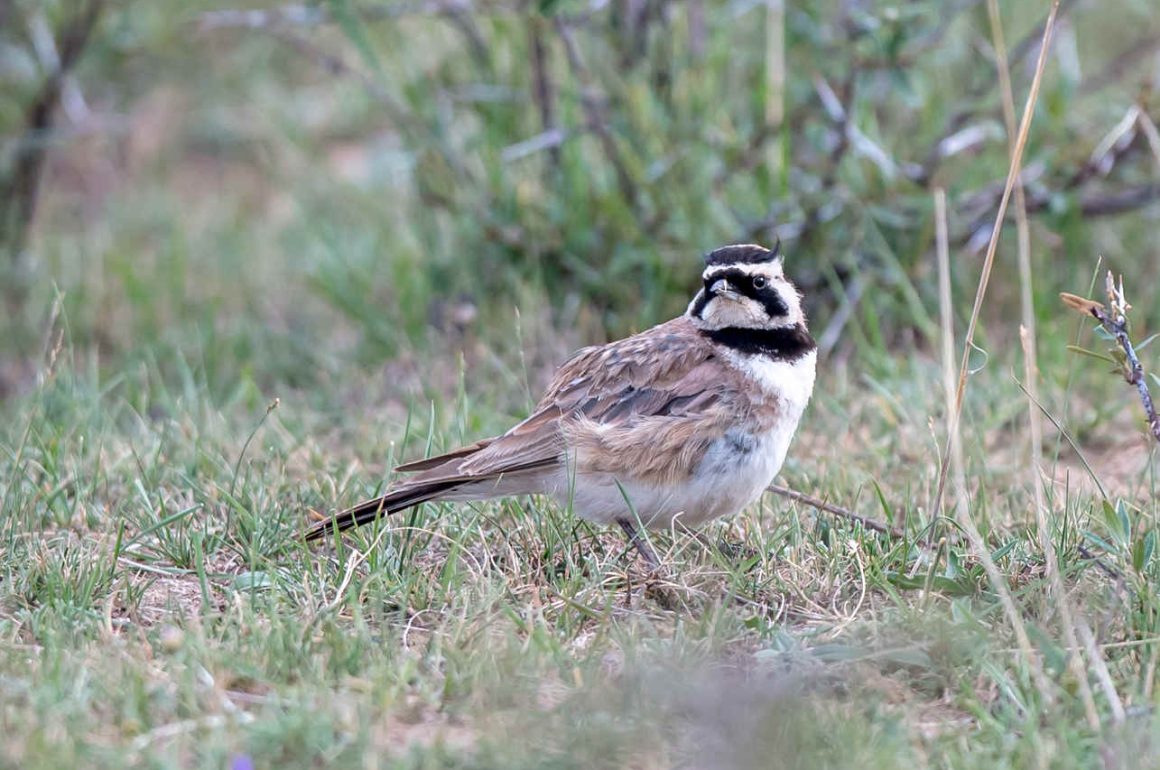
Photo: Horned Lark, Ruoergai, China. Please do not ask for the subspecies.

Kai has lived in Shanghai for 22 years. He only started birding after moving to China, so he is far more familiar with Chinese birds than the ones back in his native Germany. As a birder, he considers himself strictly average and tries to make up for it with photography, which he shares on a separate website. Alas, most of the photos are pretty average as well.
He hopes that few clients of his consulting firm—focused on China’s chemical industry—ever find this blog, as it might raise questions about his professional priorities. Much of his time is spent either editing posts for 10,000 Birds or cleaning the litter boxes of his numerous indoor cats. He occasionally considers writing a piece comparing the two activities.







Bananaquit is a species that never ceased to torment me whenever I was in its region of the world! It always made itself noticed, above all others, especially in a place that should have been filled with more unique birds. Not to mention that I frequently wasted what felt like hours trying to identify what eventually turned out to be one of thoose 41 subs…
Fascinating. I’ve seen horned larks on three different continents, but have never tried adding up how many sub-species I’ve seen. Perhaps I should try. It’s interesting to note that several of the world’s most successful birds (such as house sparrow and European starling) don’t have any sub species at all. Here in the UK the 30 common pheasants have all merged into one super-species, or at least are trying to do so. We still get some without neck rings, others that have great white neck bands, but I suspect that one day they will all merge into one.
Eremophila alpestris khamensis (Kham Horned Lark) or Eremophila alpestris elwesi (Elwes’ Horned Lark).
Michael, gave you a thumbs down for dissing the Bananaquit. ?
Horned Lark was suggested as being 5 or 6 species some while baqk, but as so often the can is kicked down the road pending further research; I can not understand why an interim treatment can’t be adopted using the latest suggestions, these things are not set in stone and can amended anon. Lumping all the Little Shrikethrushes back into one is just nonsense…..
The Bananaquit is universally known as the bird of false hope for its precise habits as Michael described. Still is a cheerful presence (avoiding Peter’s disapproving thumbs down for an all-out insult on Bananaquits)