
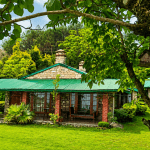
The Baan Maka Nature Lodge near Kaeng Krachan National Park in Thailand is the accommodation of choice for birders in the area. After first trying to stay there in March 2020 (yes, COVID interfered with that booking) and seeing the lodge profiled on our site in December 2024, I finally got to stay there for 9 days in July 2025.
Many good things can be said about the lodge – it is quiet, not expensive, has good food and offers the kind of services relevant to birders, such as transportation to the park, hide bookings and local guides. The one flaw I found is that I did not have the usual place to put my drying laundry, as the rooms to not have TV sets. But the lodge compensates with a number of birds directly on or within close walking distance of the lodge, which I will focus on in this post.
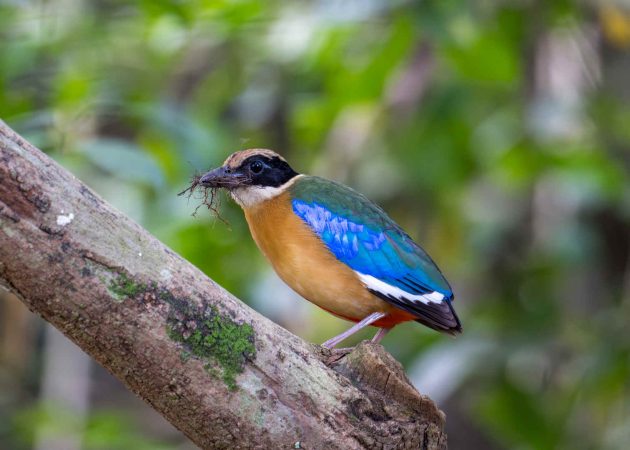
The star among these – at least in July, its breeding season – is the Blue-winged Pitta. There is at least one nesting pair on the grounds of the lodge, and just walking outside of the lodge for a few hundred meters, you can hear and sometimes see more. I will show more photos of the species in a separate post.
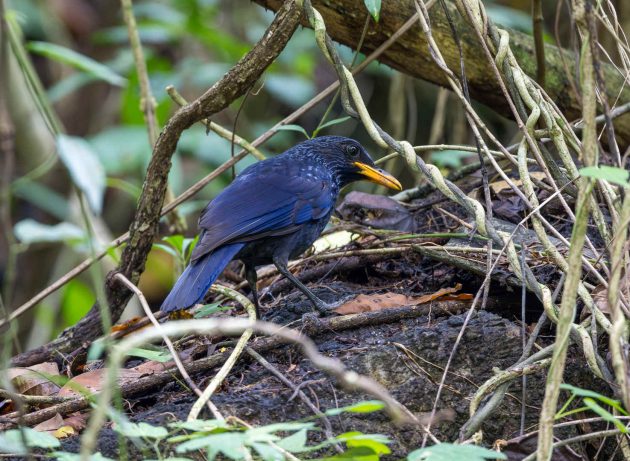
Blue Whistling-thrushes seem to utilize very similar habitat on the grounds of the lodge.
There are also three owl species here, though admittedly, I only heard the Collared Scops Owl. But I got a short glimpse of a Brown Boobook (nice to see it after just encountering a Northern Boobook in Shanghai a few days earlier) …
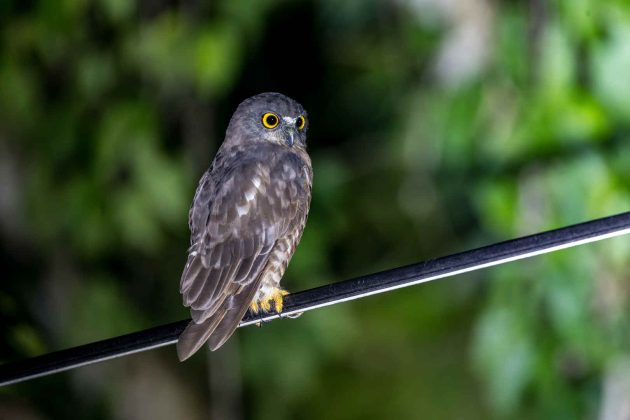
… and much better views of an Asian Barred Owlet.
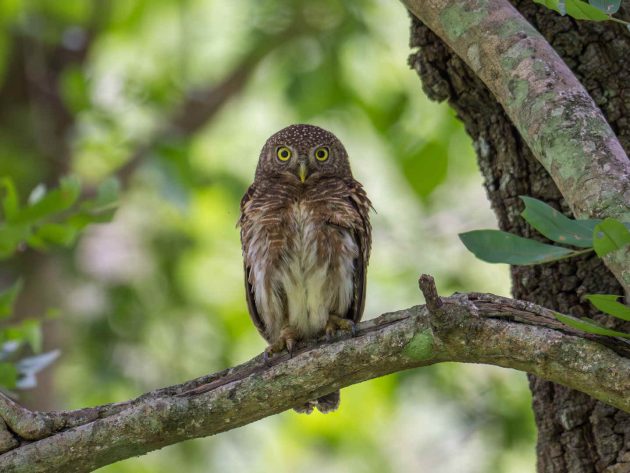
The logic behind its scientific name, Glaucidium cuculoides, is a bit spurious – does it really resemble a cuckoo (“e.g. grey-coloured, long-tailed, barred underparts”, HBW)?
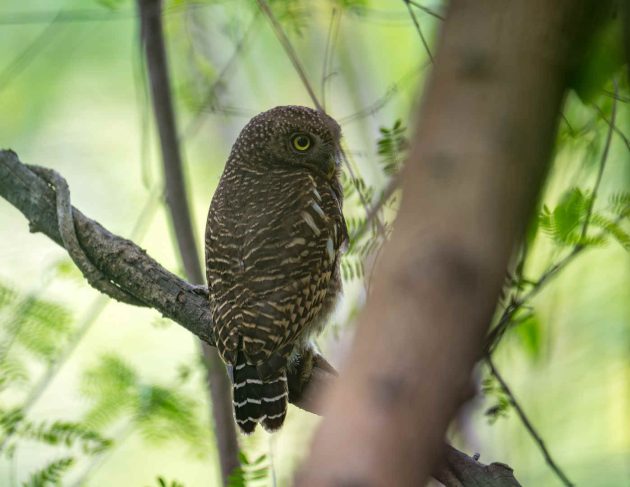
Somewhat fittingly, a paper on the species appears in the not-very-charmingly abbreviated Nat. Hist. Bull. Siam. Soc., which sounds a bit like a right-wing terror organization to me (it is not). The paper describes an attempt of the owl to nest on the ground – more specifically, in a discarded paint tin, which looks rather pathetic.
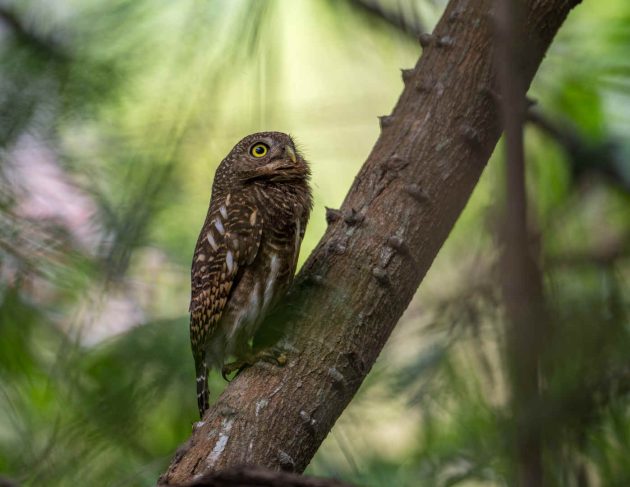
Not many places in Asia are free of bulbuls, and the lodge is not one of them. The most common ones here are the Streak-eared Bulbul …
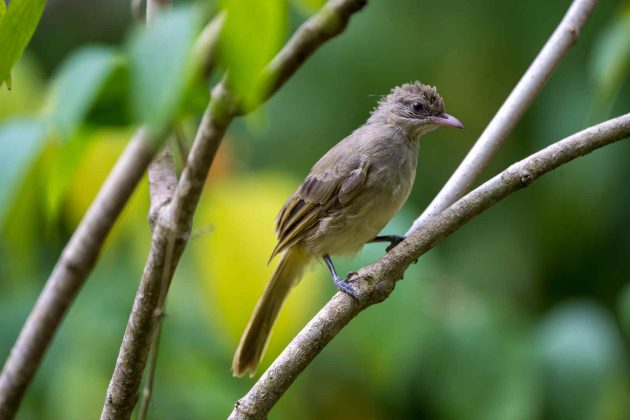
and the well-known Elvis imitator, the Black-crested Bulbul.
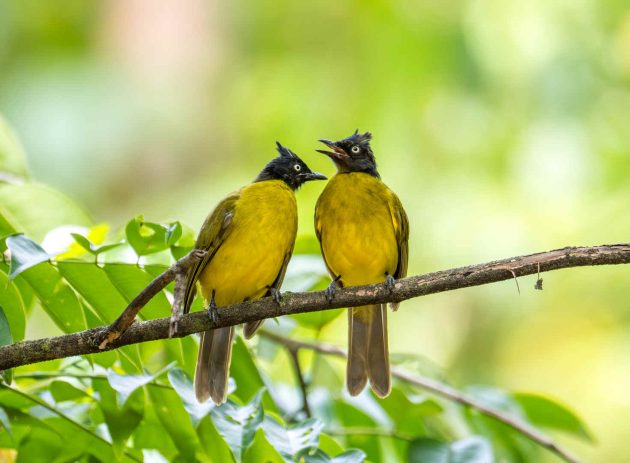
If you think you have relationship issues, check out this video to make you feel better.
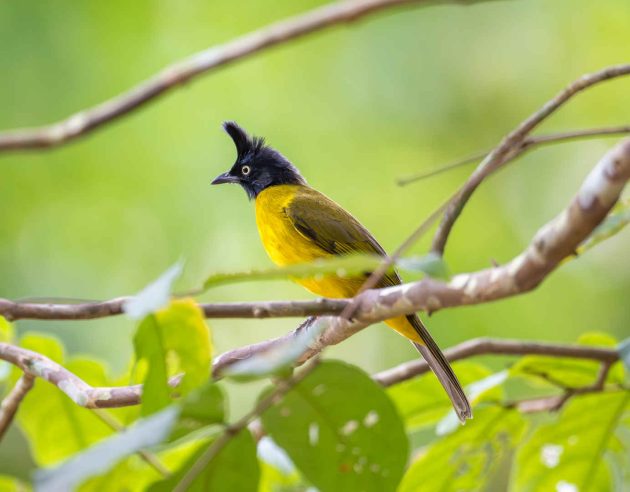
As so often in bird names, the scientific name Rubigula flaviventris refers to one aspect of the bird that is not present in the subspecies found at the lodge (it does not have a red throat), while the other aspect, the yellow belly, is hardly the most distinctive feature of the bird.
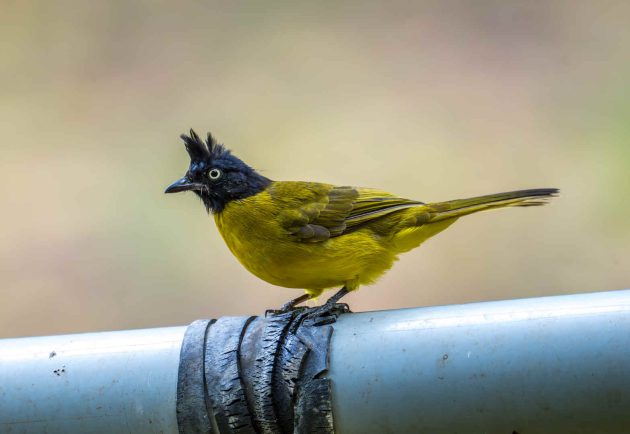
This becomes even more obvious when comparing this bulbul with another bulbul on the lodge grounds, the Black-headed Bulbul, with a distinctively different eye color and no crest (but the same yellow belly).
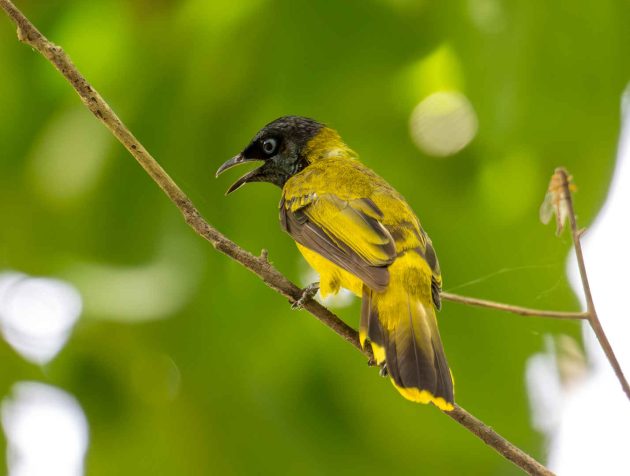
Admittedly, for this species, the scientific name Microtarsus melanocephalos is fairly accurate – it indeed has tiny feet (Microtarsus) and a black head (melanocephalos).
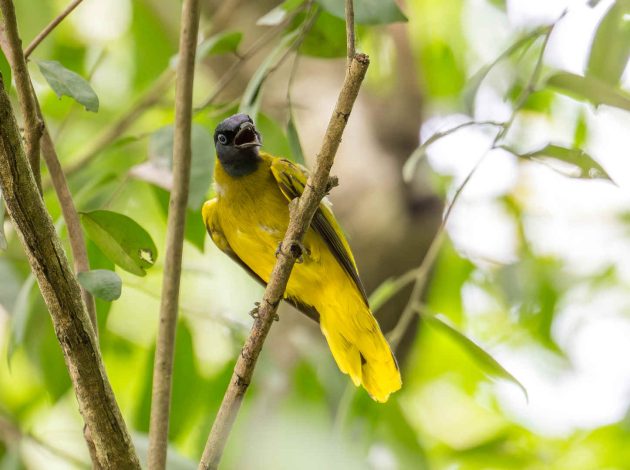
In terms of their color scheme, both have some similarities to the Black-hooded Oriole that shares the same habitat in the lodge area …
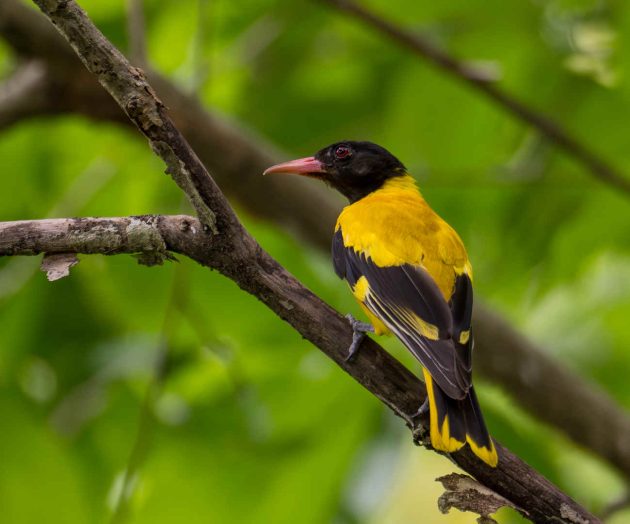
… but its scientific name Oriolus xanthornus is rather bland (xanthornus means yellow bird).
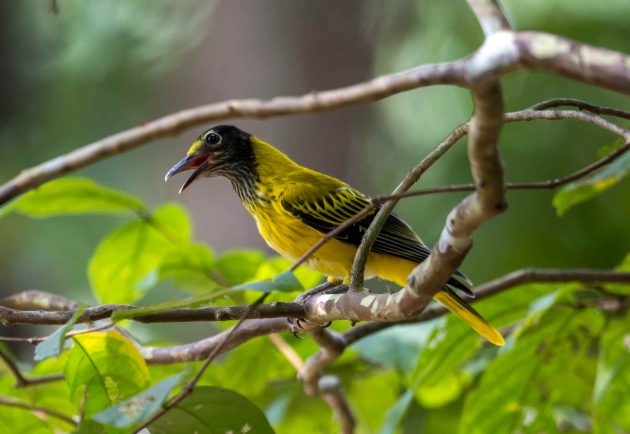
The real yellow bird around here is (of course) the Common Iora.
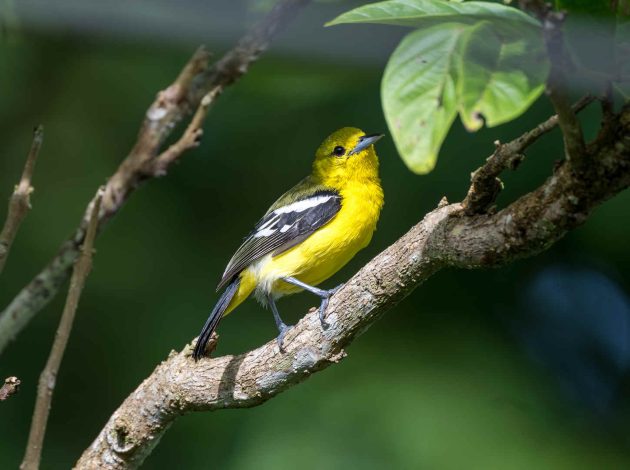
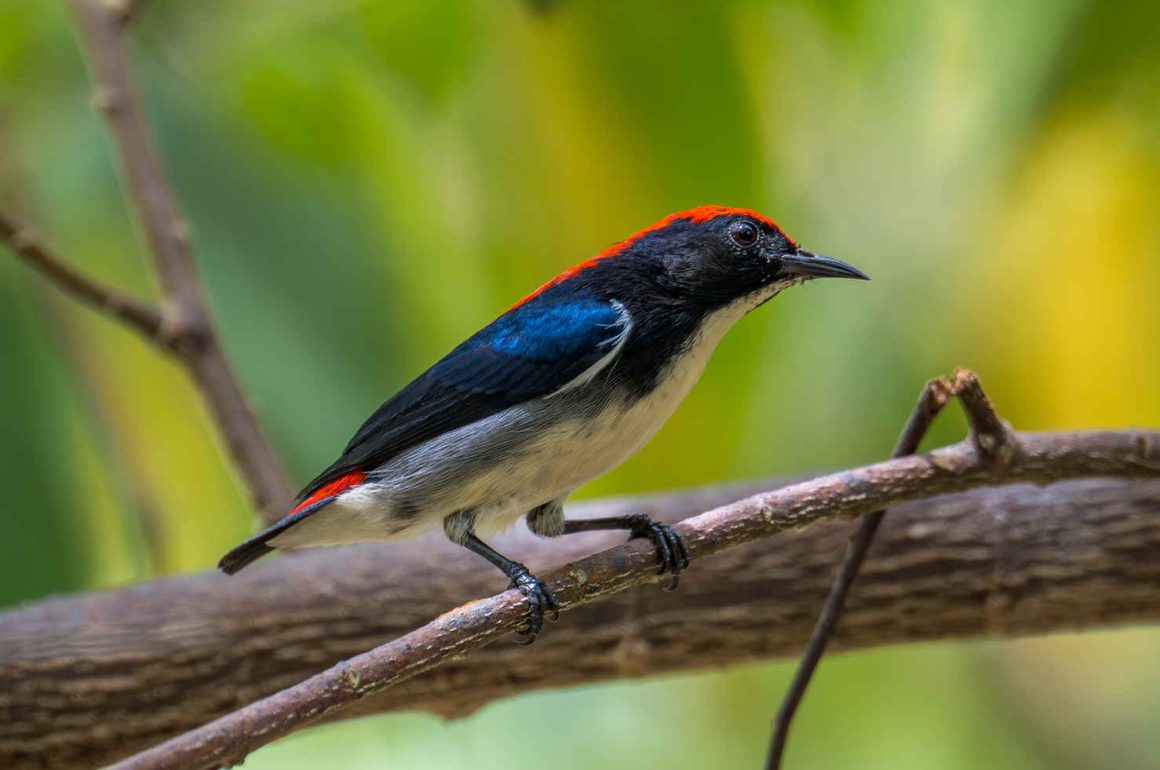
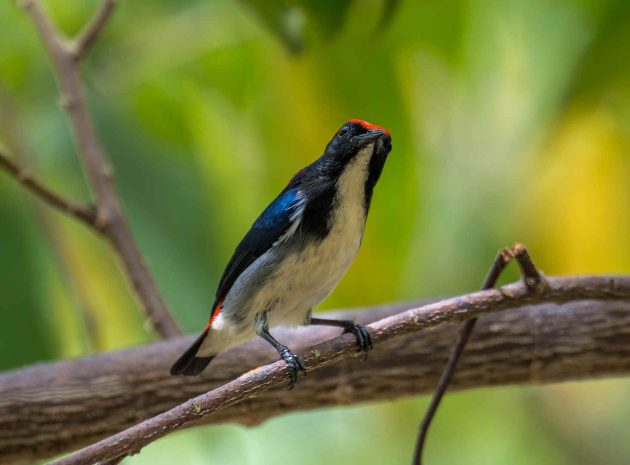
It shares some smaller fruiting trees on the lodge grounds with a few other, somewhat more interesting species. My particular favorite among these was the Scarlet-backed Flowerpecker.
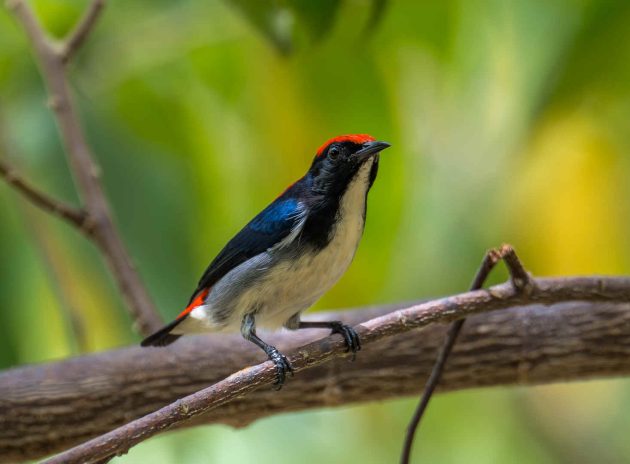
It is not a frightening-looking bird despite its scientific name, Dicaeum cruentatum (“blood-stained”).
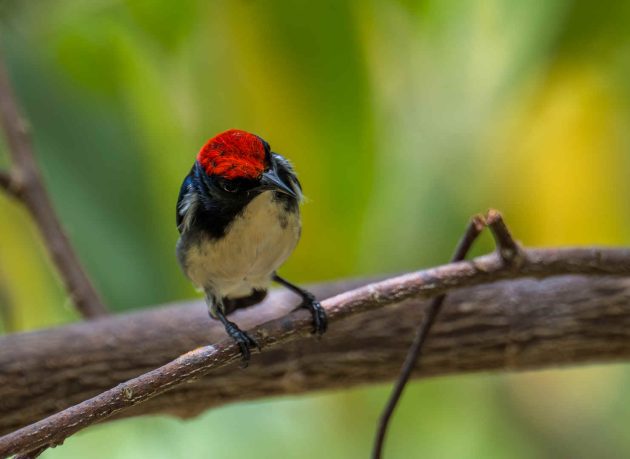
Some of the papers on the species are boring (“The mitochondrial genome of the scarlet-backed flowerpecker (Dicaeum cruentatum Linnaeus) from southwestern China”).
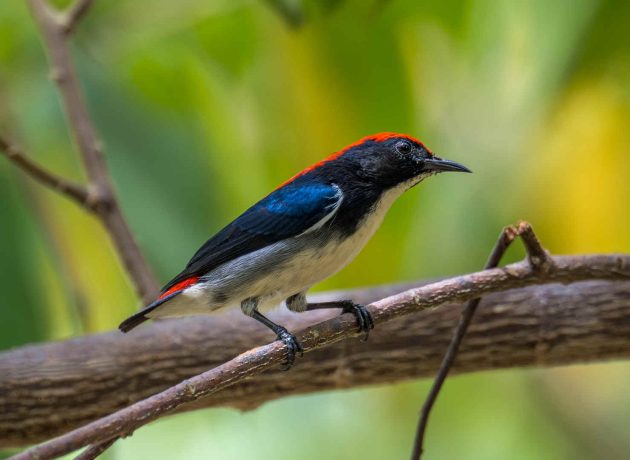
Others are only mildly interesting, such as one suggesting biparental care (both parents feed the nestlings with green mistletoe fruits).
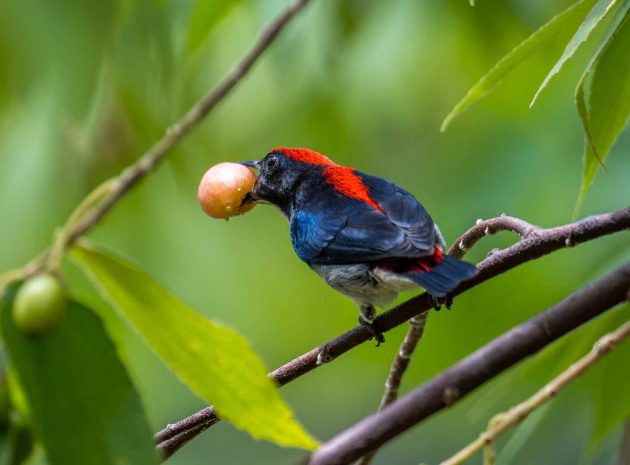
Others are quite interesting, such as one stating that the flowerpecker can fall into a torpor, reducing its metabolism by about 70% (this is known for some hummingbirds).
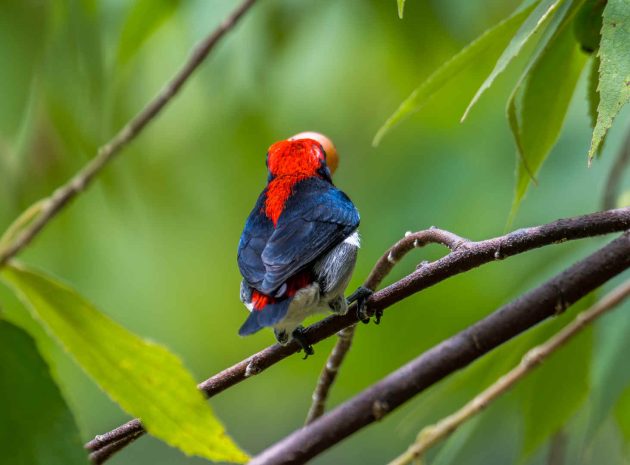
Finally, some are marginally disgusting, such as one on analgoid mites from flowerpeckers (in the Australian Journal of Entomology).
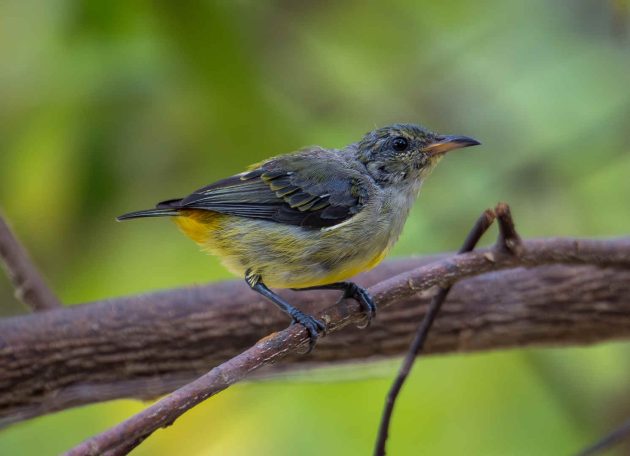
Unfortunately, I only saw a juvenile (or a molting bird?) of another flowerpecker, the Orange-bellied Flowerpecker.
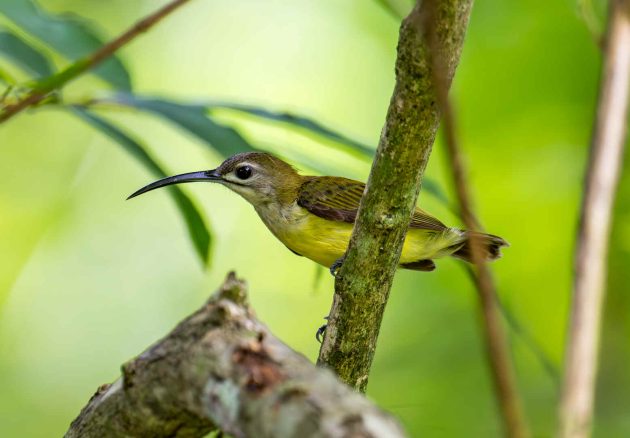
The same bushes also held a Little Spiderhunter …
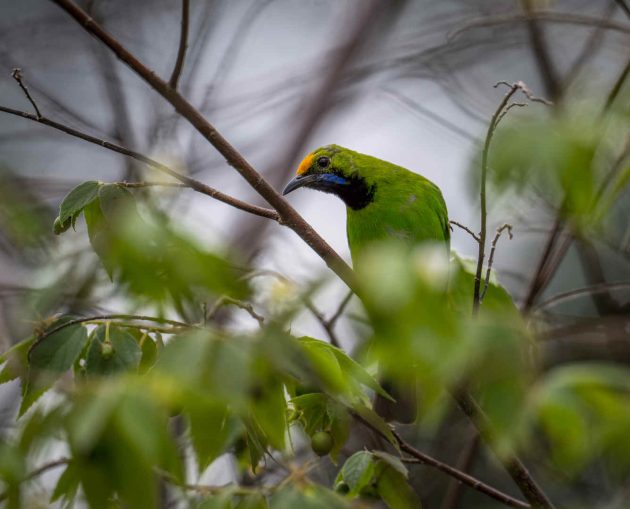
… and a Golden-fronted Leafbird.
The lodge is right next to a lake, which has a few more species:
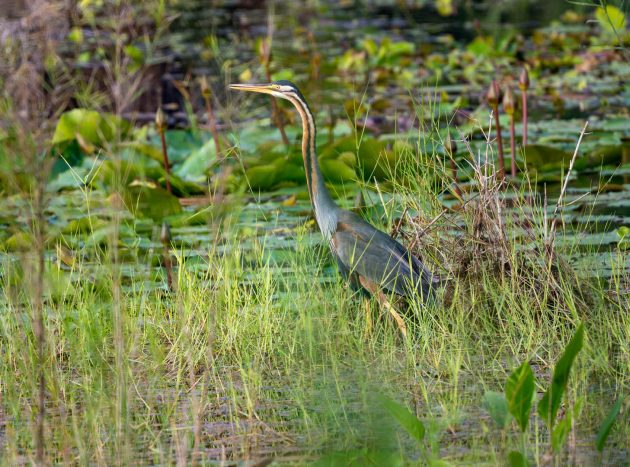
Purple Heron …
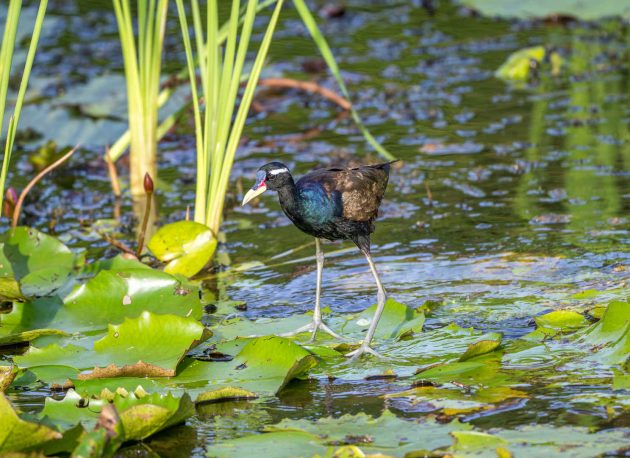
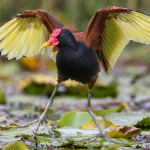
… and Bronze-winged Jacana.
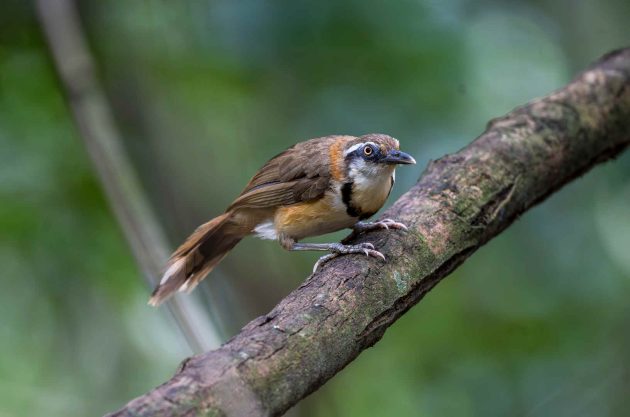
If you like jewelry – particularly necklaces – you will also appreciate the lodge presence of both Greater Necklaced Laufhingthrush …
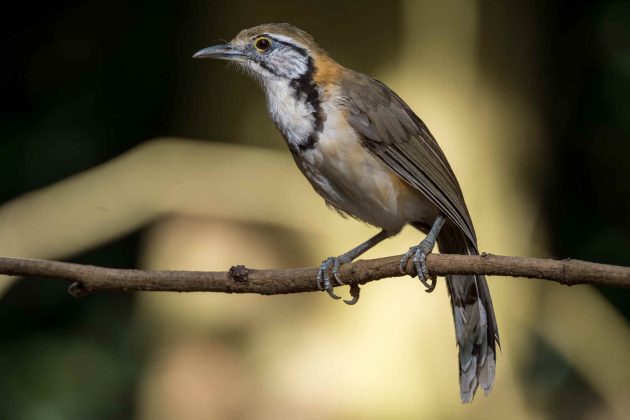
… and Lesser Necklaced Laughingthrush. Both species seem to be quite used to the lodge visitors.
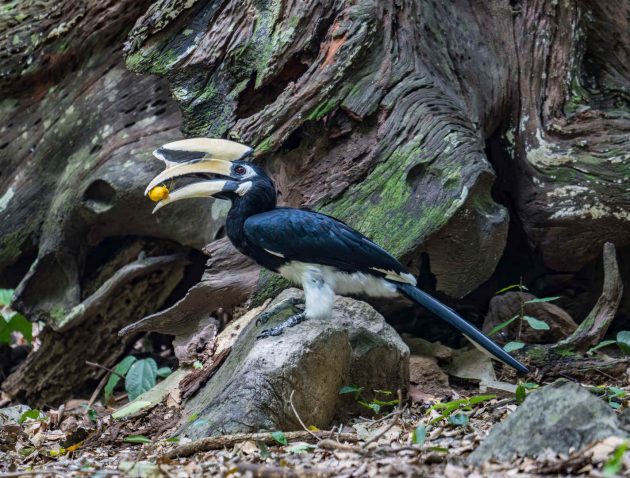
As are some Oriental Pied Hornbills.
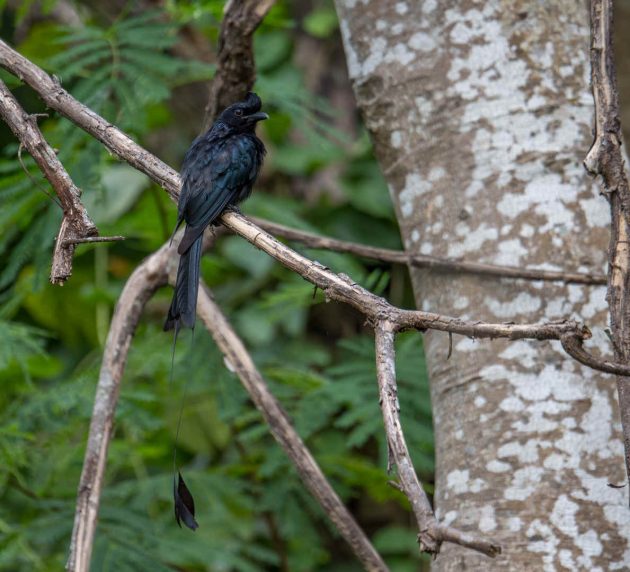
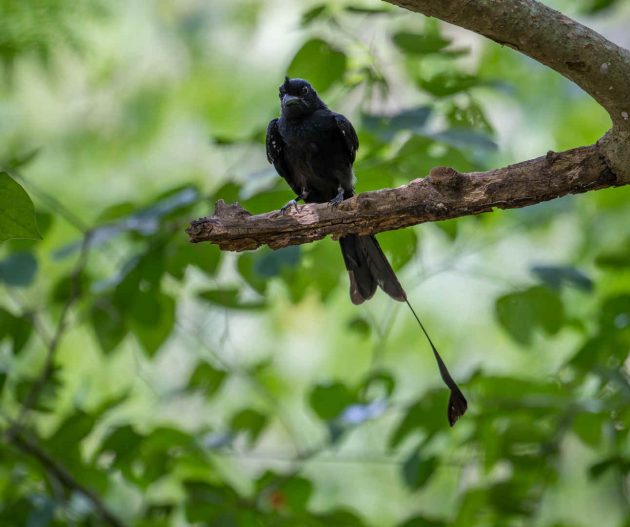
If one stayed at the lodge for a very long time, one would probably also no longer feel that Greater Racket-tailed Drongos are quite bizarre birds, as they are very common here.
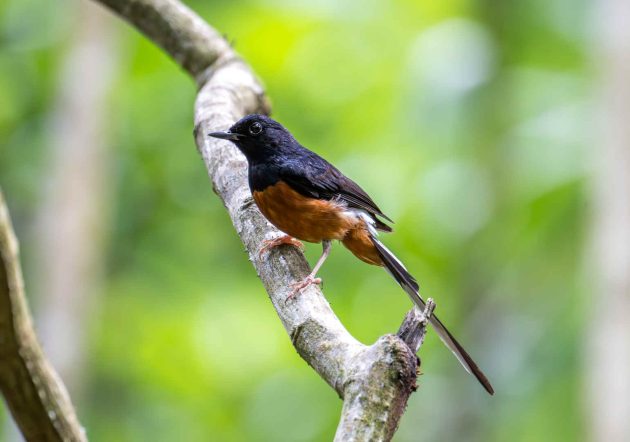
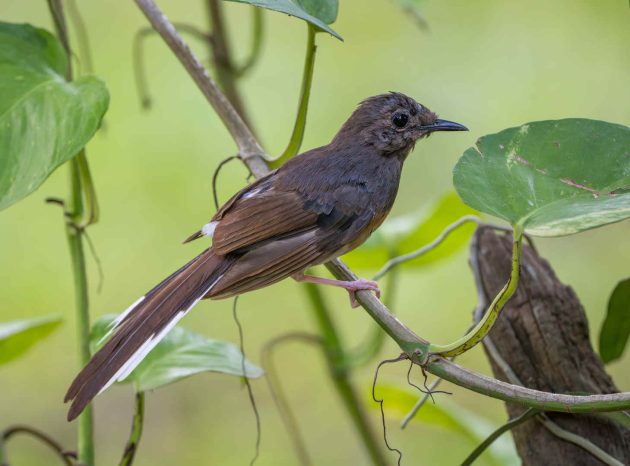
In terms of bird sounds, White-rumped Shamas are among the more dominant birds at the lodge.
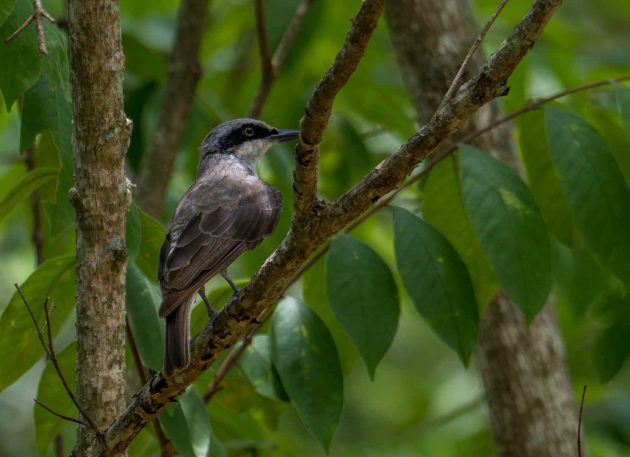
The scientific name of the Large Woodshrike is Tephrodornis virgatus, indicating a streaked bird (virgatus) – not an obvious name, I think. In any case, it looks kind of bland to me compared to proper shrikes, even though it probably has a much nicer soul than the butcherbirds.
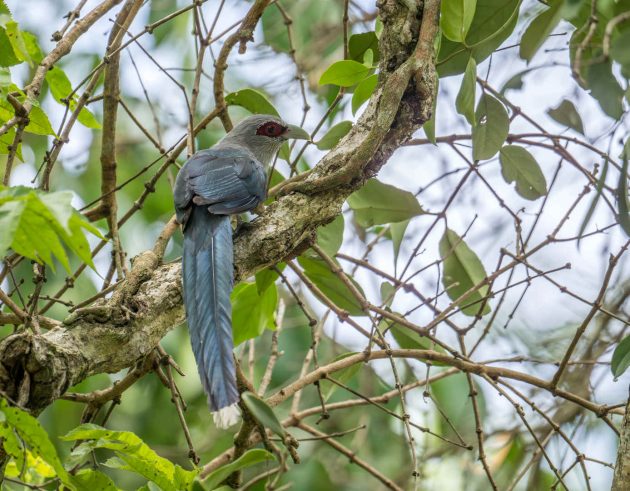
A final nice bird to find on the lodge grounds is the Green-billed Malkoha, a bird that strikes me as neither particularly green-billed nor sad (Phaenicophaeus tristis is the scientific name).
I will end this post with one of these heartfelt but rather boring recommendations. While the lodge was a great place for me to do birding for about 12 hours per day, it could also be rather good for a family with at least one birder among them, as it is a good place for excursions to the national park, a relaxing place in itself, and offers on-site birding whenever the birder within the family has some free time. My recommendation would be even stronger if I did not have any plans to go there again – don’t want the place to get too popular after all …








I’m going – this looks very enticing. I read the profile too.