

Highlights
Safe, birder-friendly, and small country with huge altitude and habitat variety, with close to a thousand bird species and amazing wildlife and landscape.
Key Bird Species and Families
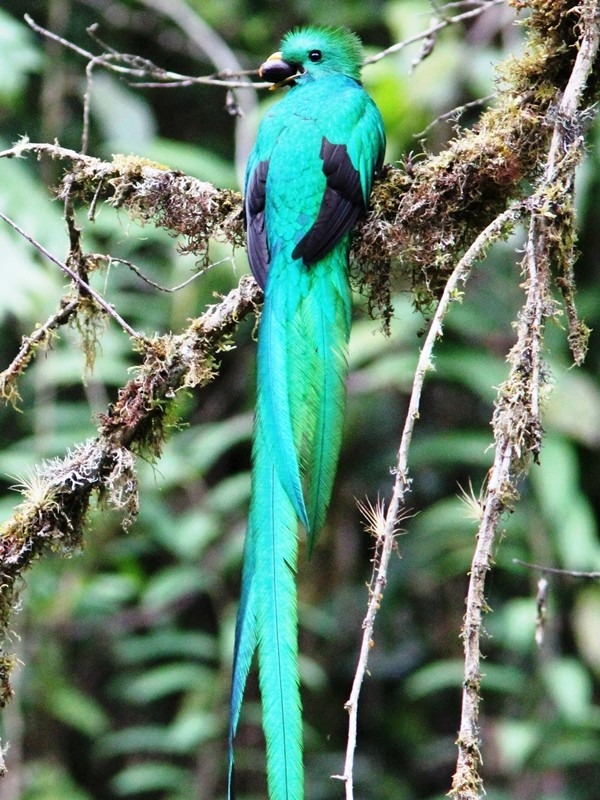
- 10 trogon species, including Resplendent Quetzal
- Many raptor species, including Ornate and Black Hawk-Eagles, King Vulture, Gray-headed Kite, Swallow-tailed Kite, Laughing Falcon, White Hawk, Collared Forest-Falcon
- More than 50 Tanager species, including the endemic Black-cheeked Ant-tanager
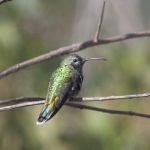
- Close to 60 species of Hummingbirds, including endemics and other special ones
- Colourful Toucans, Aracaris and Toucanets
- Close to 20 species of Parrots, including Scarlet and Great Green Macaws, Parakeets, and Parrotlets
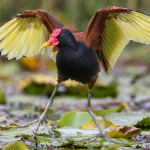
- Sungrebe and Sunbittern
- Various waterbirds, herons, egrets, storks, and ibises
- Tinamous, guans, curassows, and chachalacas
- Puffbirds, jacamars, and motmots
- And much more …
Best Regions for Birding
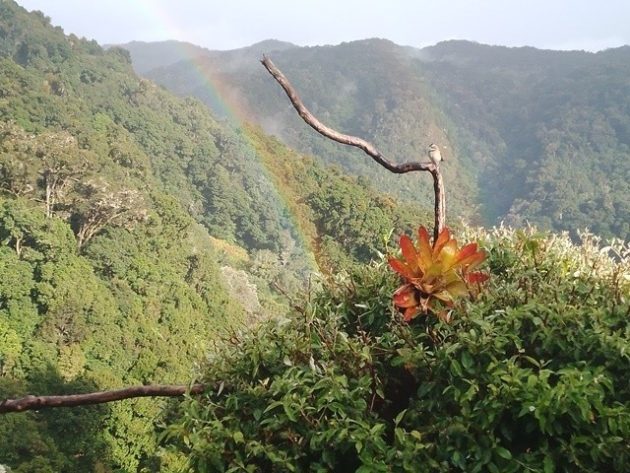
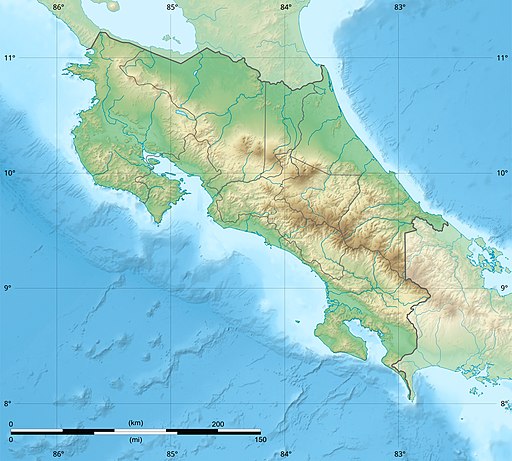
The Talamanca Mountains are the backbone of Costa Rica, dividing it into a Caribbean and a Pacific side. Many species can be found only on one side since the more than 3000 meters ridge separates populations. Most of the high elevation cloud-forest species can be found just here, and a few just at or above tree-line at the paramo vegetation around Cerro de la Muerte. San Gerardo de Dota and Savegre Valley are a perfect base to discover both the cloud forest and the paramo.
Pacific coasts and foothills are one of the nicest areas offering very rich bird and wildlife. The northern part, especially Guanacaste, is mainly dry with very different species than further south, while the Osa Peninsula is the wildest and rainiest in the whole country.
The Caribbean lowland is generally hot, wet, and humid, thus the remaining protected forests have extremely rich flora and fauna. The Sarapiqui region and Tortuguero are a nice combination to discover the Caribbean side.
Volcanic areas such as the scenic Arenal or especially the Tenorio area, with the continental divide, can offer not just amazing landscapes but a mix of Caribbean and Pacific species.
Although Monteverde offers very good birding, mainly in cloud forests during the peak season, it tends to be too crowded by visitors.
Best Birding Season
November-April – generally drier
April-May and Aug-Nov – generally more wet but exceptional for migration
Birding Trip Suggestion(s)
- HIGHLAND BIRDING
In the Talamanca Mountains, the Savegre Valley offers one of the best cloud forest and nearby paramo birding. Its center is San Gerardo de Dota, which offers plenty of different accommodations. One of them is Casa Quetzal, which is a guesthouse for birders with a Birding & Photography garden surrounded by huge primary and secondary tropical cloud-forests. The garden has flowery bushes, some local trees, including aguacatillo, whose fruit is the favourite of the Resplendent Quetzal. This area is home to high altitude birds, insects, and plants which you can not find at lower elevations. More details at www.quetzalbirding.com
- FOOTHILLS – MID-ELEVATION BIRDING
Generally, lowlands are below 2000 feet or 600 meters, and “foothills” are between 2000 and 4000 feet or 600 and 1200 meters.
A day-long Foothill or Mid-level Birding expedition can be a visit to Los Cusingos. This protected area covers altitudes between 800 and 3820 meters above sea level. On its 78 hectares, there is a 2 kilometers long trail at the “lower levels” which can be visited if a permit is prearranged. It is located in Quizarra, Perez Zeledon, where the former house of Alexander Skutch, one of the first ornithologists of Costa Rica, has been transformed into a small museum. The exhibition is surrounded by a botanical garden. The protected area is a bird sanctuary and has a great diversity of species, so one can search for various species here, such as Turquoise Contiga, Golden-naped Woodpecker, Baird’s Trogon, Blackhooded Antshrike, or Orange-collared Manakin, Riverside Wren, Spotcrowned Euphonia, several tanager and antbird species like Bicolored Antbird.
- PACIFIC LOWLAND BIRDING
There are different types of habitats you can visit in the Pacific Lowlands. Here is a general description of the habitats:
A. Mangrove
This is the home of some typical mangrove dwellers, such as Mangrove Hummingbird, Mangrove Vireo, Mangrove Warbler, Yellow Warbler, and Panama Flycatcher from the songbirds. With some luck, among the dense bushes, one might spot Boat-Billed Heron. Wood Stork and Bare-Throated Tiger-Heron are relatively common and can be spotted at the edge of the water quite easily. The most colourful species of the mangroves are the American Purple Gallinule and the Roseate Spoonbill. White Ibises can be around in small numbers, and when a Mangrove Black-Hawk flies too close, they should be in the air flying around. There are several Kingfisher species here, such as Ringed, Amazon & Green, but surely the most sought-after one is the adorable American Pygmy Kingfisher. Cuckoos are well represented here as well with Mangrove Cuckoo, Yellow-Billed Cuckoo, and Squirrel Cuckoo.
B. Seaside
The seaside areas usually have popular beaches, especially the sandy areas, but there are some more hidden or rocky places where it is still easy to walk and look around a little bit for Magnificent Frigatebird, Black Skimmer, Brown Pelicans, Olivaceous Cormorants, or Laughing Gulls. American Oystercatcher is a scattered breeder, but during migration, there is a chance to see them. Depending on the season and water level, there are always some plovers, sandpipers, and other shorebirds. But perhaps the most attractive birds for birders are the Scarlet Macaws, which follow the coastline and occur especially where they can find their favourite food source, the almond trees. If they are around, one surely can’t miss them; they are large, colourful, and extremely noisy.
C. Rivers & Estuaries
If you missed anything at the previous 2 habitats than rivers and estuaries can give a second chance for some of the species mentioned before, such as White Ibis or Kingfishers. Muscovy ducks love undisturbed rivers as well. Both Crested Caracara and Yellow-headed Caracara can be around, and Osprey fish around here as well. Alongside the bushy areas, the most colourful Tanager will be Cherrie’s, but Blue-Gray and Palm Tanagers should be around as well. The most common Hummingbird is usually Rufous-tailed. Northern Waterthrush, Riverside Wren, and Great-tailed Grackle are almost always around, and Blackbellied Whistling Ducks are usually around as well.
D. Lowland Forests & Edges
There are several excellent areas to visit for finding typical lowland Pacific forest species, from Carara National Park through private reserves to the Osa Peninsula. There are dozens of fantastic areas both for birding and general wildlife.
Practical Tips
- Best locations depend on the specific interests of each visitor (e.g., twitcher, general birder, bird photographer, general wildlife lover)
- Each month, sometimes even a week is different, so make sure you visit at a good time for your goals
Books
The Birds of Costa Rica – Garrigues-Dean
Links
- https://en.wikipedia.org/wiki/List_of_birds_of_Costa_Rica
- https://ebird.org/region/CR
- https://www.quetzalbirding.com
By Gabor Orban
Gabor and his wife, Andrea, are both professional guides with decades of experience. They actually live and migrate like strange birds. From May to October, they live in Hungary in the lowland steppe area where they run Kondor Ecolodge Birding and Photography Center, and the other half they live in the cloudforests of Costa Rica, where they have the Casa Quetzal Birding & Photography Guesthouse. Gabor Orban is the founder and owner of ECOTOURS-WORLDWIDE and can be reached at ecotoursgabororban@gmail.com
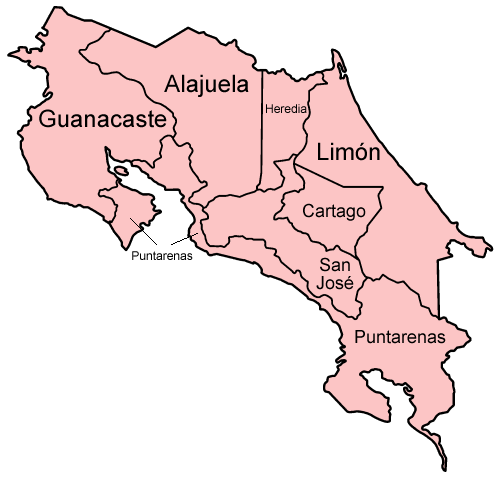
Map: “Costa Rica provinces named” by No machine-readable author provided. Golbez assumed (based on copyright claims). is licensed under CC BY 2.5.
Map “Costa Rica relief location map” by Eric Gaba (Sting – fr:Sting) is licensed under CC BY-SA 4.0.











Leave a Comment