

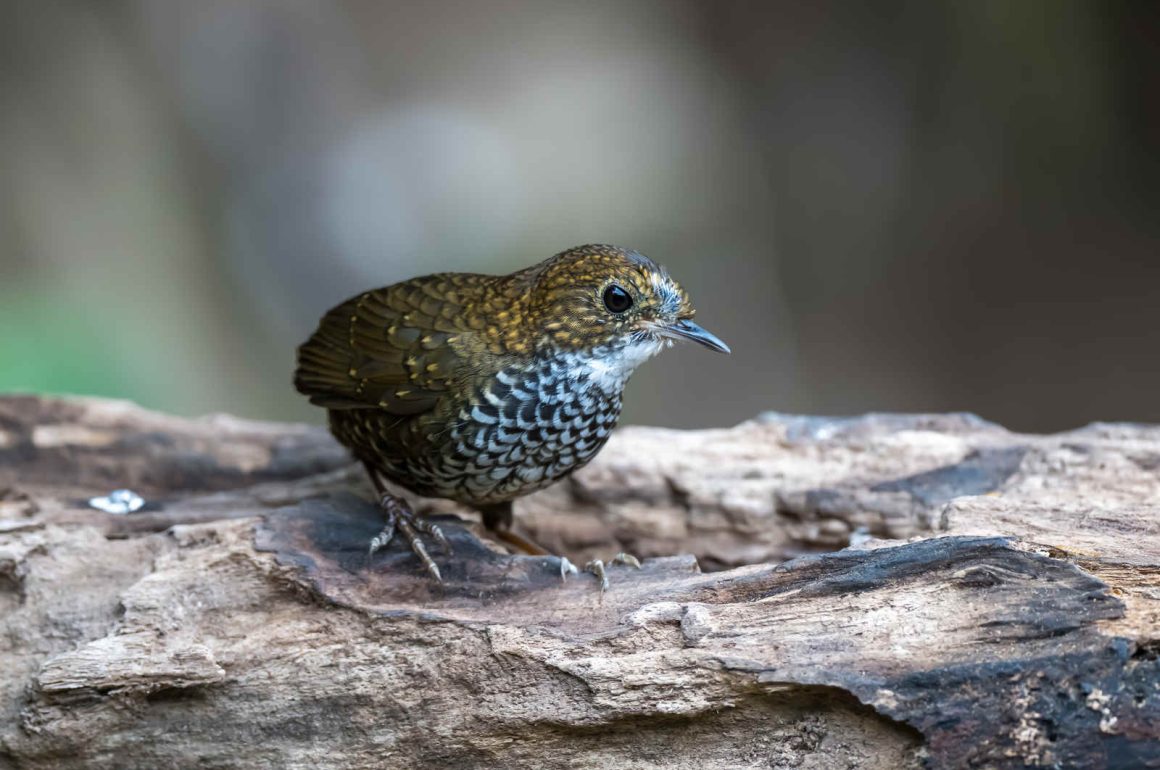
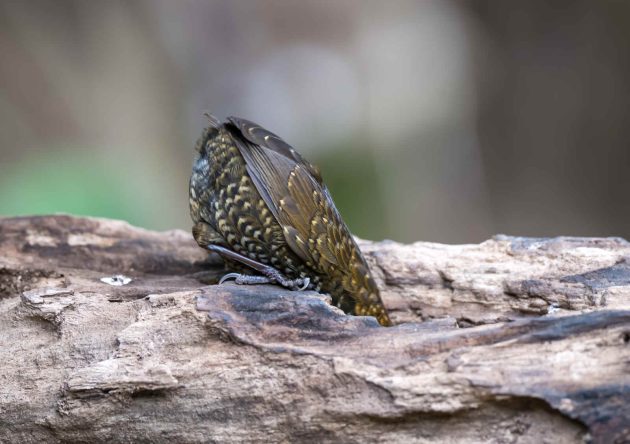
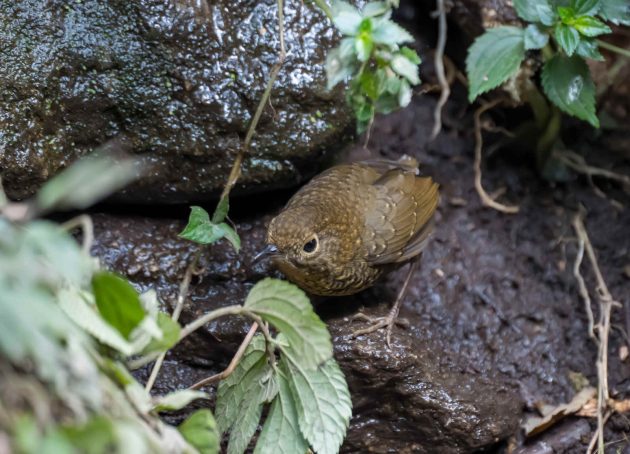
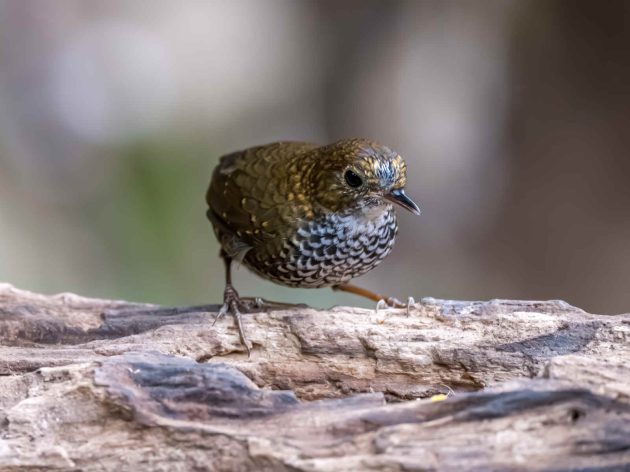
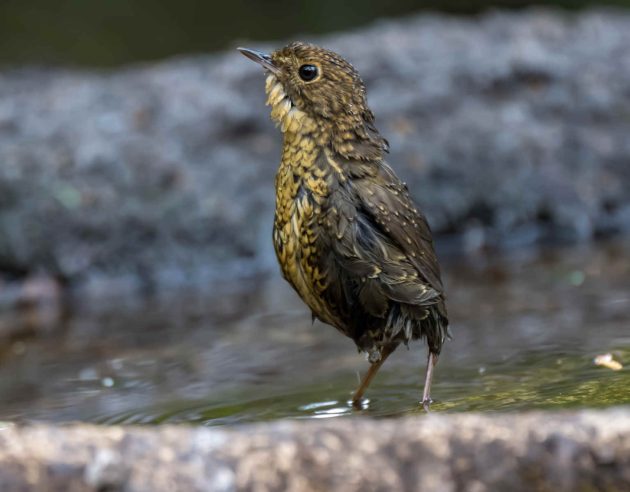
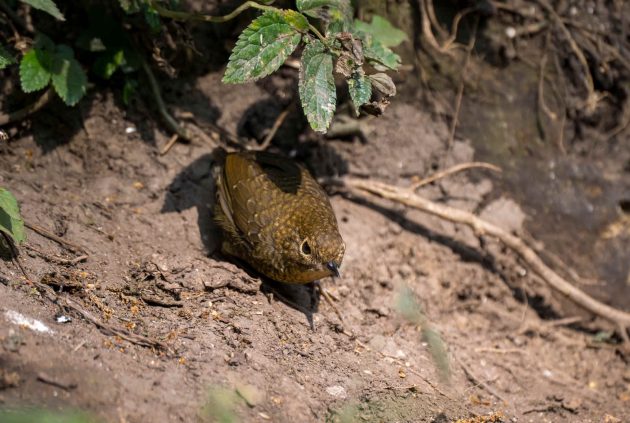
This is one of these birds for which the English name (scaly-breasted: yes, I can see the scales) is immediately contradicted by the scientific one, Pnoepyga albiventer, indicating a white-bellied bird. I am afraid I have to side with the common name here.
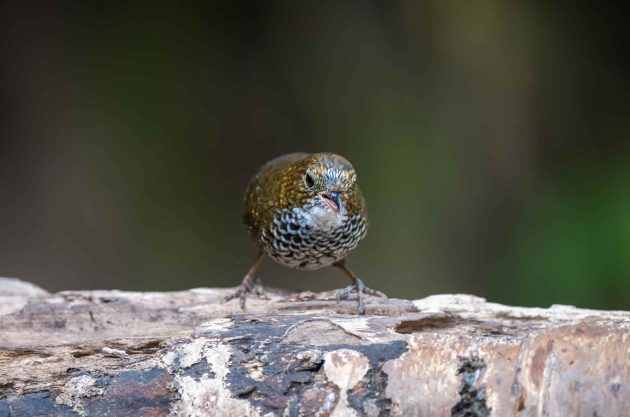
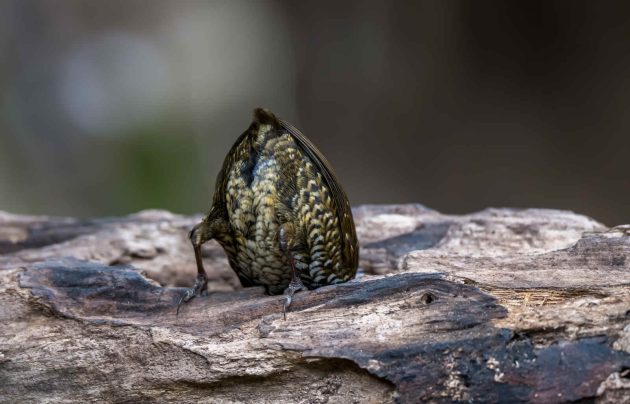
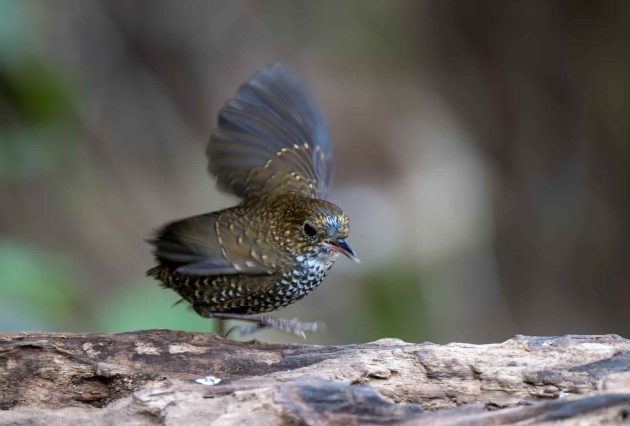
Seeing a photo of the bird makes me expect a delightful description on eBird, and I am not disappointed: “Adorable tiny bird that loosely resembles a minute tailless wren.”
And ChatGPT has no problem creating what it calls a “Minimalist Scaly-breasted Cupwing illustration”.
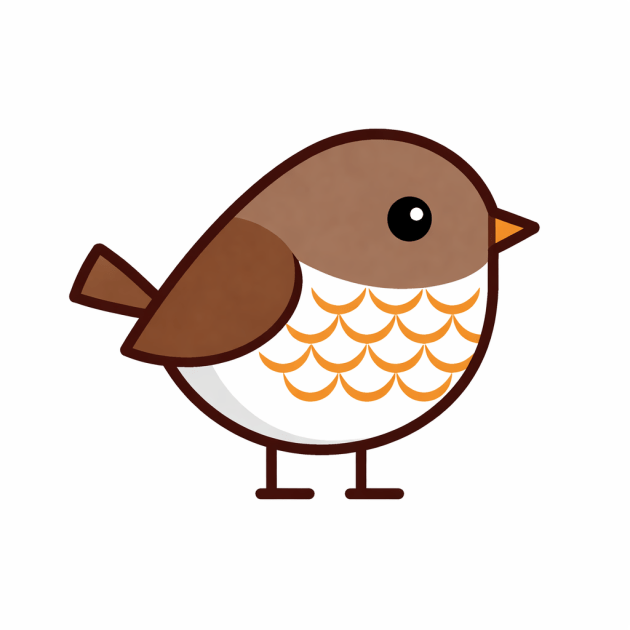
A slightly (but only slightly) less simplified illustration created by an actual person can be found here.
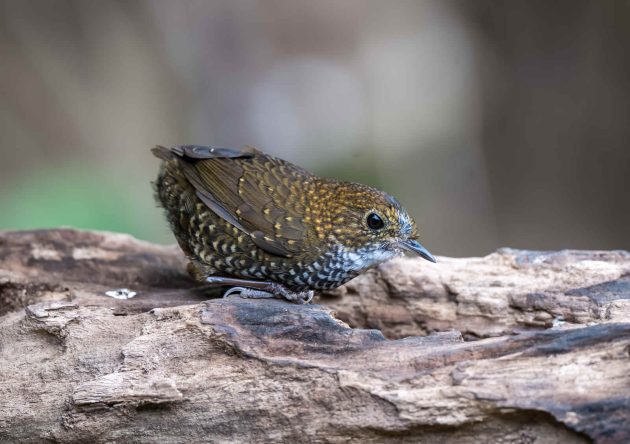
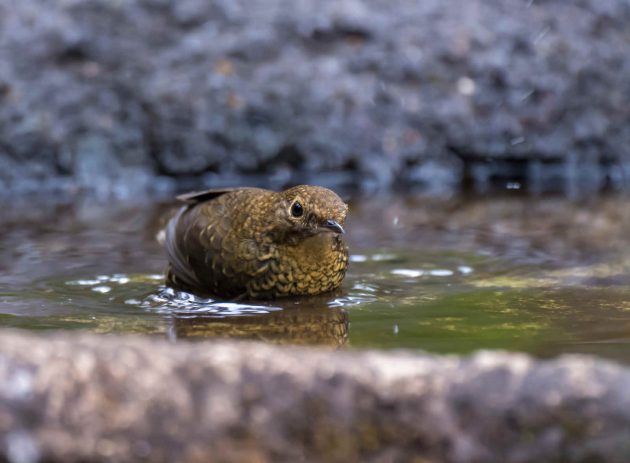
It is one of four existing cupwing species (the others are Taiwan, Nepal, and Pygmy Cupwing), which, to me, all look exactly the same, but which would still give somebody who is much more of a lister than I four separate moments of joy. Thus, for all four of them, the name “cupwing” is a suitable one – their wings indeed look like tiny cups pressed to the sides of their body.
In one paper featuring the species, Indian researchers asked, “Do trails affect nesting success?” Strangely, they then completely fail to address the question, only finding that 3 out of 5 nests near trails were unsuccessful, while not providing any data for nests away from such trails.
They do report on some stupid local folk wisdom, though – in the area where they did their research, apparently, there is a belief that if a young boy catches this bird alive, he is endowed with leadership qualities and could guide the whole tribe towards success. However, it appears to me that a tribe believing in this kind of superstition is unlikely to be highly successful.
Finally, on X (a source I do not usually use, the reason: Elon Musk), a person named Manishariprasad has a tweet on the cupwing which starts with the intriguing though somewhat disconcerting sentence “A Tiny Tiny thing that looks incapable of flight, and lives in dark, depressing, sunless undergrowth”. However, the link Google provides to this tweet is not working, so I will never know if the tweet moves further into describing the psychological impact on the bird’s soul, given its desolate habitat.
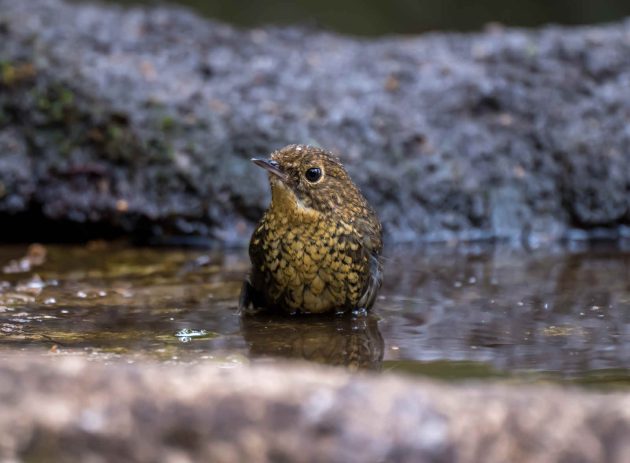
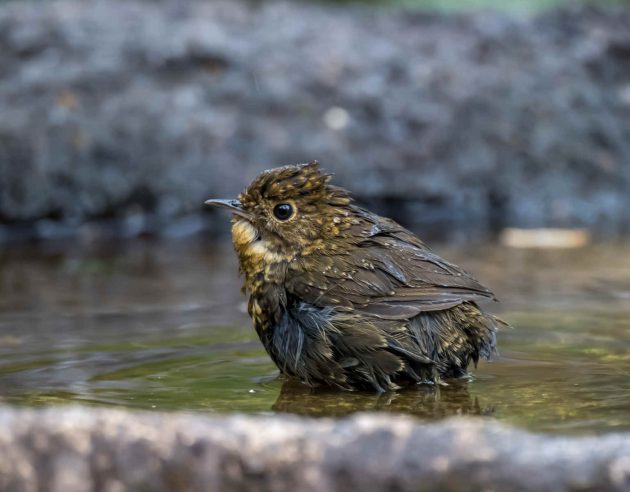
Photos taken at Baihualing, Yunnan, China in March 2026




Leave a Comment