
As Sri Lanka’s most popular birding site, Sinharaja is an essential stop for any birder visiting the country. However, probably 90% of birders visit the forest from its northern entrance in Kudawa (subject of my last post, and also covered in an excellent post on this site last year). In contrast, the forest’s southern edge near the town of Kudawa is mainly visited by non-birding tourists interested in seeing the rainforest on a day or one-night trip from the beaches of the south coast. Accordingly, this area offers a good tourist infrastructure but less expertise on stake-outs for special birds. This makes it quite interesting to visit, especially when you are not under time pressure to see as many endemics as possible within a few days.
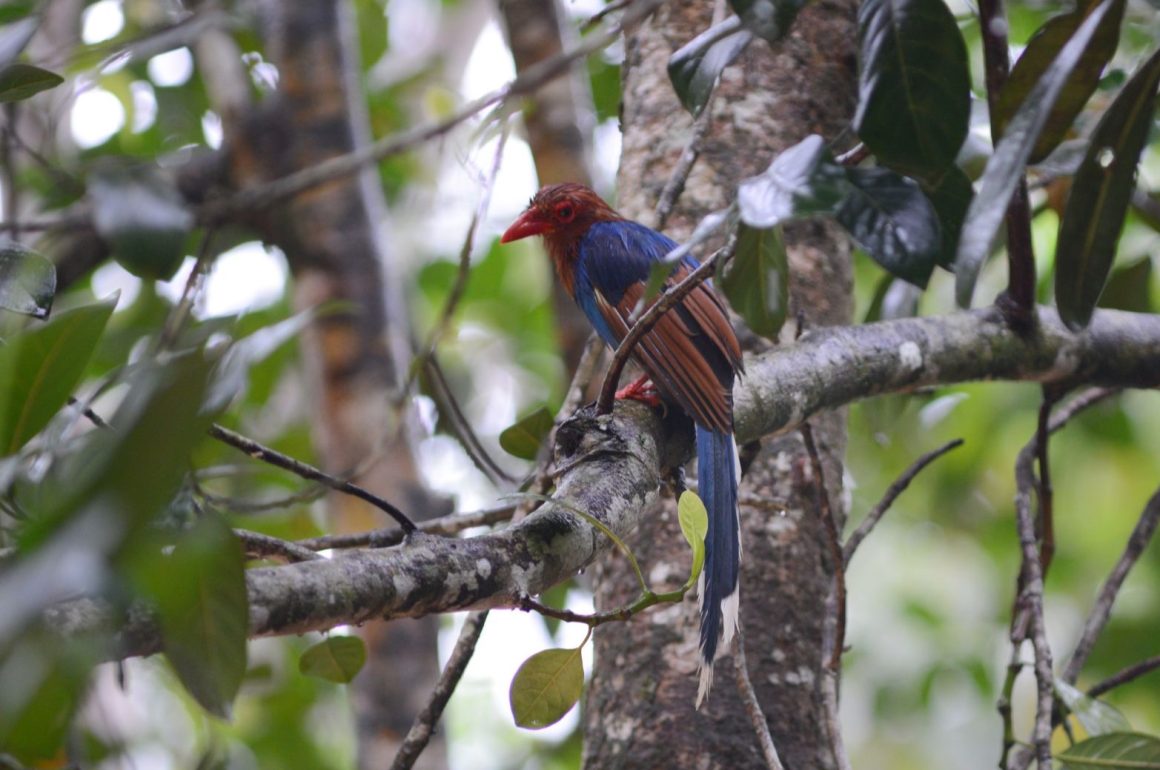
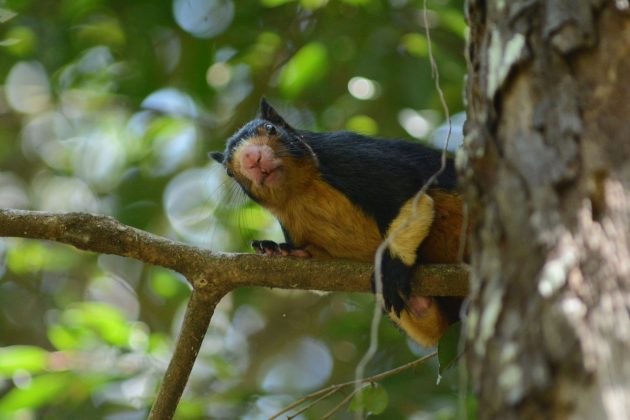
I initially thought that the drenched Sri Lanka Blue Magpie in this post’s featured image may be a good illustration of how birds on that side of the forest might feel about being enjoyed less by birders than those in the north. It then occurred to me however that they are probably quite eager to get fewer visitors, as much as they enjoy posing for photos. Either way, it seems that the priorities of other animals are skewed somewhat differently, such as this grizzled giant squirrel. Not sure if it put on this comical expression just for the photo or if this represents its resting face, but either way it seemed to be burning for a photo.
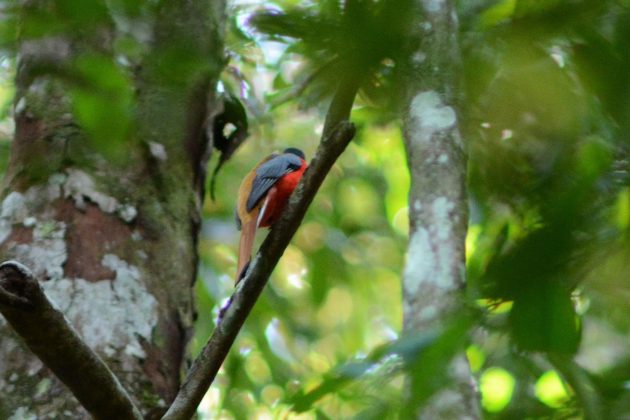
When not preoccupied by squirrels, a great bird to find in the canopy is the Malabar Trogon. Trogons are among my favourite groups of birds so whenever I see them, even rather distant sightings as when I took this photo, are very welcome. Most species seem to be a bit shy and turn around once they notice you so that you can’t take a photo of their bright red breast and belly. I’m not sure why as I think this is their main feature they can be proud of.
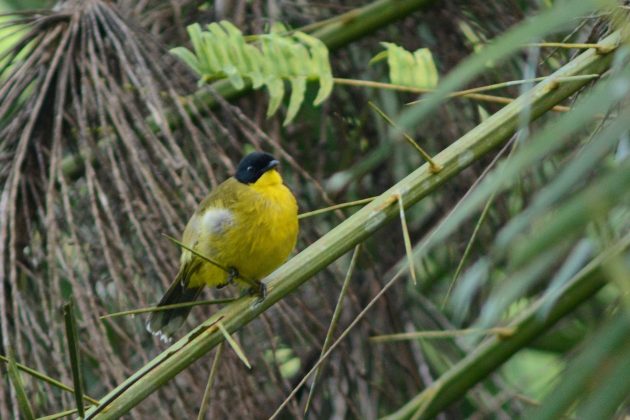
In the dense understorey and spiny rattan tangles, as well as on the forest edge, you’re likely to see the endemic Black-capped Bulbul. This bird is oddly reminiscent to a lemon in my opinion, and I can’t fathom why this bird wasn’t named Yellow-breasted Bulbul. Maybe because it would sound confusingly similar to the Yellow-bellied Bulbul? Or to the Yellow-throated Bulbul? Or they were worried that the Yellow-bellied Greenbul would be renamed to Yellow-bellied Bulbul and would then sound too similar? No wait, that doesn’t work as I just mentioned that a Yellow-bellied Bulbul already exists. Confusing bulbul names aside (my birding journal is full of strike-throughs when it comes to these…), this is a great bird to look at.
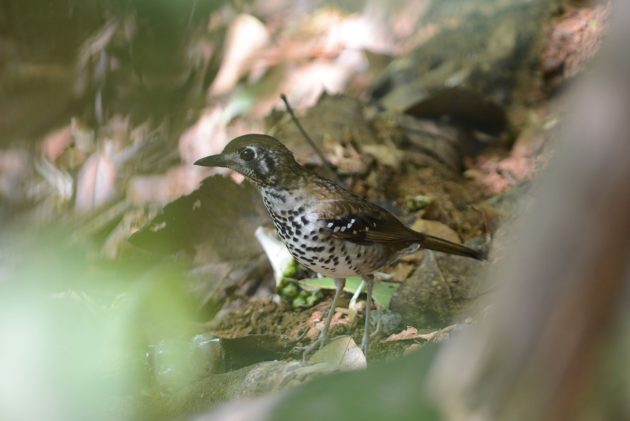
Amongst the leaf litter, Spot-winged Thrushes forage actively, and are often relatively tame. Unlike the bulbul, this bird is pretty intuitively named and is always fun to watch. It is way more abundant than the Sri Lanka Thrush (which – surprise – is endemic as well). The latter bird can in fact be the hardest of all Sri Lanka’s endemics to see.
While visited less often, Sinharaja’s southern entrance can deliver just as many birds. When you find yourself on the south coast with little time to spare, this is also definitely logistically the easiest option if you want to get a taste of the island’s tropical rainforest – and any birder worth their salt should want that!




Leave a Comment