

While that turned out to be wrong, unfortunately, it might still be the truth in the near future.
Takahe
Declared extinct in the late 19th century after intense hunting and habitat loss in New Zealand, until a small population was rediscovered in 1948 in remote Fiordland.
Bermuda Petrel
Thought extinct for nearly 300 years after early colonization of Bermuda, then rediscovered in 1951 nesting on offshore islets.
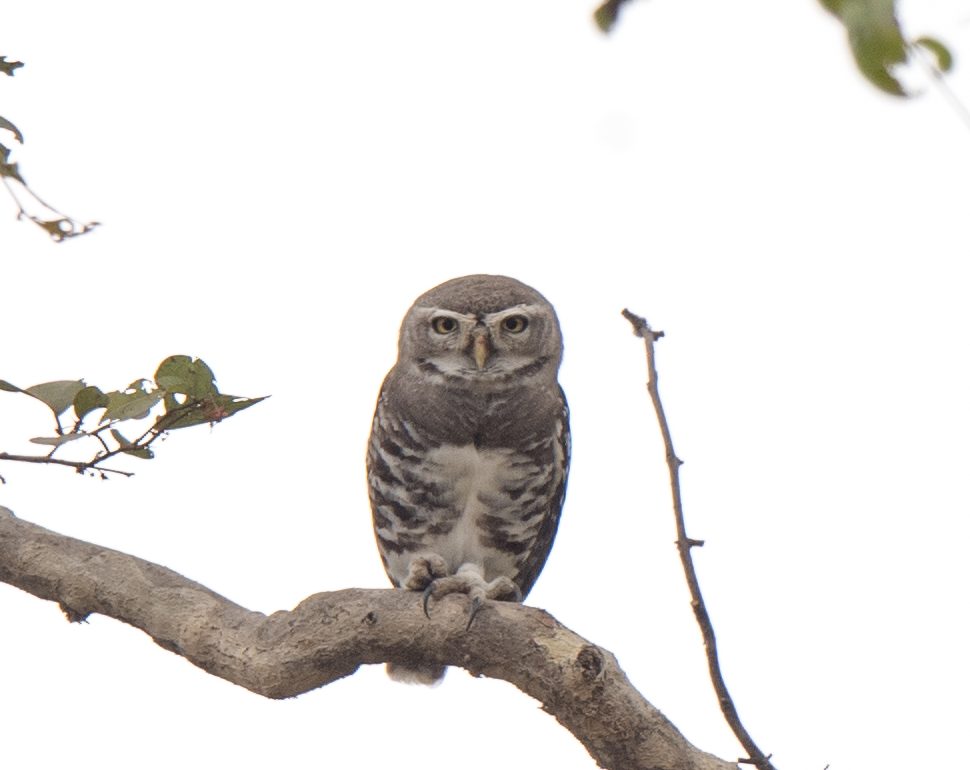
Forest Owlet
Known only from 19th-century specimens and presumed extinct for over a century until rediscovered in India in 1997.
New Zealand Storm Petrel
Known only from museum skins and assumed extinct for more than 150 years, until sightings and captures confirmed survival in 2003.
Madagascar Pochard
Feared extinct after decades without confirmed sightings until a tiny surviving population was found in 2006.
Jerdon’s Courser
Indian night bird unseen for much of the 20th century before rediscovery in 1986.
Guadalupe Storm Petrel
Long presumed extinct, recent acoustic and sight records hint it may still survive.
White-winged Flufftail
One of Africa’s rarest birds, repeatedly disappearing from known sites and feared lost before rediscoveries renewed conservation efforts.
Photo: Forest Owlet, Tansa, India











Wouldn’t it be great if we could rediscover populations of Eskimo and Slender-billed Curlews? Unfortunately the chances of doing so are tiny. I’d really like to see a Pink-headed Duck, too. I once met Jean Delacour, the last person to keep Pink-headed Ducks alive in his waterfowl collection, so I have at least met someone who knew them as live birds. They haven’t been seen for many decades, so the chances of them still existing are highly unlikely. Delacour’s birds were lost during the Second World War.
I would love to see an Ivory Billed Woodpecker although there are a few people in Louisiana who swear it’s still around.
Lazarus species. I have seen a few now, notably on São Tomé. Slender-billeds went extinct in my lifetime and in Europe which somehow feels worse.
Reading through the comments, I completely share the sentiment! While seeing an Ivory-billed Woodpecker or an Eskimo Curlew again feels like a distant dream, stories like the Takahe’s rediscovery in 1948 give you that tiny glimmer of hope that nature can still surprise us.