

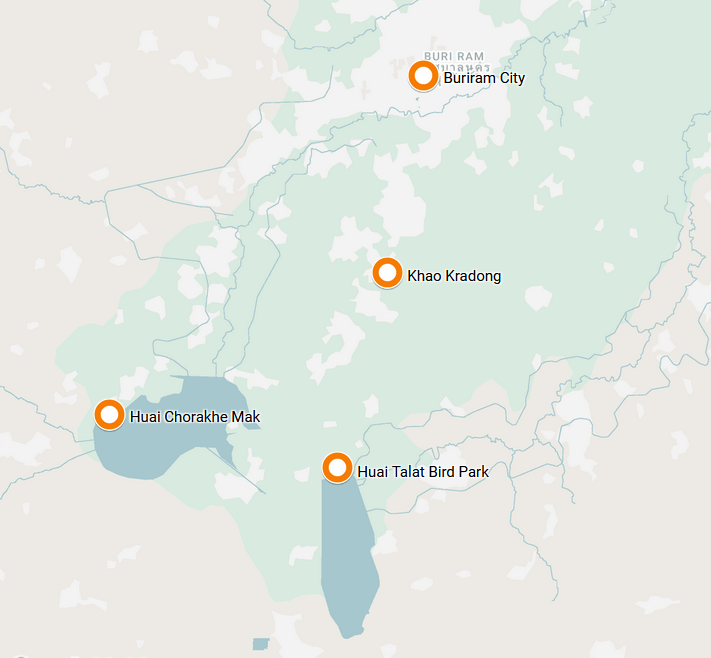
Buriram Province in northeast Thailand has become one of Southeast Asia’s most significant conservation destinations — and one of its least-known birding stops.
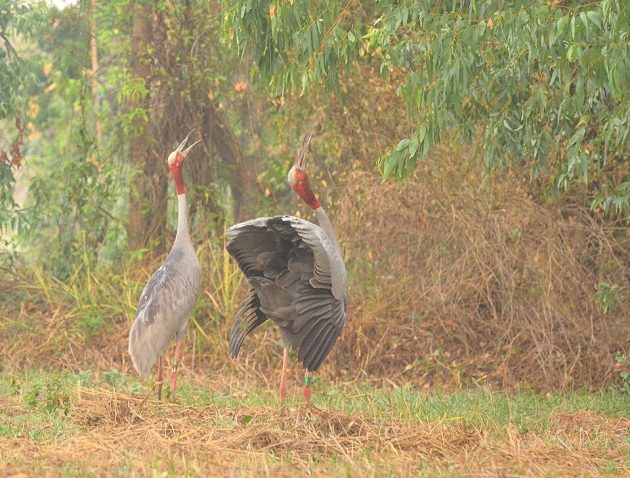
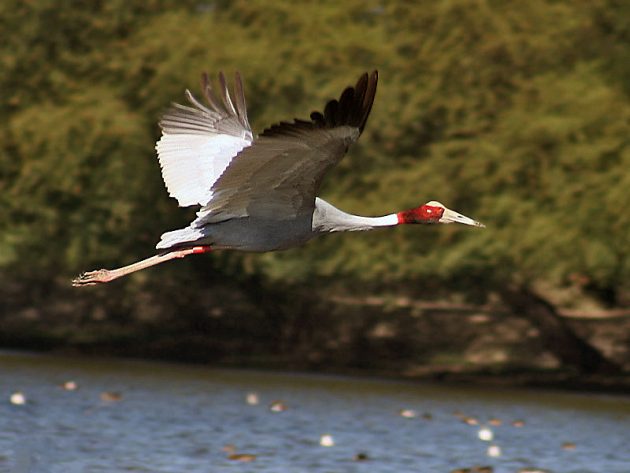
The headline story is one of the most remarkable in Asian ornithology: the complete extinction, and subsequent recovery, of the Eastern Sarus Crane in Thailand. The last wild birds disappeared in the late 1960s, lost to hunting, agricultural pesticides, and wetland loss. By 2011, a captive-breeding programme centred at Nakhon Ratchasima (Korat) Zoo had produced enough birds for the first reintroduction: twelve released at Huai Chorakhe Mak Reservoir, Buriram Province. By 2024, the wild population exceeded 168 birds, with nearly 50 born in the wild since the first wild-hatched chick in 2016. The International Crane Foundation has described the programme as potentially “the first self-sustaining crane population created by releases of captive-reared birds” — a world-first in crane conservation history.
Beyond the cranes, Buriram sits within striking distance of Phu Khieo Wildlife Sanctuary — one of mainland Southeast Asia’s finest remaining tracts of primary forest — and the wider Dong Phayayen–Khao Yai UNESCO World Heritage Forest Complex. A week based in Buriram gives access to crane wetlands, lowland forest, and montane forest, with a 100-species day a realistic target on any of the main sites.
Key Bird Species and Families
Wetlands (Huai Chorakhe Mak, Huai Talat and Sanam Bin reservoirs): – Eastern Sarus Crane Antigone antigone sharpii — 168+ wild birds; best at dawn and dusk – Cotton Pygmy-Goose Nettapus coromandelianus – Garganey Spatula querquedula (migrant, Oct–Mar) – Indian Spot-billed Duck Anas poecilorhyncha – Grey-headed Swamphen Porphyrio poliocephalus – Yellow Bittern Ixobrychus sinensis, Cinnamon Bittern I. cinnamomeus – Watercock Gallicrex cinerea – Shorebirds during migration windows (Oct–Nov and Feb–Mar)
Primary forest (Phu Khieo and Nam Nao): – White-winged Duck Asarcornis scutulatus (globally endangered; Phu Khieo lake is one of the most reliable accessible sites in Thailand) – Austen’s Brown Hornbill Anorrhinus austeni – Siamese Fireback Lophura diardi – Blue Pitta Hydrornis cyaneus – Coral-billed Ground Cuckoo Carpococcyx renauldi – Sultan Tit Melanochlora sultanea – Silver Pheasant Lophura nycthemera (Nam Nao; regularly seen along forest roads) – Great Slaty Woodpecker Mulleripicus pulverulentus – Red-headed Trogon Harpactes erythrocephalus – Eared Pitta Hydrornis phayrei
Best Regions for Birding
Huai Chorakhe Mak Reservoir (20 minutes south of Buriram city) The centrepiece of the crane reintroduction programme. The Wetland and Eastern Sarus Crane Learning Centre (free entry, 8 am–6 pm daily) has a four-storey observation tower, loan binoculars, and flat-bottomed e-pong boats for hire on the reservoir. Over 170 species recorded at the site. GPS: 14.9030°N, 103.0169°E.
Huai Talat Reservoir / Buriram Bird Park (~10km south of Buriram, Buriram–Prakhon Chai road). The second crane reintroduction wetland, closer to Buriram city than Huai Chorakhe Mak. Over 200 species recorded; November–April peak. An adjacent private aviary (locally called Suan Nok) coexists with the wild reservoir birding. Evening food vendors make it a natural dusk venue and a pleasant alternative to a second evening session at the learning centre.
Sanam Bin Reservoir (~40km south of Buriram, Prakhon Chai district). The third crane reintroduction wetland, along the same Route 219 corridor south of Buriram. Designated a No Hunting Area. No formal visitor infrastructure, but cranes are present for those willing to explore. GPS: 14.639614°N, 103.069381°E.
Khao Kradong Forest Park (6km from Buriram city) A compact IUCN Category V forest on an extinct volcanic plug, 265m above the rice plains. Offers a distinct habitat — bulbuls, flycatchers, barbets, woodland species absent from the open wetlands — plus a reservoir at the foot of the hill for waterbirds. The summit platform is the best elevated raptor-watch point near Buriram city. Best used as an hour-long stop between wetland sessions rather than a standalone destination.
Phu Khieo Wildlife Sanctuary (~2 hours west, Chaiyaphum Province) is among the most respected birding sites in mainland Southeast Asia and is worth the commitment. 1,560 km² of primary mixed deciduous and semi-evergreen forest; 419+ species recorded. An overnight stay is strongly recommended — the 2-hour drive each way makes a day trip punishing, and the best birding is at first light. White-winged Duck at the reserve’s lake is the signature target, reached via a 5km ranger-accompanied hike. Entry 200 baht; no entry after 4 pm; mobile reception absent inside the reserve. Also supports 120+ wild elephants, tigers, and clouded leopards.
Nam Nao National Park (~2.5 hours northwest, Phetchabun/Chaiyaphum border) 966 km² of montane forest adjoining Phu Khieo; 300+ species. More accessible for independent visitors than Phu Khieo. Silver Pheasant is the headline target, typically encountered along forest roads in the early morning. Best combined with Phu Khieo into a dedicated two-night extension — not a day trip from Buriram.
Best Birding Season
November to April is the most productive period overall. Crane numbers at Huai Chorakhe Mak are typically at their peak, migrants (Garganey, shorebirds) supplement the resident waterbird assemblage, and December to February offers the most comfortable field conditions — cool, dry mornings and blue skies. A WINGS Birding Tours group visiting in February 2026 counted 31 cranes at dusk and 21 the following morning.
July to September is the crane breeding season. Birds are paired and territorial; seeing chicks alongside adults is possible. Wetland vegetation is lush and waterbird diversity peaks, though afternoon rain is normal.
May to June is workable but harder going. Extreme heat, lower water levels, and less active birds in the middle of the day make the experience more demanding.
The sweet spot for combining crane wetlands, forest birding at Phu Khieo, and comfortable temperatures is November to March.
Birding Trip Suggestion(s)
Five-day Buriram Birding Circuit (base: Buriram city)
Day 1 — Arrive in Buriram. Late afternoon and dusk session at Huai Chorakhe Mak (3–6 pm): prime crane activity, best light on the water.
Day 2 — Dawn starts at Huai Chorakhe Mak (6–9 am; best birding of the trip). Boat hire is strongly recommended. Mid-morning: Khao Kradong Forest Park for woodland species and a raptor watch from the summit. Late afternoon/dusk: Huai Talat Reservoir (Buriram Bird Park) — 200+ species, second Sarus Crane site, pleasant dusk venue with food vendors on site.
Day 3 — Full day at Phu Khieo Wildlife Sanctuary. Leave Buriram by 6 am. Lake hike for White-winged Duck (ranger required; arrange at the visitor centre). Overnight near the reserve.
Day 4 — Morning at Phu Khieo or drive north to Nam Nao National Park for Silver Pheasant and montane forest species. Afternoon return to Buriram.
Day 5 — Second dawn session at Huai Chorakhe Mak for photography. Depart, or extend with a further night at Phu Khieo if the forest birding on Days 3–4 left unfinished business.
For visitors wanting professional guidance: WINGS Birding Tours (wingsbirds.com) runs an expert-led Thailand itinerary in February, limited to eight participants, with a dedicated two-day focus on Huai Chorakhe Mak. Thailand Bird Wildlife Tours (thailandbirdwildlifetours.com) offers a two-day, one-night Sarus Crane photography tour, including visits to participating farming families.
Practical Tips
- Minimum distance from cranes: 200 metres. Standard etiquette for protected birds helps keep them relaxed and behaving naturally.
- Best hours: 6–9 am and 3–6 pm. Midday is unproductive in all seasons — birds rest in the heat.
- Dusk is the most atmospheric session: cranes return to roost, calling as they come in, and the light on the reservoir can be extraordinary.
- Boat hire (e-pong flat-bottomed boats) is strongly recommended for waterbird observation at close quarters. Book in advance: +66 94 284 8087.
- A hire car is essential — no public transport serves Huai Chorakhe Mak. A car also unlocks Phu Khieo, Nam Nao, and the Khmer temple sites in the same trip.
- Doo Nok app (iOS/Android): developed specifically for this site with identification information for 500+ species recorded at the reservoir. Download before visiting.
- The Learning Centre has loaned binoculars available at no charge for visitors without their own.
- At Phu Khieo, ranger accompaniment is required for the lake hike. Arrange at the visitor centre on arrival. No mobile reception inside the reserve — download maps before entering.
Books
- A Field Guide to the Birds of Thailand — Craig Robson (Helm Field Guides)
- Birds of South-East Asia — Craig Robson (Princeton Field Guides) — broader regional reference with full coverage of northeast Thailand species
- The Doo Nok app functions as a practical site-specific field guide for Huai Chorakhe Mak
Links
- Full visitor guide to Huai Chorakhe Mak, including the conservation story: buriram.live/sarus-crane-buriram/
- Bird Conservation Society of Thailand (BCST): bcst.or.th
- International Crane Foundation: savingcranes.org
- WINGS Birding Tours (February Thailand tour): wingsbirds.com
- Thailand Bird Wildlife Tours (crane specialist, local): thailandbirdwildlifetours.com
- Thaibirding.com — Thailand birding community resource
- Doo Nok app — available on iOS App Store and Google Play
By Dan Moir
Dan Moir runs Buriram Live (buriram.live), an English-language guide to Buriram Province in northeast Thailand. He can be reached at dan@buriram.live.
Photos: CC-licensed crane images (KongkhamWichit CC BY-SA 4.0 pair-calling photo; J.M.Garg CC BY-SA 3.0 in-flight photo).






Leave a Comment