

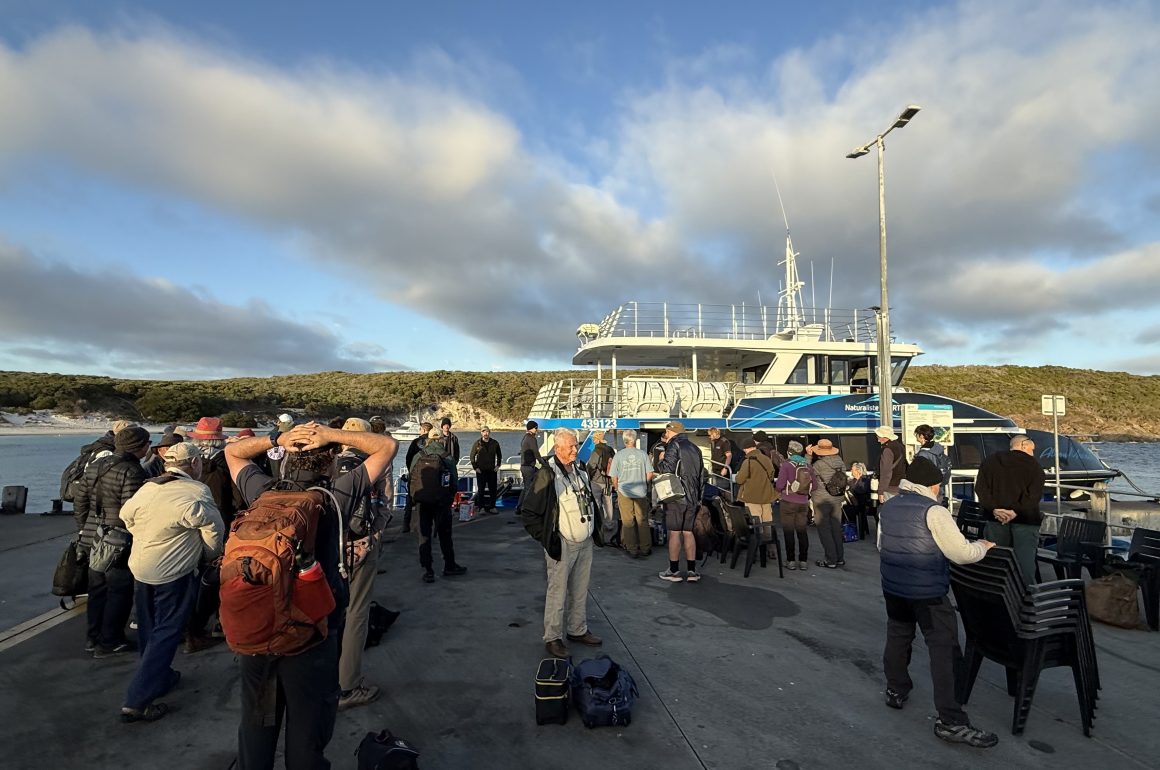
After quite a long period of absence I am back! Good to be writing for 10.000 Birds again, excited to share some stories, hope you enjoy them! I am currently based in Perth, Western Australia, pursuing a bachelor’s degree in marine biology, so I don’t have as much time to do international travelling, but I am not complaining as the avifauna here is very exciting and the land to explore is huge!
Seabirds have always been intriguing to me. Growing up by the Baltic sea, yearly migrations offered great viewings and observations of the many migrating birds that call the sea their home. But that mostly consisted of little black dots going back and forth at the horizon. The oceans that cover 70% of our planet, provide an incredible source of food and space for many different kinds of birds. For those, that depend on it, there is no replacement and although the “true” seabirds may be hard to observe by the general public as they are usually in quite remote places and require a boat to properly observe, they are there and are as important to the natural world, as the tomatoes in your garden are to you, if not even more;)
A few weeks ago by a very spontaneous decision I joined a pelagic birding trip out of Bremer Bay which is located in the south of Western Australia, just by the Southern Ocean. I had previously been on a pelagic birding boat off the coast of Norway, which I remember vividly as the captain was the nicest man ever, chucking a Fanta bottle attached to a rope overboard so it can cool down in the North Atlantics cool waters and we can all enjoy a cold beverage. That trip presented interesting birds but there was no chance of observing the most famous group of seabirds that has ever existed. The Albatrosses… Since the Southern Hemisphere of our world hosts most of the worlds seabirds, and almost all of the albatross species I was very excited to finally get the chance to observe these iconic birds here, in my adopted home, Western Australia.
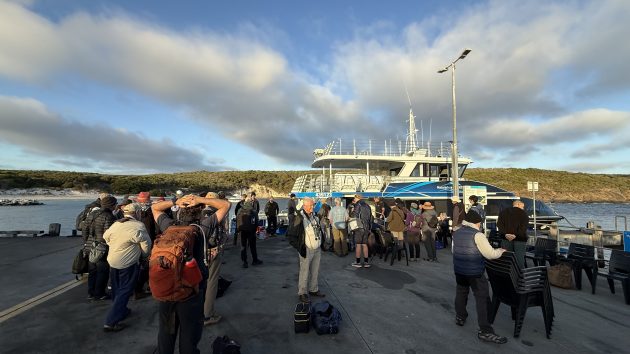
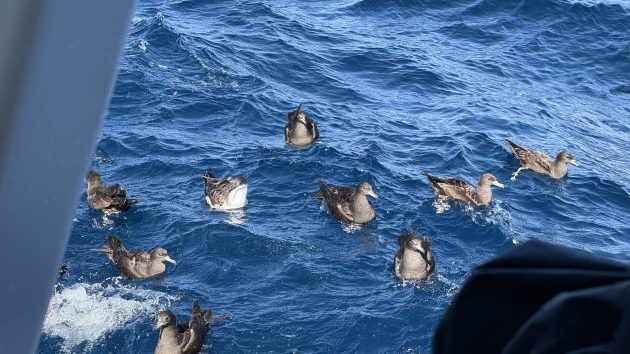
Early Friday morning, after making the drive down from Perth the previous day, I parked the car at Bremer Bay harbour and joined the quite big pile of people scouring around the ship that would take us all out to sea. After a brief explanation of the plan, people took their places and we were off. The ocean was quite bumpy that day with about 2-3m swells, with short periods and an easterly wind of about 20 knots. I had taken a sea sickness pill during breakfast, so I was not too worried about the rough seas. As soon as we left the harbour, a huge pod of dolphins greeted us and with Flesh-footed Shearwaters (Ardenna carneipes) tailing our boat, course was set south towards the Bremer Canyon approximately 70 kilometers off-shore. After about 15 minutes of sailing, first indication species that showed we were moving closer to deeper waters, arrived. A Soft-plumaged Petrel (Pterodroma mollis) glided past the front of the boat and caused the first shouts and stress of the day. On the way to the canyon I was thrilled to see my very first albatross. A Indian Yellow-nosed Albatross (Thalassarche carteri) appeared up on the horizon and glided closer to the boat. Due to their impressive wing span and shape of the wings, albatrosses do not need to flap their wings very often in order to fly. They stay close to the oceans surface, catch thermals radiating off the water and use the wind to glide great distances. Studies have shown that it takes approximately the same amount of energy for an albatross to fly as it does for it to stand on the ground. Thanks to this efficiency these birds can fly roughly 800 km a day, 16000 without landing and more than 1000000 kilometers in their lifetime. Absolutely mind blowing. I want to be an albatross.
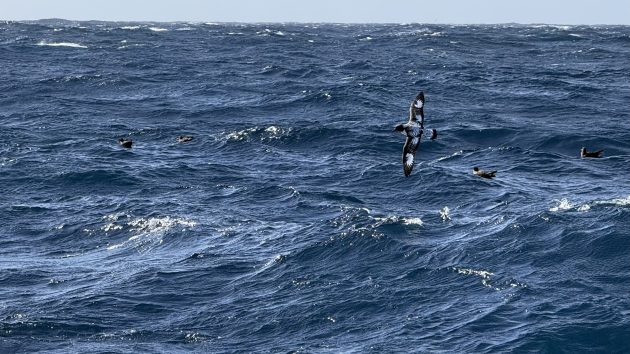
Many birds showed up during the journey to the canyon, Wilson’s Storm-Petrels (Oceanites oceanicus) they were trailing the boat and doing their unique “dancing” behaviour in which they patter their feet on the surface. Here is a link to a White-faced Storm-Petrel (Pelagodroma marina), which we also saw, “dancing” – https://www.youtube.com/watch?v=fmpm_rhji6k . Truly unique. A Pintado Petrel (Daption capense) caused a little chaos on the boat as it was the seasons first, and people got good views and photos. Although the star of the day was a Great Shearwater (Ardenna gravis) which suddenly appeared when we were at the canyon and chunks of fish were thrown overboard to attract the birds. Birders are enthusiastic people. Everyone does it differently, some just observe, some take photos or draw, some chase rarities to add to their lists and watch the numbers grow. I was just stepping down below deck to go to the bathroom (every out-of-the-ordinary bird appeared just as I was stepping away, as they always do) when a great shout washed over the boat – GREAT SHEARWATER, 8 O’CLOCK, 200 METERS, GOING RIGHT. Carnage. Pure carnage. People falling over, curse words flowing and cameras clicking. Nothing but pure love for the game right there, and although a bit funny from the side, understandable and lovely to see such a passion. The bird had deviated a long way from its typical range and not by just a little margin. Their range consists of the South Atlantic, and here it was, having crossed the whole Indian Ocean to find itself in front of us.
After having spent a couple of hours drifting with the current, we slowly started making our way back. A little pod of Killer Whales (Orcas) caught us by surprise, and although it was the first time I had ever seen one, I was barely keeping my eyes open with all the sea sickness pills, sun and rocking of the boat having an affect on me. I found a quiet spot, and took a lovely and what felt like a well deserved nap.
After docking, I went to have a look around town and find a Tawny-crowned Honeyeater (Gliciphila melanops). Bremer Bay is a very tranquil, isolated but at the same time, a very characteristic town. Surfers are going back and forth, wetsuits drying on the patios, and birders walking around town at the same time. Perfect mix if you ask me:) I reccommend keeping an eye out for these pelagic charters if you are ever travelling to this part of the world and also make sure to visit The Telegraph on Bremer cafe for some of their killer eggs benedict.
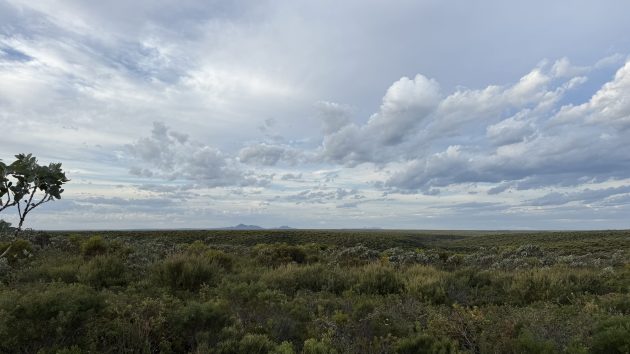
Overall, such a lovely experience in my first, proper pelagic birding trip. Bunch of new lifers, new friends made and a story to tell. I love seabirds, their wandering in the vast oceans and their unique adaptions to this unforgiving environment. As I am currently studying marine biology, I later hope to focus my career and time towards exploring more about these magnificent birds and hopefully gain heaps more stories to tell.
Here is the full checklist of all the birds that we saw with amazing photos from other participants – https://ebird.org/checklist/S325112851





Welcome back! Great post. I’d love to go on a pelagic trip, but bouncing around at sea is not for me.
Keep the stories coming Valters. This was a delight to read.
“Real birds eat squid.” Welcome to the world of seabirds and seabirding!