

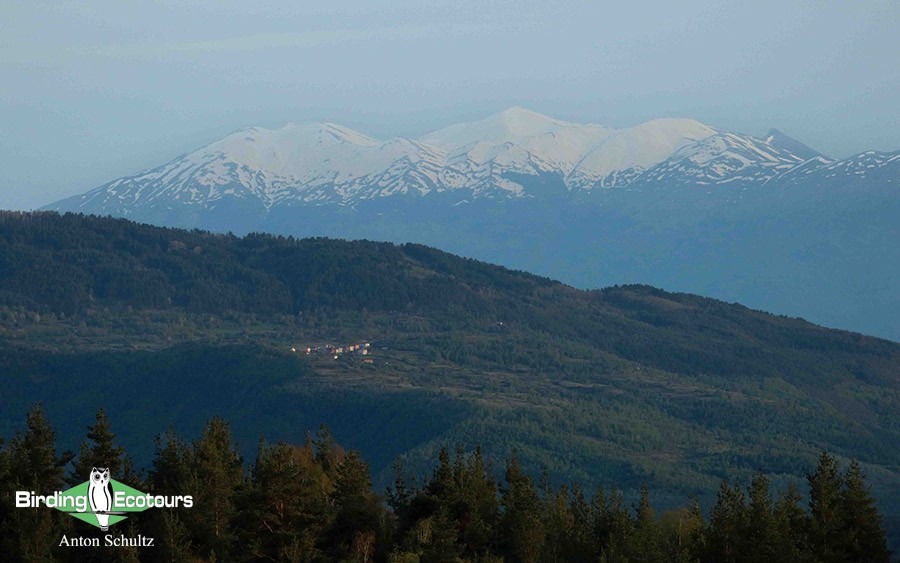
Anton Schultz is a bird guide at Birding Ecotours. He is based in South Africa and recently completed his honours degree in Zoology at the University of Pretoria, studying Red Larks in the desert. In 2019, Anton completed a Big Year in southern Africa, recording 804 species in one calendar year at the age of 19. Since then, his yearning for adventure has only continued to grow.
Bulgaria is probably best known among Western Palearctic listers for Red-breasted Goose, with northeastern Bulgaria historically being one of the species’ major wintering strongholds. Huge flocks have gathered here in the past, although in recent years the birds have tended to spend less time in Bulgaria and in lower concentrations, with many wintering farther north in Romania.
I would argue, however, that Bulgaria in springtime, particularly around May, is even more incredible, as a litany of species make their way back from wintering grounds across Africa and the Indian subcontinent. Some are simply passing through, while others are settling in to breed for the season. I would like to explain a few of those journeys here, to give you an idea of just how special this country is.
Starting in the southwest of the country, the legendary Trigrad Gorge is well known as one of Europe’s classic sites for getting good views of the sought-after Wallcreeper. These birds are largely altitudinal migrants, moving to lower elevations during winter before returning to their breeding cliffs as temperatures begin to rise in spring. At Trigrad, that means returning to the towering marble walls of this spectacular gorge in the Rhodope Mountains.
Finding these birds is no simple task, and it can require some patience. If you are parked near the main viewing site, your best bet is to wait below the sheer faces and scan carefully with a spotting scope. If you are lucky, you will probably first be alerted by the crimson wings of a Wallcreeper suddenly popping out against the grey surroundings, attached to an otherwise remarkably inconspicuous little grey bird. If you are even luckier, it may come closer, flicking those extraordinary wings open as it hops and flutters across the rock face in search of insects and spiders. Luckiest of all, however, must be the story I heard from our local guide of these birds sitting on the warm road and picking off insects in the afternoon light. It doesn’t get much more incredible than that!
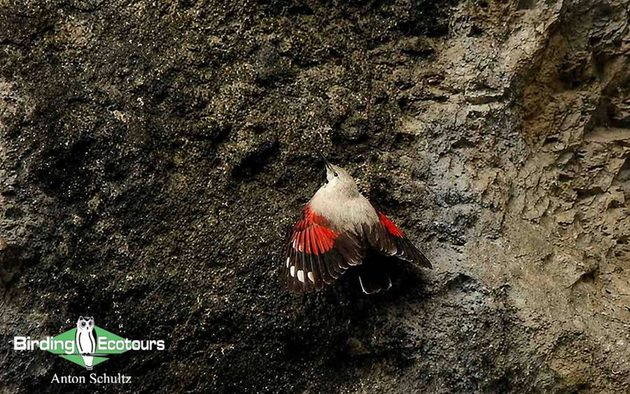
We were extremely lucky to get such close-up views of Wallcreeper at Trigrad Gorge in 2026.
Moving on to the Eastern Rhodopes, an incredible number of spring migrants return from their wintering grounds farther south, although the stars of the show must be the warblers of all shapes and sizes. Madzharovo Crater is probably the best-known site in the area. Here you can find the whistly Eastern Subalpine Warbler, back from its wintering grounds across the Sahel as it moves from bush to bush, while Eastern Orphean Warblers, returning from similarly arid wintering grounds farther east in Africa, tend to stick deeper in the scrub.
Barred Warbler can be particularly tricky in the drier, thornier areas, but eventually you may be rewarded with quite a large and distinctive shape, by warbler standards anyway. Speaking of thorny areas, this is where things become especially interesting for me. I am used to seeing extremely skulky, non-breeding Olive-tree Warblers in South Africa at the southern end of a migration that stretches all the way into southeastern Europe. Here, by contrast, one can see them darting from tree to tree through open valleys, often surprisingly out in the open. In the oak forests nearby, you may also pick up the dainty Eastern Bonelli’s Warbler, newly returned from wintering grounds centered around Sudan and Ethiopia.
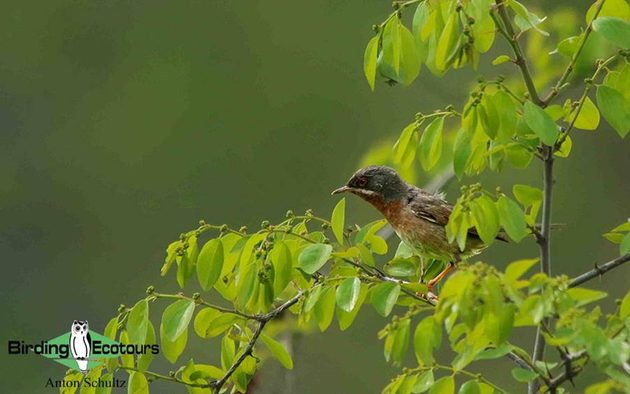
Eastern Subalpine Warblers are actually fairly numerous around the Eastern Rhodopes in springtime, but nonetheless adorable and difficult to nab a good sighting of.
As for the non-warblers, probably one of the biggest highlights here has to be the chance to see the Western Rock Nuthatch, which ranks highly among my greatest birding experiences. Similar to the Wallcreeper, seeing this bird can require a scope and some patience, but if you scan thoroughly enough, you may eventually be rewarded with the sight of a remarkable flask-shaped mud nest plastered onto the rock face, with a Western Rock Nuthatch coming and going regularly. It doesn’t get much better.
Finally, farther north along the Black Sea coast, Cape Kaliakra itself is a hotspot for birds passing through along the Via Pontica migration route. Here too, there is always the chance of an odd warbler dropping in on passage, or perhaps a Red-breasted Flycatcher if you are lucky, making its way back from wintering grounds across India and Pakistan. Then there is the Collared Flycatcher, arriving from an entirely different direction, having spent the northern winter in south-central Africa, particularly around Zambia and neighboring countries.
One of the greatest highlights here, however, has to be the possibility of a large flock of Rosy Starlings moving along the coast. These birds have travelled back from wintering grounds largely across the Indian subcontinent, and in some years, they settle around Kaliakra to breed, nesting colonially in cavities in the steep rocky shores.
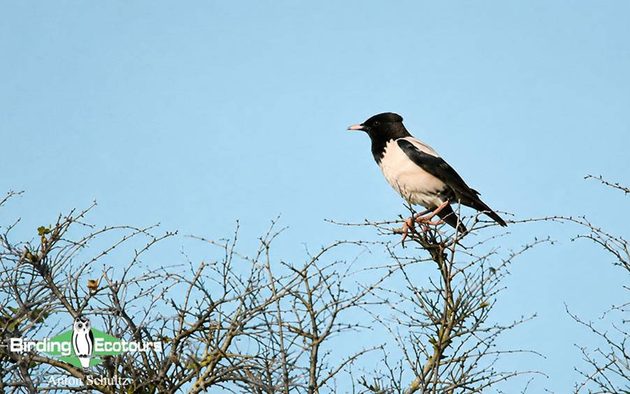
The stunning pink pastel tone on its underside and mantle makes the Rosy Starling one of the more unique-looking birds you can see worldwide.
For me, that is what makes Bulgaria in May so special. Within a relatively small country, you can watch birds arriving from South Africa, the Sahel, northeastern Africa, and the Indian subcontinent, while mountain species are moving back up towards their breeding grounds at the same time. Bulgaria might not immediately come to mind as one of the world’s great birding destinations, but standing there in spring, watching all of these journeys converge, it is difficult not to fall a little bit in love with it. I’m excited to be heading back there in 2027!









Leave a Comment