

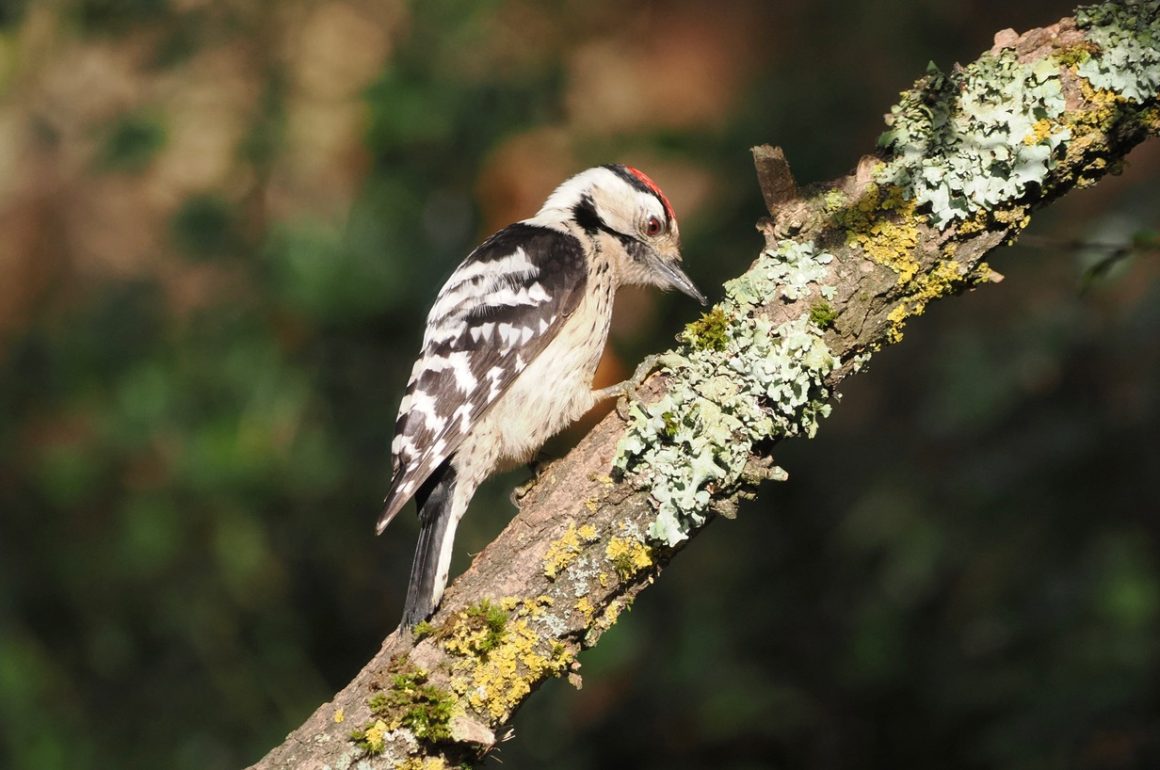
Though the sighting occurred many decades ago when I was just eight years old, my first Lesser Spotted Woodpecker remains etched into my memory. The bird appeared in an apple tree in a friend’s garden, and I remember being fascinated by how tiny it was – no bigger than a sparrow – while its distinctive barred back was a fine field mark. At the time I had never seen a Great Spotted Woodpecker: I was to see my first one a year later while on holiday in Germany.
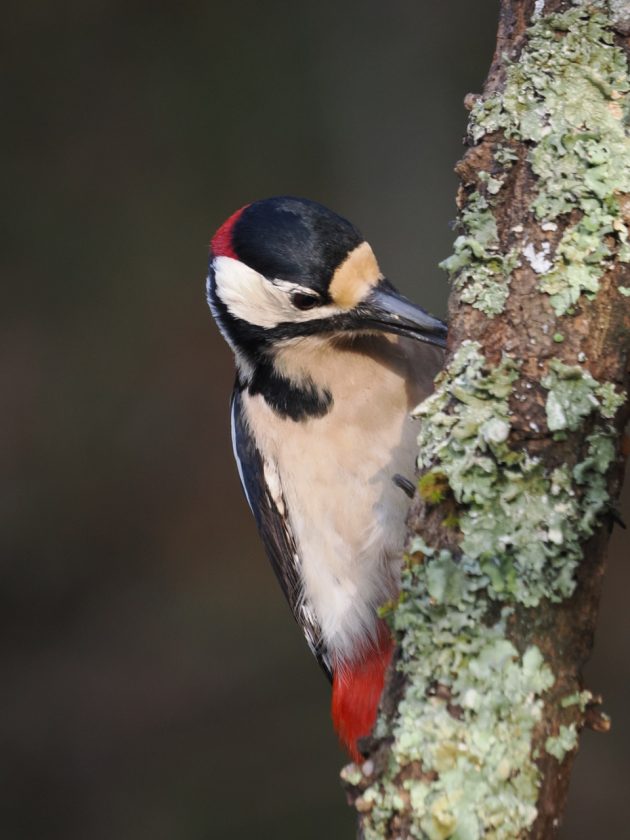
The red patch on nape indicates that this is a male Great Spotted Woodpecker
Today there are unlikely to be any young birdwatchers in Britain who see their first Lesser Spotted Woodpecker before their first Great Spotted, for the former has become a rare bird that has disappeared from places where it was once quite common, while the Great Spotted is now a familiar species to many people, for it comes to gardens where it is attracted to feeders. Its population has quadrupled in the last few decades, and this century it has even colonised Ireland, which was previously a woodpecker-free zone.
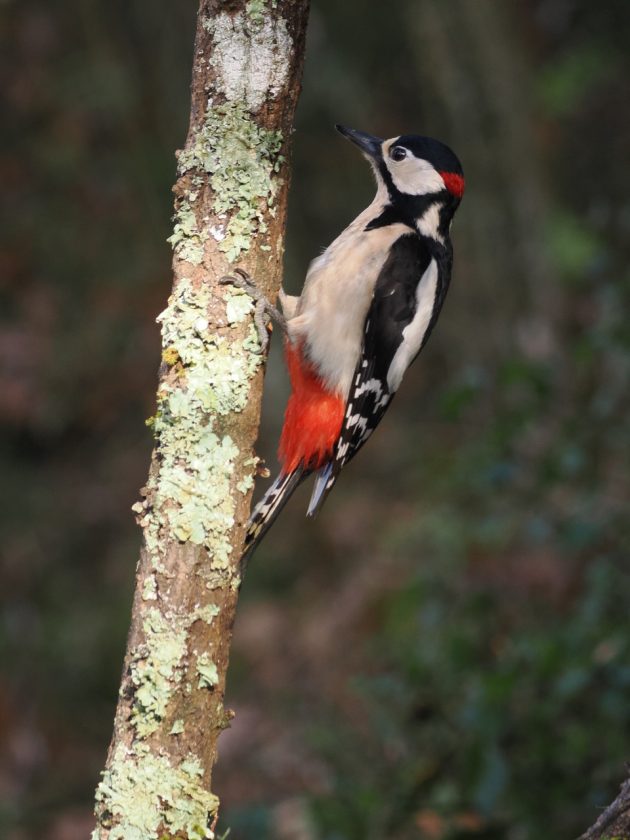
Great Spotted Woodpecker
It’s some years since I last saw a Lesser Spotted Woodpecker in my home county of Suffolk, though it’s a bird that I still see regularly on the continent. The European Breeding Atlas 2 (2020) notes that this species has suffered long-term declines in France and Germany, as well as Britain, and in Sweden since 2012. Worryingly, nobody really knows why its population is shrinking.
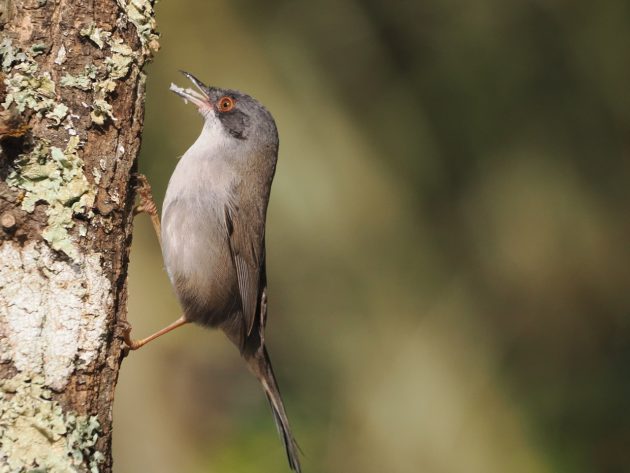
Female Sardinian Warbler
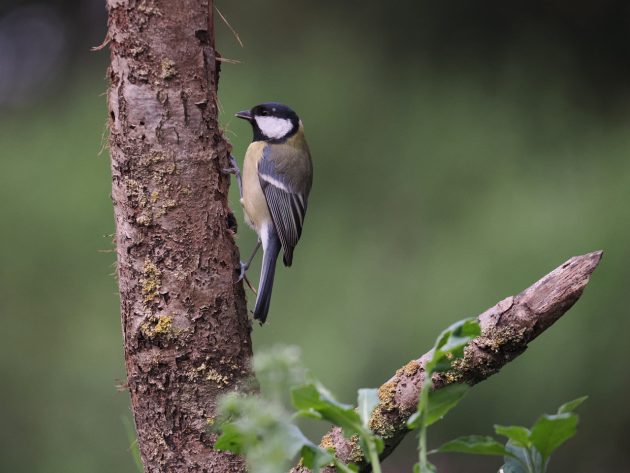
Great Tit, a familiar bird from home
Fortunately it’s not all doom and gloom, for Europe’s smallest woodpecker has expanded its range this century in both Spain and Portugal, as well as Italy. It’s now difficult to see a Lesser Spotted in England, let alone photograph one, so last month I went to Catalonia in Spain to try my luck there. To be honest there wasn’t really a lot of luck in it, as I went to a woodland hide not far from Barcelona where these woodpeckers are regular visitors. However, much of the excitement and challenge of bird photography comes from its unpredictable nature: nothing is ever guaranteed.
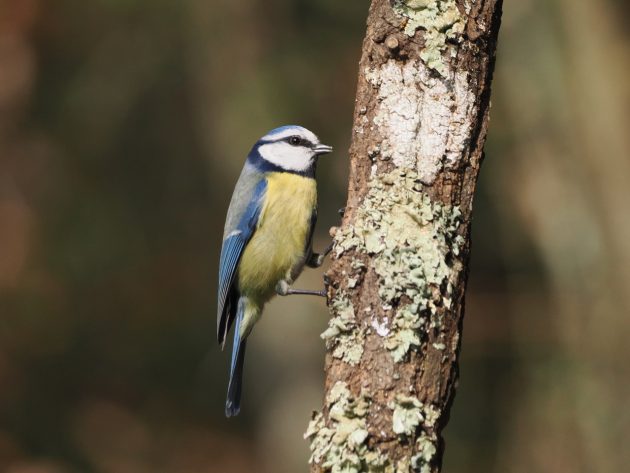
I didn’t really come to Spain to photograph Blue Tits – they are common in my garden at home
The hide was situated in an area of young, scrubby woodland where the predominant trees were a mixture of deciduous and evergreen oak, holly and birch. Our guide met us at 7am and led us to the hide on a cool morning when the weather seemed undecided between rain and sun. It eventually opted for the latter. On the short walk to the hide we noted the rootings of wild boar, and heard a distant Iberian Green Woodpecker singing, competing with Blackbirds, Great Tits and Chaffinches.
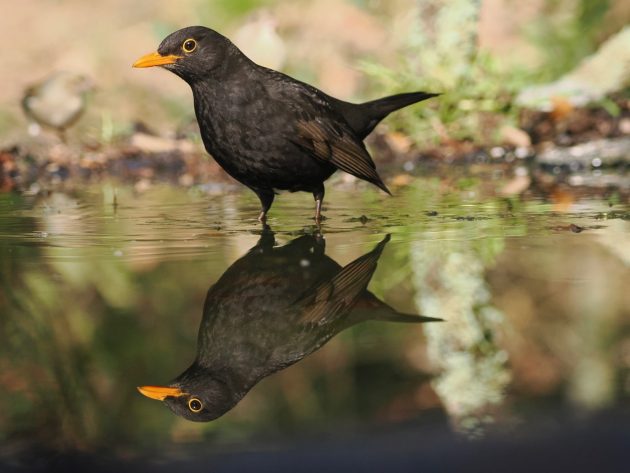
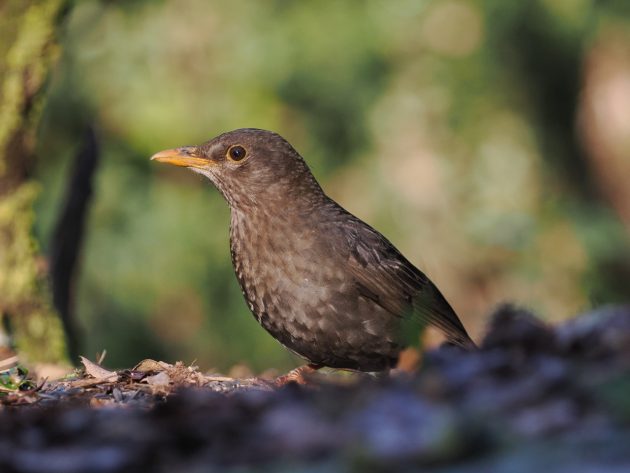
Cock Blackbird (above) and a hen below
Alas, the Green Woodpecker never came within sight of the hide. For the first hour we were entertained by a variety of woodland birds, the great majority of which were species familiar from home. Greenfinches and Chaffinches, Blackbirds and Robins, Blue Tits and Great Tits were constant visitors, as was a Nuthatch. A reminder that we were in Spain, not England, was a female Sardinian Warbler that appeared every now and again. She was a shy bird and never lingered.
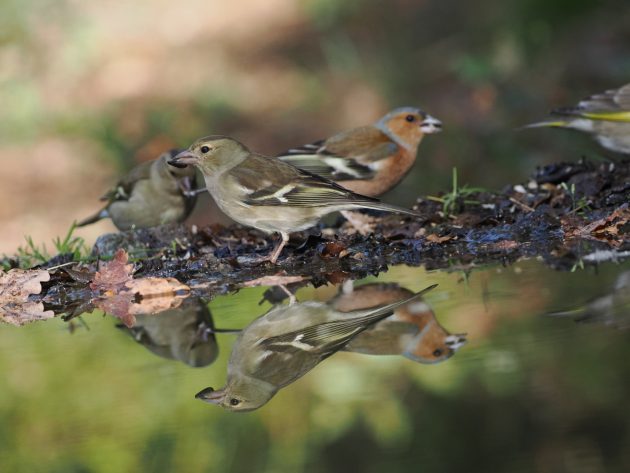
Chaffinches
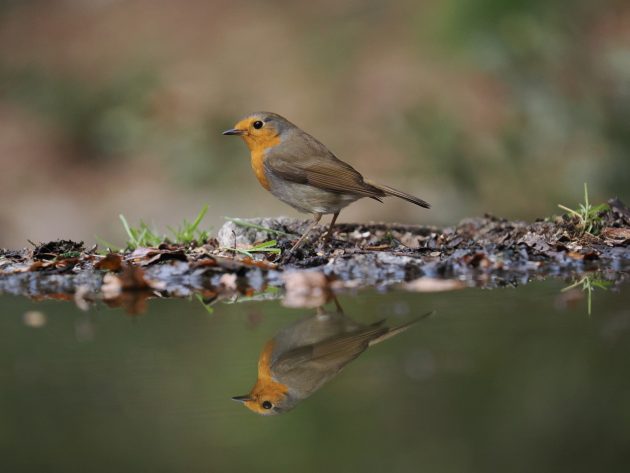
European robin
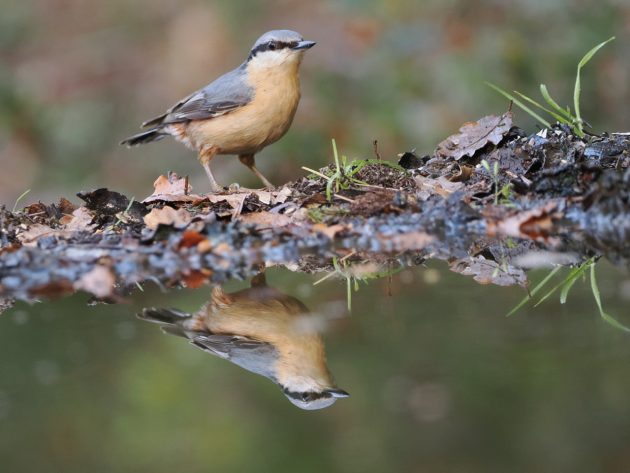
Nuthatch, an active and frequent visitor in front of the hide
We had only been in the hide for a mere half hour when the first woodpecker arrived – a male Great Spotted. I’ve photographed these woodpeckers many times, but it’s difficult to resist pointing your lens at such a handsome bird, with its bold black-and-white and scarlet plumage. The red patch on the nape indicated that this indivdual was a male, as the female lacks this patch of colour.
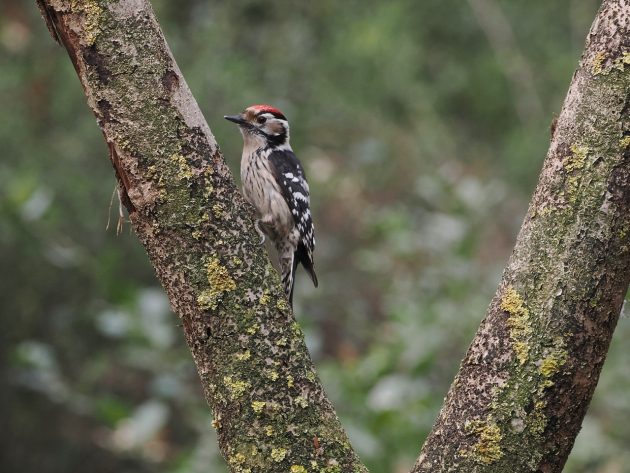
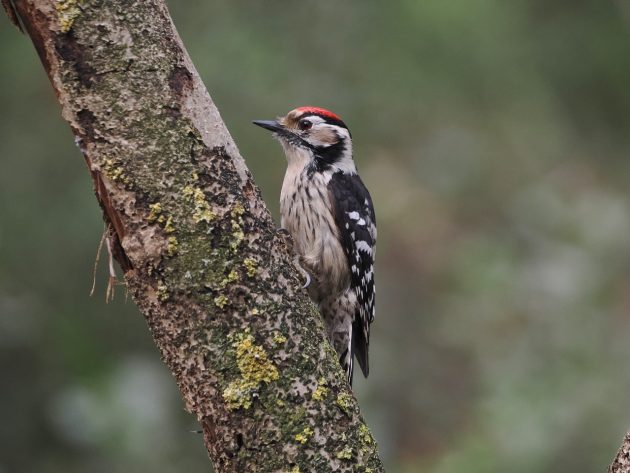
Our quarry appears: a Lesser Spotted Woodpecker
It was nearly an hour later that our quarry suddenly appeared: a beautiful little male Lesser Spotted Woodpecker. When you have travelled a long way to photograph a bird there’s a great feeling of relief when you eventually manage to point your camera at it. It stayed for barely a minute, but it was long enough for some pleasing photography, while there was just sufficient sunshine for a highlight to appear in the bird’s eye. These diminutive woodpeckers are always a delight to see, and to be able to watch one at such close range was a real treat. An hour later what we presumed was the same bird came back, and this time stayed a little longer. His mate – assuming he had one – never appeared. Was she already on eggs?
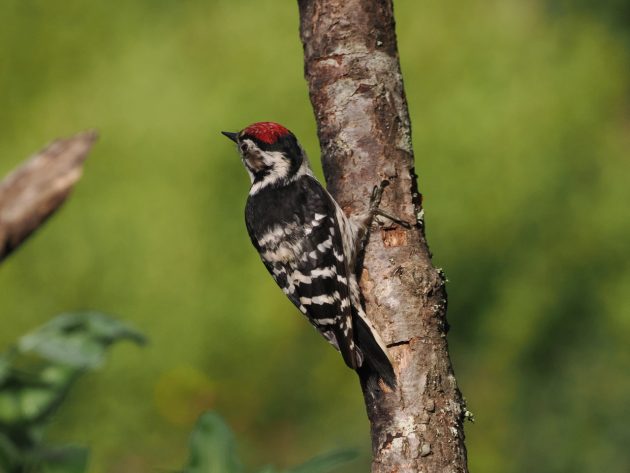
The Lesser Spotted Woodpecker was once known as the Barred Woodpecker because of its barred back
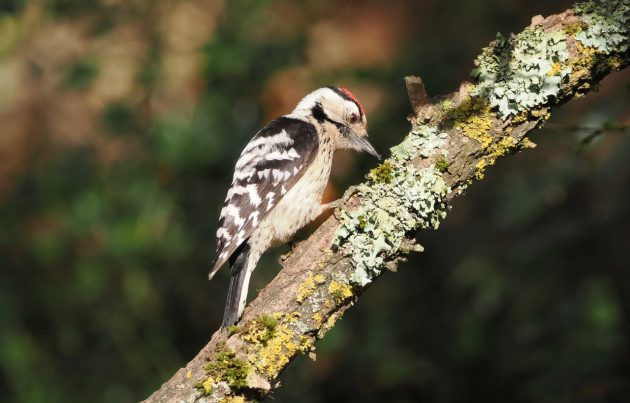
Hide photography is always fascinating, as you never really know what might turn up. We were delighted when an unexpected pair of Hawfinches appeared, and for a couple of minutes foraged with the Greenfinches in front of the hide.
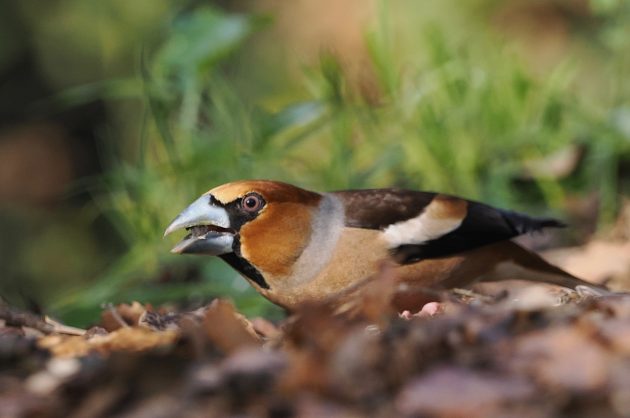
Cock Hawfinch: the owner of an impressive beak
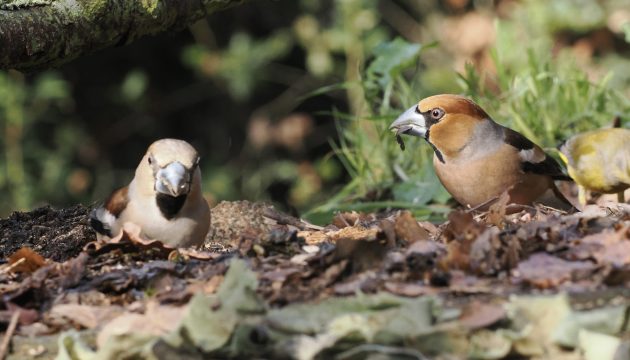
The Hawfinch came with his mate
When I photograph birds I try and avoid frame filling shots, but this was difficult with the Hawfinches, for not only were they near the hide, but they were in close company with the Greenfinches. To exclude the latter from the photographs I ended up with the shot you see here. However, Hawfinches, with their disproportionate nutcracker beaks, almost lend themselves to such portraits.
The Lesser Spotted Woodpecker made his third and final appearance at around 10am. We had another two hours in the hide, but never saw him again. However, we had one last surprise when a cock Cirl Bunting came for a drink, just minutes before our morning’s session finished. Though quite common birds in Spain, these buntings tend to be shy so not easy to photograph. He was, you might say, the bonus bird which helped make our visit to the hide both successful and memorable.
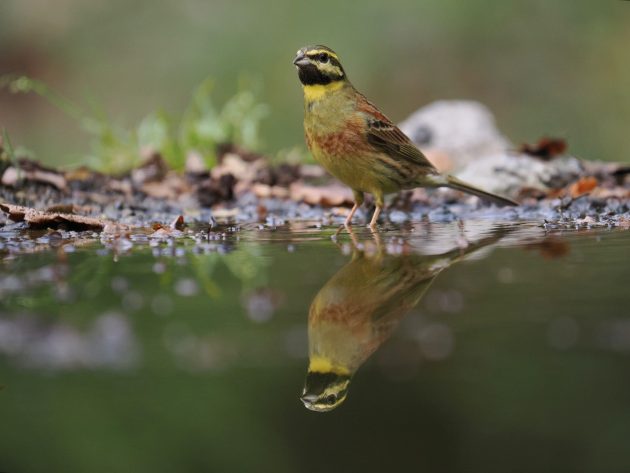
A cock Cirl Bunting, a late and unexpected visitor
My thanks to my companion David Tipling for organising this trip to Spain. The hide we used is one of almost 100 throughout Spain managed by Photo Logistics (www.photo-logistics.com).






The Cirl Bunting is a beauty!
As I am in the U.S. northern Minnesota, this was so interesting and fun. Your Robin is similar but not, same colors just a bit rearranged and we refer to it Robin Red breast. The breast color stopws at the top of chest and then goes to white. The Hawkfinch is very similar to our Grossbeak ! We have a variety of Grossbeaks in varying colors, the body shape and that beak are a give away! Yours is most similar in color to our Evening Grossbeak. Our Nuthatches are in two sizes, one of which is tiny. Both are very similar in color and marking as yours. Love to watch them scramble up and down trees mostly upside down. Your Great Tit, though I can’t tell size, is colored and marked like our Chickadee, of which we have two in differing size. I have never seen a Lesser Spotted , so tiny would be so fun to see one . Thanks!