

By Jess Costa
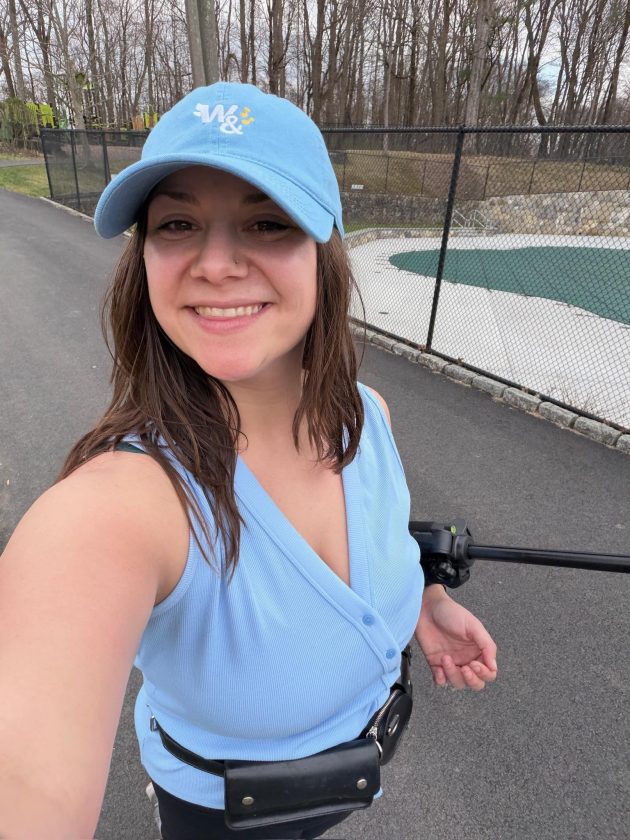
A storyteller on the Wings & Whistles team who believes genuine connection and a slightly silly point of view can cut through the noise. With ten years in film production, Jess shapes stories that feel human, organic, and helps people feel a little less alone.
New York tumbled into spring, with only a few wavering days bringing us back to winter. Just like the birds returning to my backyard, I’m flocking outside to soak up the midday heat. I’m lucky that I get to joke with my friends, fellow birders themselves, that this fascination and skill really sneaks up on you. Today, I’m able to pull out more threads instead of passively thinking, “Oh, that’s a bird.” It’s like when I started going to more orchestral concerts, the perks of dating a trombonist. Before I knew what I was listening for, a lot of the pieces blended. Then, through him, I learned about the warmth and support the trombone’s sound gives to an orchestra. Now I can hear that throughline and pick out the trombone in a crowd.
That’s what it feels like to be a birder.
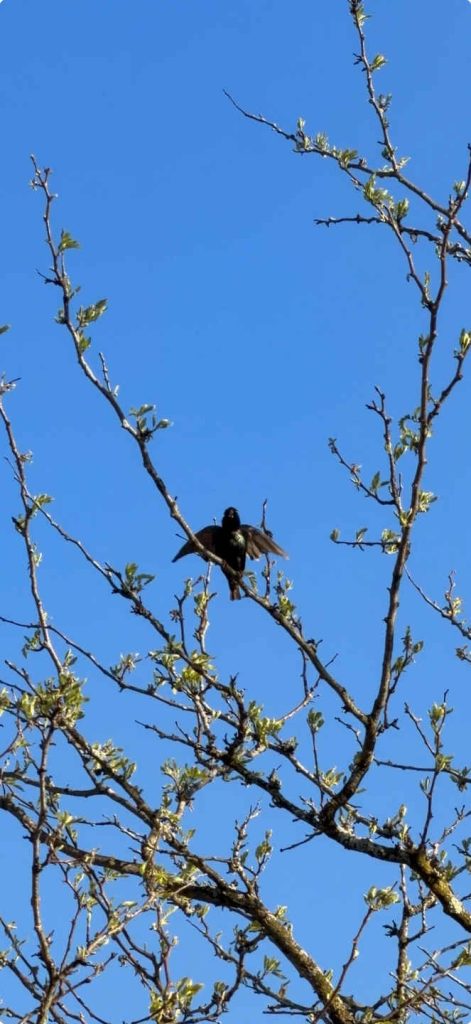
I have been birding for officially a year, and spring has become a whole new world. I went from knowing the classics, cardinal, blue jay, robin, crow, to picking out my feathery friends’ hellos on my runs. I’m looking at you, House Finch and Downy Woodpecker!
Birding has taught me to be aware of my environment. The extra engagement it takes to pause and listen is something I take for granted some days. A sound-wizard mentor of mine, Carl Welden, jokes, “We only notice our ears when they’re cold.” Tuning into my world taught me the language of my living surroundings.
Truthfully, this birding journey began by supporting my friend’s app, Wings & Whistles. I’d wander my backyard, catching chirps with glee. But my spark bird, the bird that really catapulted me into birding, had this froggy call overhead. Trying to catch another chirp, thinking that the other call was my reptilian friend, I met the Fish Crow. The strange delight that rose over me in that moment changed it all. This giant crow could ribbit with the best of the frogs.
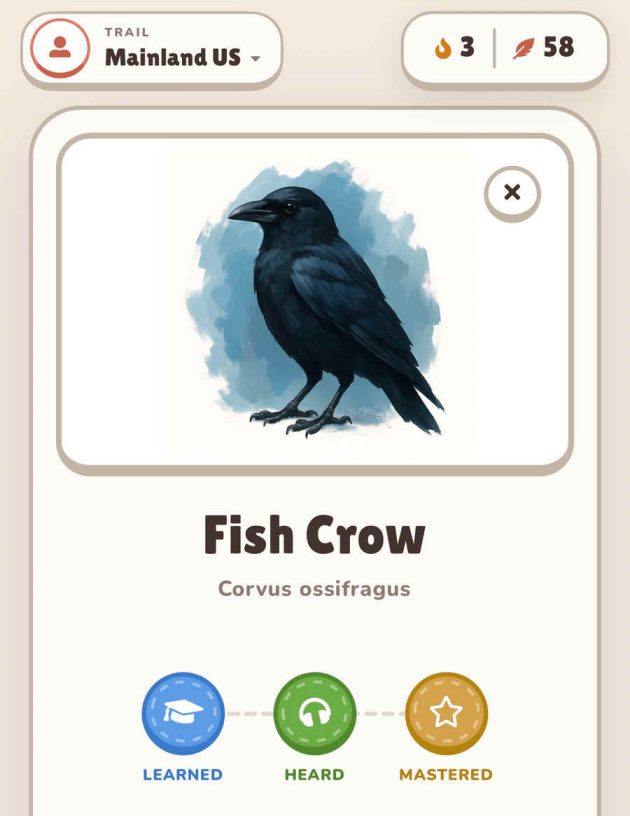
So now when I hear that ribbit echo through my yard, I look up instead of around, their shadowed forms silhouetting the overcast sky. They were one of the neighbors who kept me company through the winter.
I’ve always been a learn-by-doing kid. I need to get my hands dirty, or birdy, to understand. Wings and Whistles’ record ID was such an easy intro point: record a chirp to know their name. But I wanted to go beyond asking my device each time. I wanted to learn how to bird by ear. I’ve tried some field guides, but as a complete beginner in this space, I feel like I need a guide to understand them. But I guess that’s the one-to-one of giving someone a dictionary and then asking them to speak. Wings & Whistles: Learning Journeys is the middle ground I was looking for. It feels like the space I’ve been wanting to prepare my ears for what I’m trying to pick up in the field.
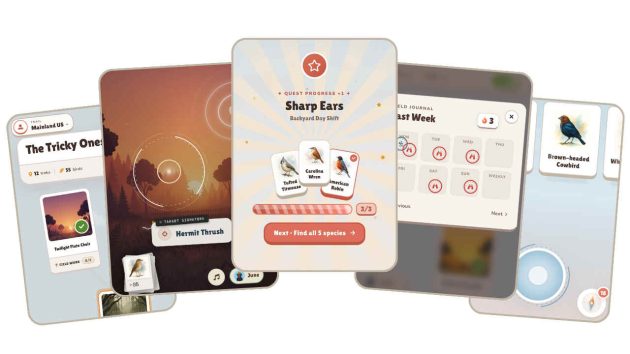
When I tried Learning Journeys, every round taught me 5 birds in 5 minutes. I’d work through the quizzes, feeling proud of my score, but I wondered how much it would really stick in the wild. Then I remember doing the Finch Clinic round, and I learned what a warble was: the chaotic blend of notes hopping around. A few days later, I was out on a run and heard that messy call: the House Finch. And now picture me on my run, holding my phone up to record an ID to confirm. I was amazed at the connection. I learned 5 bird calls, AND I got to fully engage with one. Wings & Whistles prepared me.
Birding is a language, and Wings & Whistles: Learning Journeys are the Duolingo of the bird world, so… want to learn to speak bird?



Leave a Comment