
Which bird species do you think is the biggest attraction to visitors of your lodge?
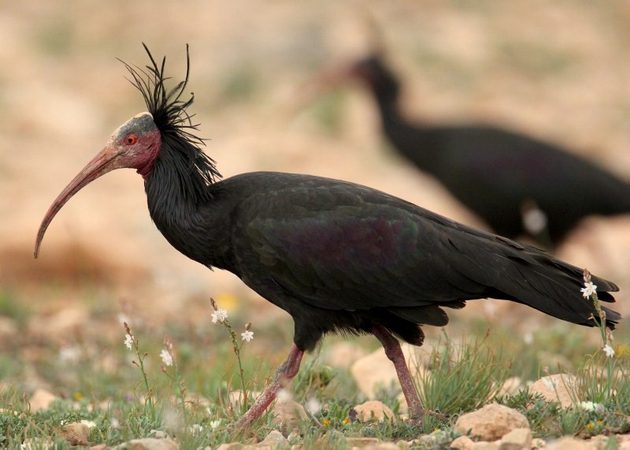
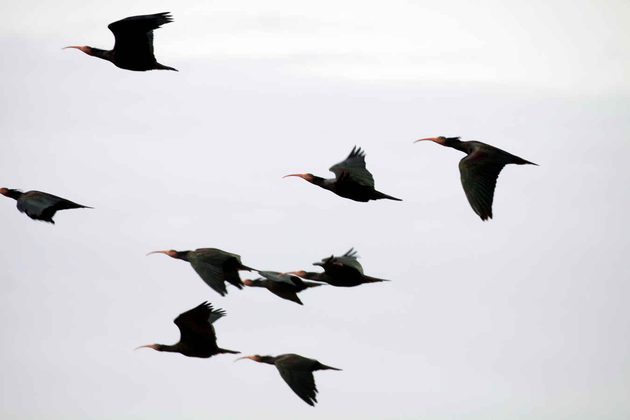
Northern Bald Ibis (Geronticus eremita): The Northern Bald Ibis is unquestionably the flagship bird of our region and one of the main reasons international birdwatchers visit south-western Morocco.
Atlas Kasbah is ideally situated for exploring the areas around Agadir and the Souss-Massa coast where this remarkable species can be observed. The Souss-Massa region is one of the world’s key strongholds for the wild Northern Bald Ibis, and the species has become a symbol of bird conservation in Morocco. The Souss-Massa National Park is particularly important for the species and its habitat. Visit Morocco
What is the name of your lodge, and since when has your lodge been operating?
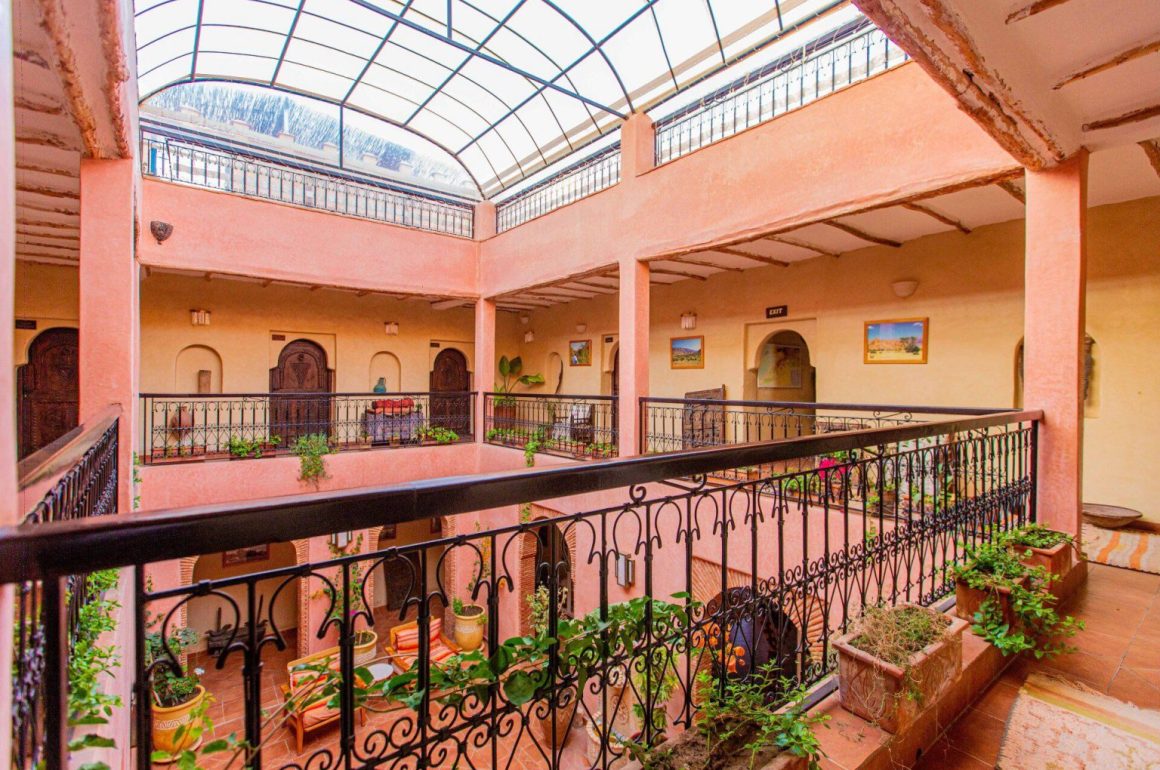
Our lodge is Atlas Kasbah Ecolodge, near Agadir in south-western Morocco. Atlas Kasbah has been welcoming guests since 2009. It was created as an ecolodge with a strong commitment to responsible tourism, environmental protection, and the preservation of the local Amazigh cultural heritage. We are located in the countryside outside Agadir, in the UNESCO Arganeraie Biosphere Reserve, a vast protected landscape between the Atlantic, the High Atlas and the Anti-Atlas.
The argan tree (Argania spinosa) is endemic to south-western Morocco, and the argan ecosystem supports exceptional biodiversity. The Arganeraie Biosphere Reserve was designated by UNESCO in 1998.
Our location is particularly interesting for birdwatchers because very different ecosystems are accessible from Atlas Kasbah: argan forest and farmland, the Souss Valley, semi-arid landscapes, mountains, Atlantic cliffs and beaches, river estuaries and the wetlands of Souss-Massa National Park.
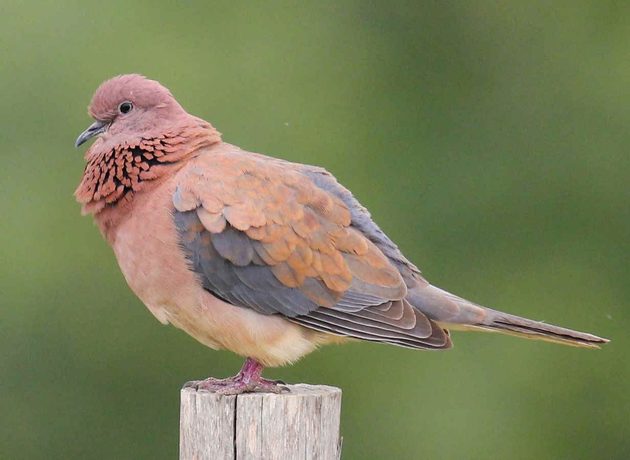
Laughing Dove
How best to travel to your lodge?
The easiest way is to fly to Agadir Al Massira International Airport. Atlas Kasbah is approximately 20 minutes by car from the airport, and we can organise private airport transfers. Agadir also has good road connections with the rest of Morocco. Marrakech is approximately 250 km away.
One of the great advantages of Atlas Kasbah for birdwatchers is that guests can stay in one comfortable base while exploring a remarkably varied area. Possible excursions include the immediate surroundings of Atlas Kasbah and the argan forest, the Souss Valley and Oued Souss, Souss-Massa National Park and Oued Massa, the Atlantic coast south towards Tiznit, the coastal area north of Agadir, and the foothills of the High Atlas and Anti-Atlas.
From Atlas Kasbah, guests can also arrange longer excursions towards areas such as Taroudant and Tafraoute to discover other landscapes and ecosystems of south-western Morocco. Private transport can be organised by Atlas Kasbah upon request.
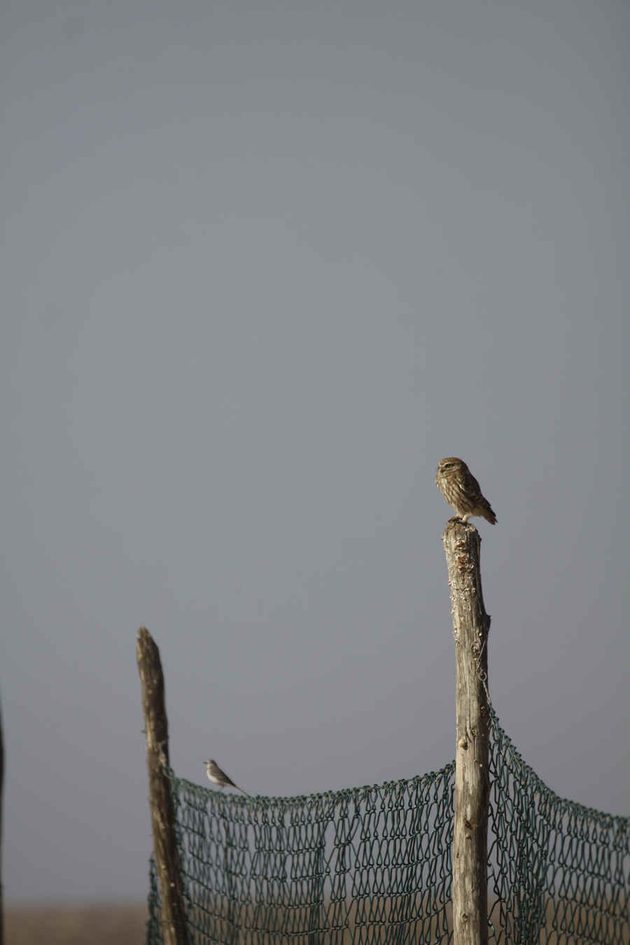
Little Owl
What kind of services – except for accommodation and food – does your lodge offer to visiting birders?
Atlas Kasbah has been welcoming nature enthusiasts and specialist birdwatching groups for many years. We provide birders with a comfortable base in the heart of the Arganeraie Biosphere Reserve, practical information about the main birding areas of the region, and assistance in planning their excursions according to their interests and the season.
We can also organise private transport from Atlas Kasbah to the main birding and nature sites of the region, including Souss-Massa National Park, Oued Massa, Oued Souss, the Atlantic coast and other areas around Agadir. This allows guests to use Atlas Kasbah as a single base while exploring several very different habitats.
At Souss-Massa National Park, local guiding is available on site. However, it is important to point out that highly specialised ornithological guides are relatively limited in the region. In practice, many of the dedicated birdwatchers who stay with us travel in small, pre-organised groups with their own specialist birding guide or tour leader. This is particularly common among international birdwatching groups, who use Atlas Kasbah as their accommodation and base for exploring the wider Souss-Massa region.
For group bookings of more than 10 participants, Atlas Kasbah can, upon request and subject to availability, assist the group in trying to identify a specialist birding guide or appropriate local contact. However, specialist guiding is not an in-house service provided directly by Atlas Kasbah.
Depending on the interests of the guests, birding possibilities include the argan landscape surrounding Atlas Kasbah, Souss-Massa National Park and Oued Massa, Oued Souss and the Atlantic coastal habitats, areas frequented by the Northern Bald Ibis, and the semi-arid and mountain landscapes towards the High Atlas and Anti-Atlas.
Independent birdwatchers are equally welcome. We can provide practical information, suggest areas to explore, and arrange their transport, while they organise their birdwatching independently.
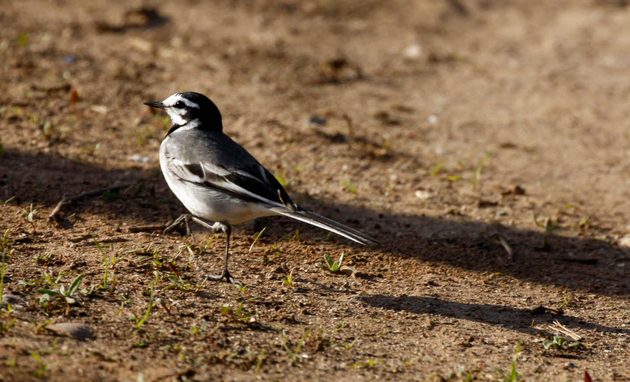
Moroccan Wagtail
What makes your lodge special?
Three things make Atlas Kasbah particularly special for nature travellers: location, diversity and philosophy.
First, Atlas Kasbah is situated within the UNESCO Arganeraie Biosphere Reserve, one of the characteristic ecosystems of south-western Morocco. UNESCO describes the argan ecosystem as globally unique and particularly adapted to arid conditions.
Second, our location gives birdwatchers access to an exceptional diversity of habitats without having to change accommodation every night. Within day-trip distance, visitors can explore argan forest, agricultural areas, semi-arid steppe, river valleys, wetlands, estuaries, dunes, Atlantic beaches and cliffs, and mountain habitats. Souss-Massa National Park alone contains around 250 bird species, according to Morocco’s National Tourist Office, and is internationally known for the Northern Bald Ibis.
Third, Atlas Kasbah was created around an environmental philosophy rather than simply adopting an ecological label later. Our approach includes responsible management of water and energy, waste reduction, locally sourced food and products, environmentally responsible gardening and close links with neighbouring Amazigh communities. Atlas Kasbah was awarded a Gold Award at the World Responsible Tourism Awards. For our birdwatching guests, this means that the nature experience does not stop when they return from an excursion: they are staying in an ecolodge whose identity is closely connected with the landscape they have come to discover.
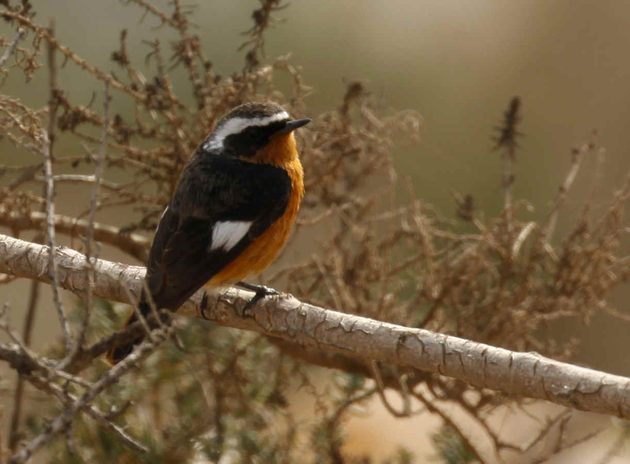
Moussier’s Redstart
What are the 10-20 most interesting birds that your lodge offers good chances to see?
The birdlife varies considerably according to habitat and season. Some species can be observed in the countryside around Atlas Kasbah, while others are encountered during our birdwatching excursions to the wetlands, coast, Souss-Massa National Park and surrounding landscapes.
Among the most interesting birds of the Atlas Kasbah/Souss-Massa birding experience are:
- Northern Bald Ibis – Geronticus eremita
- Moussier’s Redstart – Phoenicurus moussieri
- Black-crowned Tchagra – Tchagra senegalus
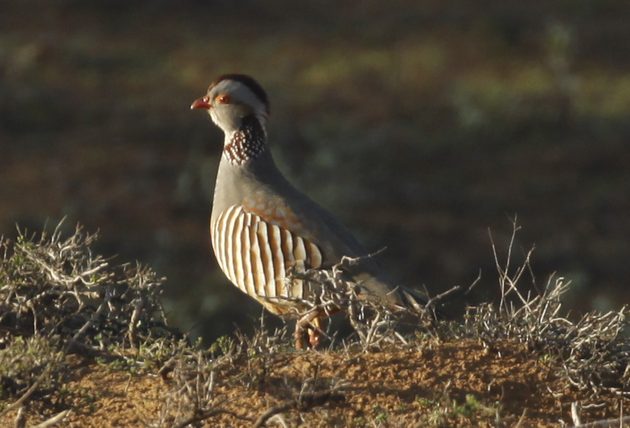
- Barbary Partridge – Alectoris barbara
- Black-winged Kite – Elanus caeruleus
- Lanner Falcon – Falco biarmicus
- Ruddy Shelduck – Tadorna ferruginea
- Marbled Duck – Marmaronetta angustirostris
- Greater Flamingo – Phoenicopterus roseus
- Eurasian Spoonbill – Platalea leucorodia
- Glossy Ibis – Plegadis falcinellus
- Purple Heron – Ardea purpurea
- Black-winged Stilt – Himantopus himantopus
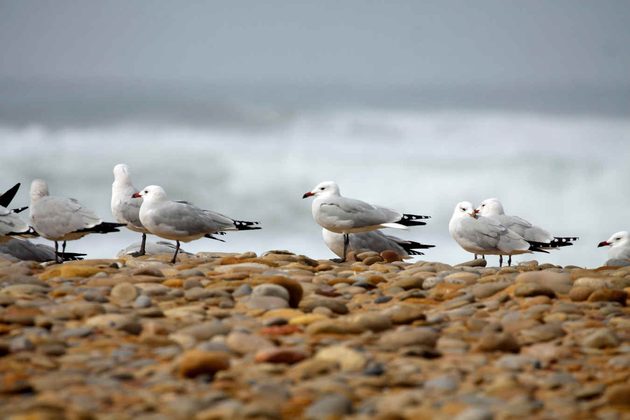
- Audouin’s Gull – Ichthyaetus audouinii
- Osprey – Pandion haliaetus
- Western Marsh Harrier – Circus aeruginosus
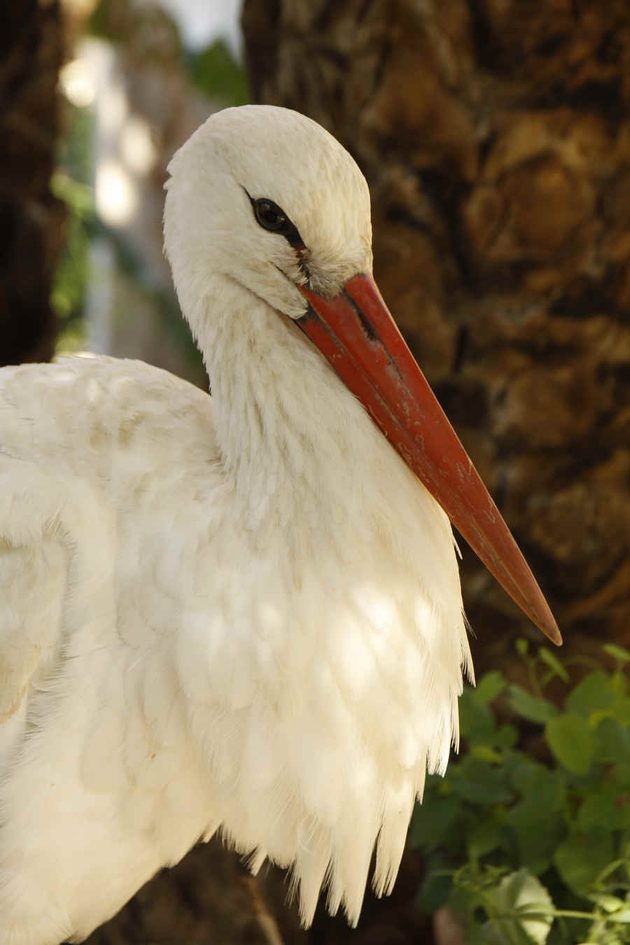
- White Stork – Ciconia ciconia
- Whimbrel – Numenius phaeopus
- Sanderling – Calidris alba
- Common Crane – Grus grus
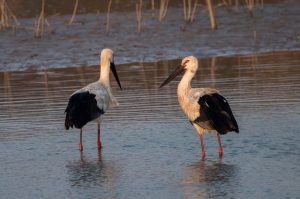
White Stork
This list deliberately combines some of the characteristic birds of the dry south-western Moroccan landscape with wetland, coastal and migratory species that guests can encounter on excursions.
The National Tourist Office specifically highlights the extraordinary bird diversity of Souss-Massa and records birds including spoonbills, flamingos, falcons and, above all, the Northern Bald Ibis; it also identifies Oued Massa as a particularly important wetland birding area.
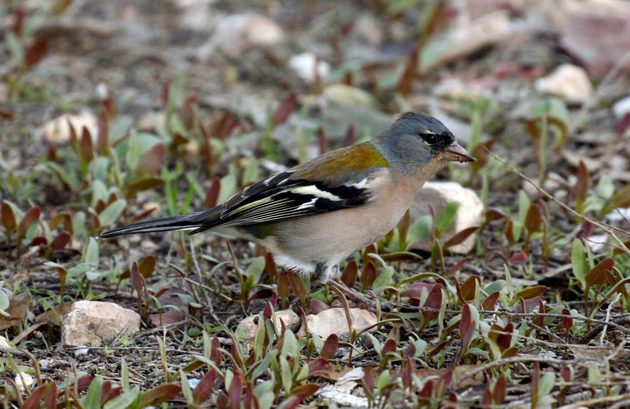
North African Chaffinch
What is the best time to visit your lodge, and why?
There is interesting birdlife throughout the year, but spring and autumn are particularly rewarding for birdwatchers because resident North African species can be combined with migration.
Spring is also a beautiful period for visitors interested in botany, butterflies and the wider natural environment. After winter rains, the landscape can become surprisingly green and colourful, with wildflowers throughout the countryside.
Autumn brings another important migration period, particularly around the coast, estuaries and wetlands.
Winter is also excellent for birding, especially for waterbirds and winter visitors around the Oued Massa and Oued Souss wetlands.
For this reason, rather than having one very short “birding season”, the Agadir-Souss-Massa region offers different ornithological experiences at different times of year.
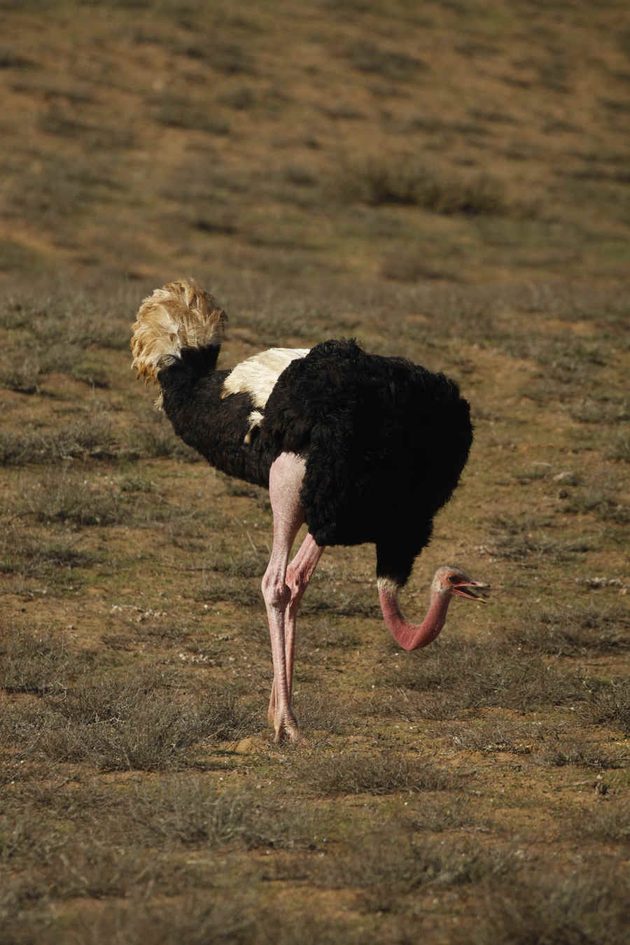
Red-Necked Ostrich
Is your lodge involved in conservation efforts? If yes, please describe them.
Yes. Environmental conservation and responsible tourism have been fundamental to Atlas Kasbah since its creation.
We are located within the UNESCO Arganeraie Biosphere Reserve, so our immediate environment is part of a landscape of major ecological and cultural importance. UNESCO describes the argan ecosystem as globally unique. The argan tree helps protect soils and water resources and provides habitat for a wide range of biodiversity. The traditional management of the argan landscape is also closely connected with Amazigh communities.
At Atlas Kasbah, our environmental approach includes careful water management, wastewater treatment and reuse, reduction and recycling of waste, energy efficiency, environmentally sensitive landscaping and gardening, and the use of local products whenever possible. We also promote local employment and work with local producers, craftspeople and women’s cooperatives.
We believe conservation is also about education. By bringing visitors into contact with the argan ecosystem, the Souss-Massa wetlands, local wildlife and Amazigh culture, we encourage guests to understand why these landscapes deserve to be protected. Birdwatching is particularly compatible with this philosophy: it creates economic value from keeping habitats and wildlife intact.
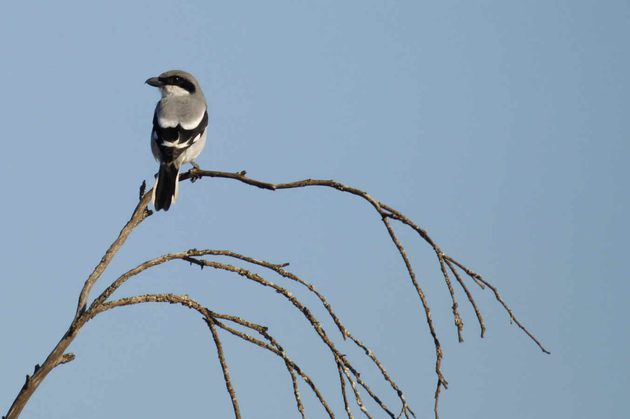
Southern Grey Shrike
What other suggestions can you give to birders interested in visiting your lodge?
Our first recommendation is: do not rush the region. The great strength of birding around Atlas Kasbah is the diversity of habitats. We therefore recommend staying several nights and dedicating different days to different ecosystems. For example, visitors can combine birding in the argan landscape with a full day around Oued Massa and Souss-Massa National Park, another excursion along the Atlantic coast, and another towards the foothills of the Atlas.
Birders should bring good binoculars and, if possible, a spotting scope for wetlands and coastal birding. A telephoto lens is useful for bird photography. We also recommend comfortable walking shoes, sun protection, a hat, a reusable water bottle, and layers of clothing, as mornings can be cool even when afternoons are warm. Early mornings are particularly rewarding.
Finally, visitors should remember that south-western Morocco is much more than a single target species. The Northern Bald Ibis may bring birders here initially, but the combination of North African specialities, migrants, wetland birds, raptors and the wider biodiversity of the argan ecosystem is what makes a longer stay so rewarding.
Barbary Partridge
Do you have activities for non-birders? If so, please describe.
Yes, and this is one of the strengths of Atlas Kasbah for couples and groups where not everyone is a dedicated birdwatcher.
Nature activities can include walking and hiking, botanical discovery, and general wildlife excursions.
At the ecolodge, guests can also enjoy Moroccan cooking classes, pottery and traditional crafts, Arabic or Amazigh cultural activities, astronomy and stargazing, wellness and spa experiences, as well as simply relaxing by the pool and enjoying the surrounding landscape.
Guests can discover argan oil production and the work of local women’s cooperatives, explore nearby Amazigh villages or take excursions through the Atlas and Anti-Atlas landscapes.
Our own nature-stay programme explicitly combines wildlife discovery with activities such as cooking, pottery, language and cultural discovery, and astronomy.
This makes Atlas Kasbah particularly suitable for a couple where one person wants several days of serious birding while the other prefers nature, culture, gastronomy or wellness.
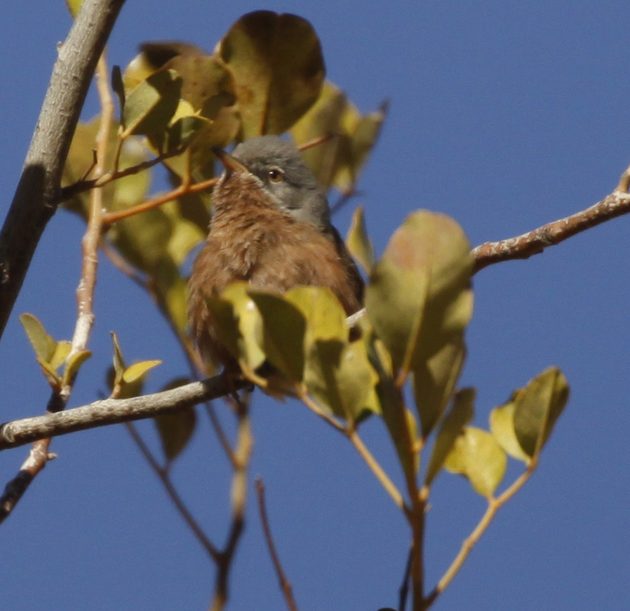
Tristram’s Warbler
If any reader of 10,000 Birds is interested in staying at your lodge, how can they best contact you?
Readers can contact us directly:
- Atlas Kasbah Ecolodge Tighanimine Elbaz – Agadir – Morocco
- Website: Atlas Kasbah Ecolodge
- Nature stays: Atlas Kasbah Nature Stays
- Email: contact@atlaskasbah.com
- Telephone / WhatsApp: +212 661 488 504 Or +212 662 188 889
When contacting us, birdwatchers are welcome to tell us their dates, number of participants, and particular interests. This allows us to help them prepare the most appropriate programme.
Audouin’s Gull
Is there anything else you would like to share with the readers of 10,000 Birds?
We would like readers of 10,000 Birds to think of Agadir and the Souss-Massa region not simply as a seaside destination, but as one of Morocco’s great nature destinations.
Atlas Kasbah sits at a fascinating ecological crossroads. To the west is the Atlantic. To the north and east rise the High Atlas. To the south are the Anti-Atlas and increasingly arid landscapes. Between them lie the Souss Valley, the argan forests, wetlands, estuaries, dunes and coastal cliffs.
The UNESCO Arganeraie Biosphere Reserve itself extends across a vast part of south-western Morocco, while the nearby Souss-Massa National Park protects approximately 33,800 hectares of coastal and wetland habitats. This means that a visitor can experience dramatically different ecosystems during a single stay.
And birding is only part of the story. The same journey introduces visitors to endemic and adapted plants, reptiles, mammals, insects, geology, traditional agriculture and the Amazigh culture that has developed alongside this environment for centuries.
At Atlas Kasbah, our aim is to bring all of these elements together: comfortable hospitality, serious nature discovery, responsible tourism and an authentic connection with south-western Morocco.
We would be delighted to welcome readers of 10,000 Birds and help them discover this remarkable corner of Morocco.
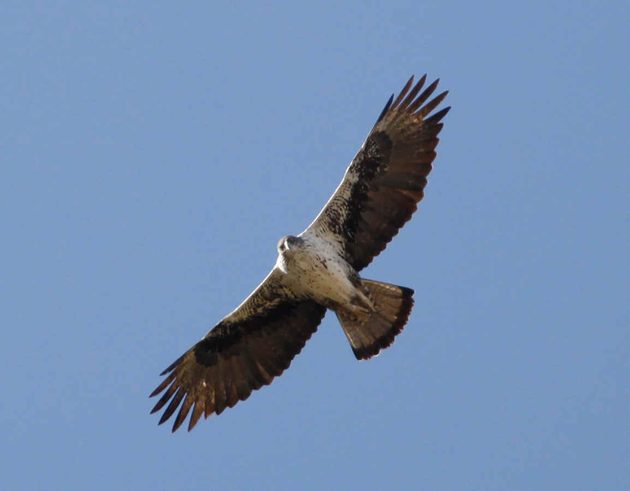
Bonelli’s Eagle



Leave a Comment